
Reading skills improvement Phonics Worksheets for Ages 5-6
8 filtered results
Difficulty Level
Grade
Age
-
From - To
Subject
Activity
Standards
Boost your child's reading skills with our engaging Phonics Worksheets designed specifically for ages 5-6. Perfect for young learners, these worksheets focus on phonemic awareness, letter sounds, and blending techniques to enhance reading comprehension. Each activity is crafted to make learning fun and interactive, helping children build confidence while mastering essential phonics skills. Our comprehensive resources include colorful illustrations and stimulating exercises that cater to different learning styles. By incorporating these worksheets into your teaching routine, you'll not only improve your child's reading abilities, but also foster a lifelong love for literacy. Start their reading journey today with our proven phonics exercises!
Favorites
With answer key
Interactive
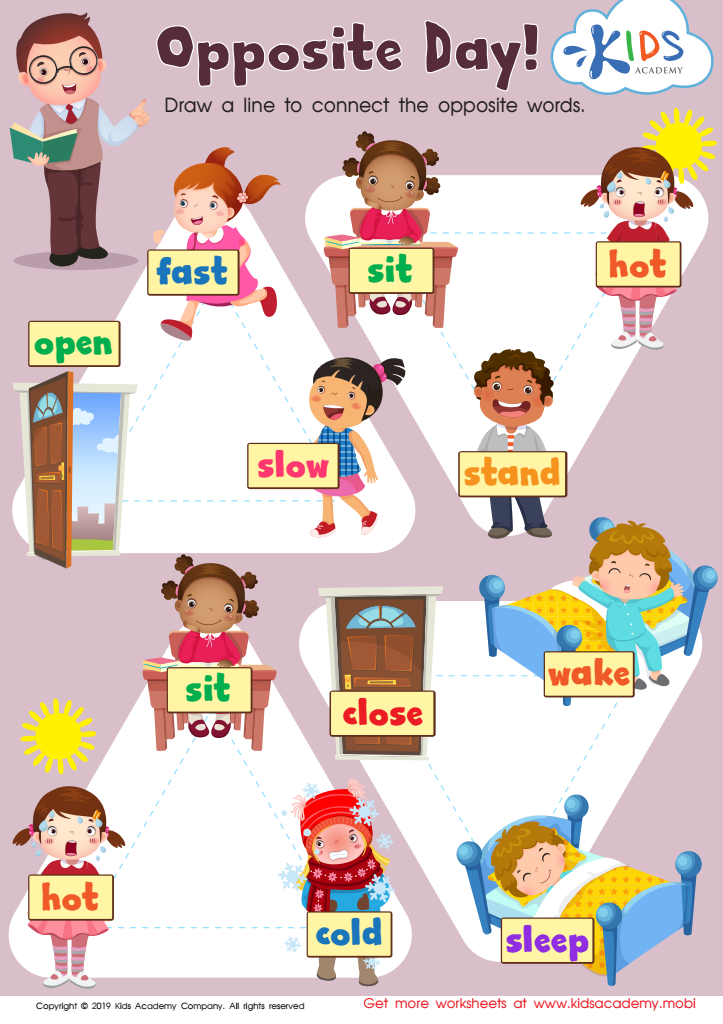
Opposite Day Worksheet
Early learners need to know about opposites to improve their higher-order thinking and critical thinking. This fun worksheet helps them understand the concept, practice opposite words, read high-frequency words and work on fine motor skills. Download the traceable PDF to get started.
 Assign to My Students
Opposite Day Worksheet
Worksheet
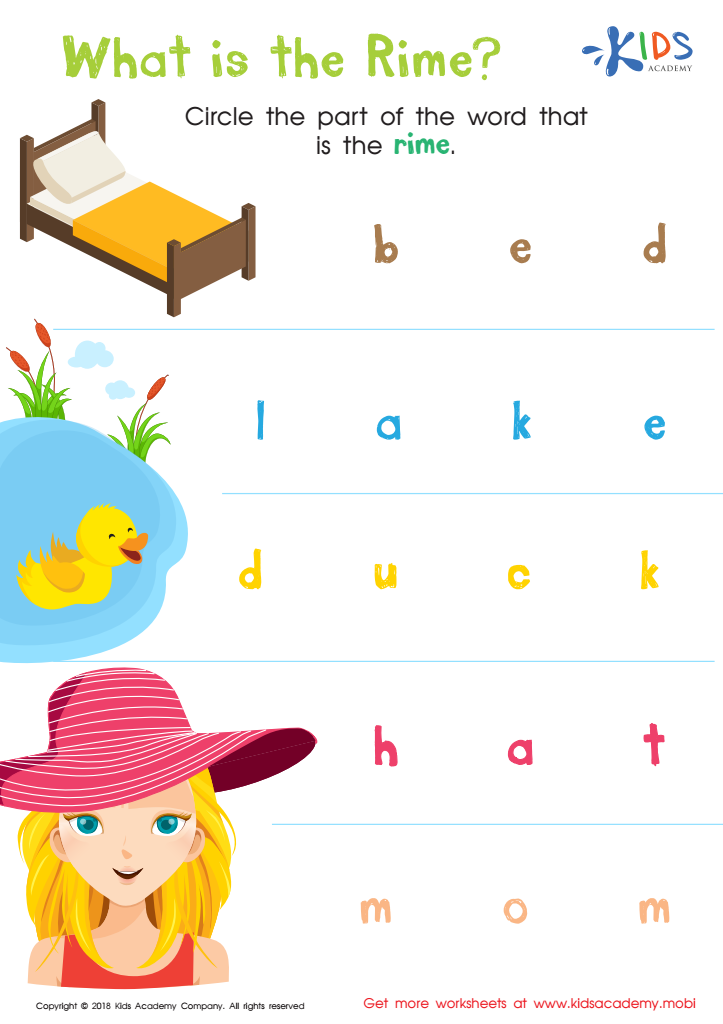
What Is the Rime? Worksheet
Kids will love this PDF worksheet that boosts their reading skills and fine motor skills as they trace the correct rimes for each picture. Knowing onset and rime is key to decoding and fluency, and this worksheet makes it fun! They won't even know they're learning and will be asking for more.
What Is the Rime? Worksheet
Worksheet
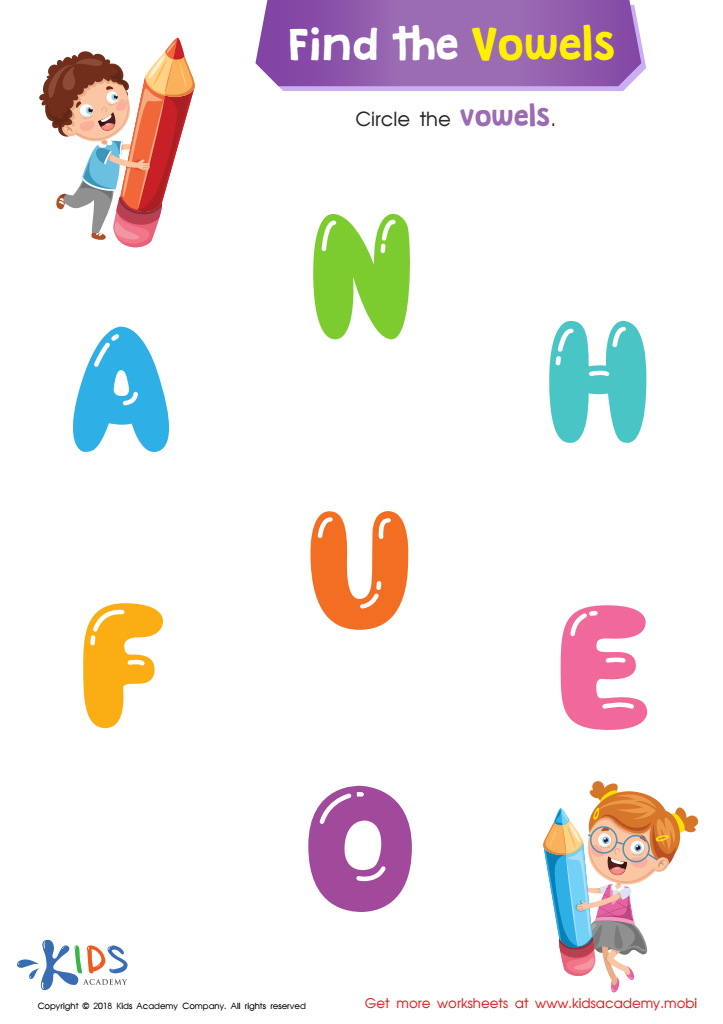
Find the Vowels Reading Worksheet
This worksheet helps kids identify vowels with bright colors and engaging activities to strengthen their visual discrimination and fine motor skills. Young learners will find it easy to succeed and be excited to keep reading!
Find the Vowels Reading Worksheet
Worksheet
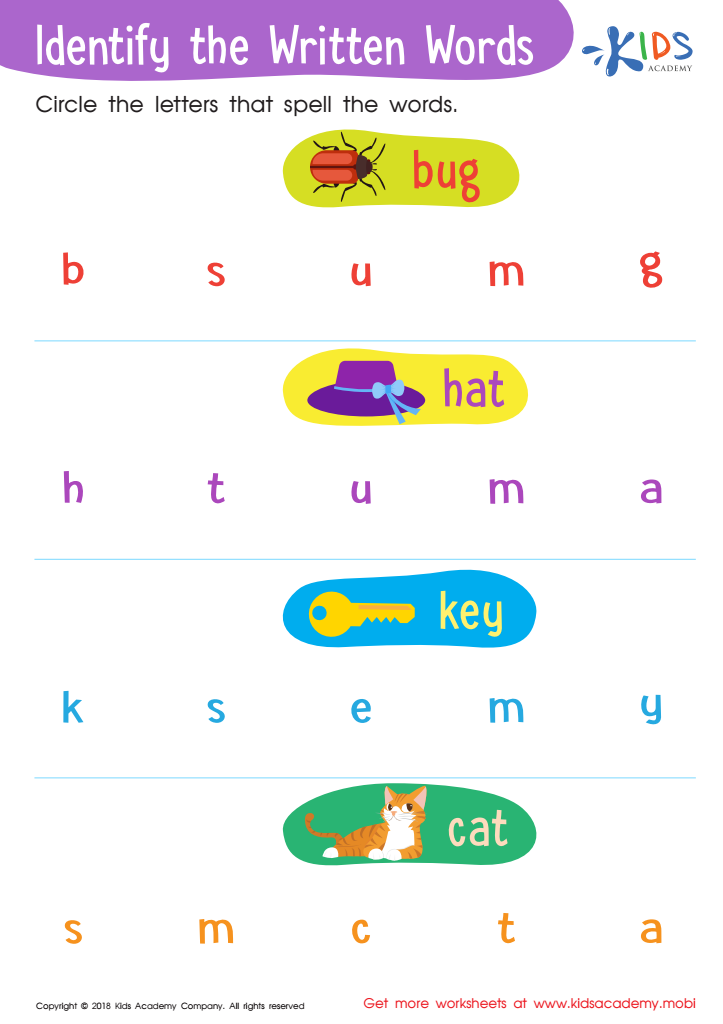
Identify the Written Words Worksheet
Have your students identify the objects on the printout, then spell the words. If they already know how to spell, this exercise should be easy. Help them circle the correct letters from the set to spell out the words. This is a great way to reinforce reading and spelling skills. Max 80 words.
Identify the Written Words Worksheet
Worksheet
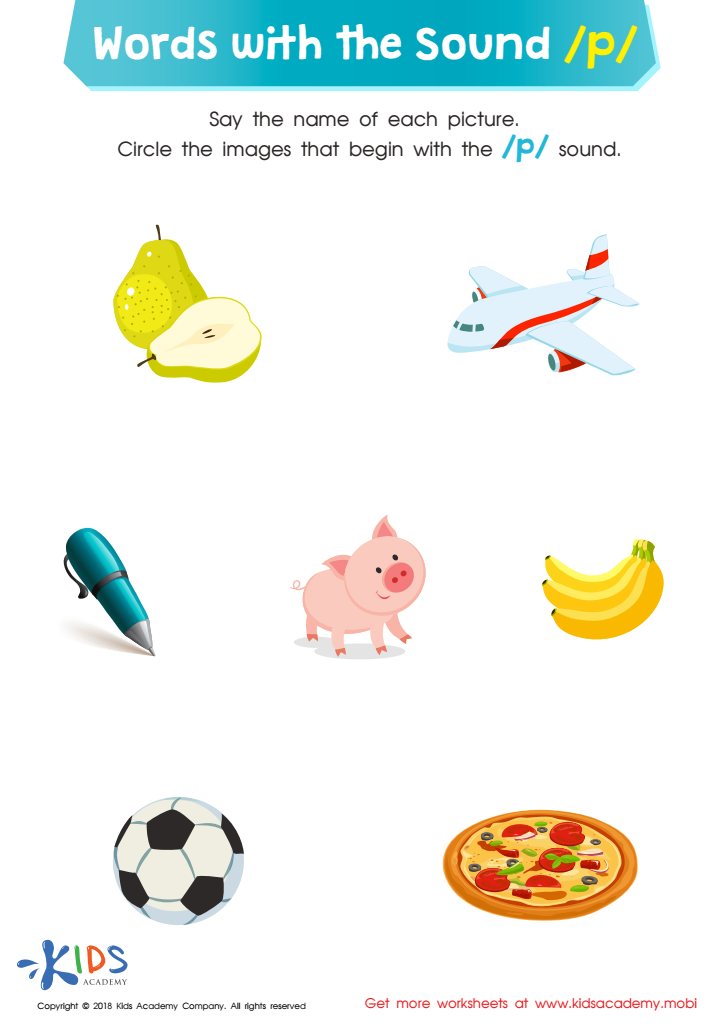
Words with sound p Reading Worksheet
Working on this fun worksheet? Name each picture aloud and listen carefully before circling those that start with the letter «p»! Pizza, pig, plane, or banana - practice phonics to help your child recognize the letter «p» sound for successful early reading and decoding!
Words with sound p Reading Worksheet
Worksheet
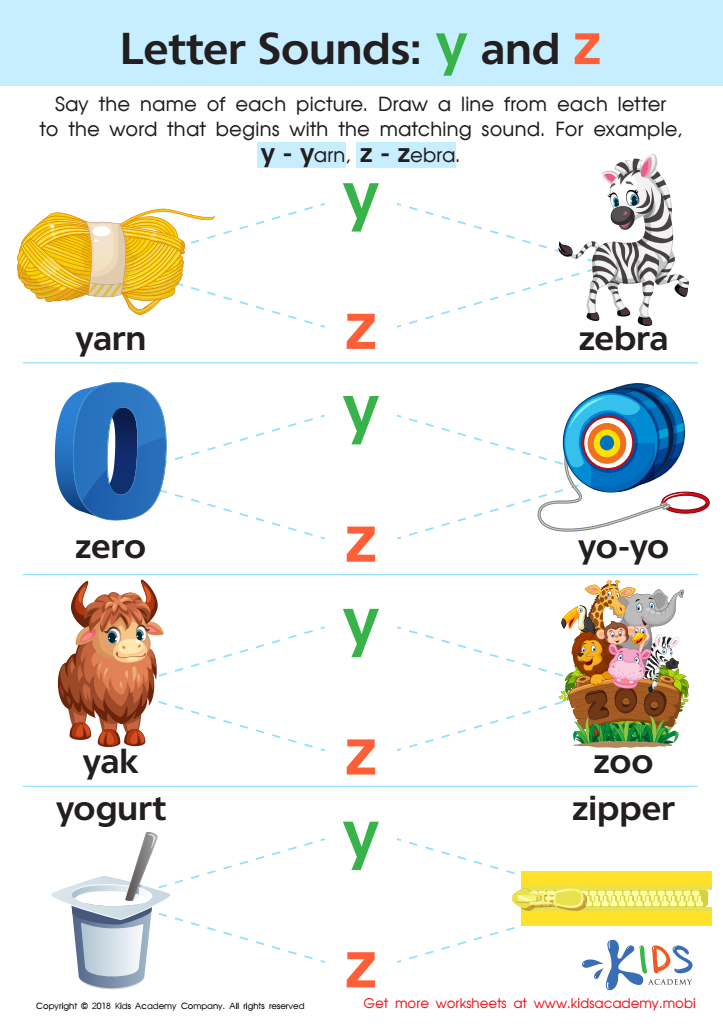
Letter Y and Z Sounds Worksheet
Y and Z can be tricky for kids to learn. Kids Academy has the answer with a great worksheet. "Yo-yo", "yak" and "zebra" help kids recognize, say and trace each letter. Plus, they can read the words and match them to images! Let your child try and help them master phonics at the end of the alphabet.
Letter Y and Z Sounds Worksheet
Worksheet
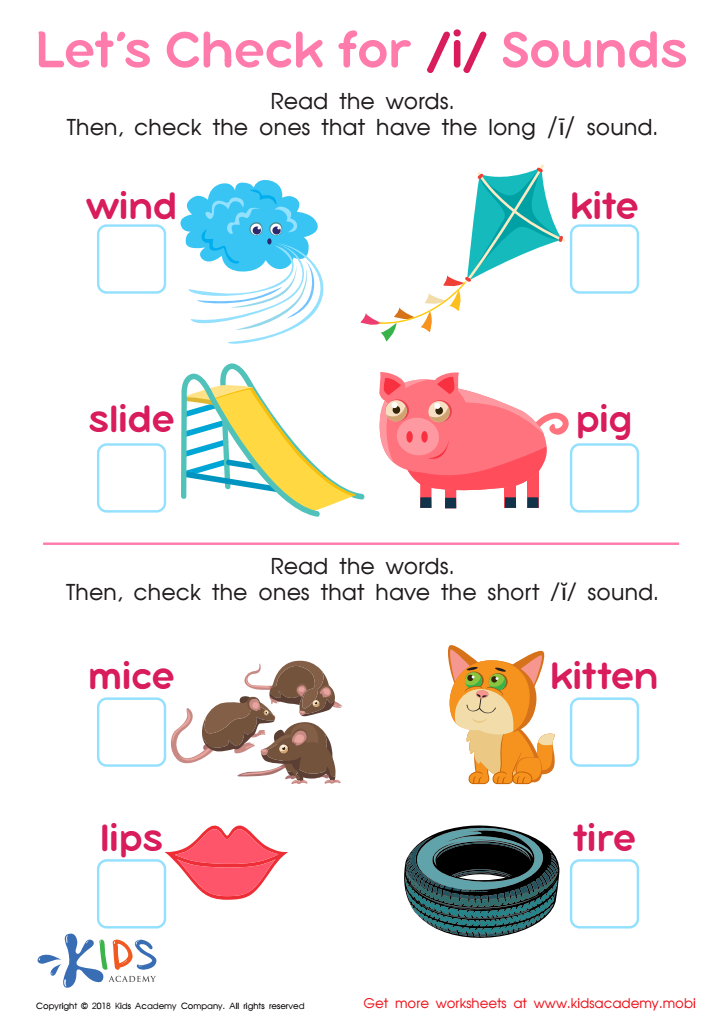
Let's Check for «i» Sounds Worksheet
This fun worksheet with pictures boosts phonics skills - differentiating between long «ī» and short «i» sounds in 1- and 2-syllable words. Kids use picture clues to read words, then check off the correct ones. It's a great way for new readers to practice early reading skills and find success on their own.
Let's Check for «i» Sounds Worksheet
Worksheet
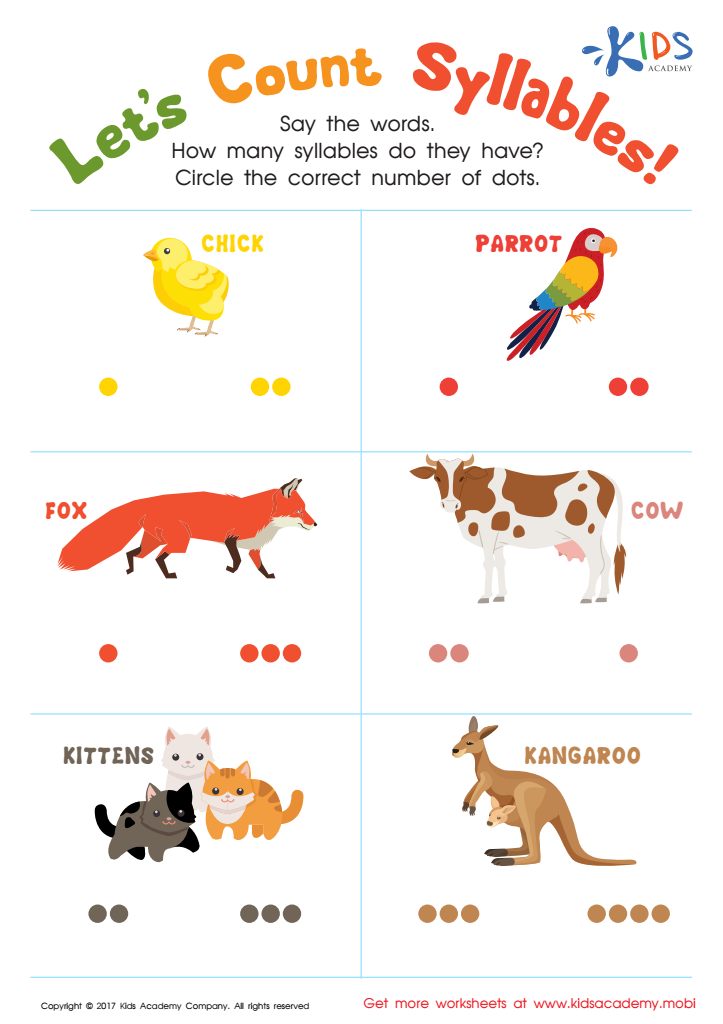
Lets Count Syllables Worksheet
This fun animal worksheet makes learning to read easier by breaking words into syllables. Bright, cheery pictures give context and help kids choose the right syllable count. Count together and enjoy as your child learns and gains success!
Lets Count Syllables Worksheet
Worksheet
Join Kids Academy for Free
Who is primarily going to use this learning content?








Improving reading skills through phonics for children aged 5-6 is crucial for their academic development and overall confidence. Phonics teaches children the relationships between letters and sounds, which forms the foundation for reading. At this age, children are typically in the early stages of literacy development, and the ability to decode words is essential for comprehension. When they grasp phonics, children can sound out words, aiding both in reading fluency and fostering a love for reading.
Moreover, strong reading skills have long-term implications on a child's success in school and beyond. Children who struggle with reading may experience difficulties in other subjects, leading to frustration and drawbacks in self-esteem. By focusing on phonics early, parents and teachers can identify and address reading challenges before they become entrenched, thus providing children with vital tools to navigate learning effectively.
In addition, phonics enhances critical thinking and problem-solving skills. Children learn how to break words down and make connections between sounds and meanings, which can invigorate their curiosity and engagement with text. Therefore, prioritizing phonics instruction at this age creates a strong literacy foundation, empowering children for future academic achievements and unlocking a world of learning opportunities.







