Chess Worksheets for Ages 5-6 - Page 5
97 filtered results
-
From - To
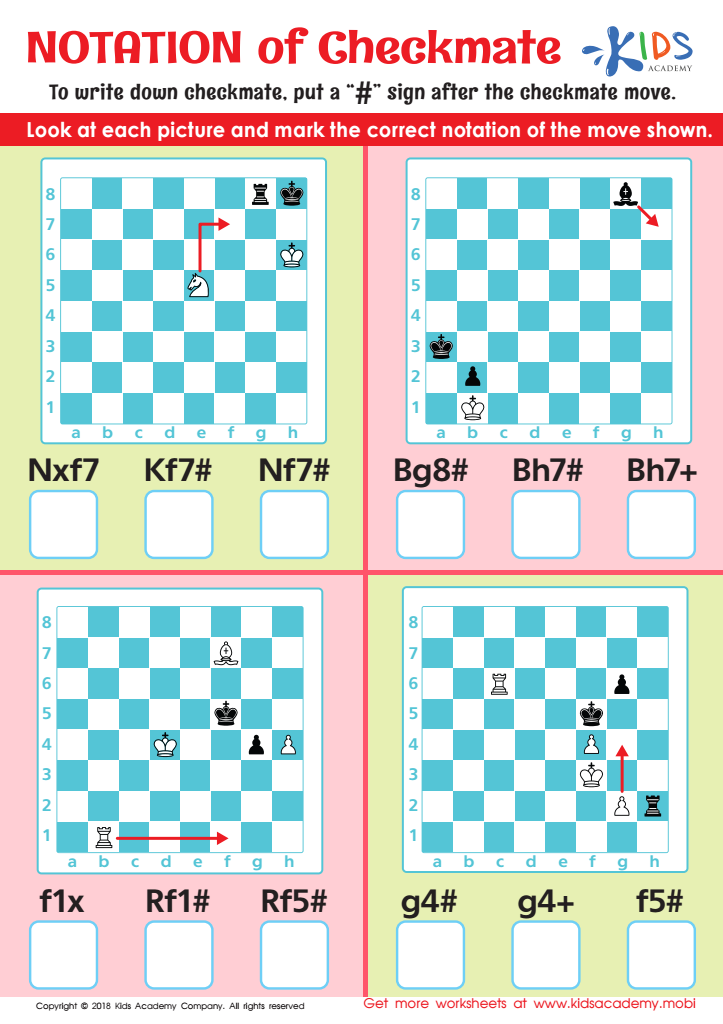
Notation of Checkmate Worksheet
 Assign to My Students








Chess is an excellent educational tool for children ages 5-6, offering numerous benefits that parents and teachers should embrace. First, it enhances cognitive skills, such as problem-solving, critical thinking, and logical reasoning. By learning to anticipate their opponent's moves, children develop strategic thinking, which can benefit their decision-making in various aspects of life beyond the chessboard.
Furthermore, chess promotes patience and focus. Young children often struggle with sustaining attention, but chess encourages them to concentrate on their moves and think ahead. This practice can translate into improved focus in academic settings. Additionally, playing chess fosters creativity, as children learn to devise unique strategies and solutions during gameplay.
Social skills are also enhanced, as children often play with peers, learning valuable lessons in sportsmanship, cooperation, and communication. Engaging in chess can serve as a fun activity that strengthens friendships while offering opportunities for mentorship between older and younger players.
Moreover, chess can be an inclusive activity, allowing children of various backgrounds and abilities to participate equally. Enhancing these skills at a young age helps lay the groundwork for lifelong benefits—academic success, healthier social interactions, and improved emotional regulation. Thus, incorporating chess into early education is a powerful investment in children’s futures.