Filters

320 filtered results

Clear all filters
Favorites
With answer key
Interactive

320 filtered results

Difficulty Level

Grade


Check out this FREE "Counting practice" Trial Lesson for age 5-6!

Breaking Down 8

Favorites
With answer key
Interactive
  • 5-6
  • Counting practice
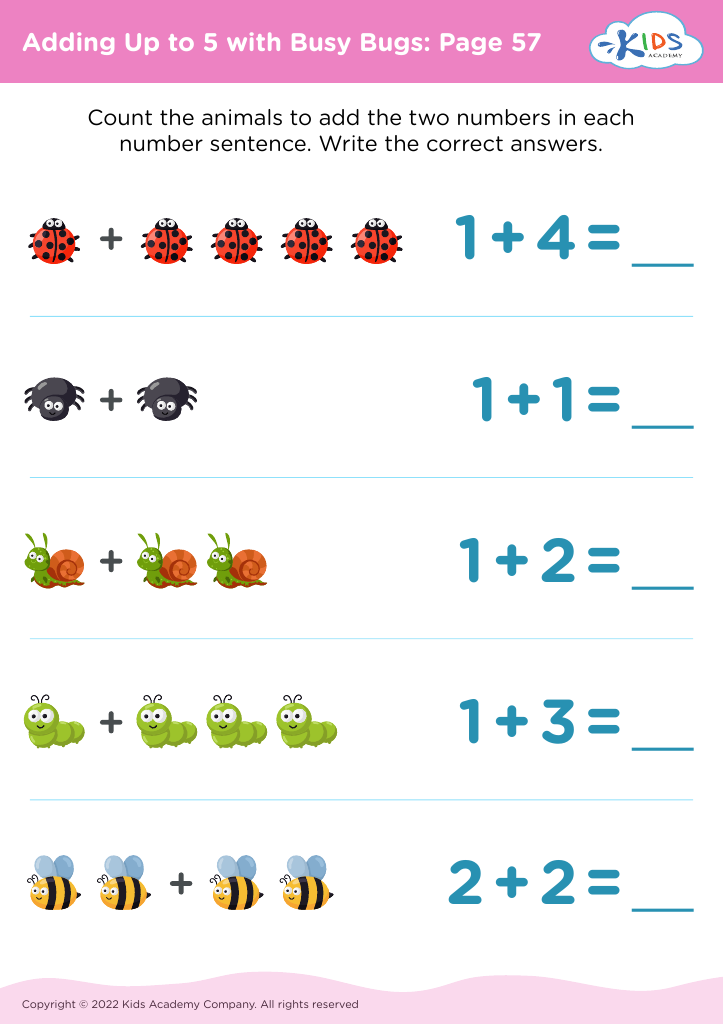
Adding Up to 5 with Busy Bugs: Page 57
Worksheet
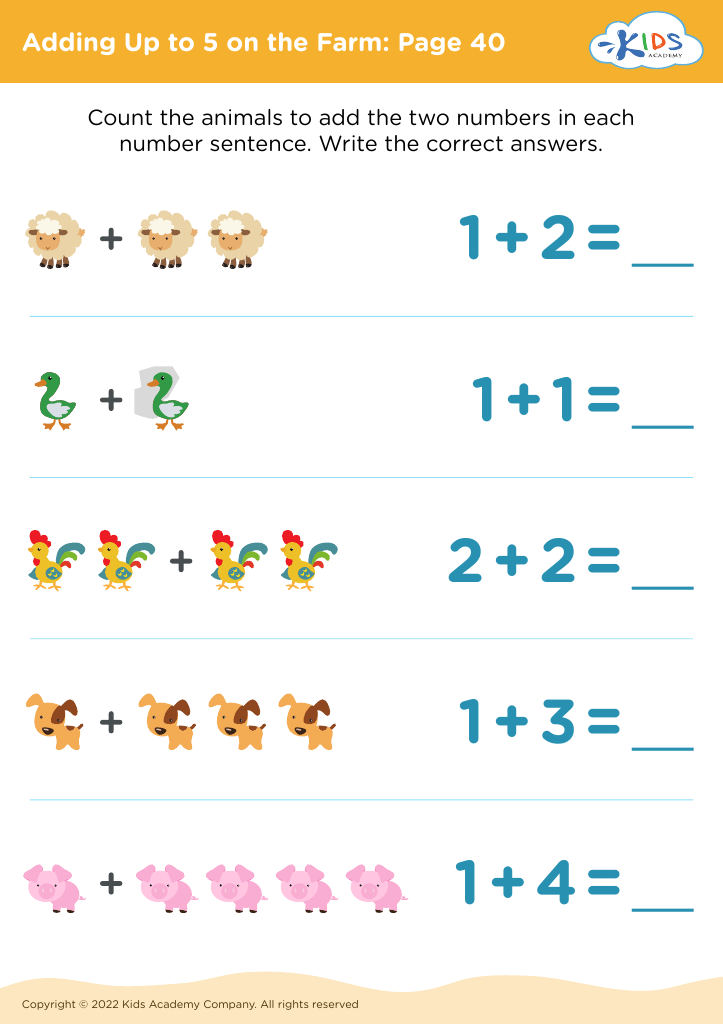
Adding Up to 5 on the Farm: Page 40
Worksheet
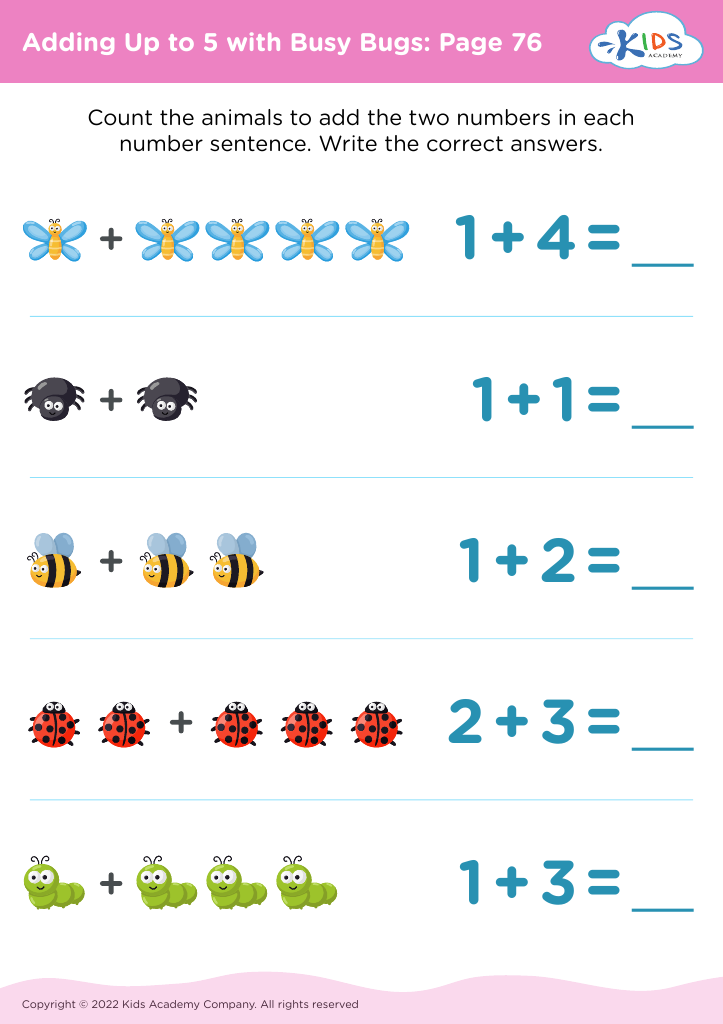
Adding Up to 5 with Busy Bugs: Page 76
Worksheet
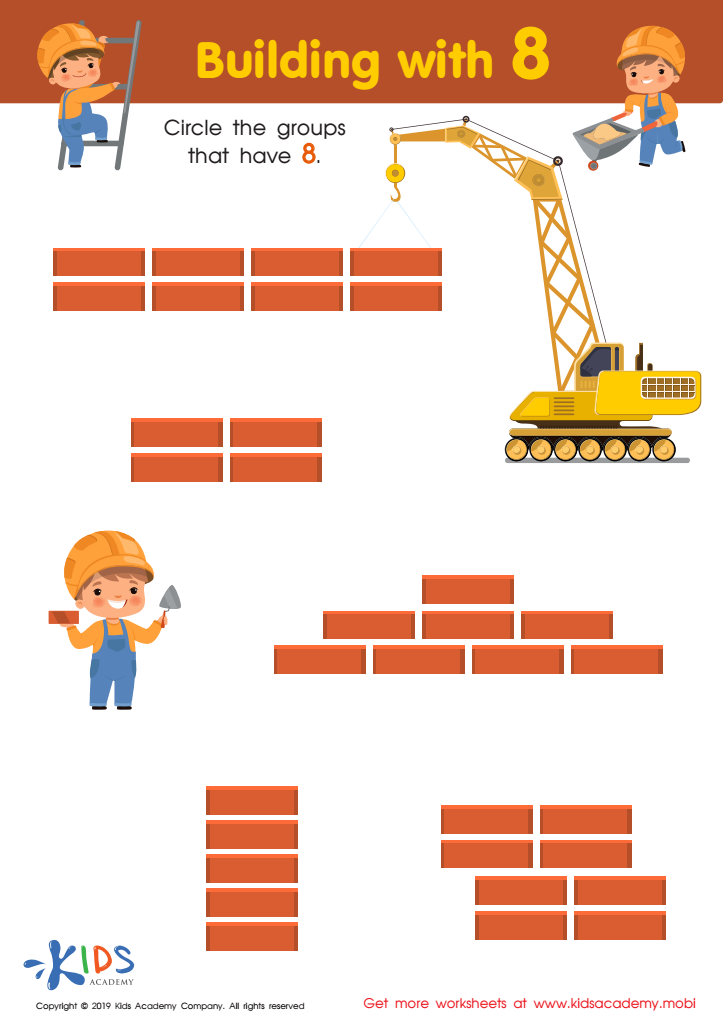
Building with 8 Worksheet

Building with 8 Worksheet

Your child can learn more with this simple exercise! Get them counting and help them circle the groups of 8 bricks. It's a great addition to their post-school lessons, supporting their counting skills. Plus, it's a fun way to learn!
Building with 8 Worksheet
Worksheet
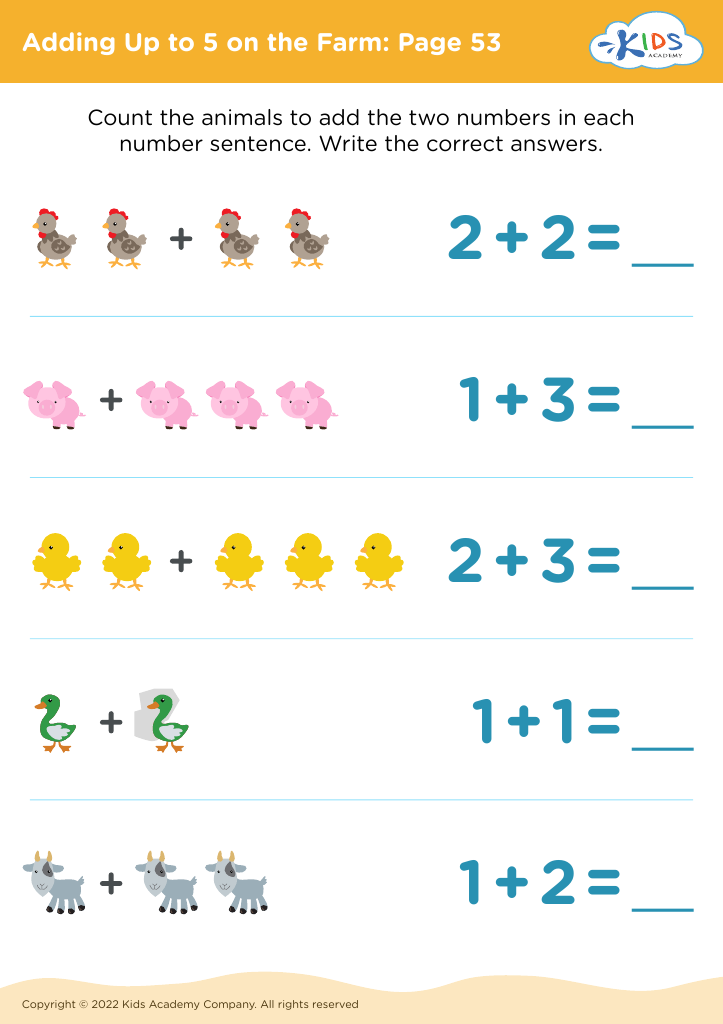
Adding Up to 5 on the Farm: Page 53
Worksheet
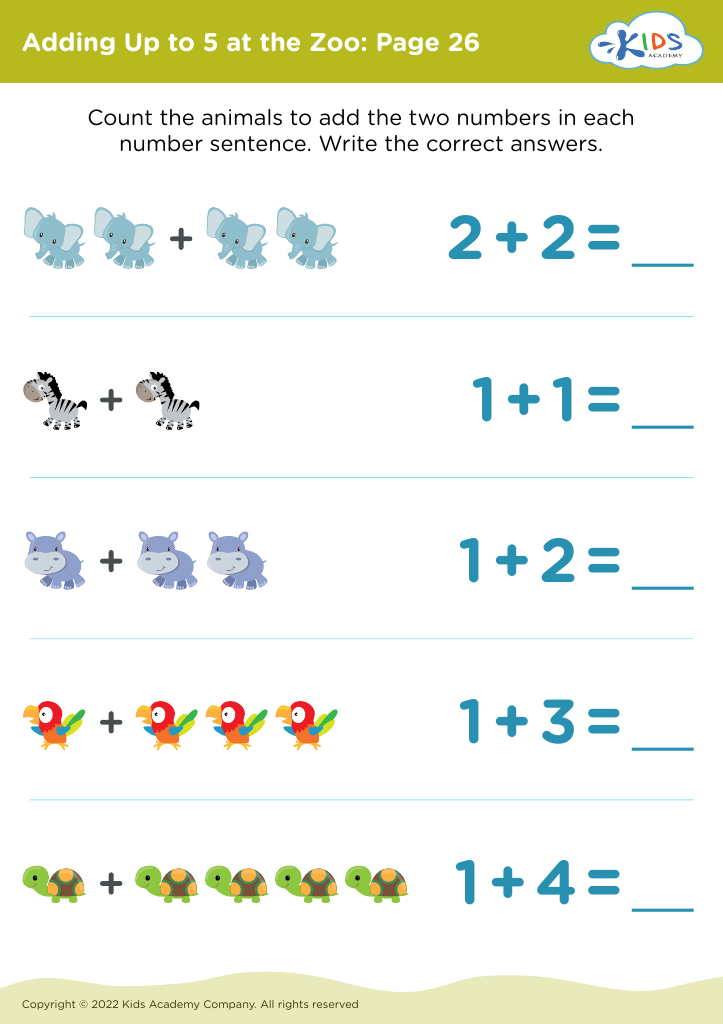
Adding Up to 5 at the Zoo: Page 26
Worksheet
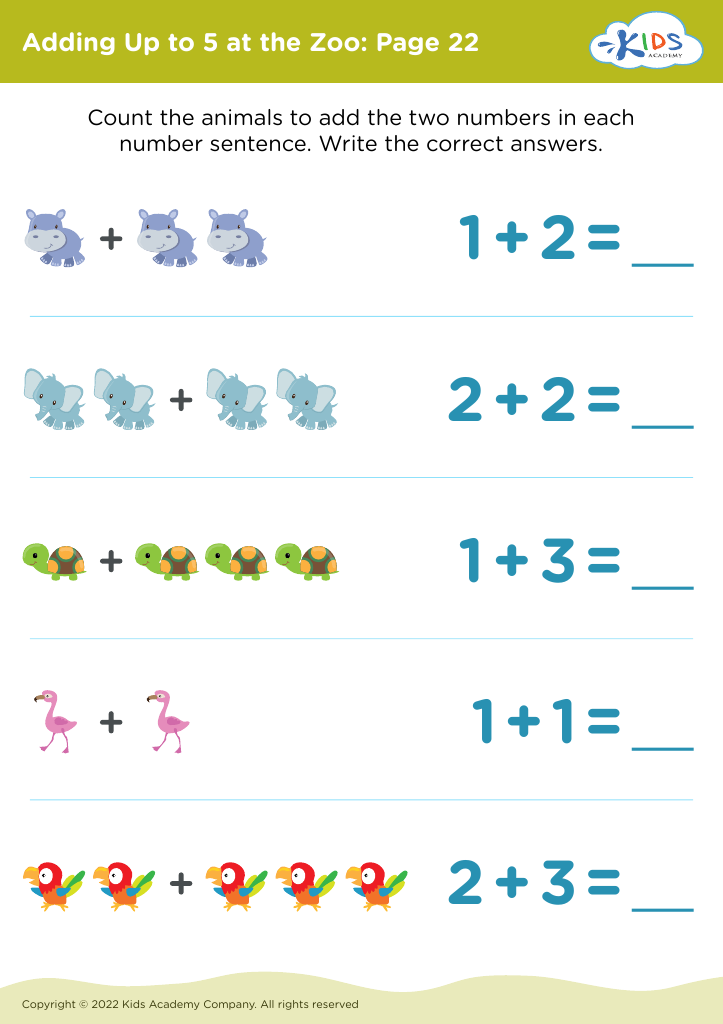
Adding Up to 5 at the Zoo: Page 22
Worksheet
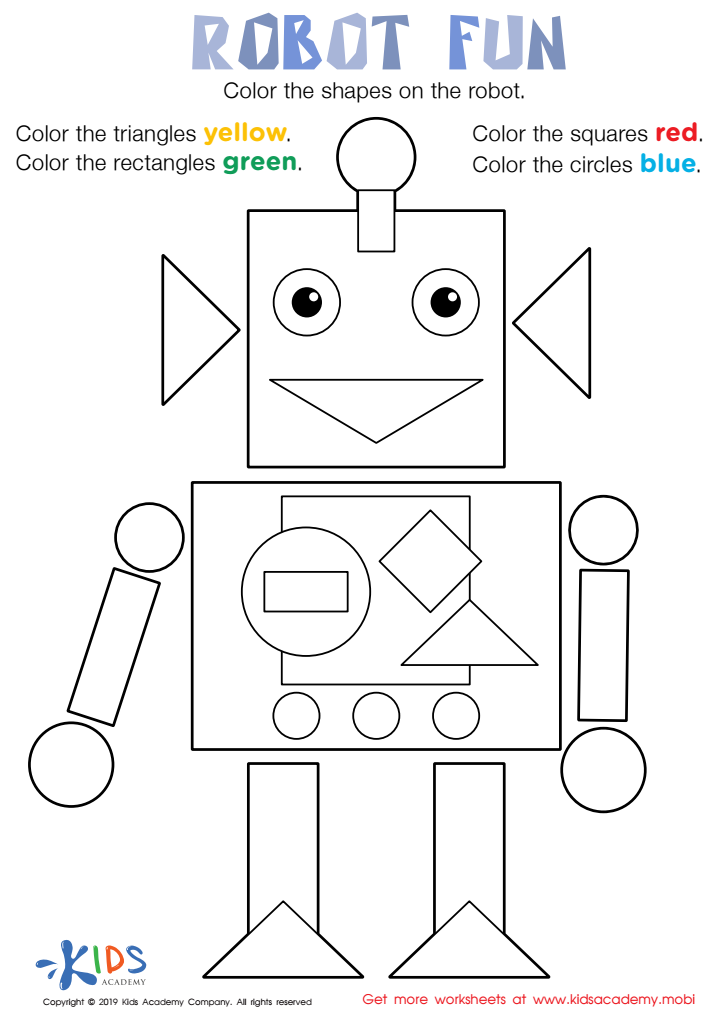
Robot Fun Worksheet
Robot Fun Worksheet

Robot Fun Worksheet

Help your child learn about basic shapes with this fun robot worksheet! Kids practice identifying circles, squares, rectangles and triangles, then color each shape according to directions. Make math practice enjoyable with this coloring page that teaches all four basic shapes - it's an important math skill!
Download (PDF)
Assign to My Students
Robot Fun Worksheet
Worksheet
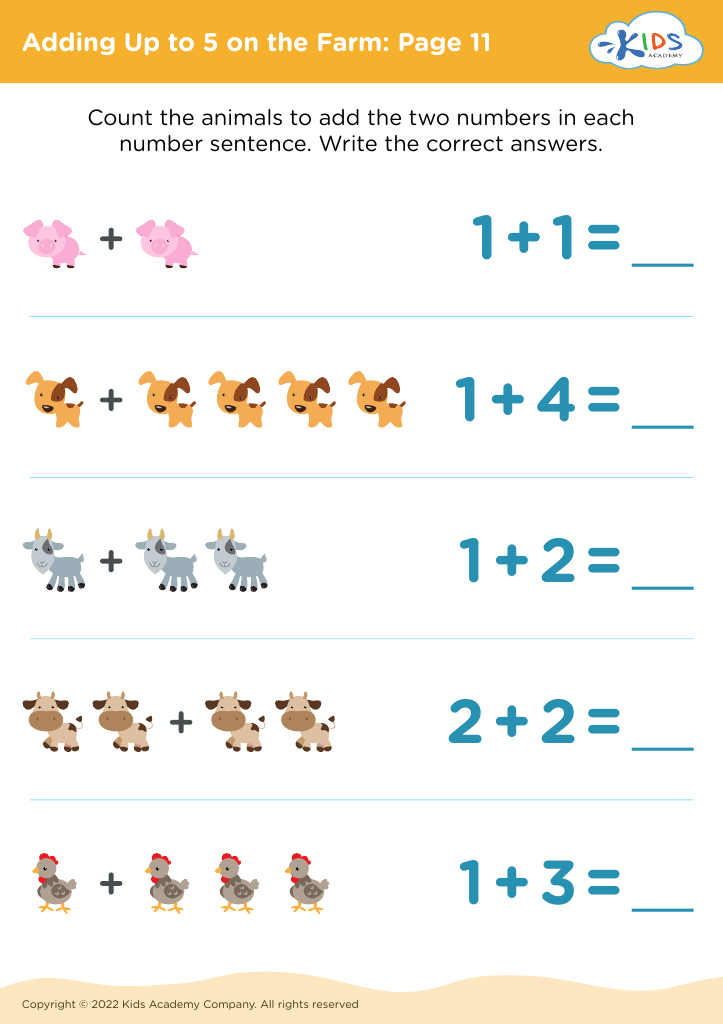
Adding Up to 5 on the Farm: Page 11
Worksheet
Pre-reading Worksheet for Kindergarten

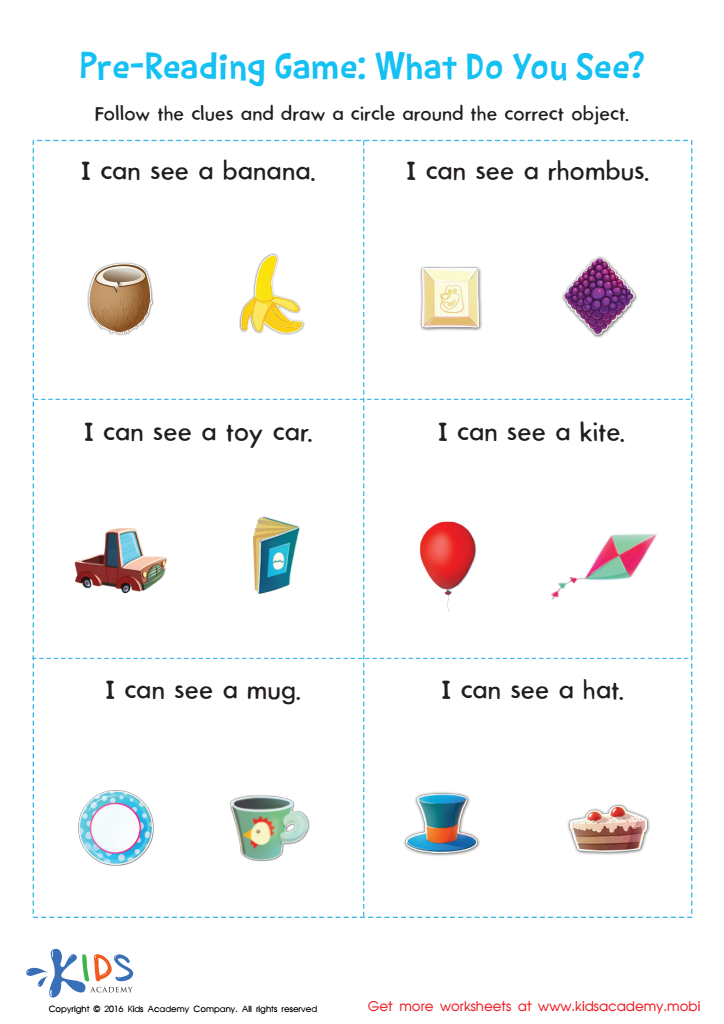
Pre–reading Worksheet: What Do You See?
Get started with this pre-reading worksheet to build your child's early literacy skills. Model, read aloud, and provide consistent repetition for successful learning.
Pre–reading Worksheet: What Do You See?
Worksheet
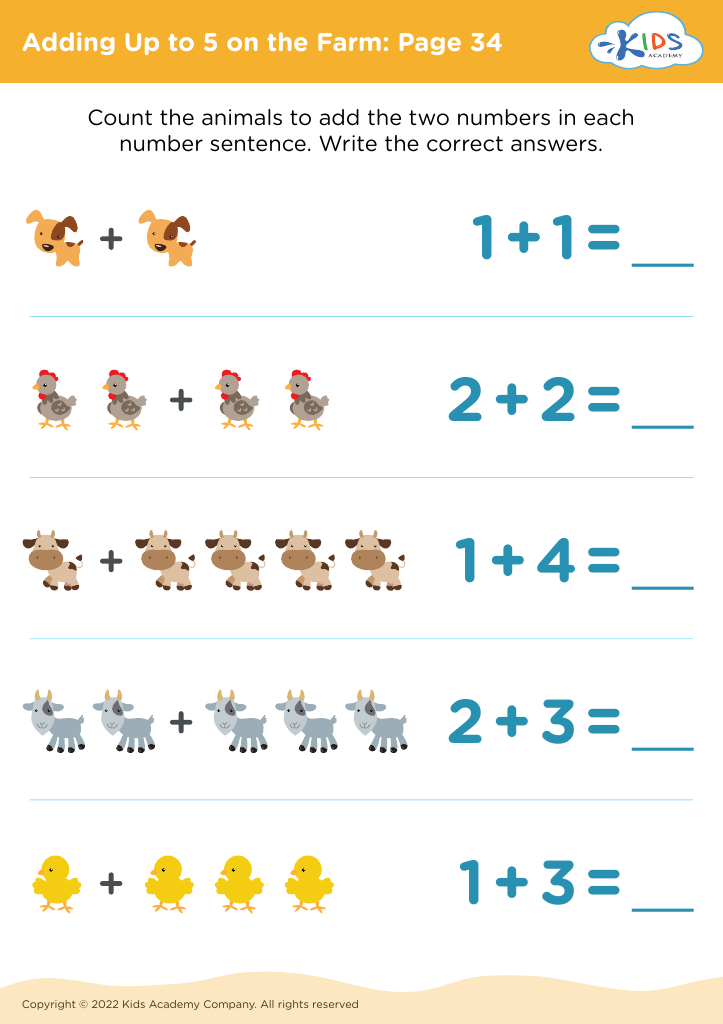
Adding Up to 5 on the Farm: Page 34
Worksheet
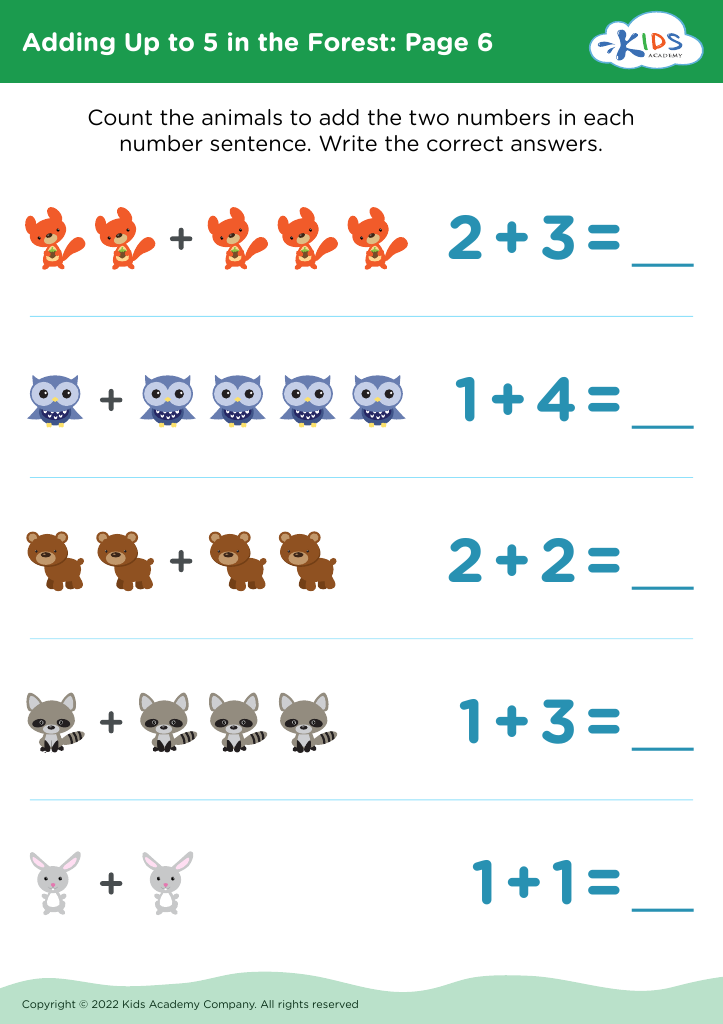
Adding Up to 5 in the Forest: Page 6
Worksheet
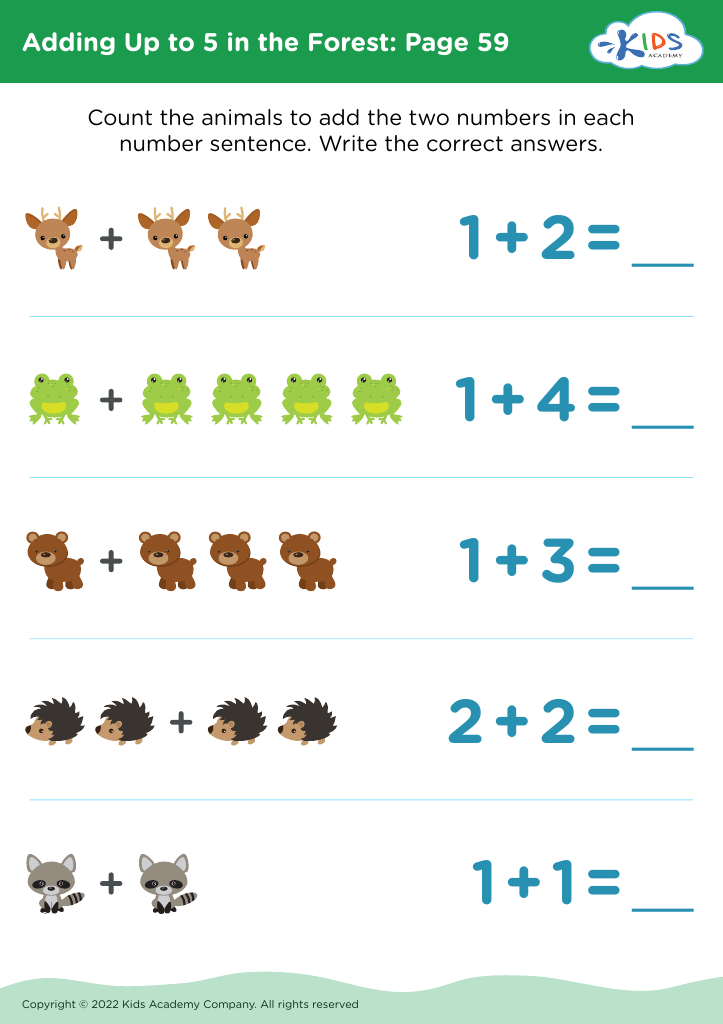
Adding Up to 5 in the Forest: Page 59
Worksheet
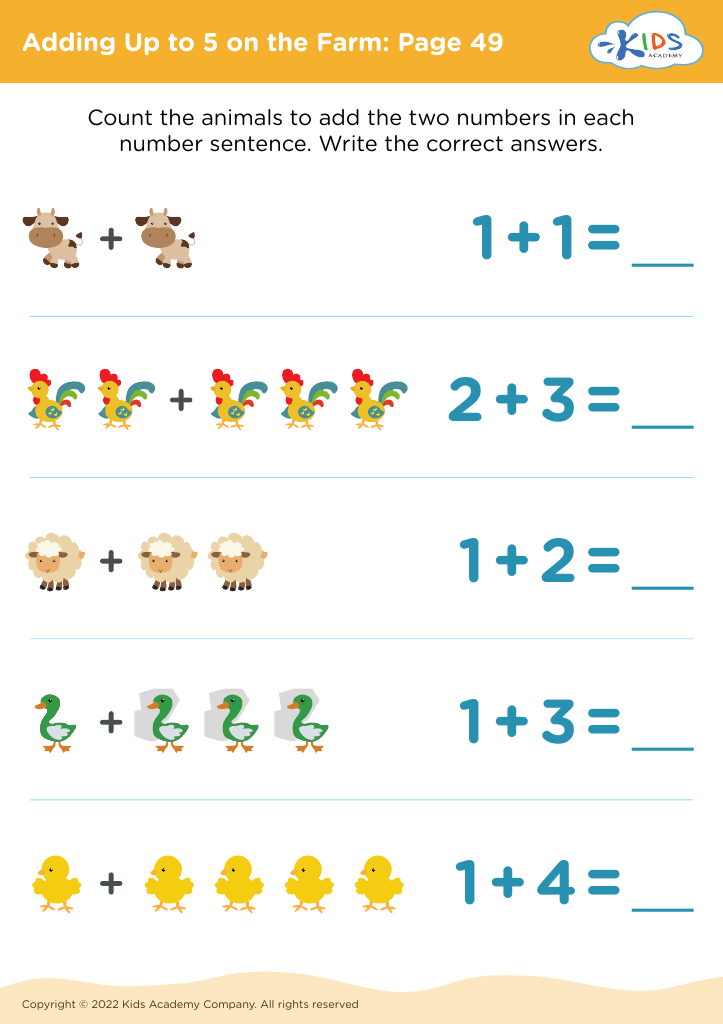
Adding Up to 5 on the Farm: Page 49
Worksheet
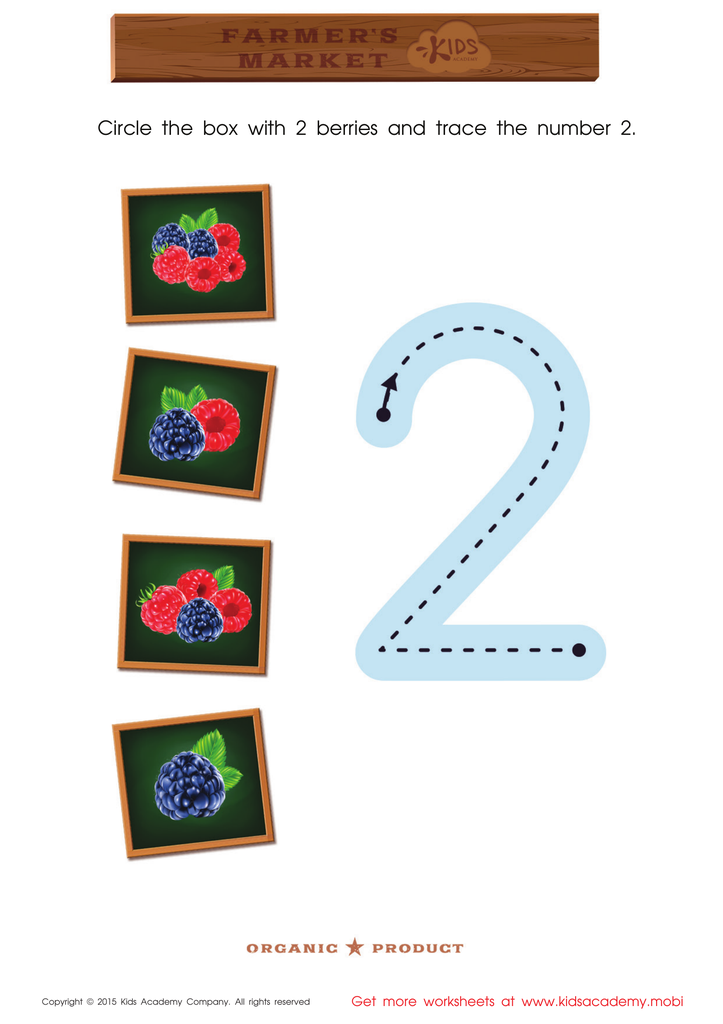
Math Game: Count the Berries and Trace the Number 2

Count the Berries and Trace the Number 2 Printable
This math worksheet by Kids Academy helps kindergartners count and write number 2. Print it out and urge your kid to count the berries in the boxes, then circle the box with 2 of them. As they trace the number 2, they practice hand motions for good handwriting. More skill-building worksheets available.
Count the Berries and Trace the Number 2 Printable
Worksheet
Making 19 with Pizza! Worksheet

Making 19 with Pizza! Worksheet

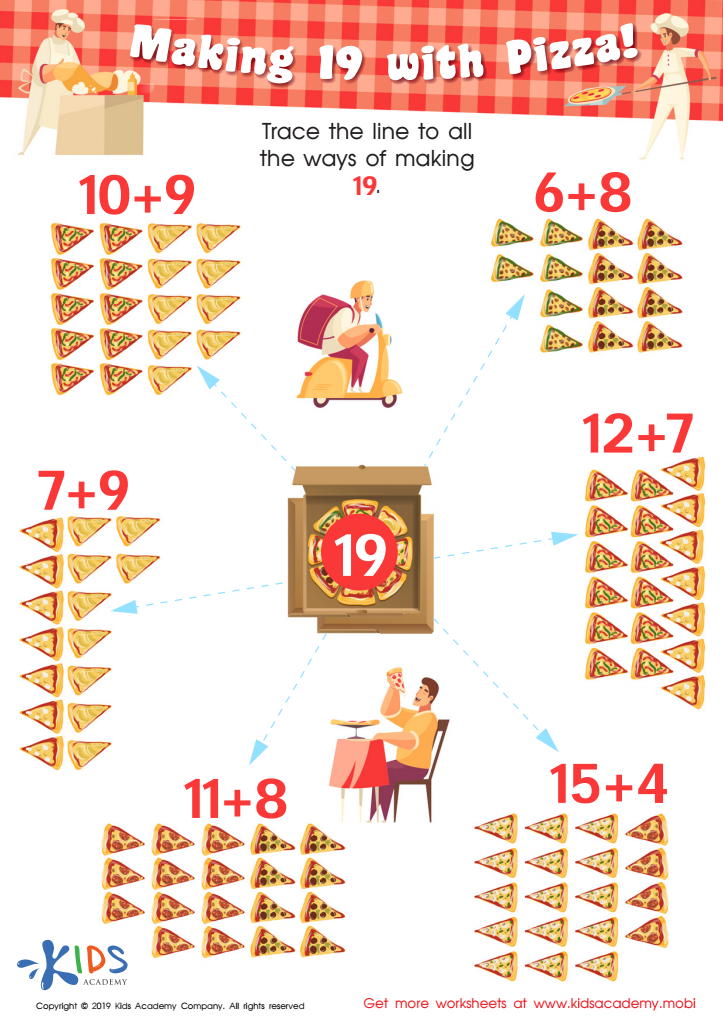
Who loves pizza? Your kids do! Next time you need to teach them math, make it fun by combining it with something they enjoy. This worksheet uses a pizza-themed problem to help them practice solving equations. Have them trace the line to figure out how to make 19. It's a great way to make learning math fun!
Making 19 with Pizza! Worksheet
Worksheet
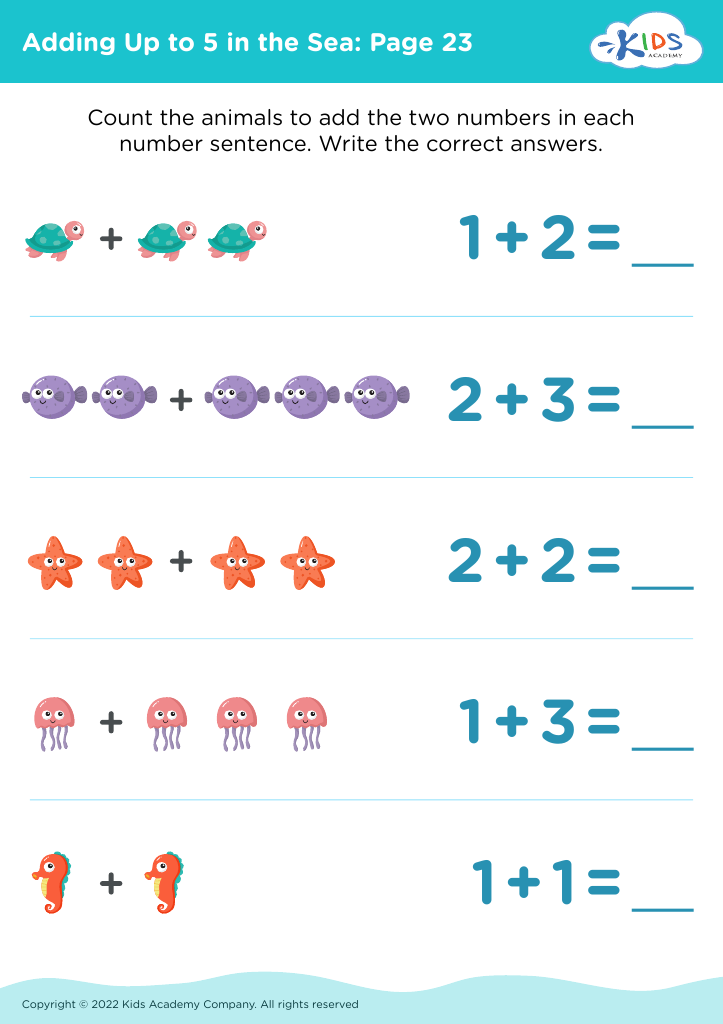
Adding Up to 5 in the Sea: Page 23
Worksheet
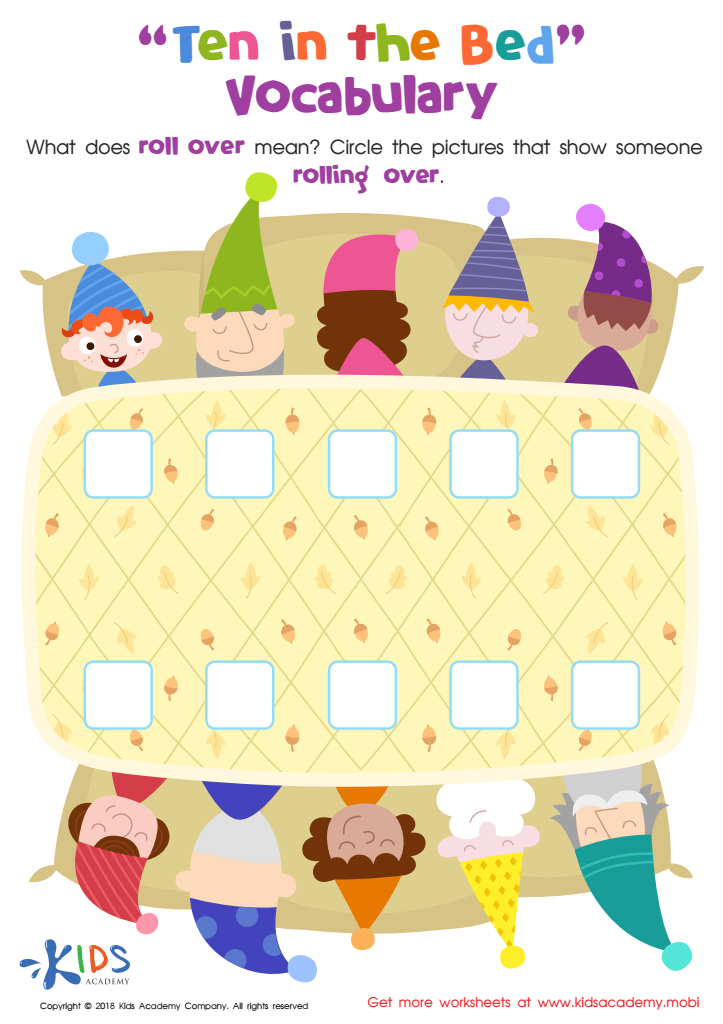
Ten in the Bed: Vocabulary Worksheet

Ten in the Bed: Vocabulary Worksheet

It's essential for emerging readers to be proficient in positional and directional words. This worksheet uses cheerful faces to help students identify who has "rolled over". Knowing these words is an essential part of reading and writing for pre-K and Kindergarteners. It also helps them to follow directions and use precise language.
Ten in the Bed: Vocabulary Worksheet
Worksheet
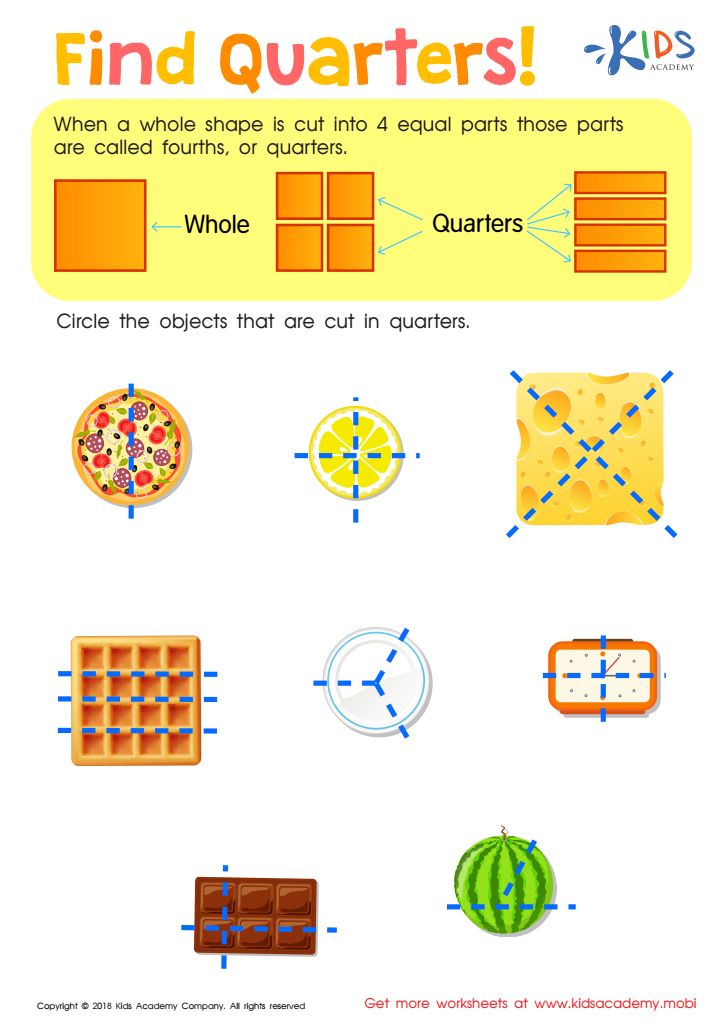
Find Quarters Worksheet

Find Quarters Worksheet

Ask your child if they know what it is called when a shape is cut into two equal parts. If yes, introduce them to quarters. Tell them that when a shape is cut into 4 equal parts, each part is called a quarter. Have them do this exercise by finding and circling objects split into quarters.
Find Quarters Worksheet
Worksheet
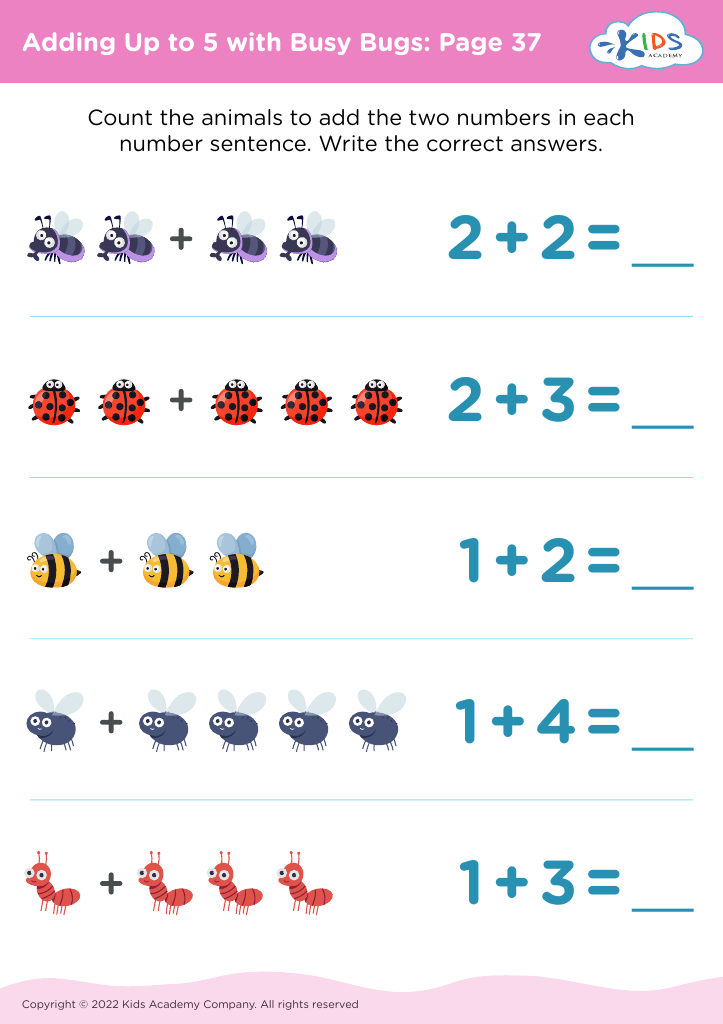
Adding Up to 5 with Busy Bugs: Page 37
Worksheet
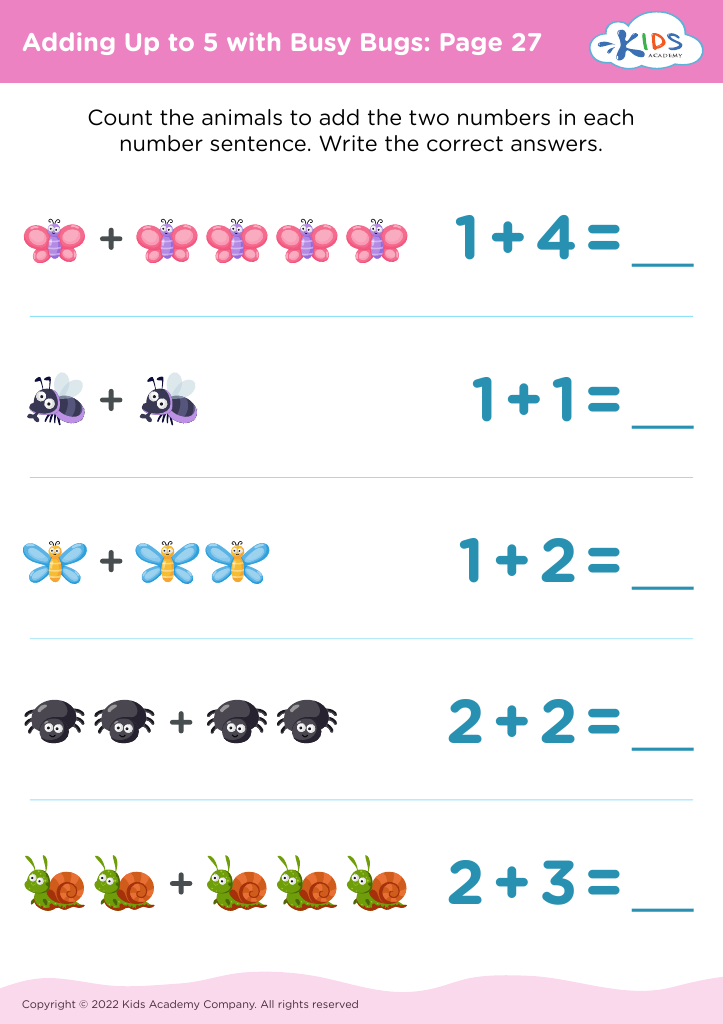
Adding Up to 5 with Busy Bugs: Page 27
Worksheet
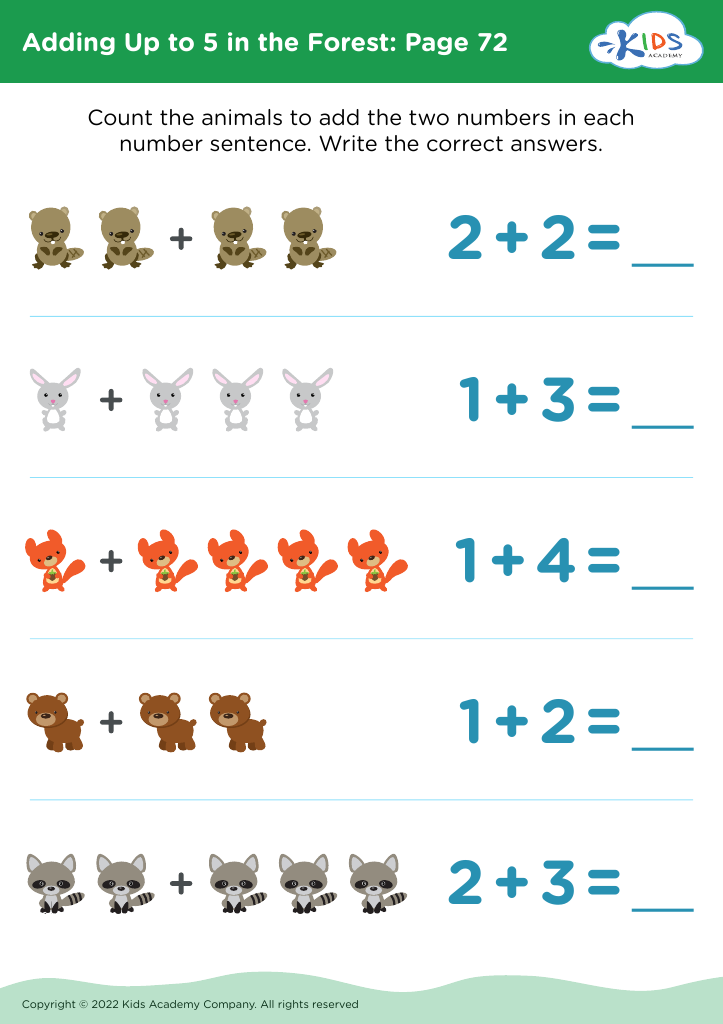
Adding Up to 5 in the Forest: Page 72
Worksheet
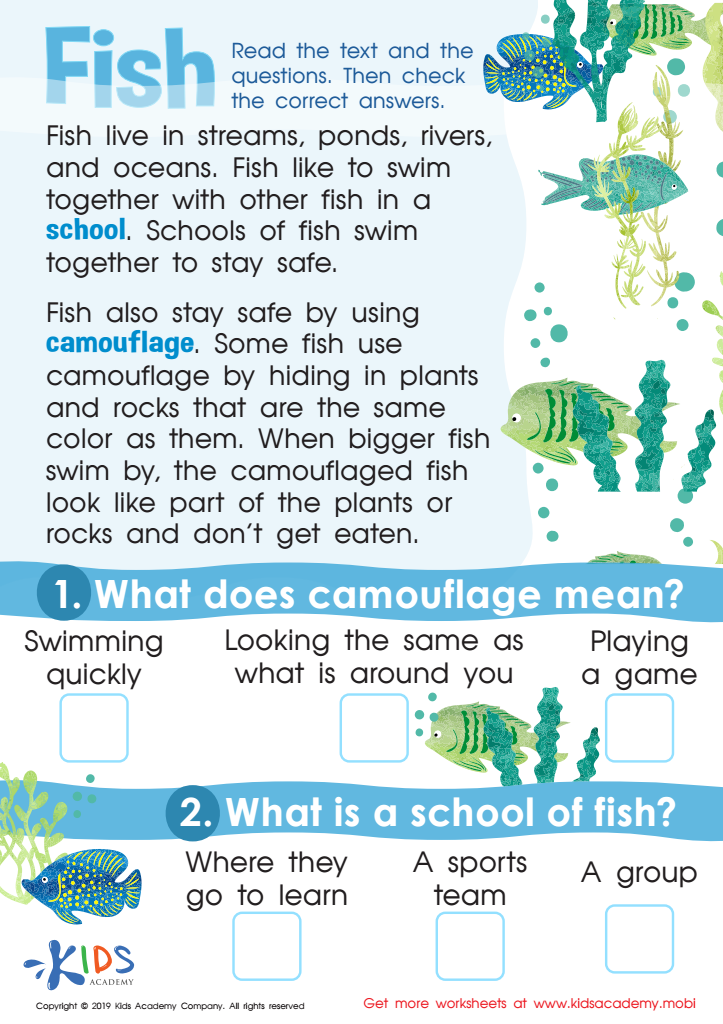
Fish Worksheet
Fish Worksheet

Fish Worksheet

Kids love learning about the creatures that live in water! This free PDF worksheet covers fish, teaching kids larger vocabulary and contextual reading comprehension. Questions prompt them to choose the right answer from multiple choices, just like in a classroom. It's a fun way to boost their reading skills and comprehension without them even realizing it!
Fish Worksheet
Worksheet
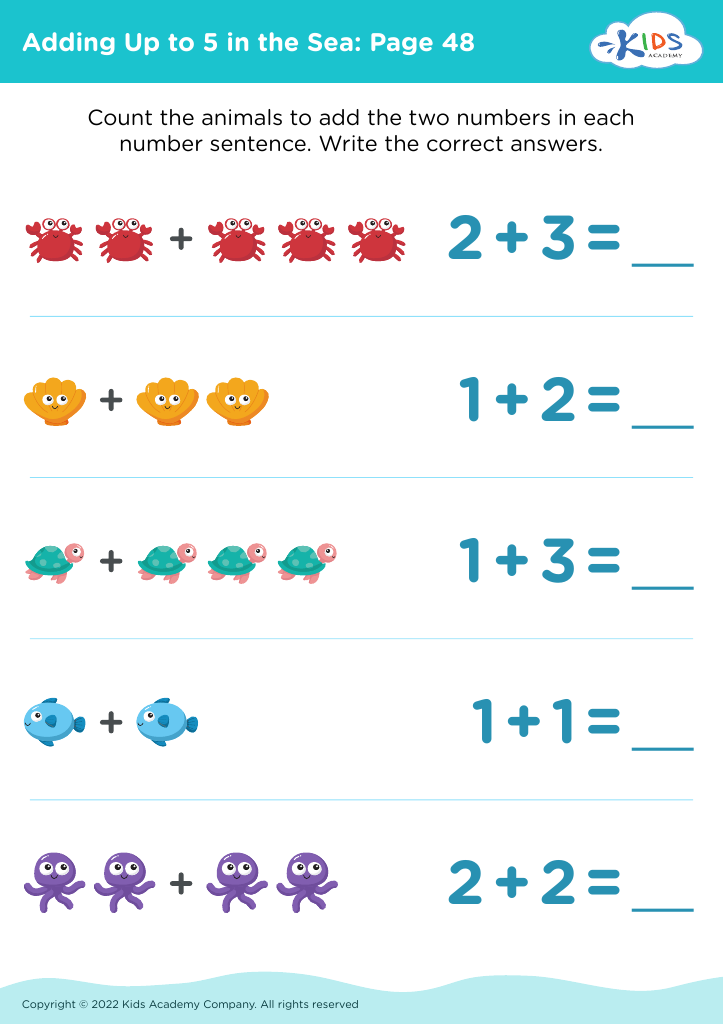
Adding Up to 5 in the Sea: Page 48
Worksheet


Counting practice for ages 5-6 is crucial for a child's early mathematical development and overall cognitive skills. At this stage, young learners are laying the foundation for future math concepts, such as addition and subtraction. Engaging in counting activities helps children develop number sense and an understanding of quantities, which are essential skills for problem-solving.

Furthermore, counting encourages fine motor skills through activities like manipulating objects or using counting tools. It also enhances verbal skills as children learn the names and sequences of numbers. Parents and teachers should care about counting practice because it fosters critical thinking and promotes a positive attitude toward mathematics.

Incorporating counting into daily routines can make learning fun and relatable for young children. Activities like counting steps, snacks, or toys make concepts tangible and accessible. Additionally, counting supports children in developing perseverance as they solve problems and sometimes encounter difficulties, an important life lesson.

Moreover, consistent counting practice builds confidence, paving the way for more complex math skills in the future. By prioritizing counting, adults can ensure that young learners not only achieve foundational math competency but also develop a love for learning that lasts a lifetime.