Filters

109 filtered results

Clear all filters
Favorites
With answer key
Interactive

109 filtered results

Difficulty Level

Grade


Our Cognitive Development Addition & Subtraction Worksheets for Ages 5-6 are designed to enhance your child’s foundational math skills while fostering cognitive growth. These engaging activities are tailored to challenge young minds, improving critical thinking, concentration, and problem-solving abilities. Utilizing vibrant visuals and interactive exercises, each worksheet aids in mastering addition and subtraction concepts, crucial for early math proficiency. Ideal for both classroom and home practice, these worksheets not only boost arithmetic skills but also cultivate a love for learning. Help your child build confidence and cognitive strength by exploring our curated selection of math worksheets today!

Check out this FREE Trial Lesson on Addition & Subtraction for age 5-6!

A

Favorites
With answer key
Interactive
  • 5-6
  • Cognitive Development
  • Addition & Subtraction
Addition worksheet for kindergarten pdf

Addition Worksheet for Kindergarten

Addition Worksheet for Kindergarten
Worksheet
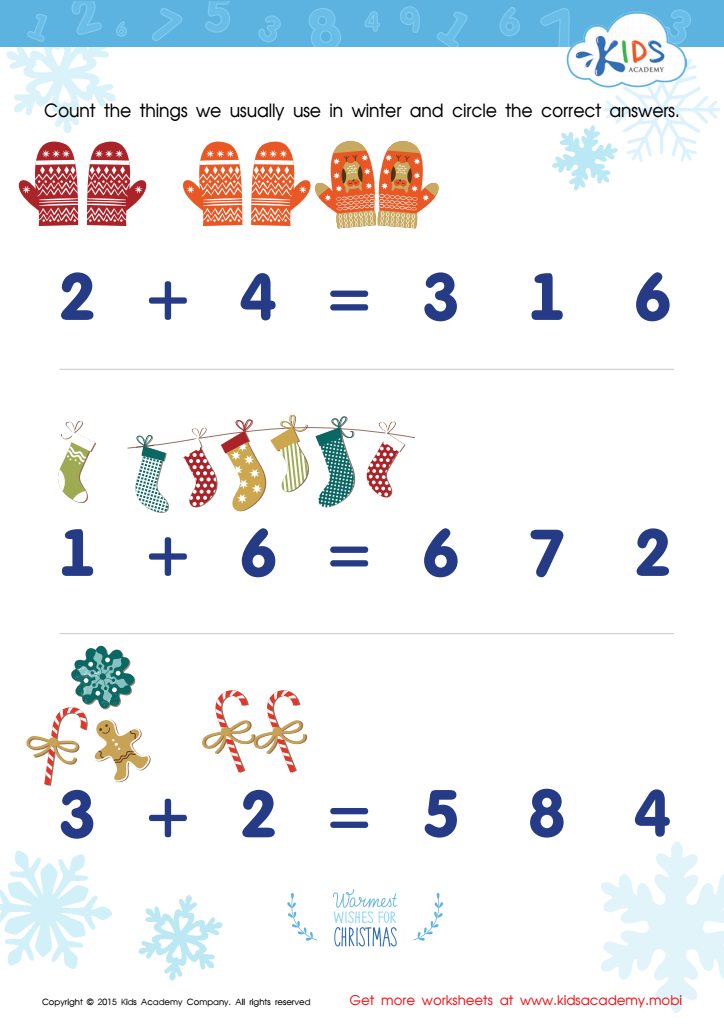
Math PDF Worksheet: Count Winter Things

Count Winter Things Worksheet

This chilly winter afternoon, help your kid warm up with Kids Academy's free math worksheet - full of bright pictures and addition practice. Let them count the things and write in the numbers for a great brain training and math head start. Get more free math worksheets here. (80 words)
Count Winter Things Worksheet
Worksheet
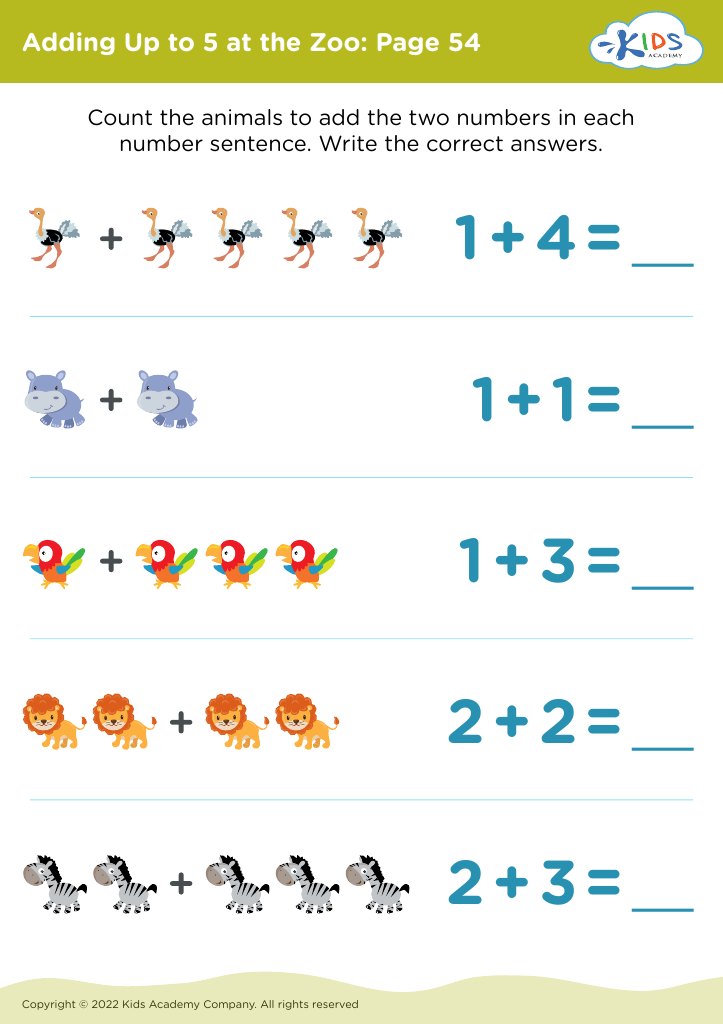
Adding Up to 5 at the Zoo: Page 54
Worksheet
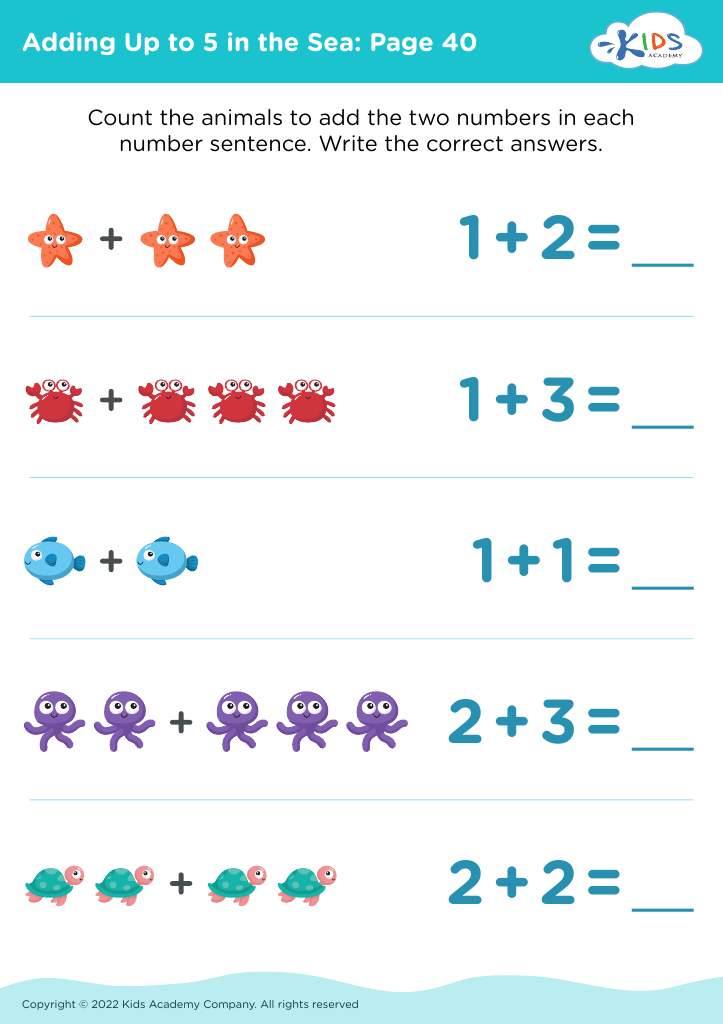
Adding Up to 5 in the Sea: Page 40
Worksheet
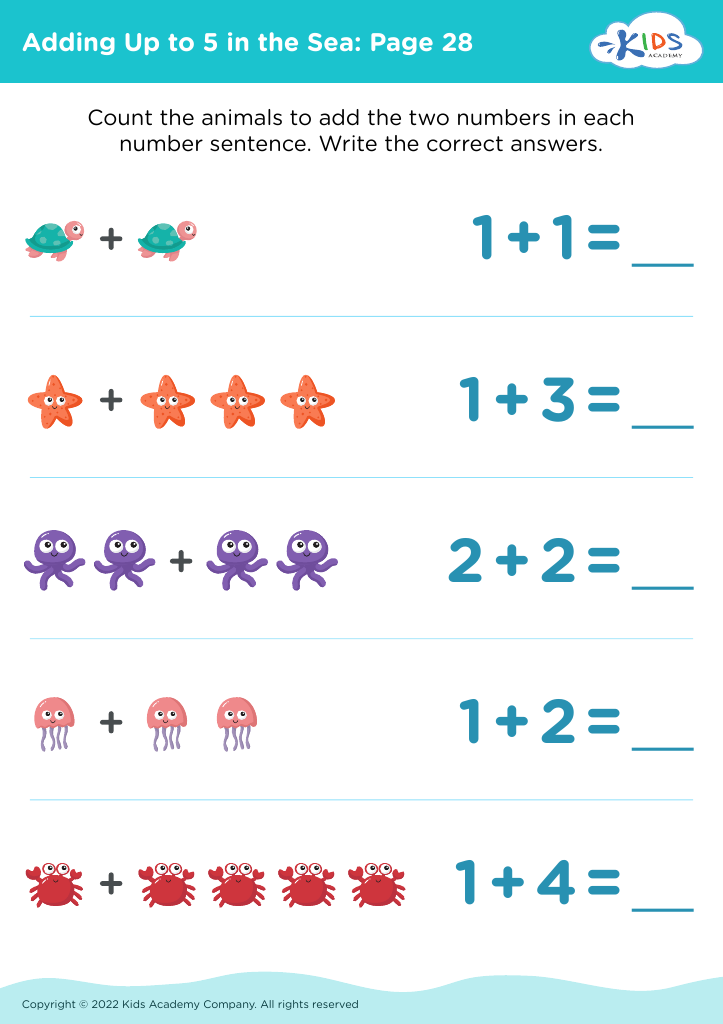
Adding Up to 5 in the Sea: Page 28
Worksheet
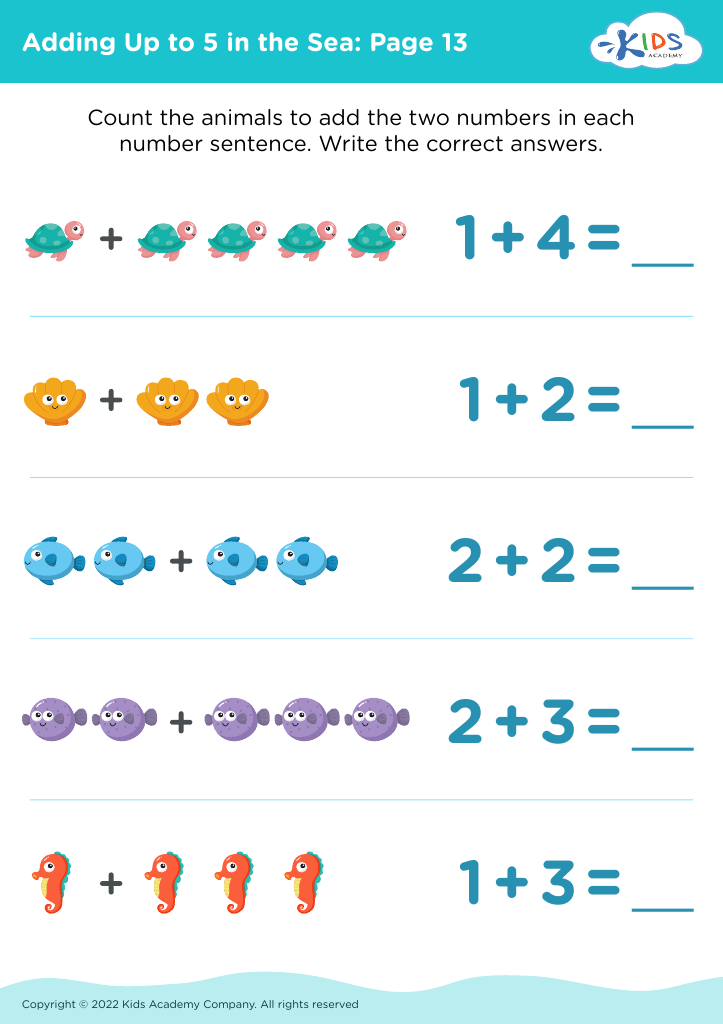
Adding Up to 5 in the Sea: Page 13
Worksheet
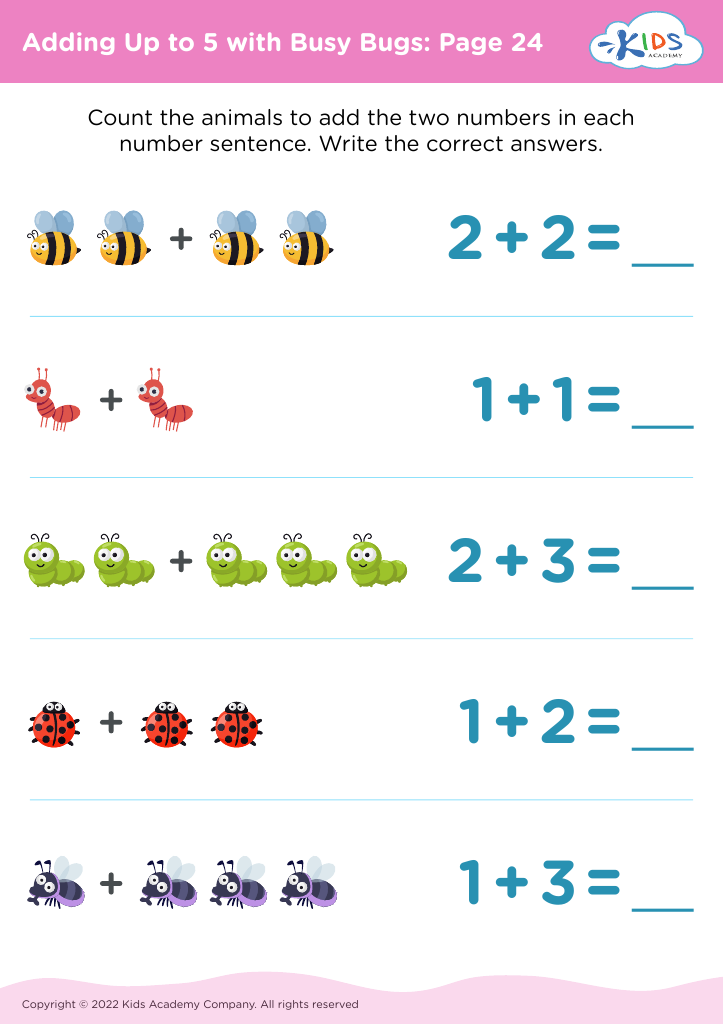
Adding Up to 5 with Busy Bugs: Page 24
Worksheet
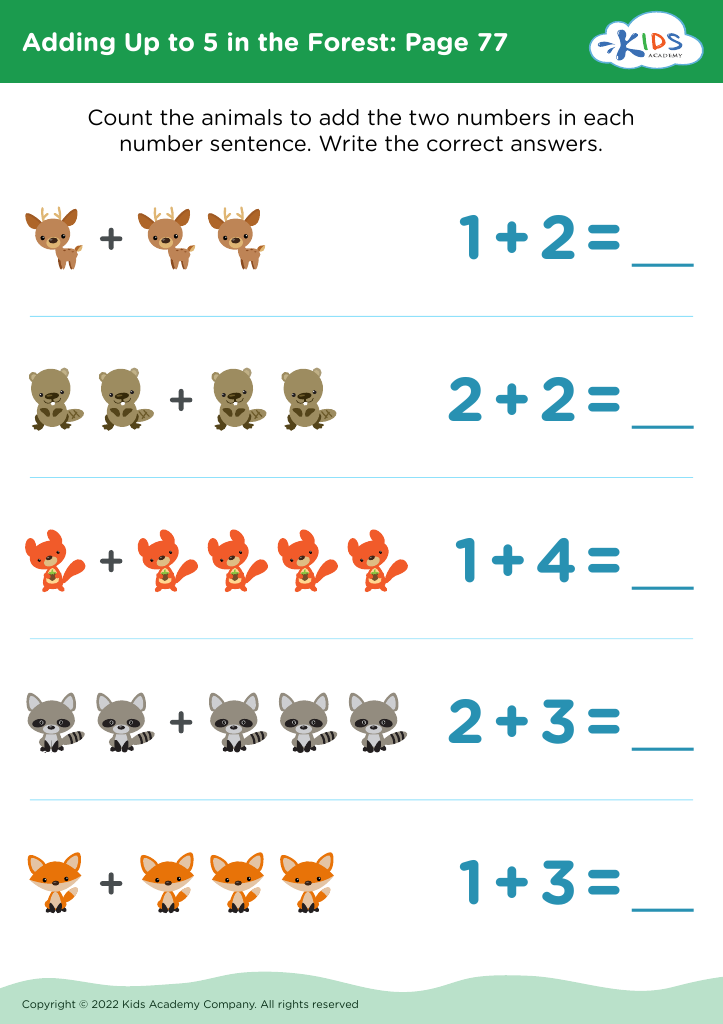
Adding Up to 5 in the Forest: Page 77
Worksheet
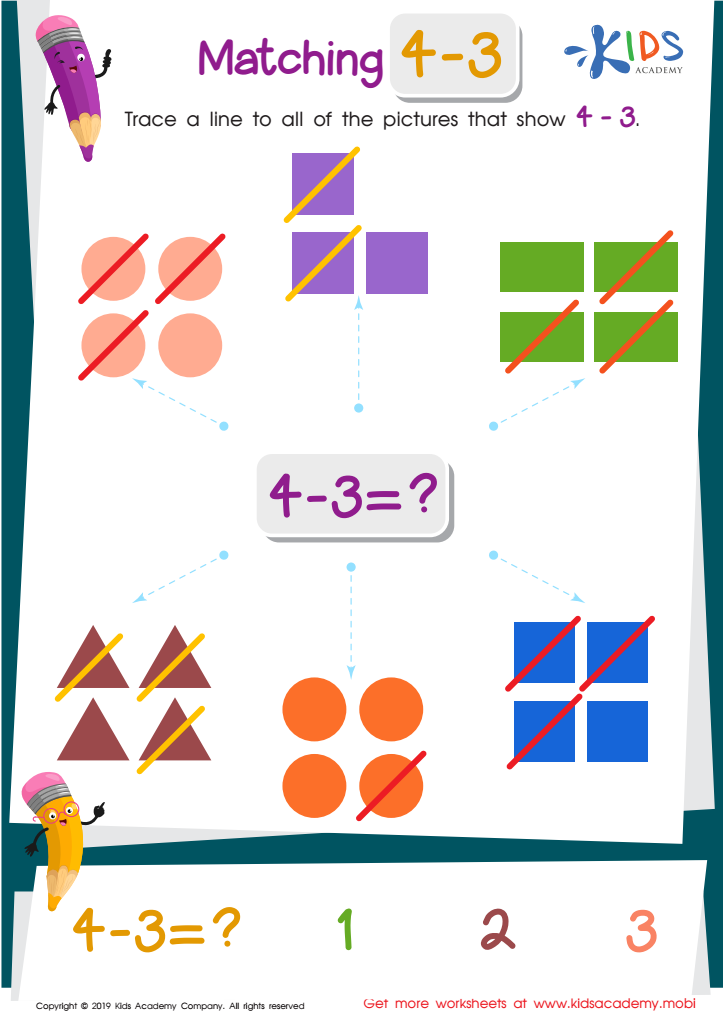
Matching 4 – 3 Worksheet
Matching 4 – 3 Worksheet
Help your kids master basic math concepts like addition and subtraction with fun exercises. Test their understanding with simple problems. For example, in this worksheet, ask them to count the objects in each picture and draw a line to the pictures that show 4 - 3 = 1. This will help them get better at solving equations.
Matching 4 – 3 Worksheet
Worksheet
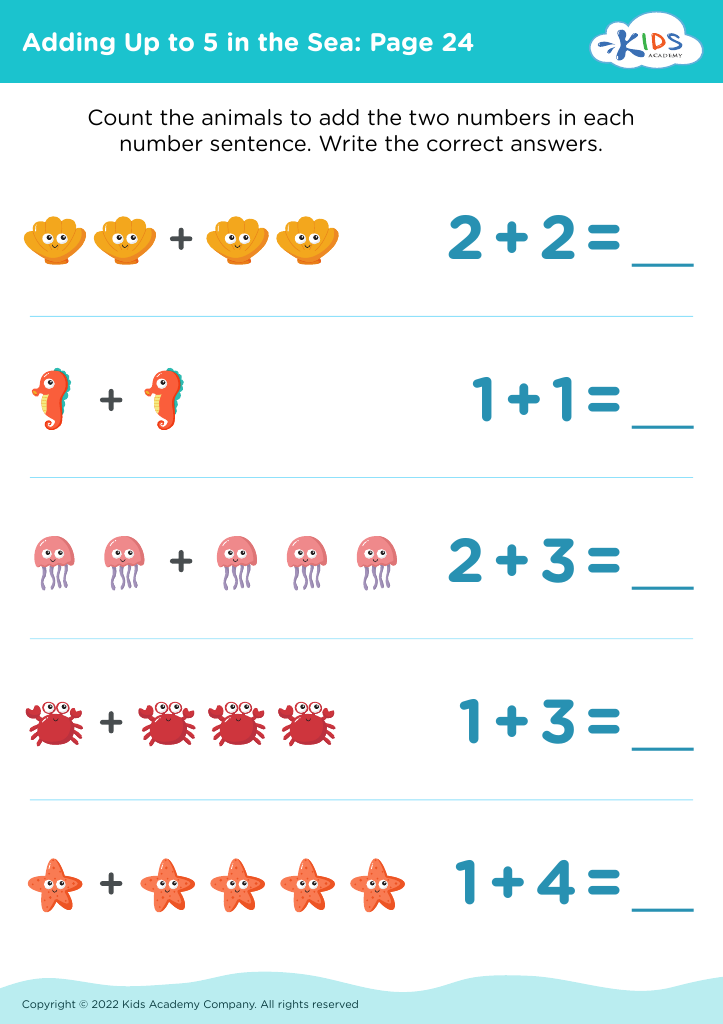
Adding Up to 5 in the Sea: Page 24
Worksheet
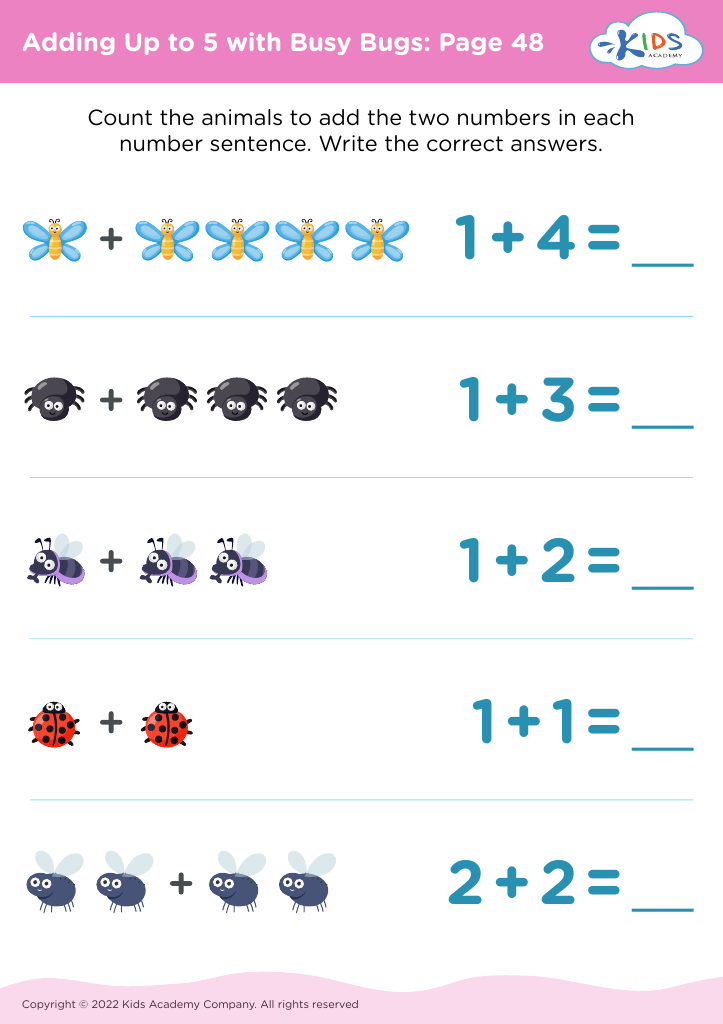
Adding Up to 5 with Busy Bugs: Page 48
Worksheet
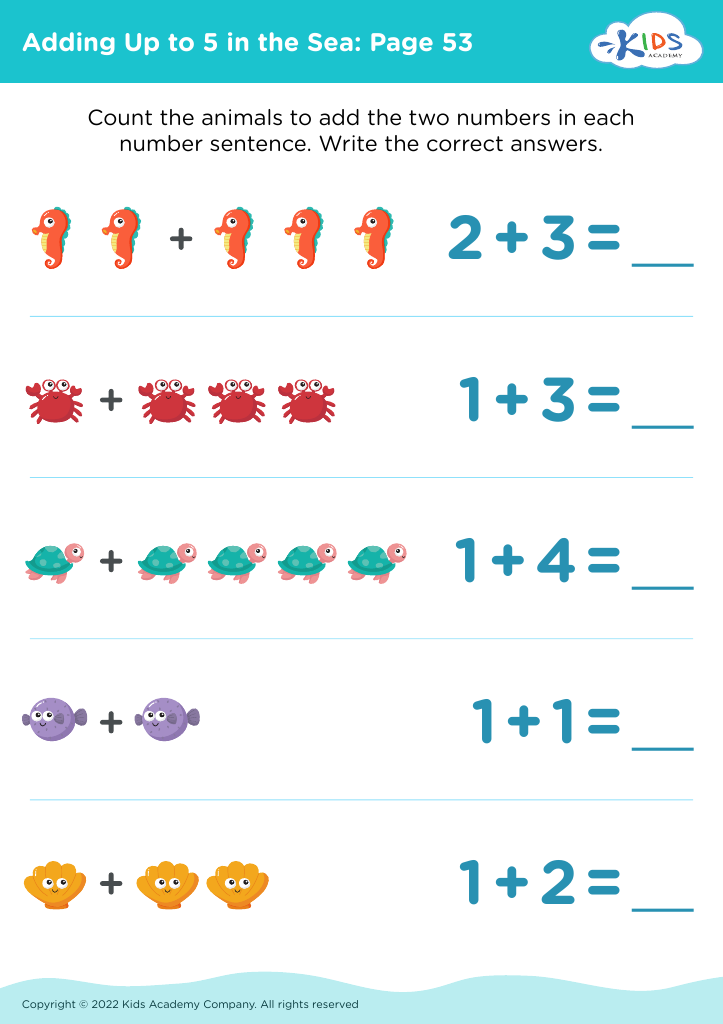
Adding Up to 5 in the Sea: Page 53
Worksheet
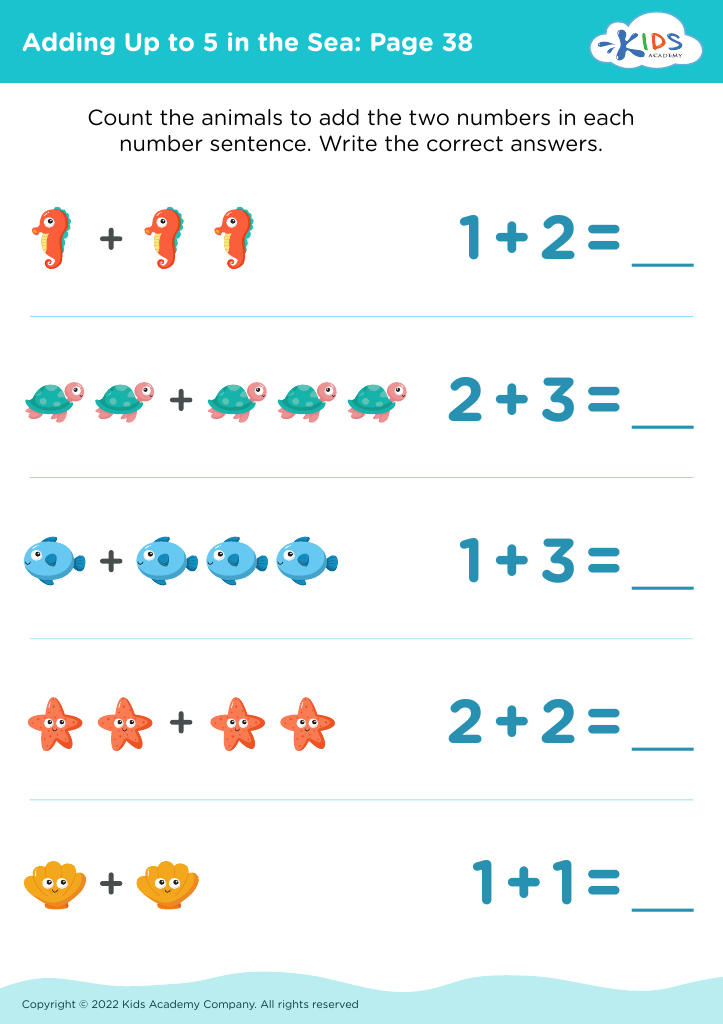
Adding Up to 5 in the Sea: Page 38
Worksheet
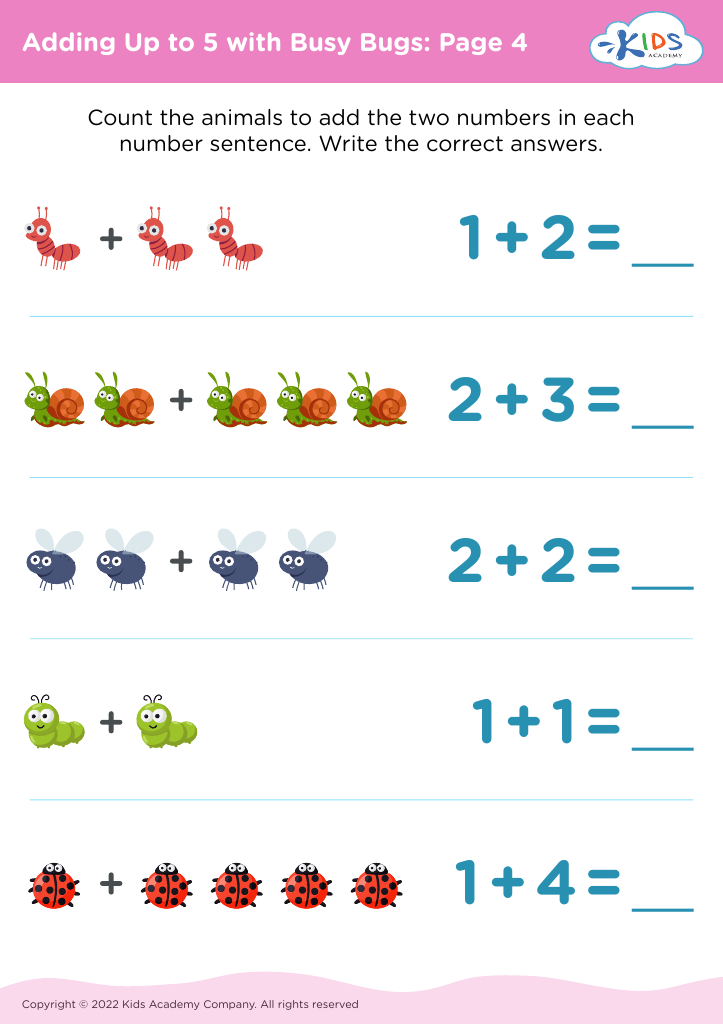
Adding Up to 5 with Busy Bugs: Page 4
Worksheet
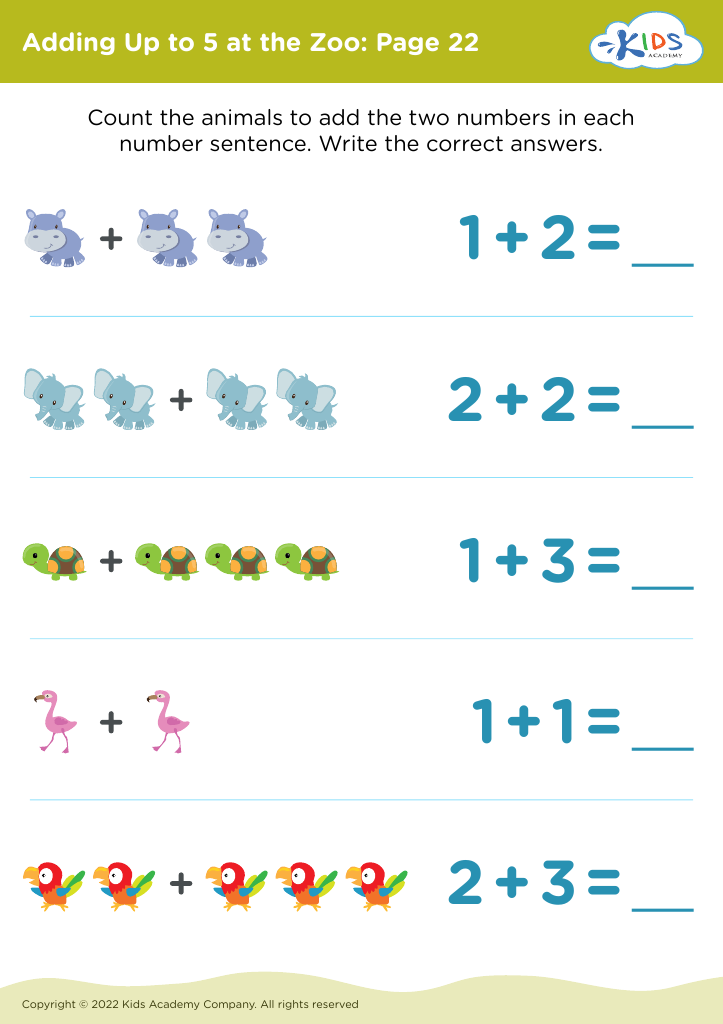
Adding Up to 5 at the Zoo: Page 22
Worksheet
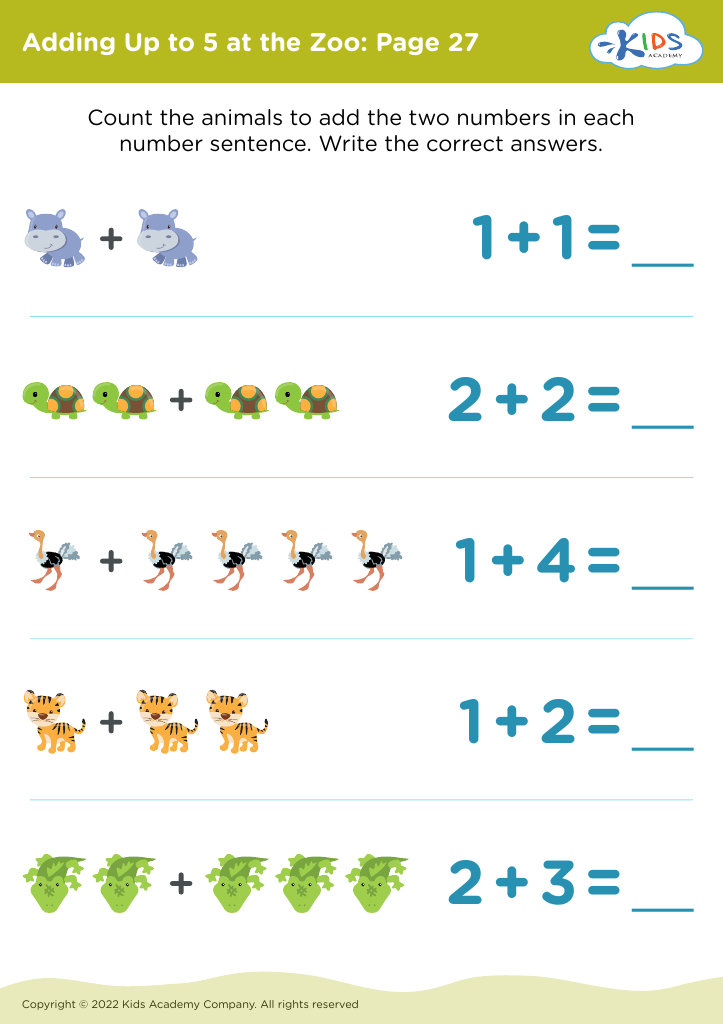
Adding Up to 5 at the Zoo: Page 27
Worksheet
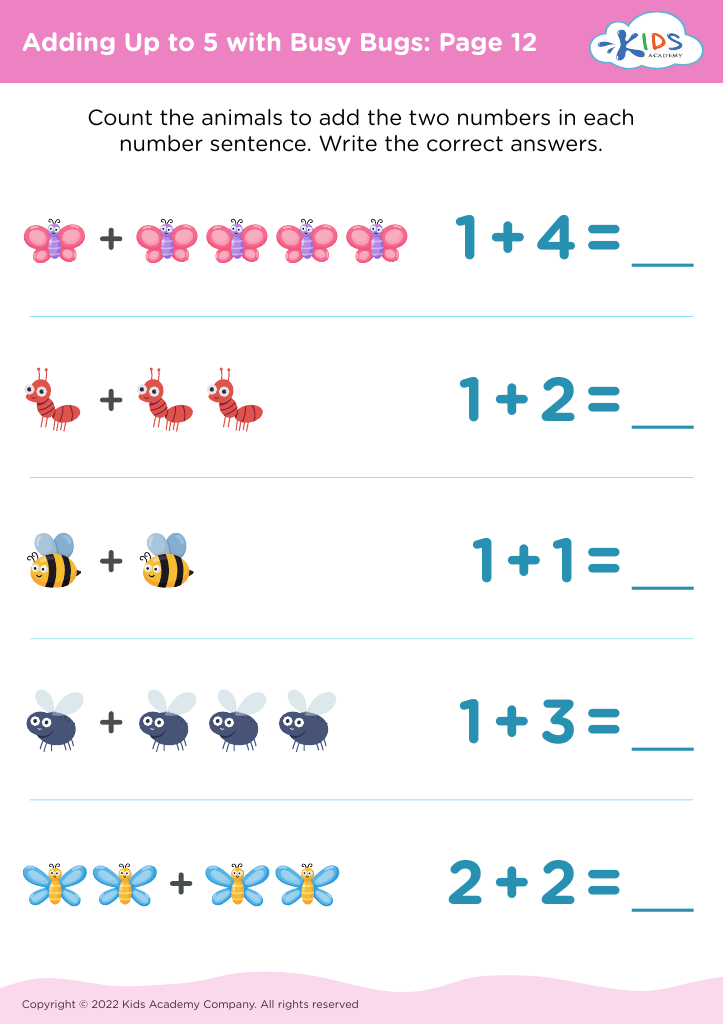
Adding Up to 5 with Busy Bugs: Page 12
Worksheet
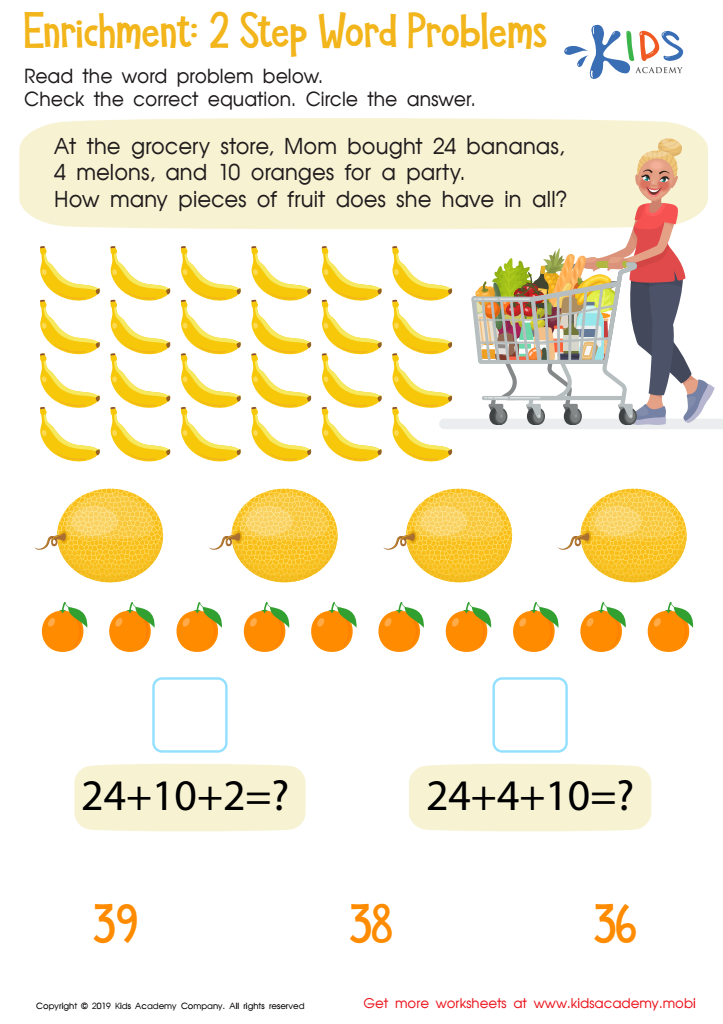
Enrichment -2 Step Word Problems Worksheet
Enrichment -2 Step Word Problems Worksheet
Help your students learn math easier and faster with this colorful worksheet. Read the word problem and then guide them in checking the correct equation and finding the answer. Your students will benefit from the extra help, as they work through new concepts each day.
Enrichment -2 Step Word Problems Worksheet
Worksheet
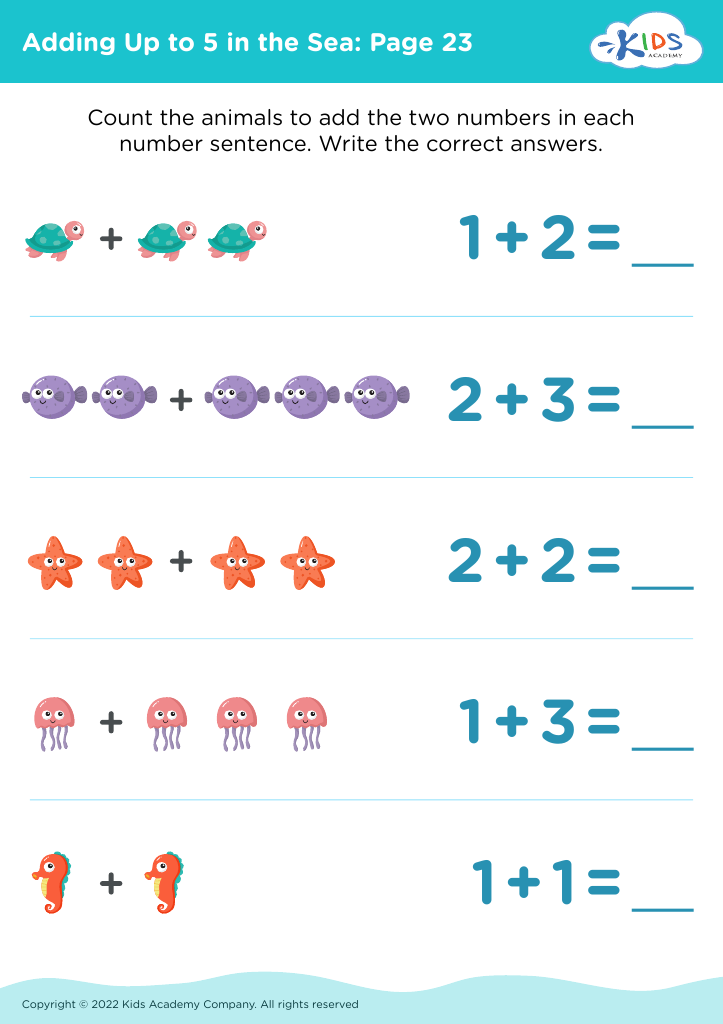
Adding Up to 5 in the Sea: Page 23
Worksheet
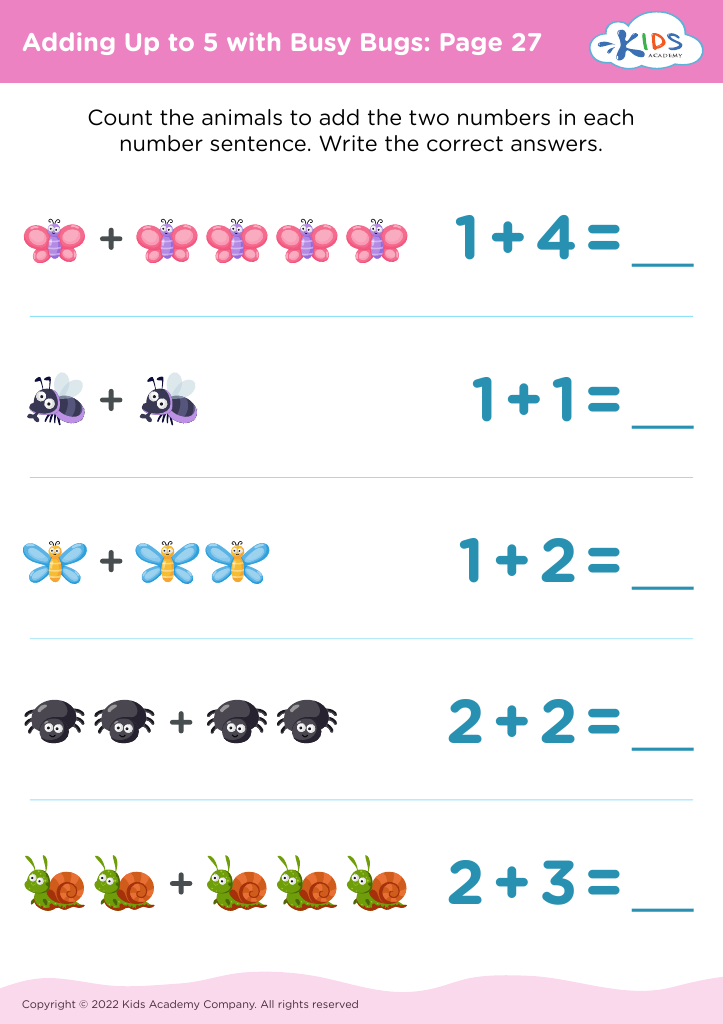
Adding Up to 5 with Busy Bugs: Page 27
Worksheet
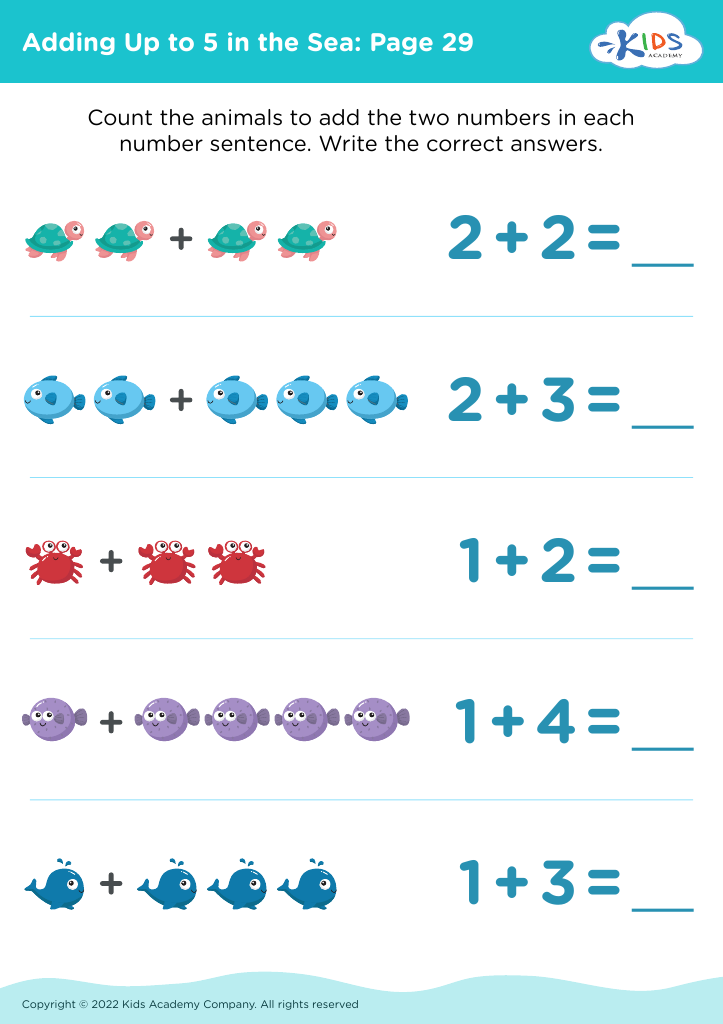
Adding Up to 5 in the Sea: Page 29
Worksheet
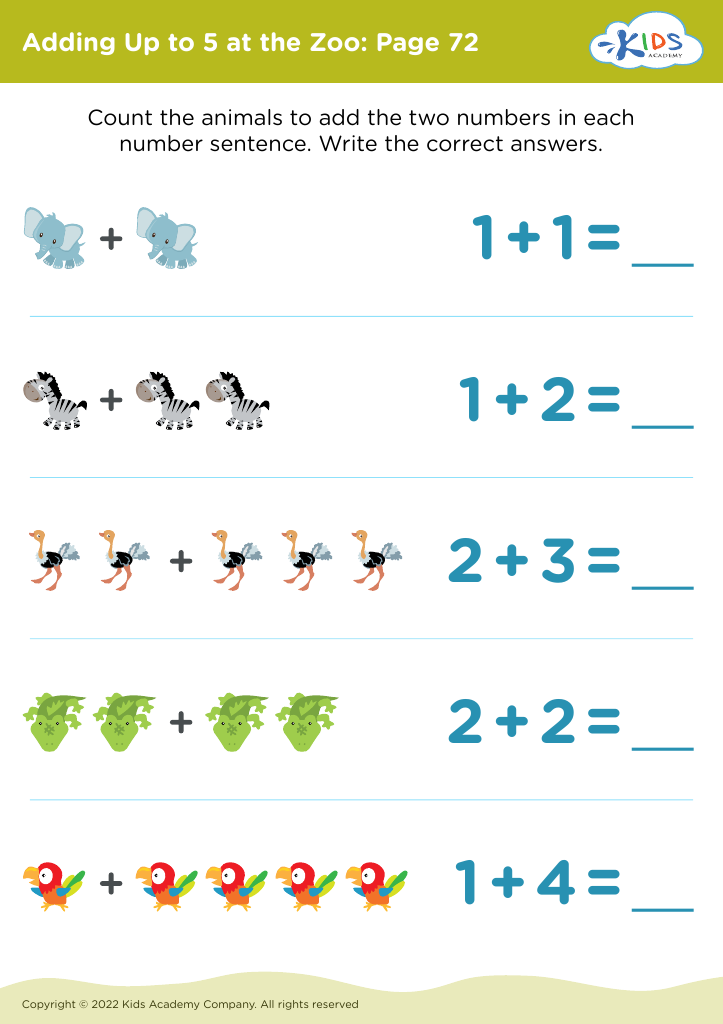
Adding Up to 5 at the Zoo: Page 72
Worksheet
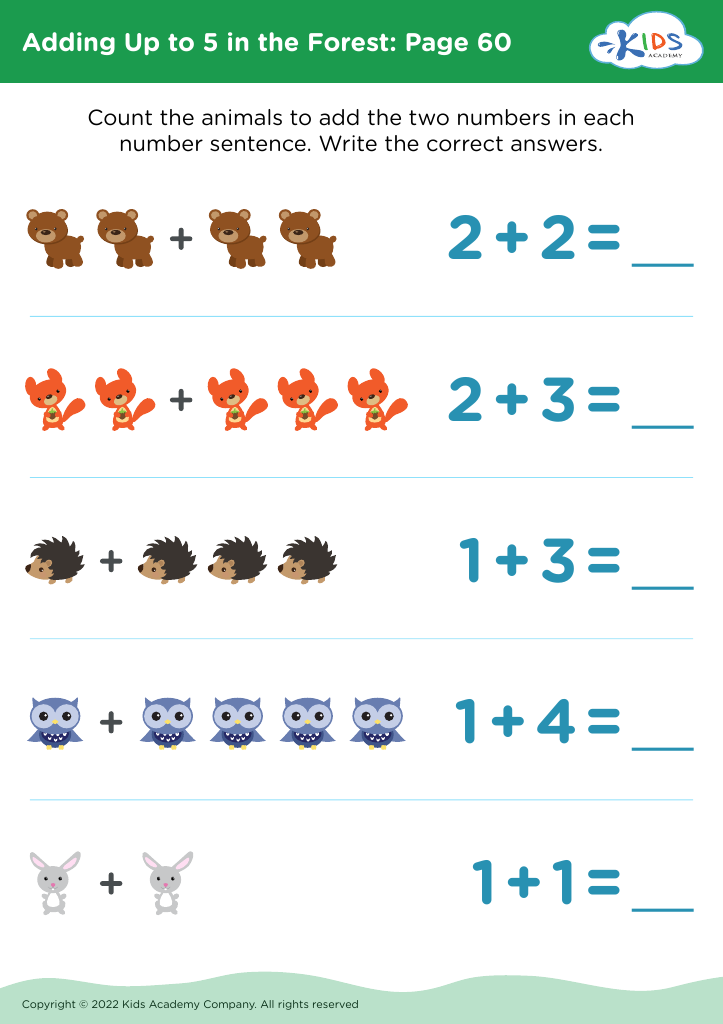
Adding Up to 5 in the Forest: Page 60
Worksheet
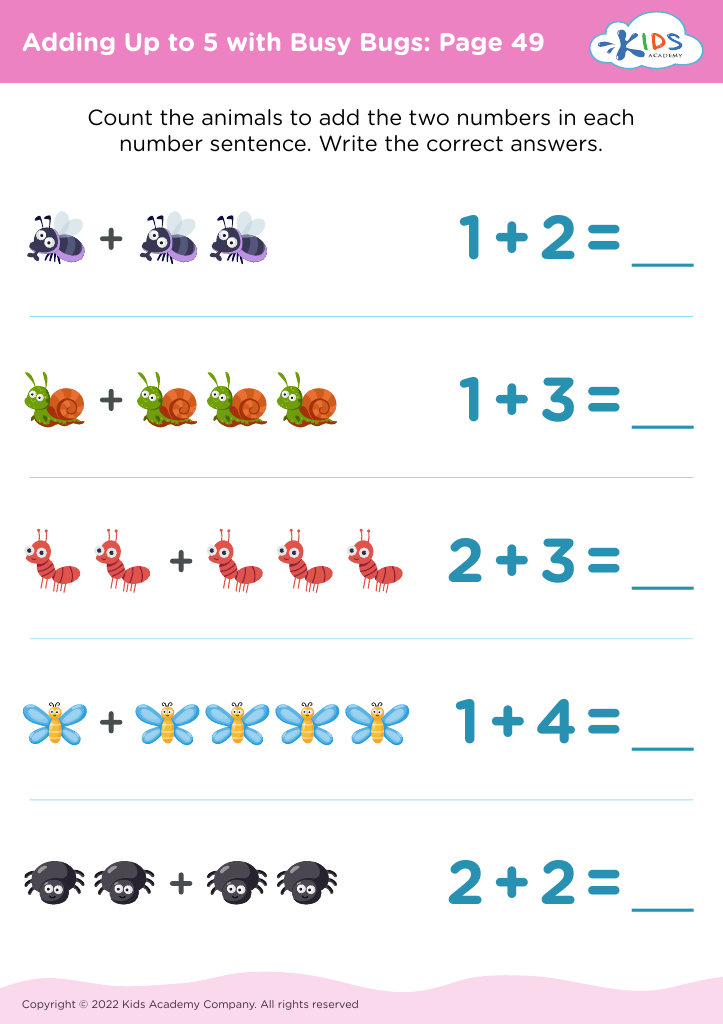
Adding Up to 5 with Busy Bugs: Page 49
Worksheet


Cognitive development in children aged 5-6 is crucial for laying the foundation of important learning skills, especially in math concepts like addition and subtraction. At this early age, children are not just memorizing basic arithmetic but are building critical thinking, problem-solving skills, and an understanding of numerical relationships. Exposure to addition and subtraction helps stimulate their mental processes, encouraging brain development that impacts overall learning and intelligence.

When parents and teachers invest time in helping children understand these fundamentals, they are aiding in the child's ability tonavigate more complex mathematical concepts in the future. Early competence in math has been linked to better academic performance, so when children grasp addition and subtraction early, they face fewer challenges with math as they advance in their schooling.

Moreover, engaging in addition and subtraction strengthens a child’s working memory and concentration skills. These exercises require children to think logically and hold multiple pieces of information in their mind simultaneously, which supports other areas of learning, including reading and science.

Ultimately, caring about cognitive development through math activities ensures children can develop confidence and enthusiasm for learning, supplying them with the tools needed for academic success and daily problem-solving in the real world. Investing in these early years sets a positive trajectory for lifelong learning and achievement.