Comparing Fractions Addition & Subtraction Worksheets for Ages 5-6
4 filtered results
-
From - To
Discover our engaging "Comparing Fractions Addition & Subtraction Worksheets" tailored for children aged 5-6. These printable worksheets are designed to enhance young learners' understanding of fractions through fun and interactive exercises. Children will practice adding and subtracting fractions while comparing their values using visual aids, helping them grasp key concepts in a playful way. Our user-friendly layout encourages independent learning and boosts confidence in math skills. Ideal for homeschooling or supplemental classroom activities, these worksheets provide educators and parents with valuable resources to support early numeracy. Unlock your child’s potential in math today with our delightful fraction worksheets!
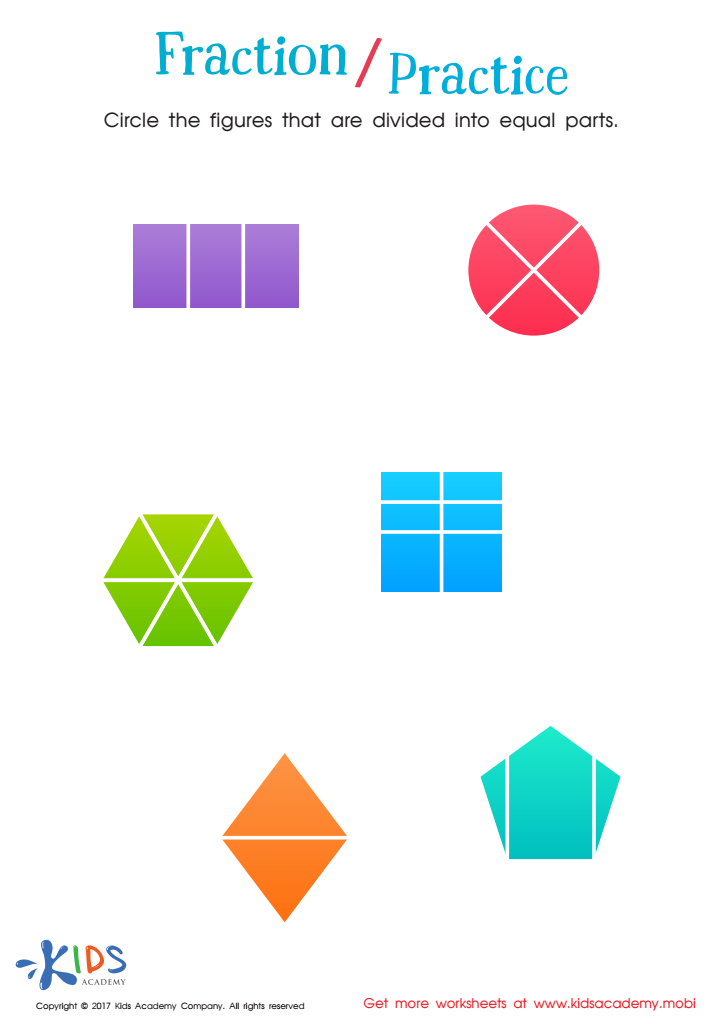
Fractions: Shapes Worksheet
 Assign to My Students
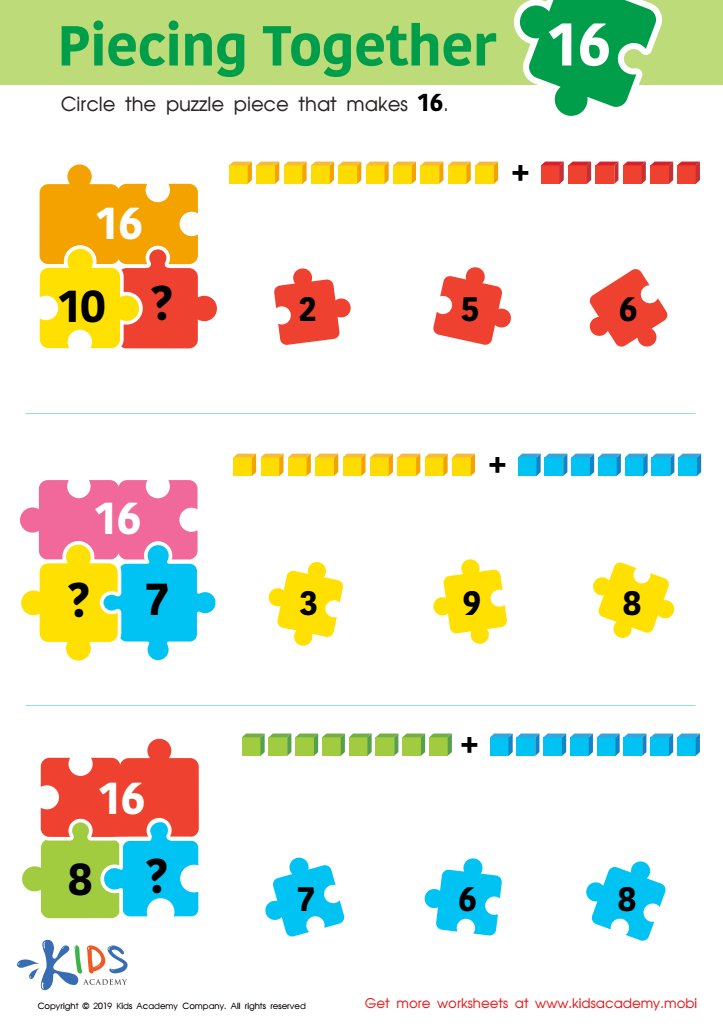
Piecing Together 16 Worksheet
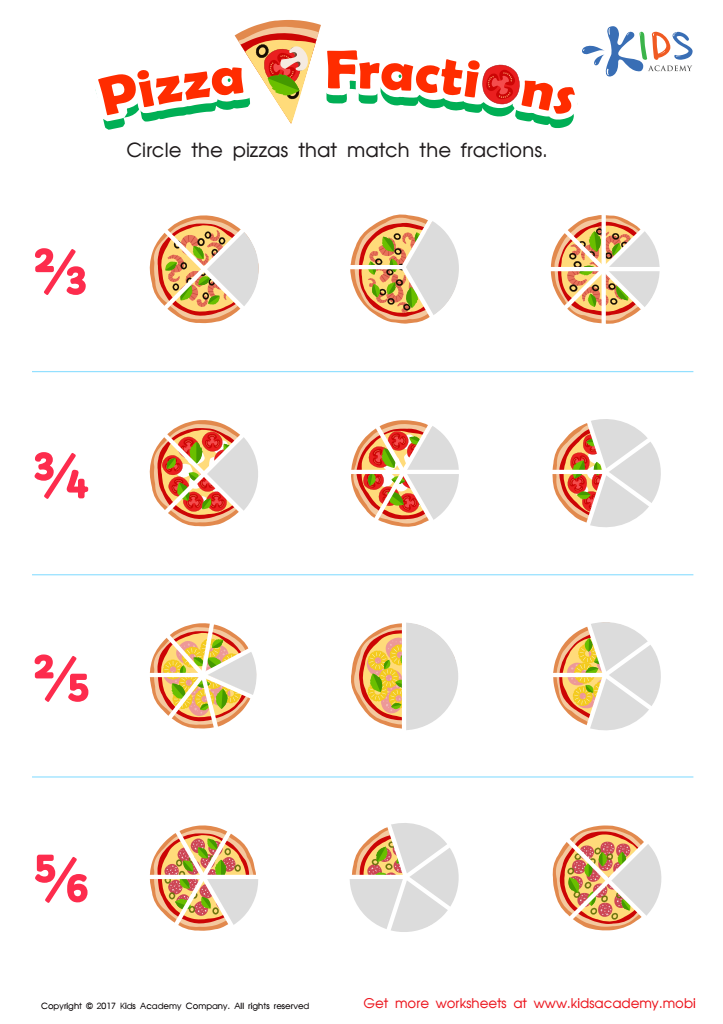
Fractions: Pizza Printable
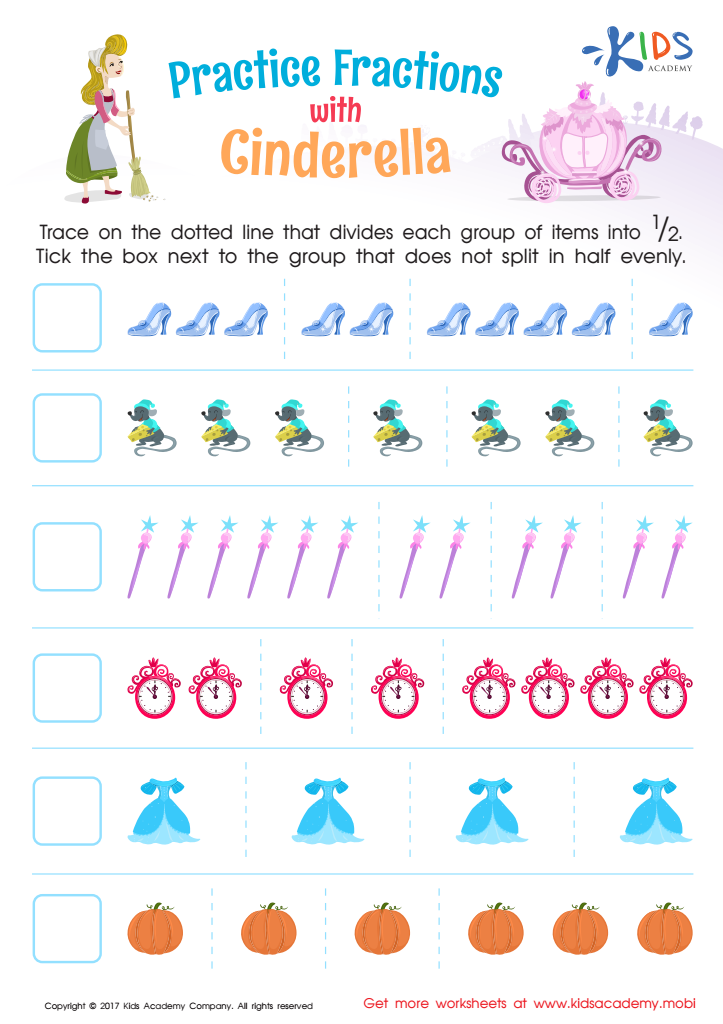
Fractions: Cinderella Printable








Parents and teachers play a crucial role in fostering foundational math skills in children aged 5-6, particularly when it comes to comparing fractions and addition and subtraction. Understanding fractions lays the groundwork for various mathematical concepts, enhancing children's number sense and problem-solving abilities. At this age, children are naturally curious and eager to explore, making it an ideal time to introduce these concepts through engaging activities and play.
Learning to compare fractions teaches children about relationships between numbers. It helps them develop reasoning skills, as they learn to determine which fractions are larger or smaller and understand how parts relate to a whole. Adding and subtracting fractions fosters early mathematical thinking; these operations highlight the importance of teamwork in problem-solving. Additionally, such skills are essential for everyday situations, like sharing food or dividing resources, equipping children with practical life skills.
By incorporating fraction comparisons, addition, and subtraction into learning, parents and teachers can encourage critical thinking, enhance cognitive development, and instill a positive attitude toward math. Celebrating these small victories builds confidence and prepares children for more advanced math concepts in the future, making it an impactful goal for early education.








