Math problem-solving Addition & Subtraction Worksheets for Ages 5-6
10 filtered results
-
From - To
Unlock your child's potential with our Math Problem-Solving Addition & Subtraction Worksheets for ages 5-6. Designed to develop essential arithmetic skills, these engaging worksheets help young learners understand and practice basic addition and subtraction. Brightly illustrated and thoughtfully structured, each worksheet offers a fun, interactive way to enhance problem-solving abilities. Perfect for both classroom and at-home learning, our worksheets make math enjoyable and approachable, laying a strong foundation for future success. Boost your child's confidence and skill with Kids Academy’s expertly crafted worksheets designed specifically for young math enthusiasts.
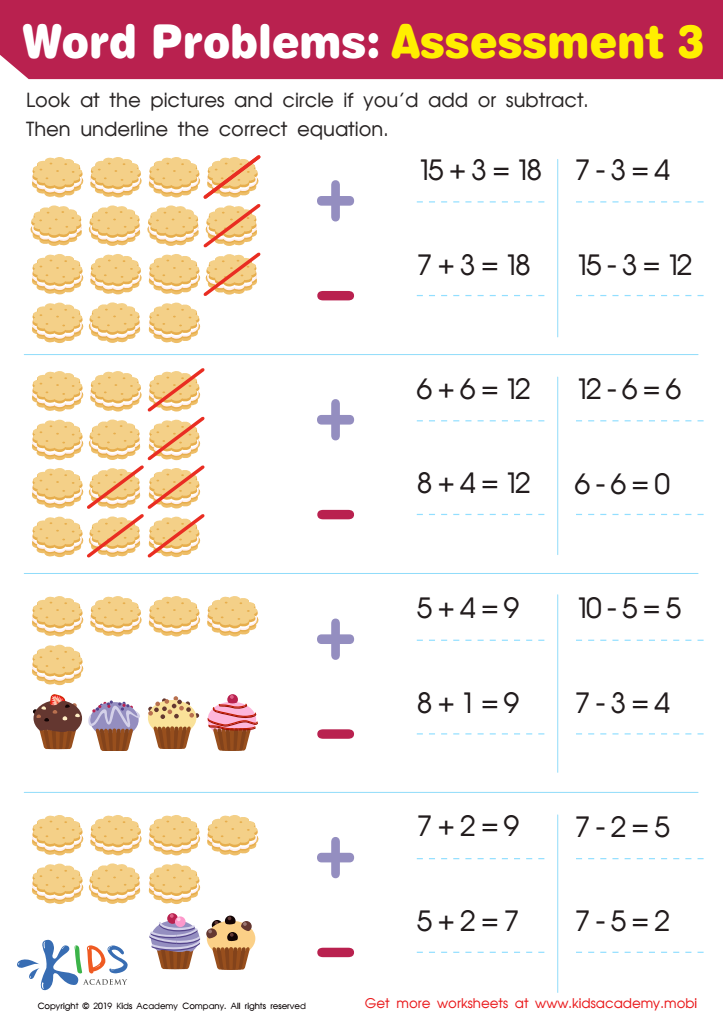
Word Problems: Assessment 3 Worksheet
 Assign to My Students
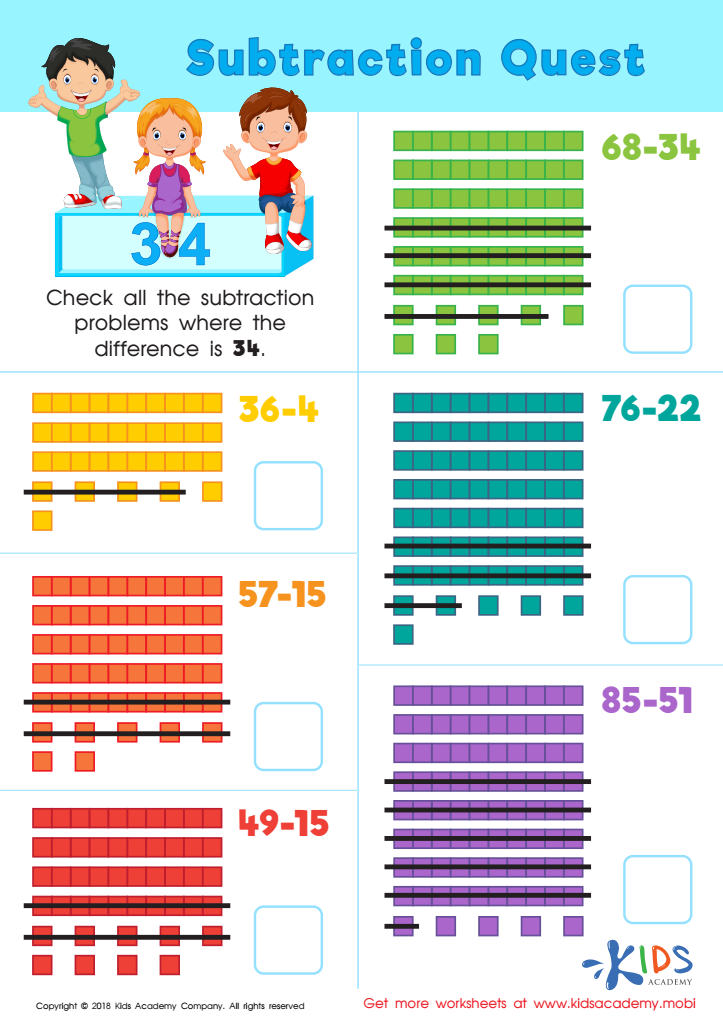
Subtraction Quest Worksheet
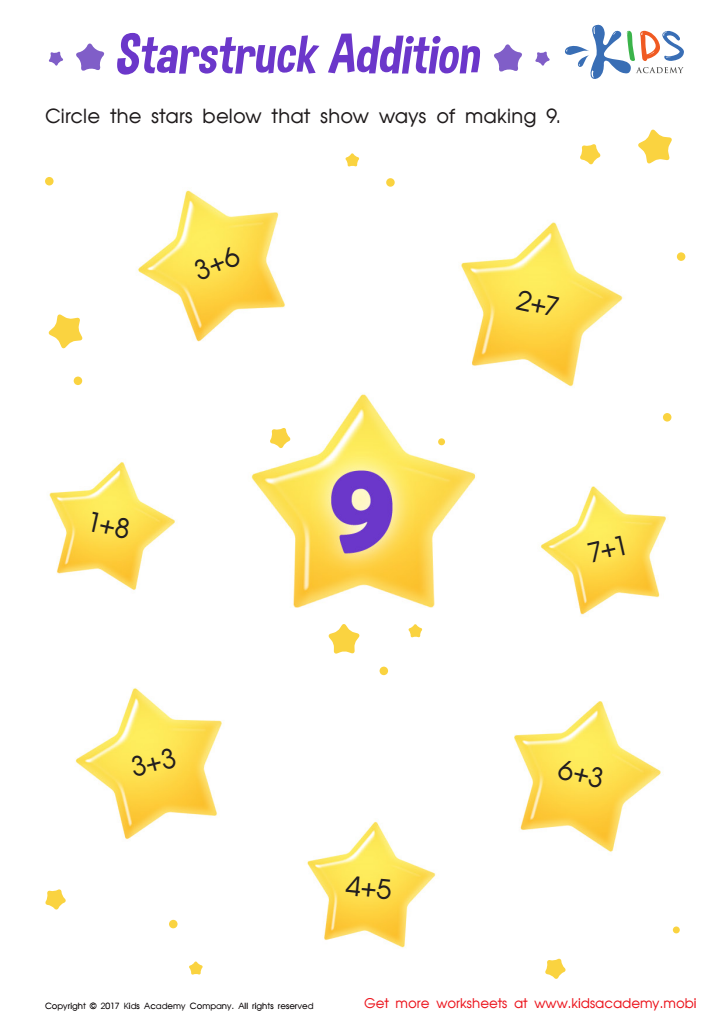
Starstruck Addition Printable
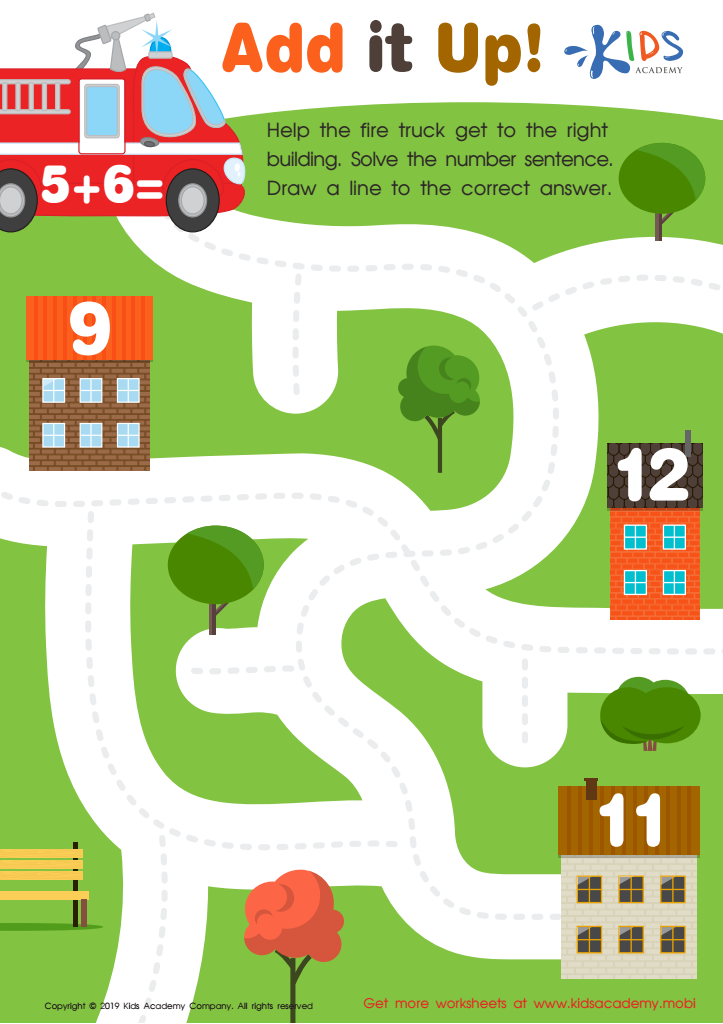
Add it Up Worksheet
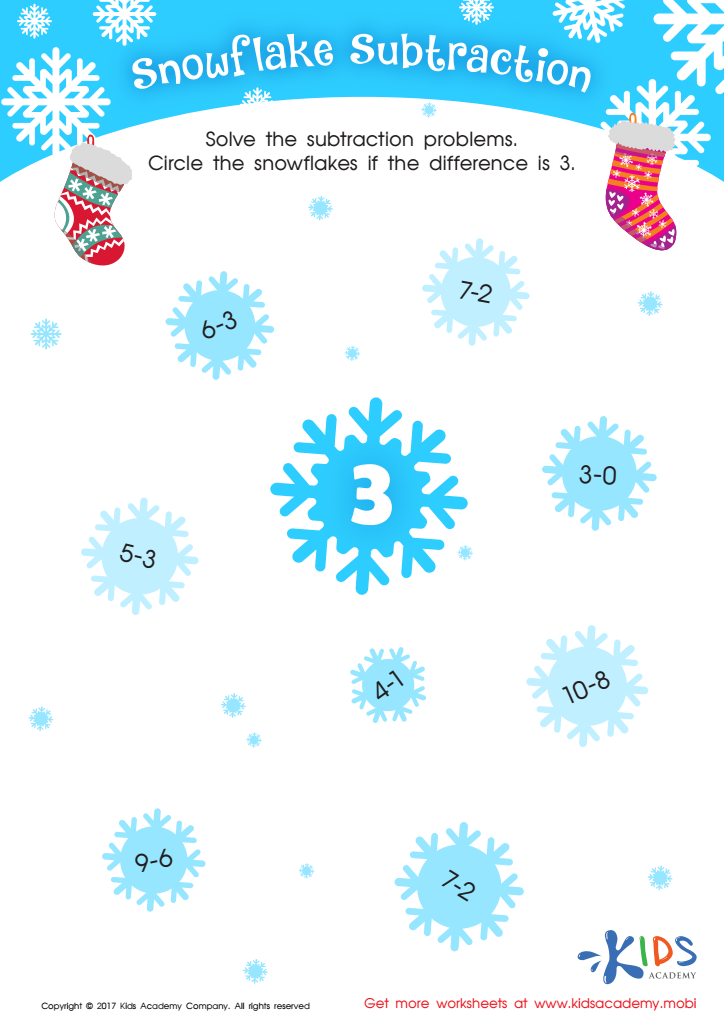
Snowflake Subtraction Worksheet
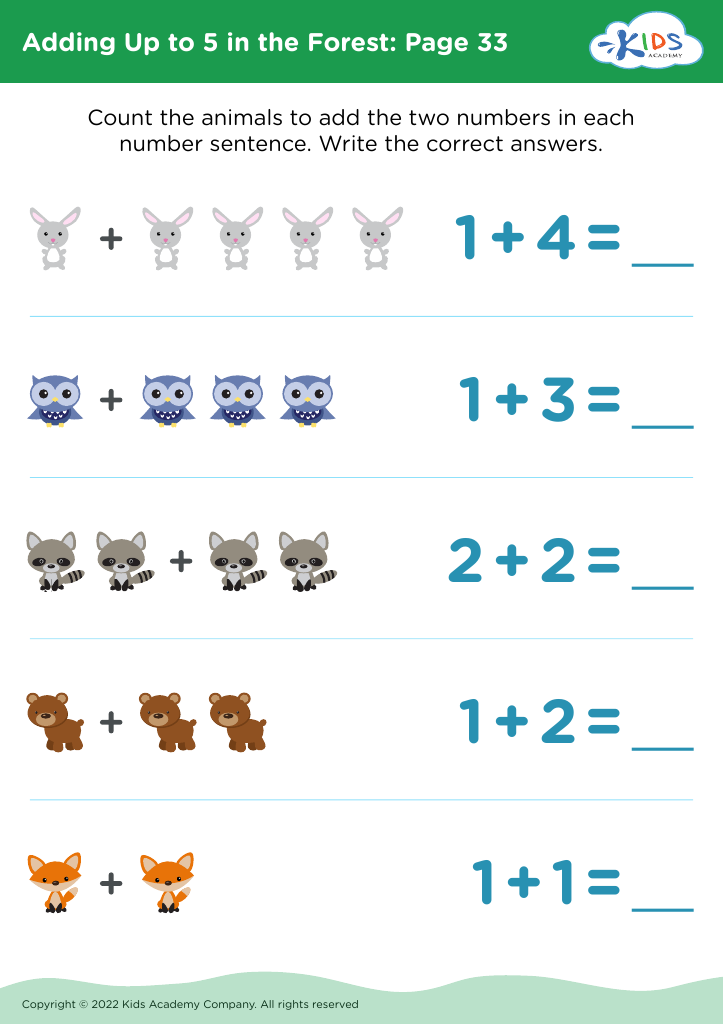
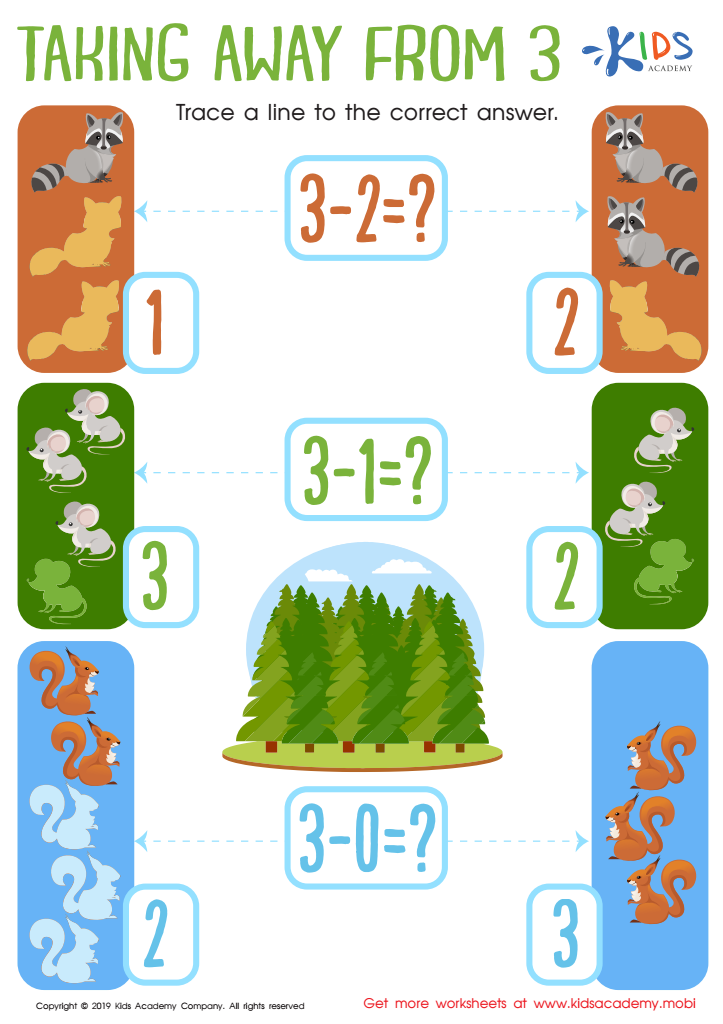
Taking Away From 3 Worksheet








Parents and teachers should care deeply about fostering math problem-solving skills, particularly addition and subtraction, in children aged 5-6. These fundamental operations form the foundation for all future mathematical learning and have a profound impact on a child’s cognitive development. At this age, young learners are highly impressionable and capable of grasping basic mathematical concepts that will be built upon in later years.
Understanding addition and subtraction enhances a child's number sense, helping them to comprehend quantities, number relationships, and the principles of how numbers interact. This early knowledge prepares them for more complex operations and problem solving, and it extends beyond mere rote learning. It encourages logical thinking, patterns recognition, and the ability to reason systematically.
Moreover, math problem-solving nurtures patience and perseverance—a growth mindset that is vital for tackling challenges not just in math, but in all areas of learning and life. Working through math problems also develops fine motor skills and visual-spatial abilities while promoting critical and analytical thinking.
Finally, parental and teacher engagement in a child's math education fosters a positive attitude towards the subject. When adults show enthusiasm and provide support, children build confidence and are more inclined to approach math with curiosity and excitement. Consequently, investing in early math problem-solving is essential for the holistic development of a confident, capable, and analytical thinker.








