Filters

127 filtered results

Clear all filters
Favorites
With answer key
Interactive

127 filtered results

Difficulty Level

Grade


Check out this FREE Trial Lesson on Addition for age 5-6!

My Family

Favorites
With answer key
Interactive
  • 5-6
  • Counting skills
  • Addition
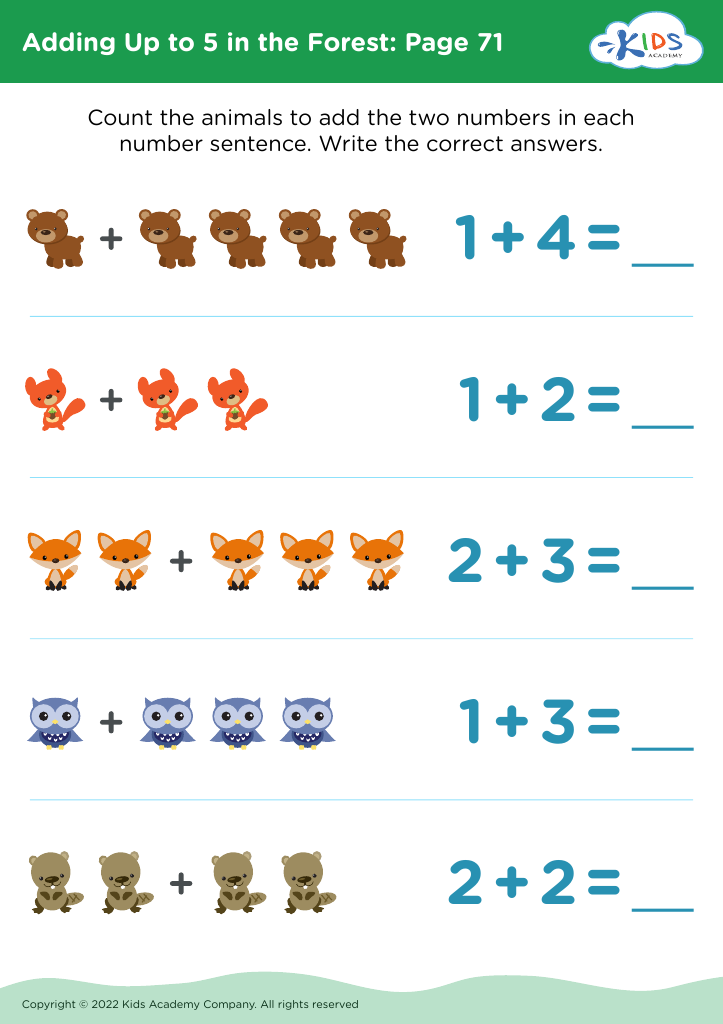
Adding Up to 5 in the Forest: Page 71
Worksheet
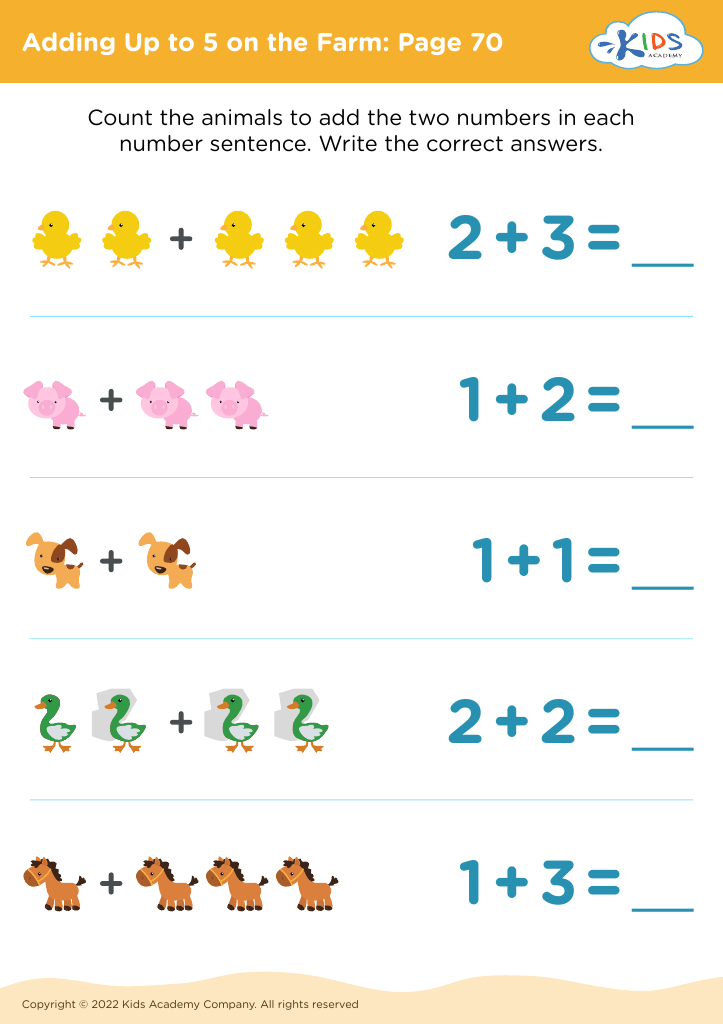
Adding Up to 5 on the Farm: Page 70
Worksheet
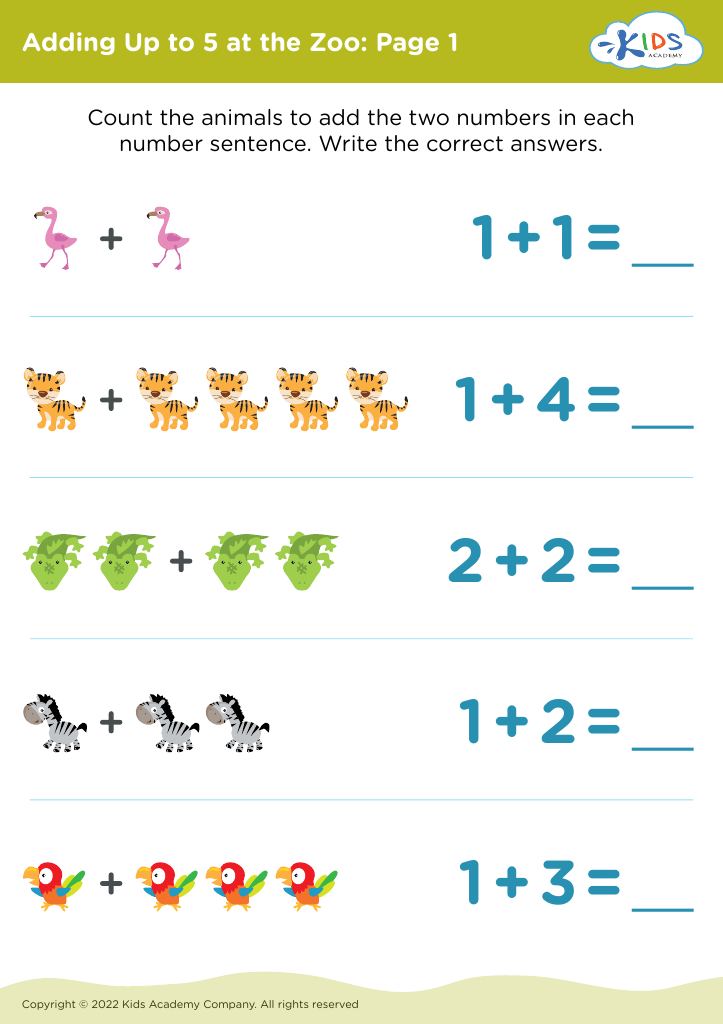
Adding Up to 5 at the Zoo: Page 1

Adding Up to 5 at the Zoo: Page 1

Adding Up to 5 at the Zoo: Page 1
Worksheet
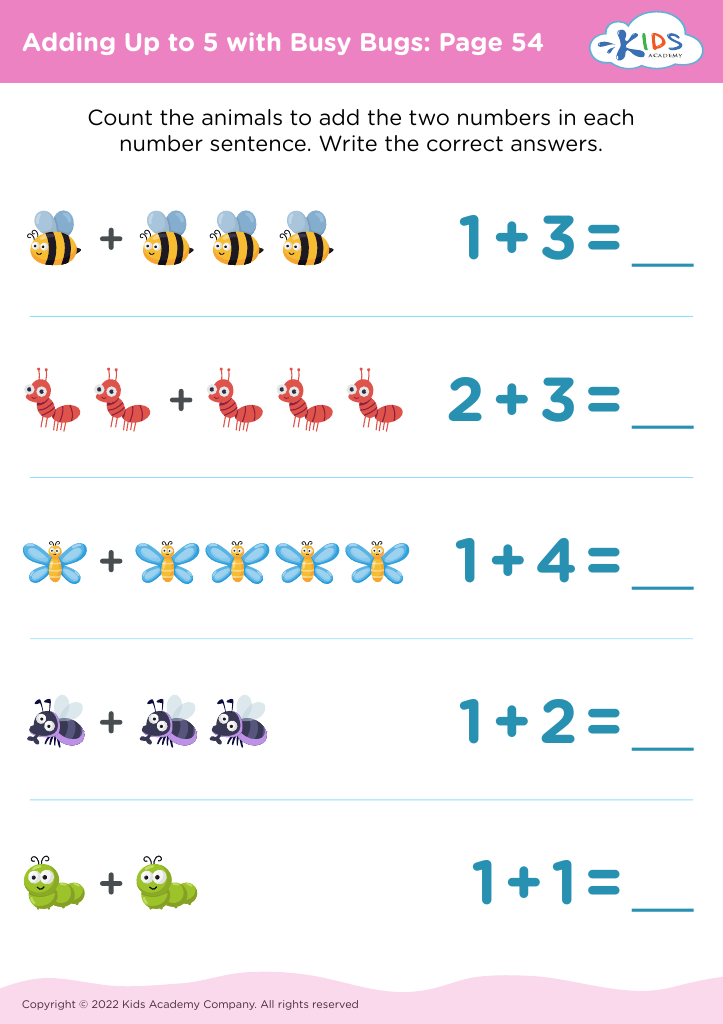
Adding Up to 5 with Busy Bugs: Page 54
Worksheet
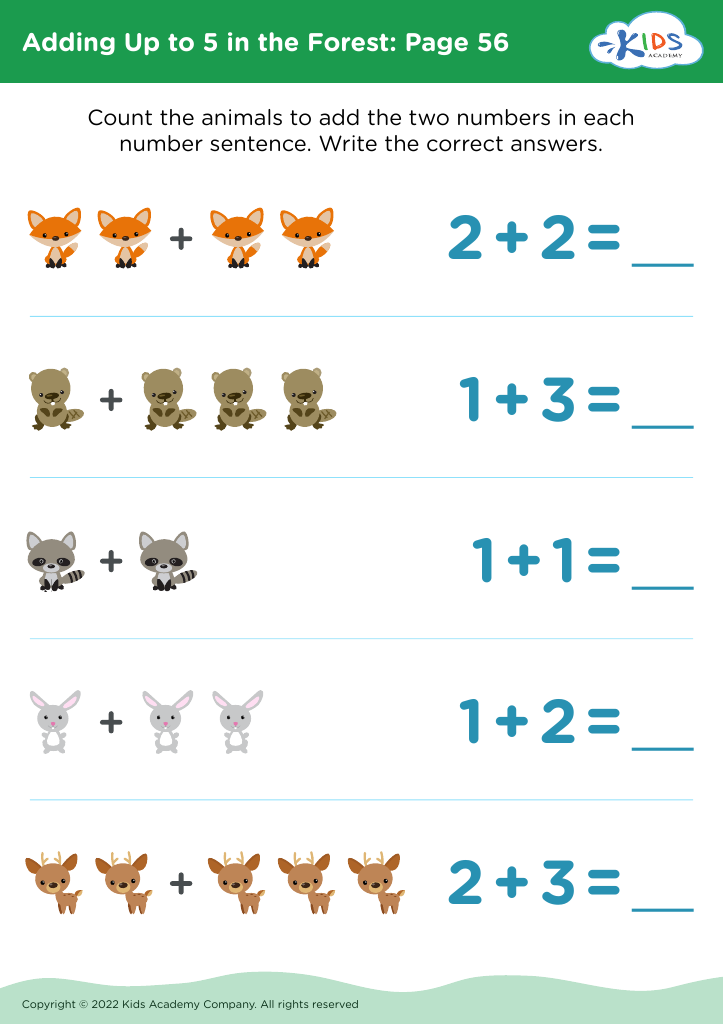
Adding Up to 5 in the Forest: Page 56
Worksheet
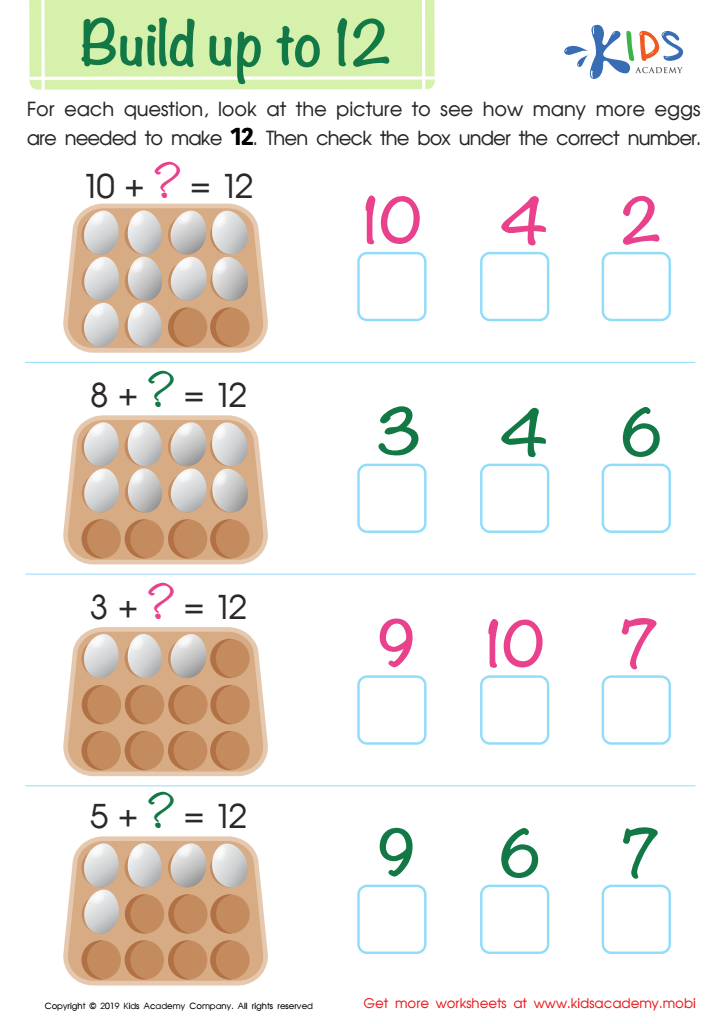
Build up to 12 Worksheet

Build up to 12 Worksheet

Love eggs? Kids can identify them in the picture in this worksheet. We need to add numbers to make 12. Look at the picture and see how many eggs are needed. Check the correct number box. Breakfast or baking, eggs are essential!
Build up to 12 Worksheet
Worksheet
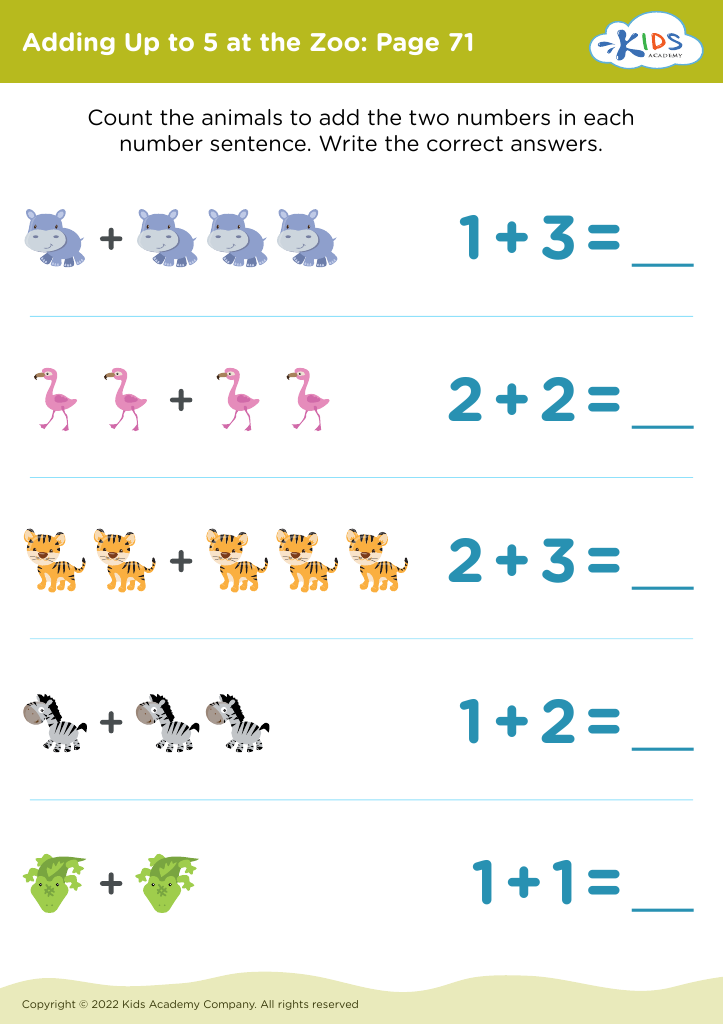
Adding Up to 5 at the Zoo: Page 71
Worksheet
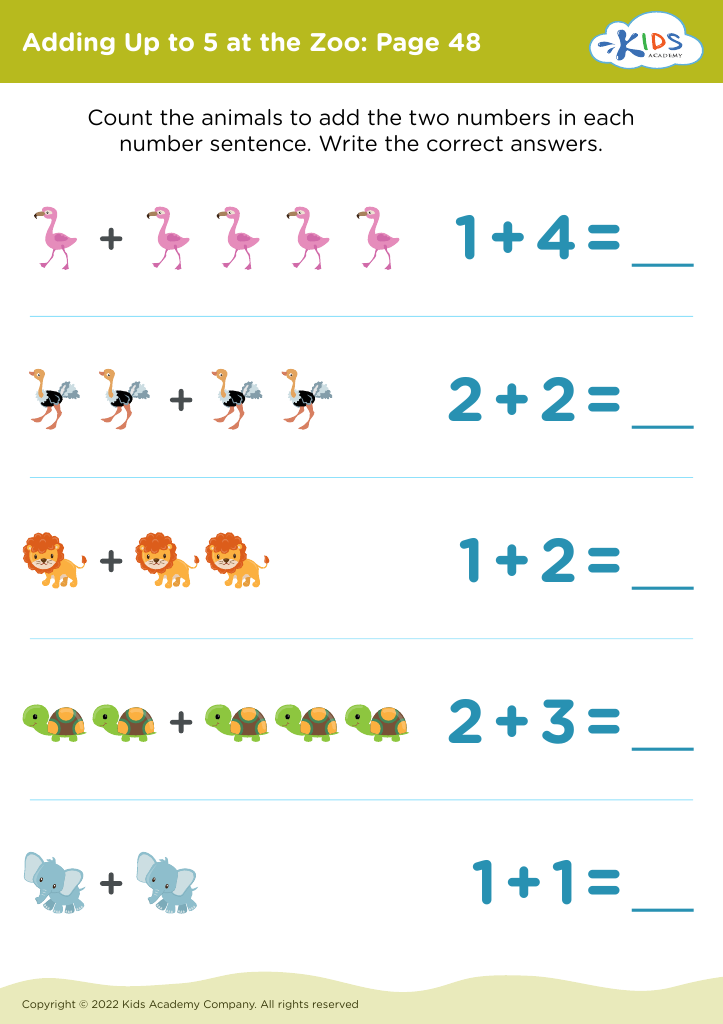
Adding Up to 5 at the Zoo: Page 48
Worksheet
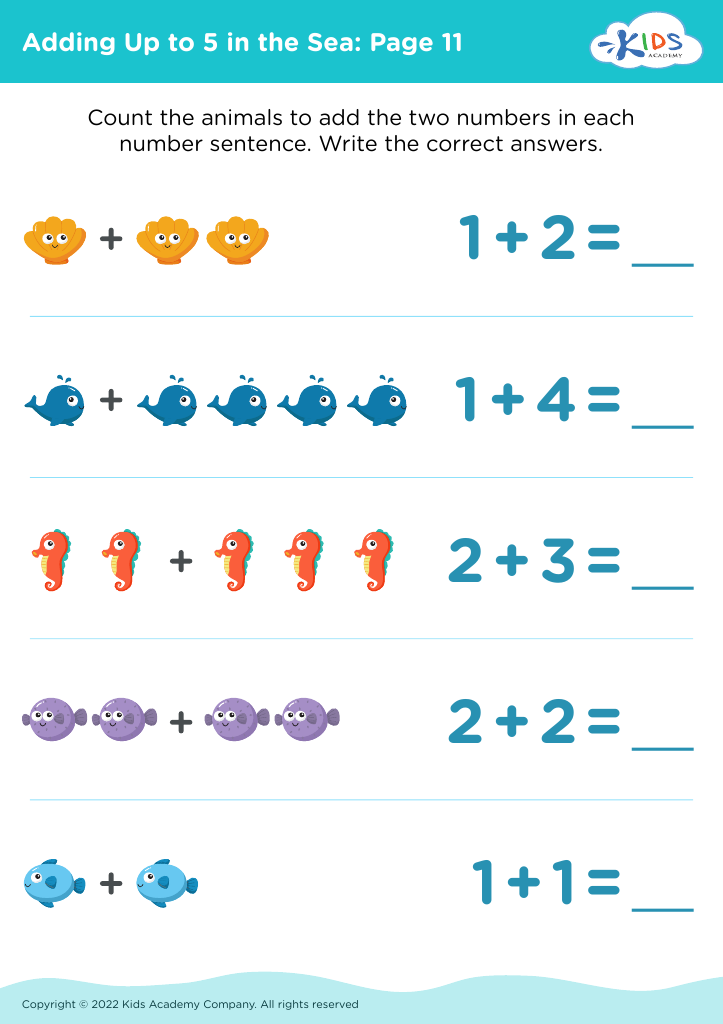
Adding Up to 5 in the Sea: Page 11
Worksheet
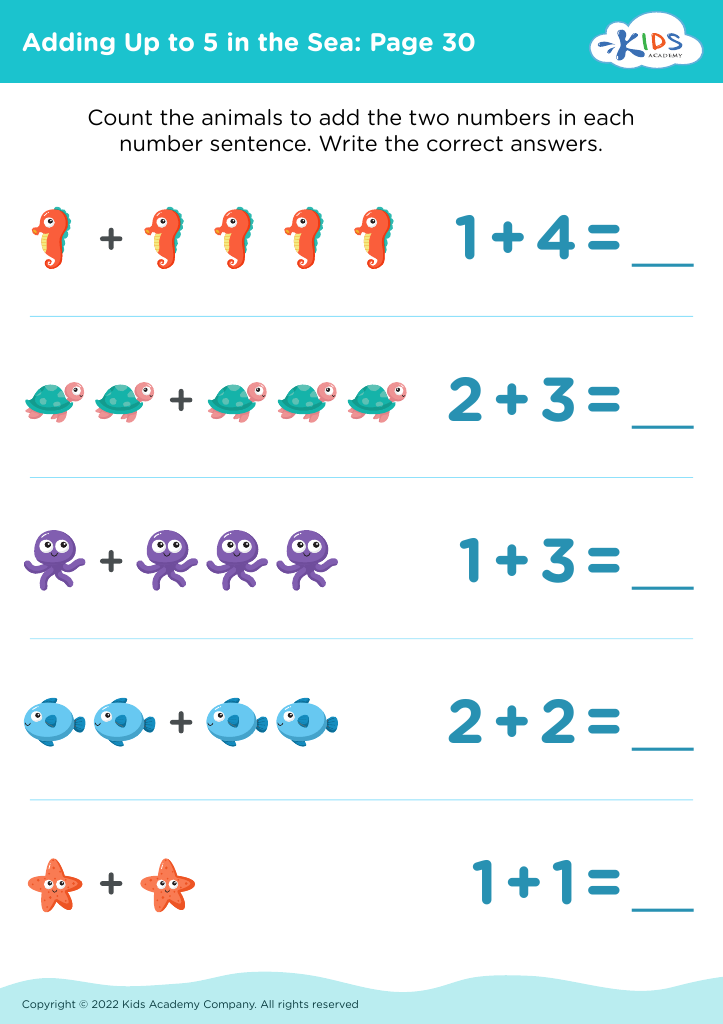
Adding Up to 5 in the Sea: Page 30
Worksheet
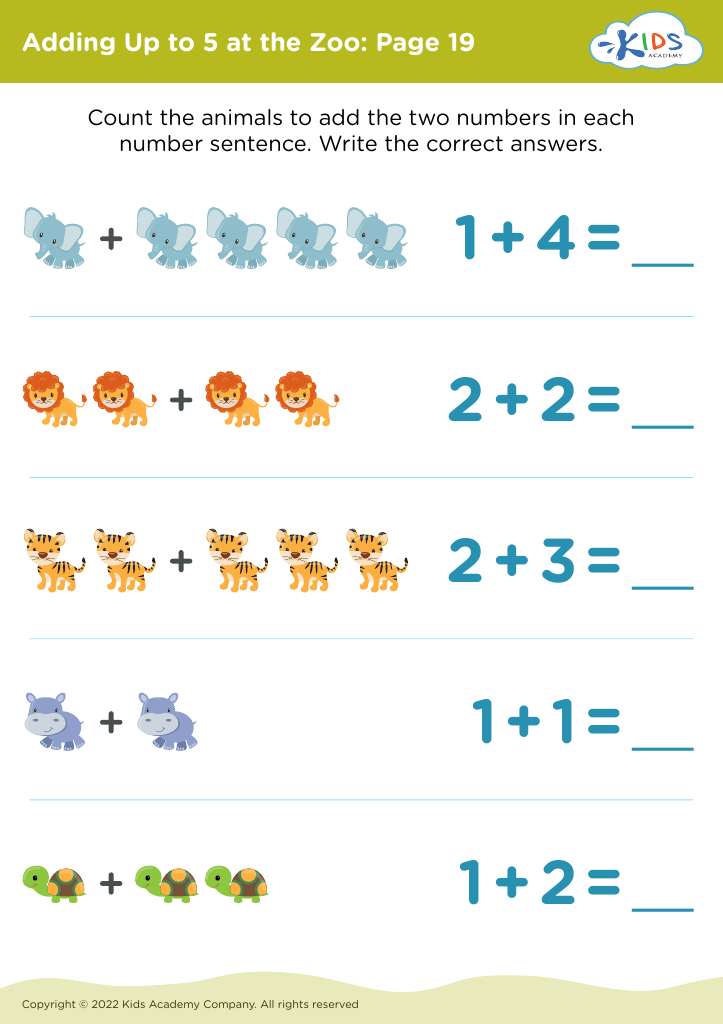
Adding Up to 5 at the Zoo: Page 19
Worksheet
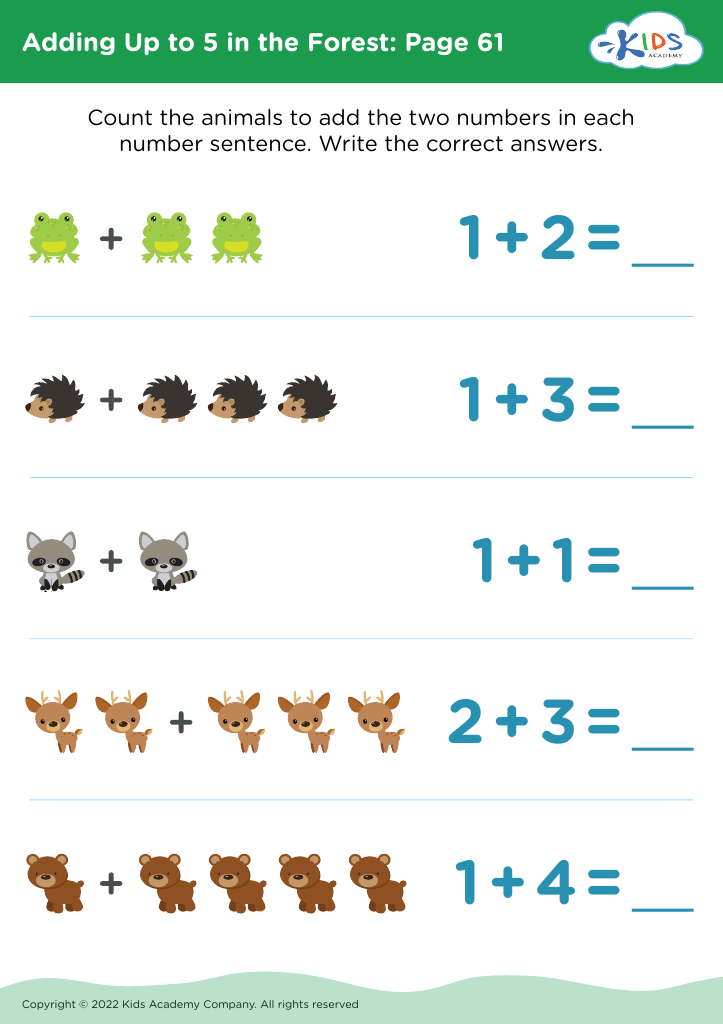
Adding Up to 5 in the Forest: Page 61
Worksheet
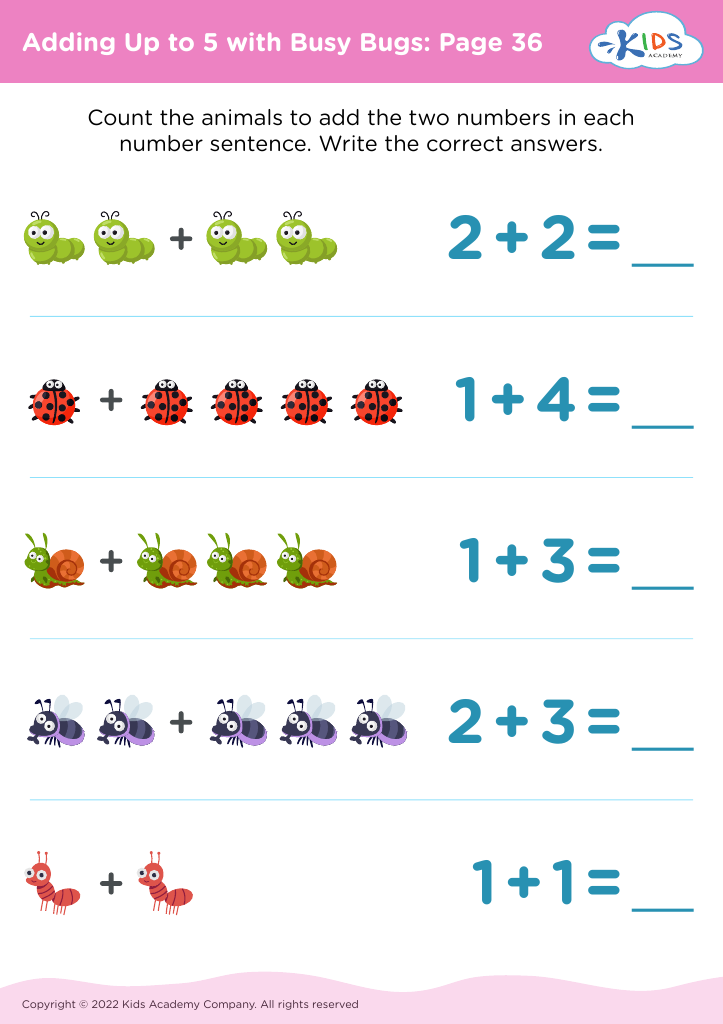
Adding Up to 5 with Busy Bugs: Page 36
Worksheet
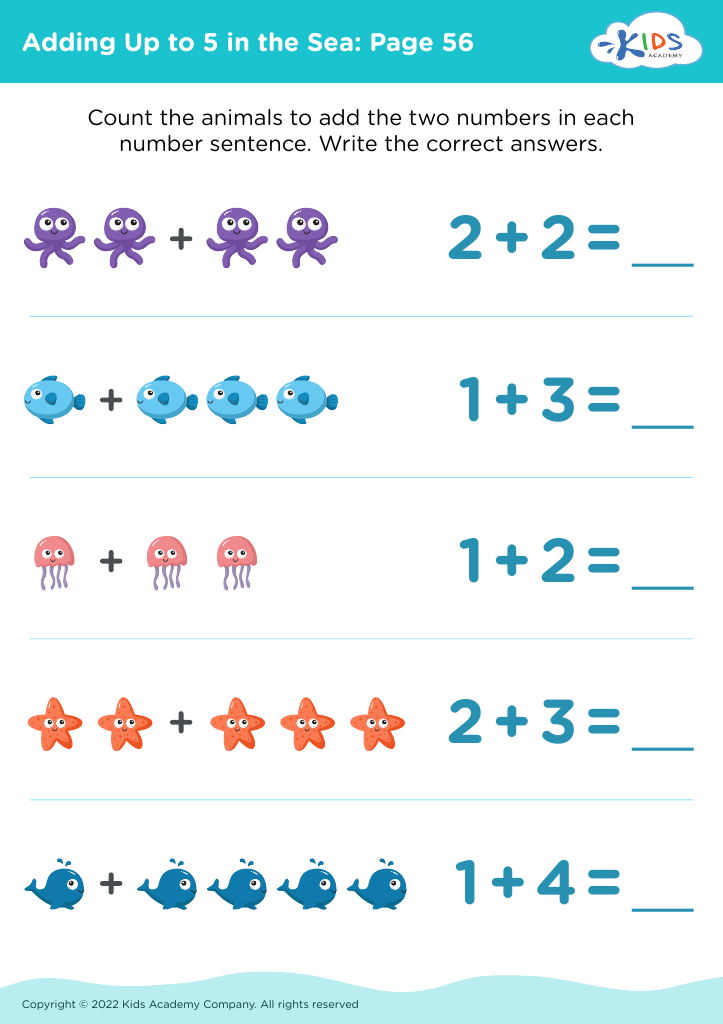
Adding Up to 5 in the Sea: Page 56
Worksheet
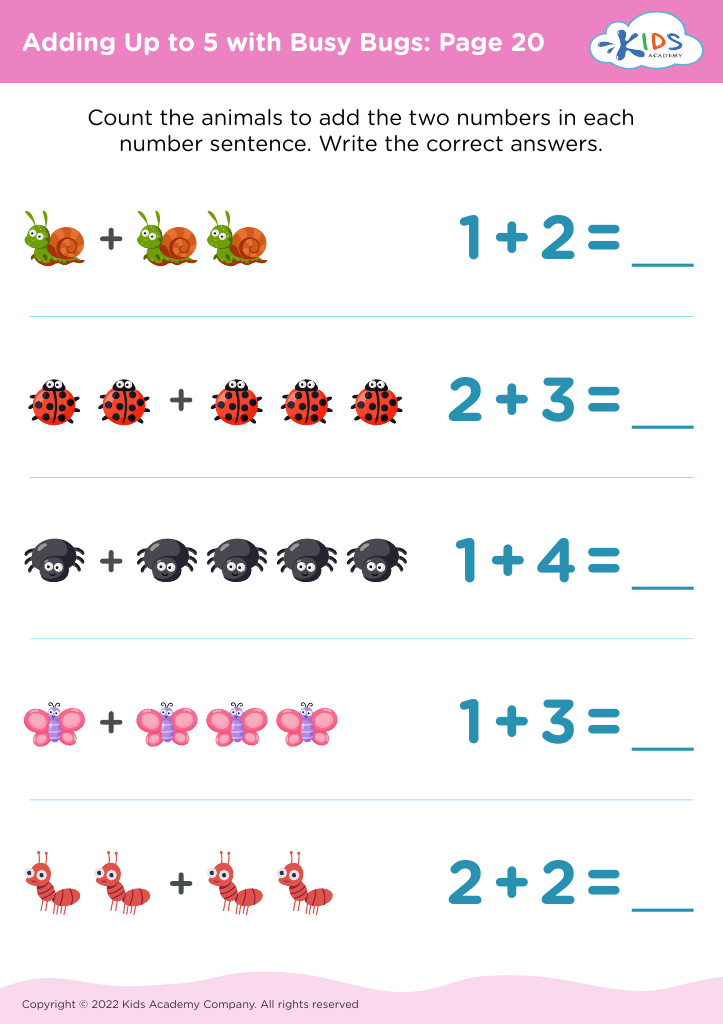
Adding Up to 5 with Busy Bugs: Page 20
Worksheet
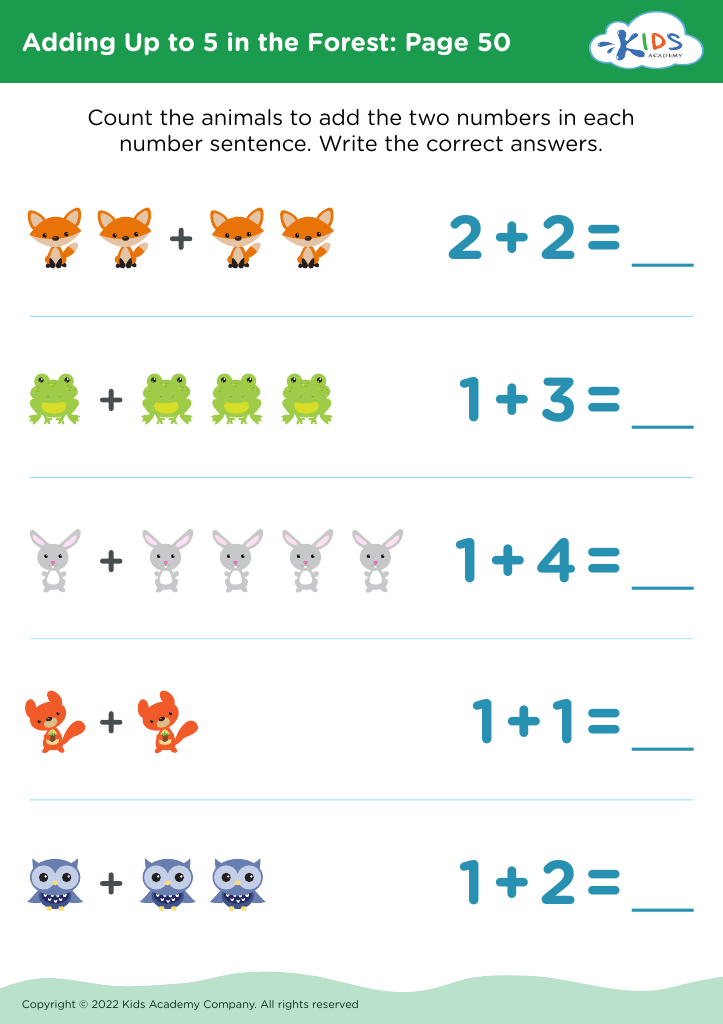
Adding Up to 5 in the Forest: Page 50
Worksheet
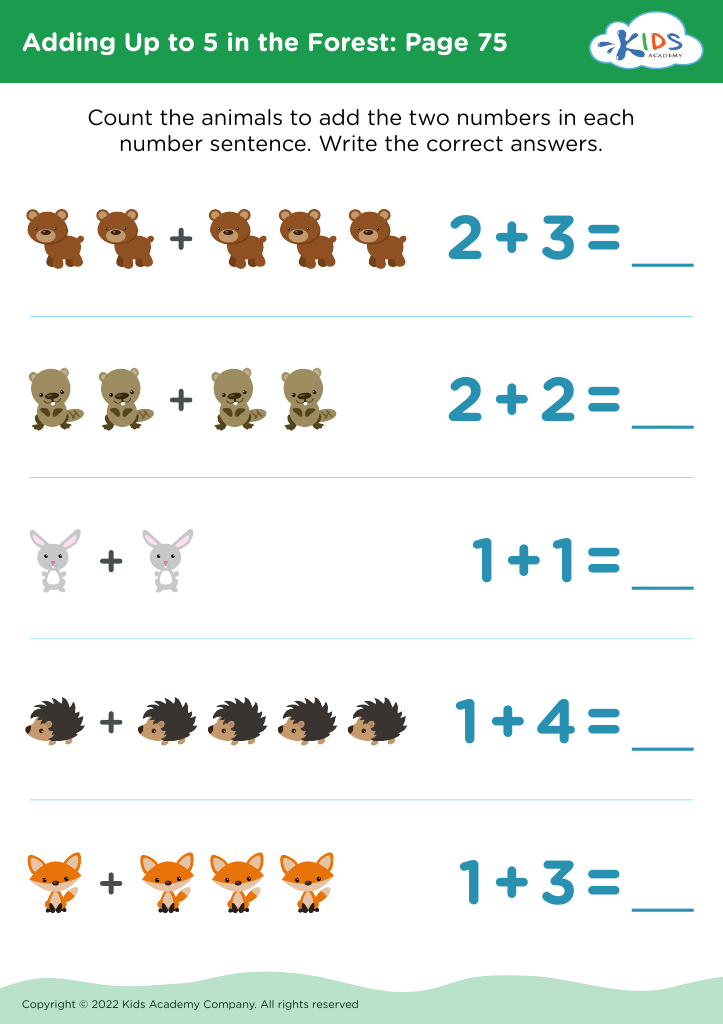
Adding Up to 5 in the Forest: Page 75
Worksheet
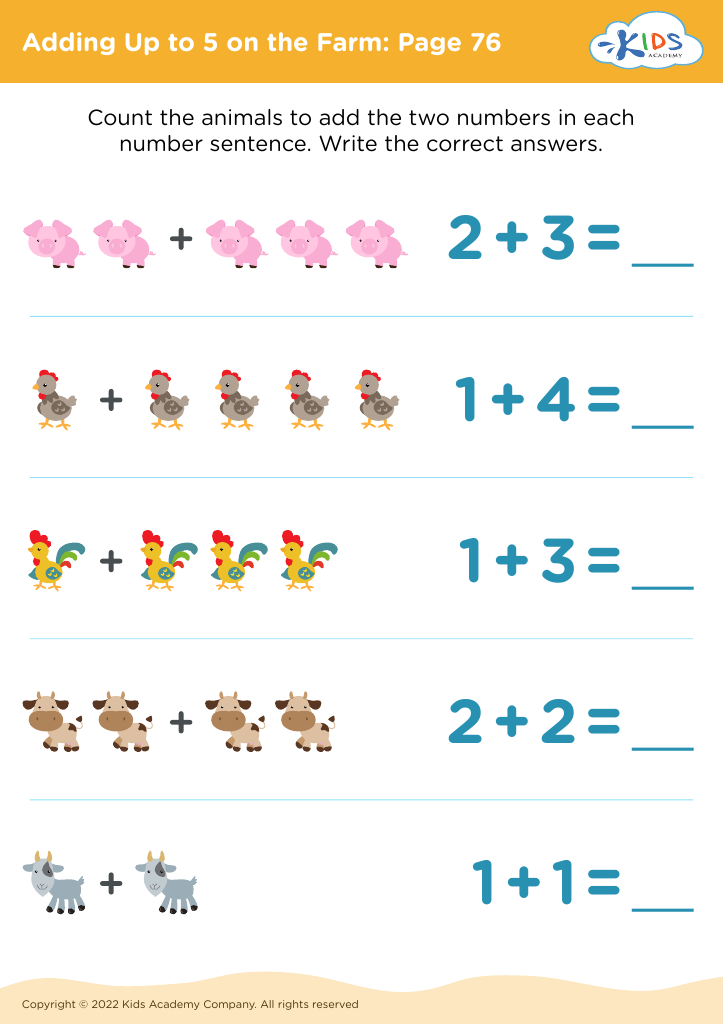
Adding Up to 5 on the Farm: Page 76
Worksheet
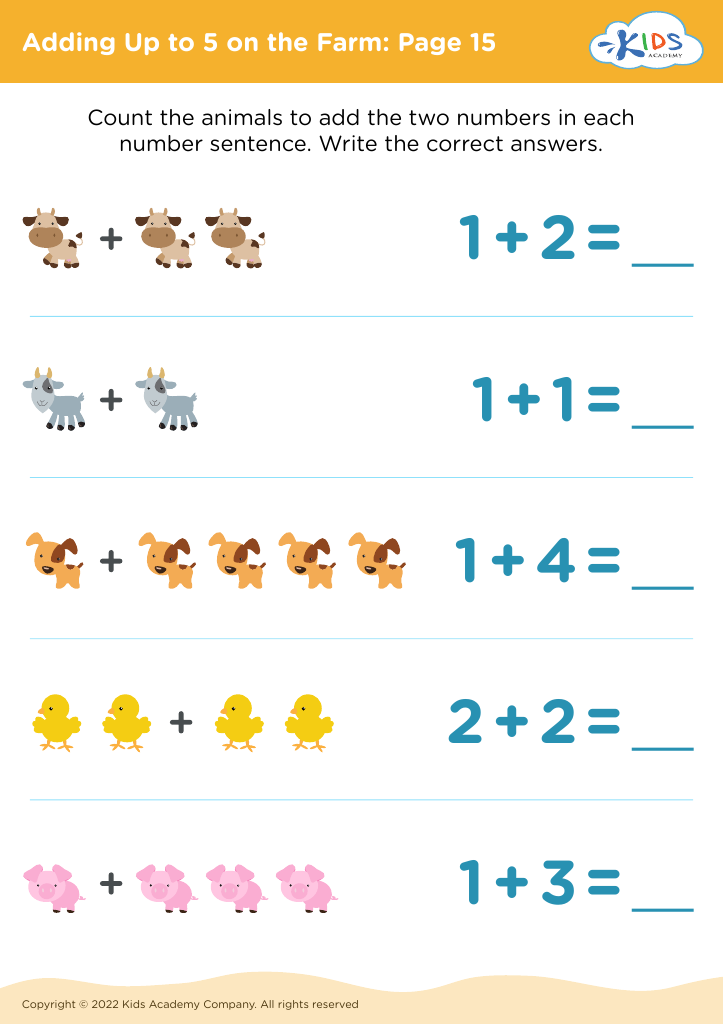
Adding Up to 5 on the Farm: Page 15
Worksheet
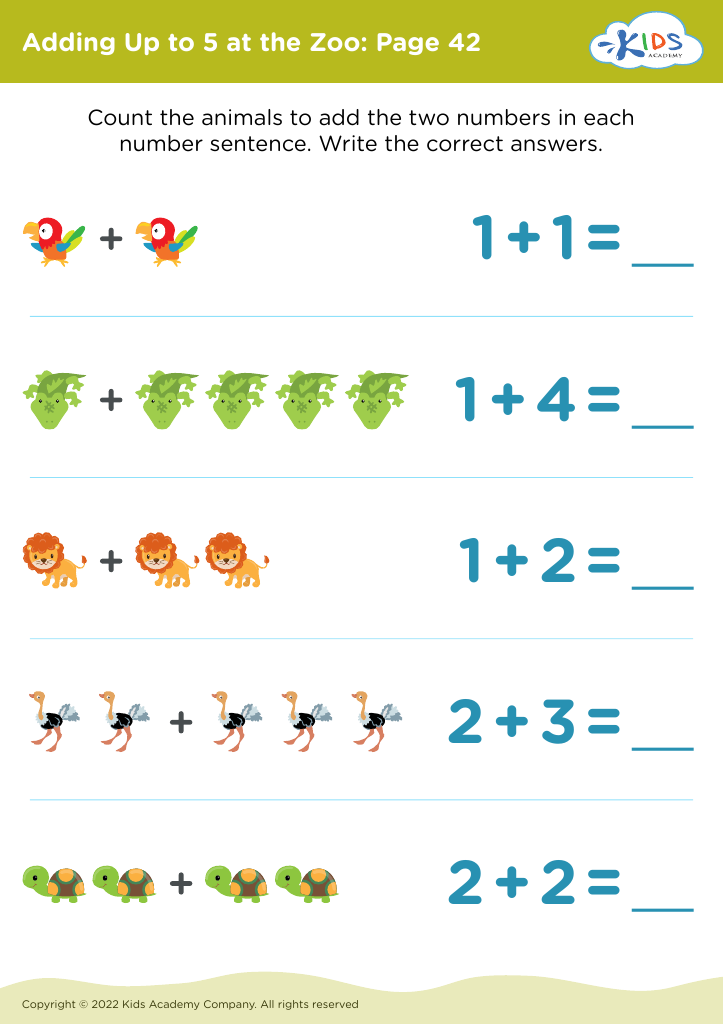
Adding Up to 5 at the Zoo: Page 42
Worksheet
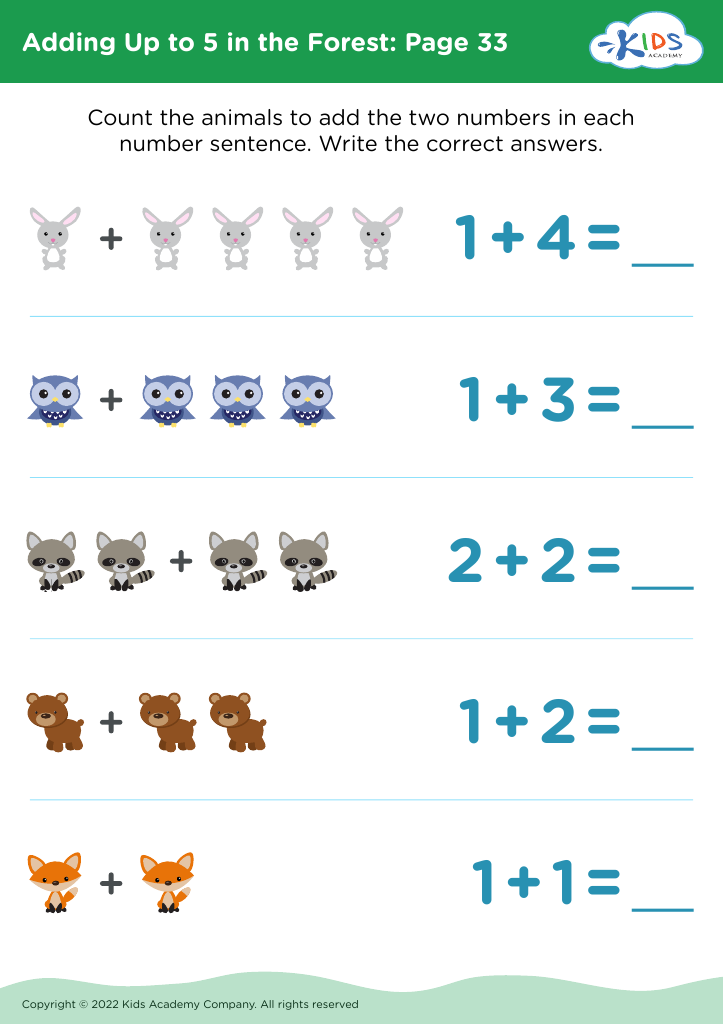
Adding Up to 5 in the Forest: Page 33
Worksheet
Help the Bee Find 16 Flowers Worksheet
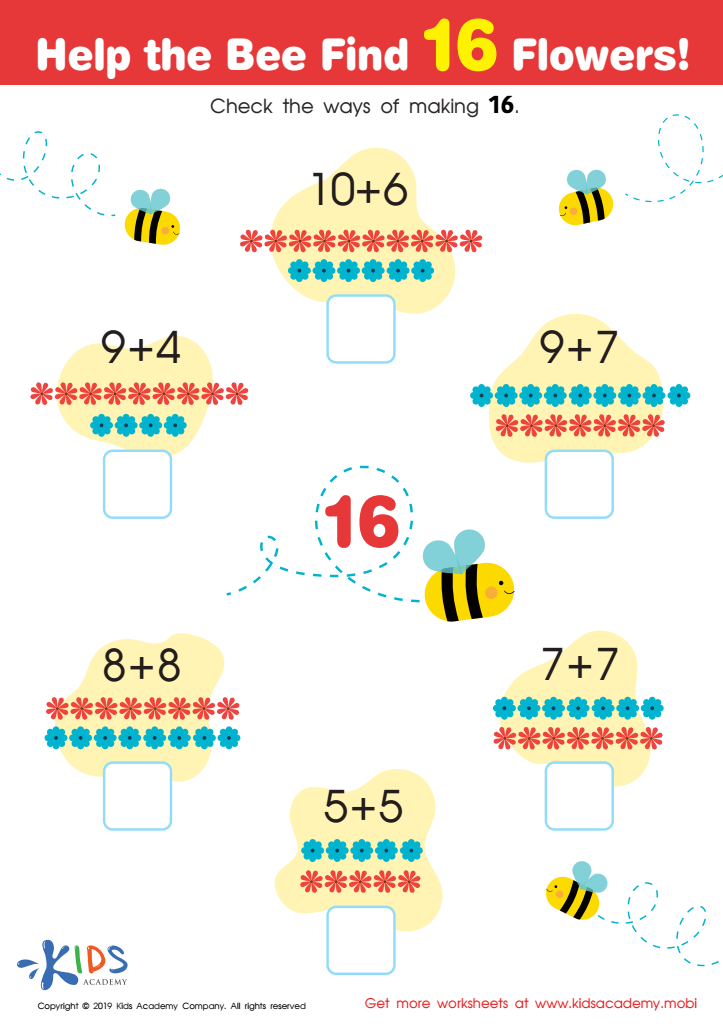
Help the Bee Find 16 Flowers Worksheet

Ask your students to count as high as they can. Show them that different numbers can equal the same figure with examples like 2+2=4 and 3+1=4. Ask for more examples, then help the bees find 16 flowers by checking the ways of making 16.
Help the Bee Find 16 Flowers Worksheet

Worksheet
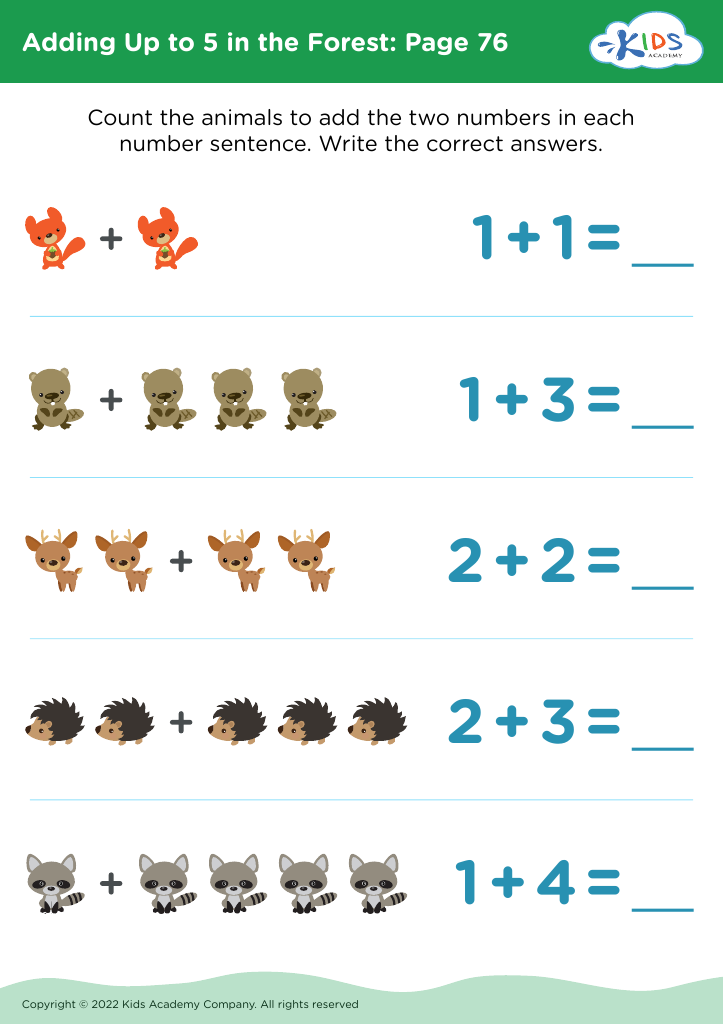
Adding Up to 5 in the Forest: Page 76
Worksheet
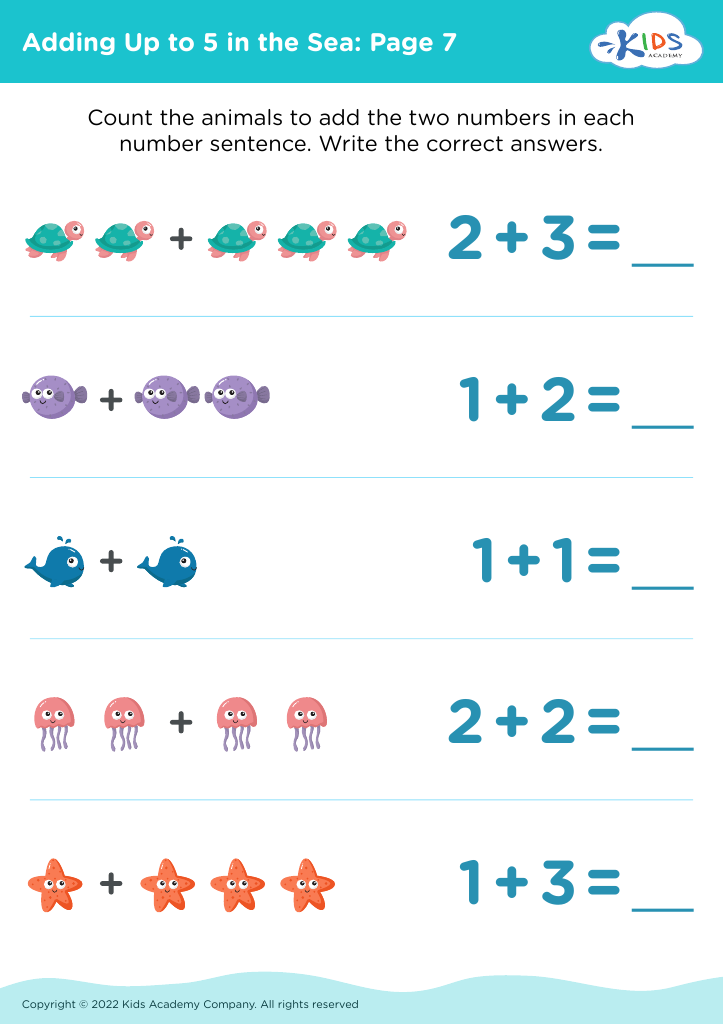
Adding Up to 5 in the Sea: Page 7

Adding Up to 5 in the Sea: Page 7

Adding Up to 5 in the Sea: Page 7
Worksheet


Counting skills and basic addition are crucial for children aged 5-6 as they lay the foundation for future mathematical understanding. At this age, children develop essential cognitive abilities, and their grasp of counting can significantly enhance their overall learning experience. Familiarity with counting aids in the recognition of numbers and improves a child's problem-solving capabilities, enabling them to tackle more complex mathematical concepts in later years.

Beyond academics, these skills foster essential life skills. For instance, mastering counting and addition empowers kids to make sense of everyday situations, like handling money at a store or understanding time intervals. When parents and teachers actively engage in promoting these skills, they help cultivate a sense of confidence and competence in children, encouraging them to explore math with curiosity rather than fear.

Furthermore, counting and addition skills support a child's social development. Playing games that involve numbers fosters collaboration and communication among peers. Parents and teachers should care about these skills because they profoundly impact a child's educational journey, social interactions, and problem-solving abilities, ultimately shaping not only mathematical competence but also a positive attitude toward learning.