Developing counting skills Numbers Worksheets for Ages 5-6
3 filtered results
-
From - To
Enhance your child's counting abilities with our engaging "Developing Counting Skills Numbers Worksheets" designed for ages 5-6. These fun and interactive worksheets help young learners master foundational counting concepts through a variety of activities. From counting objects and filling in numbers to simple addition and subtraction, each worksheet nurtures critical math skills essential for early success. Our resources are aligned with educational standards and are perfect for home or classroom use, promoting independent learning and confidence in numeracy. Help your child on their path to math mastery—explore our counting worksheets today and make learning numbers exciting and enjoyable!
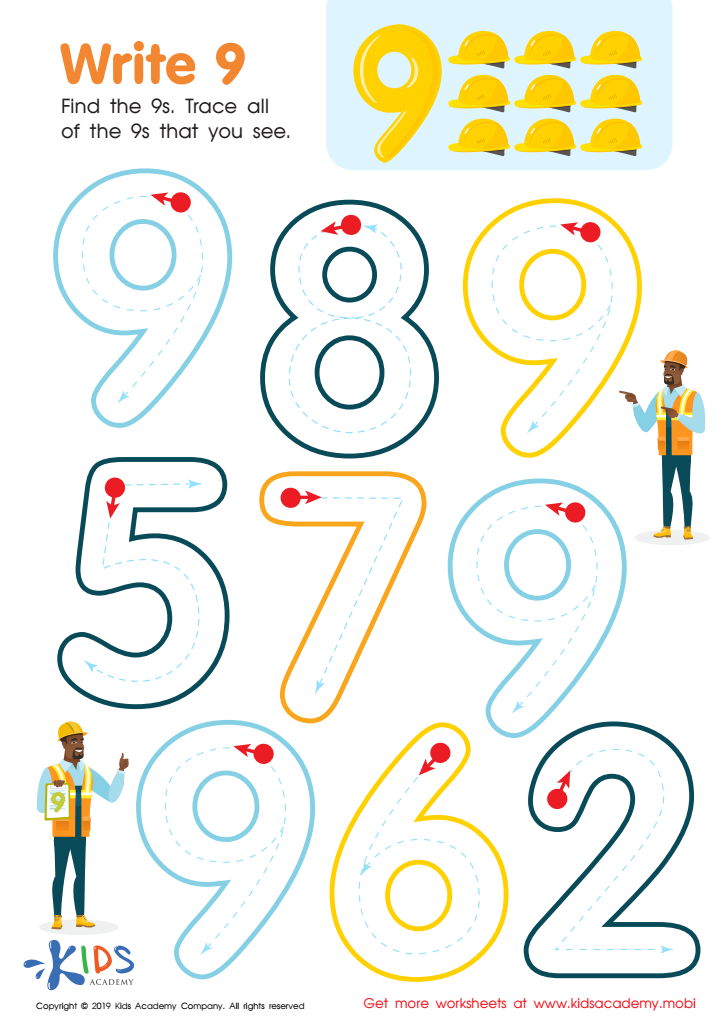
Write 9 Worksheet
 Assign to My Students
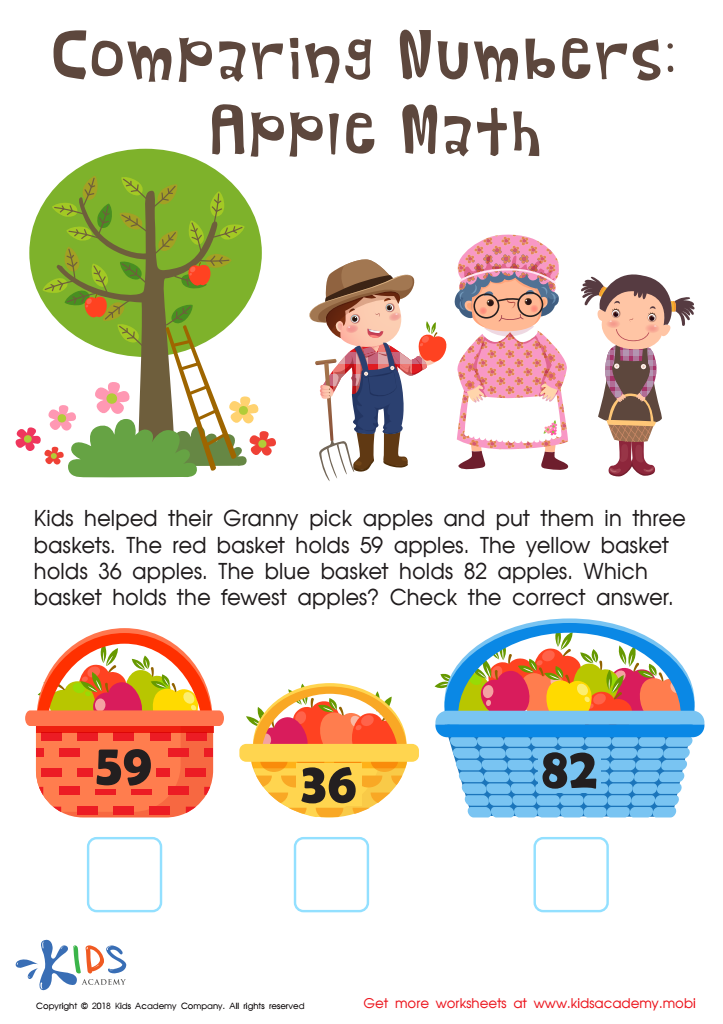
Apple Math Worksheet
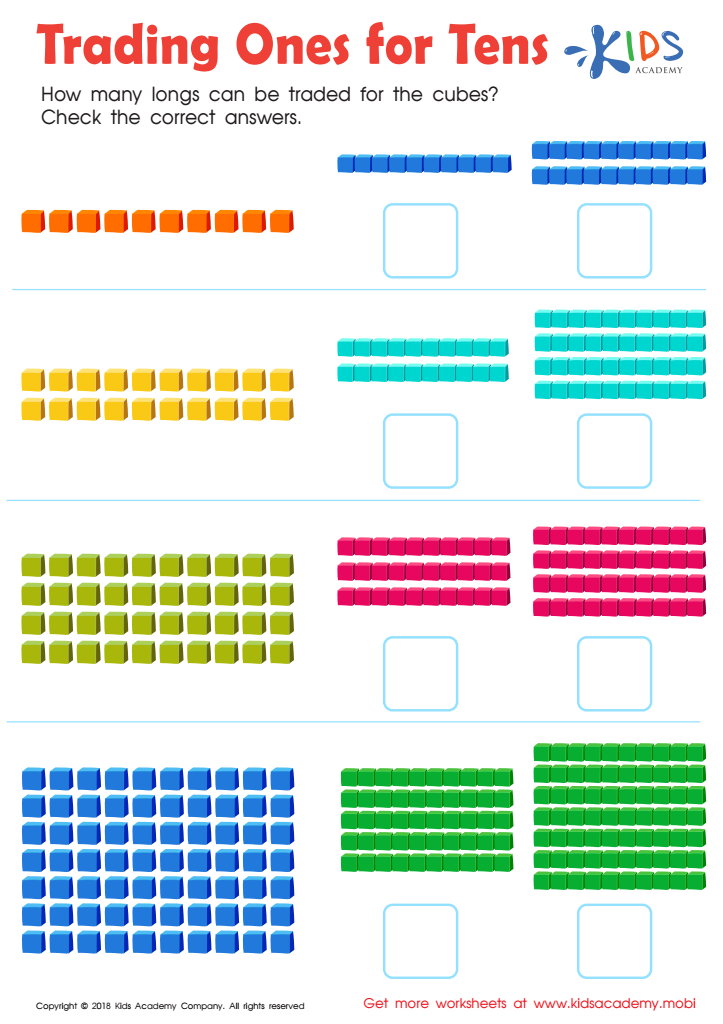
Trading Ones for Tens Worksheet: Part 2








Developing counting skills in children aged 5-6 is crucial as it lays the foundation for their mathematical understanding and overall cognitive development. During this stage, children are naturally curious and eager to explore numerical concepts, making it an ideal time for learning. Counting helps them recognize patterns, quantities, and relationships between numbers, which are essential skills for advanced mathematics.
Moreover, strong counting skills are directly linked to a child's confidence in math. When children can confidently count and manipulate numbers, they are more likely to engage in problem-solving activities and develop a positive attitude toward mathematics. This not only impacts their academic success but also shapes their ongoing relationship with numbers throughout life.
Additionally, counting skills enhance children's everyday experiences. It helps them understand concepts such as sharing, grouping, and comparing, which are fundamental in social interactions and real-life situations. Parents and teachers who prioritize counting create enriching learning environments that support children's growth, encouraging them to play, explore, and actively participate in mathematical discussions.
Thus, fostering counting skills equips younger learners with essential tools for future academic excellence, critical thinking, and confidence in their abilities.








