Enhancing math skills Numbers Worksheets for Ages 5-6
4 filtered results
-
From - To
Enhance your child's math skills with our fun and engaging Numbers Worksheets specifically designed for ages 5-6. These carefully crafted resources promote early math development through interactive activities, helping young learners recognize, compare, and work with numbers confidently. With a variety of exercises that cater to different learning styles, these worksheets enable children to practice counting, number writing, and basic arithmetic in an enjoyable way. Ideal for home or classroom use, our worksheets seamlessly blend education with play, ensuring kids build a strong mathematical foundation while having fun. Explore our collection today and watch your child excel in math!
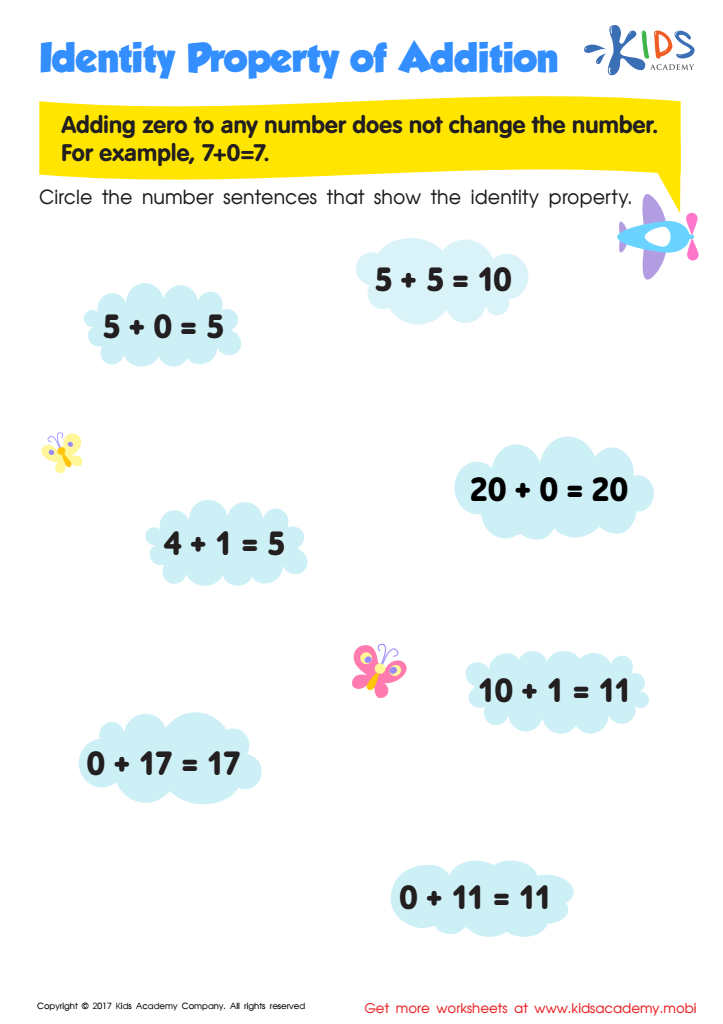
Identity Property of Addition Worksheet
 Assign to My Students
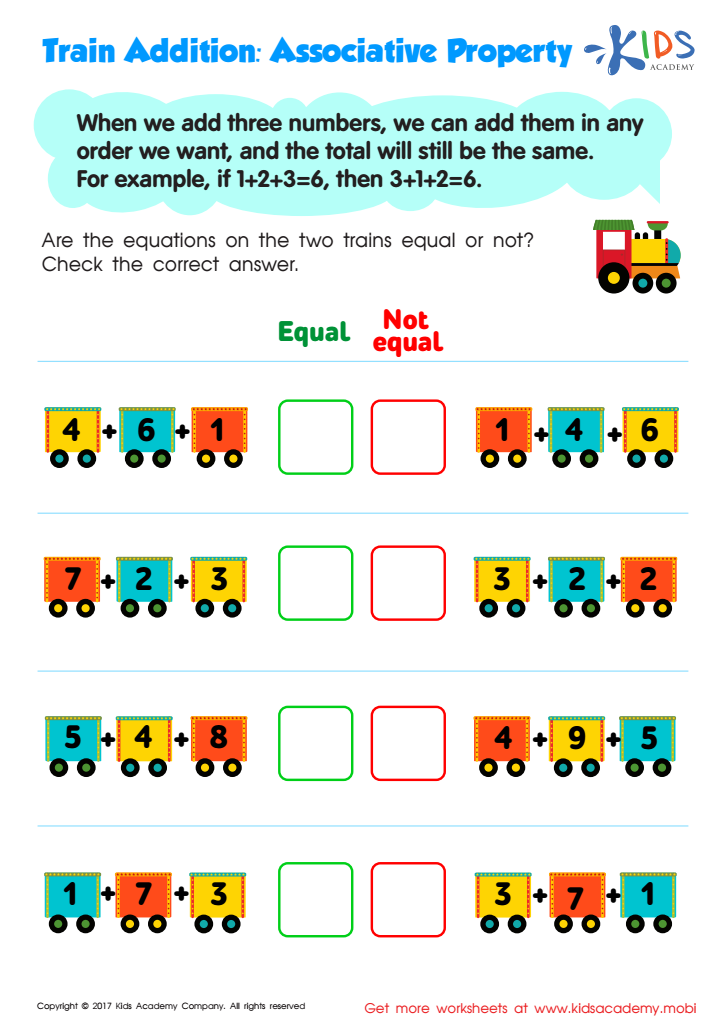
Train Addition: Associative Property Worksheet
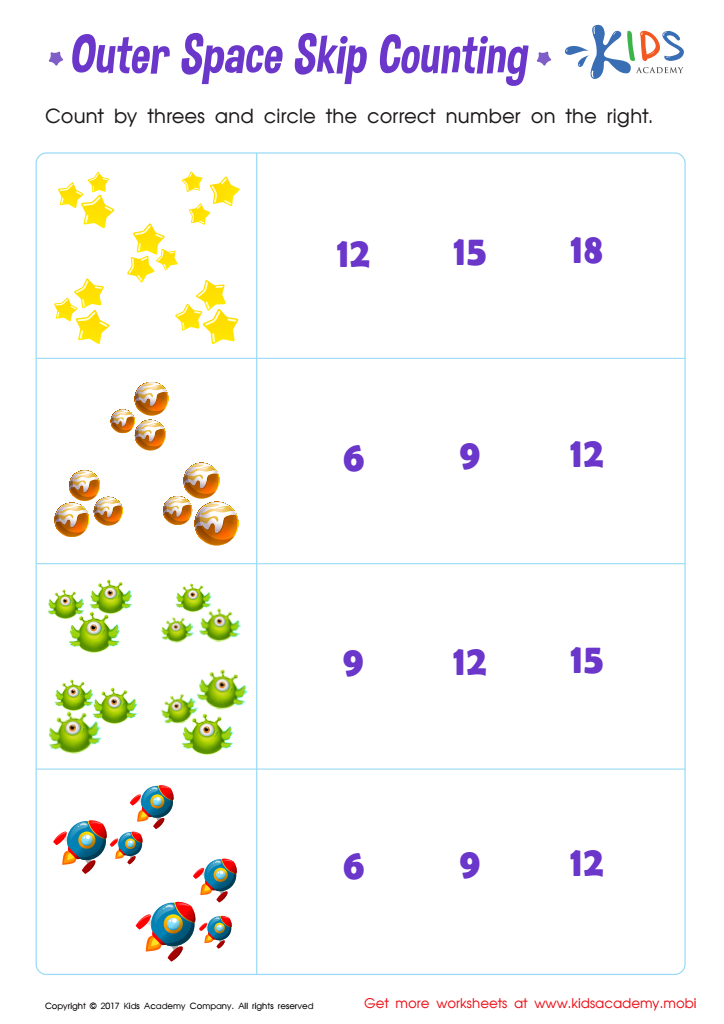
Skip Counting by 3s: Outer Space Skip Counting Printable
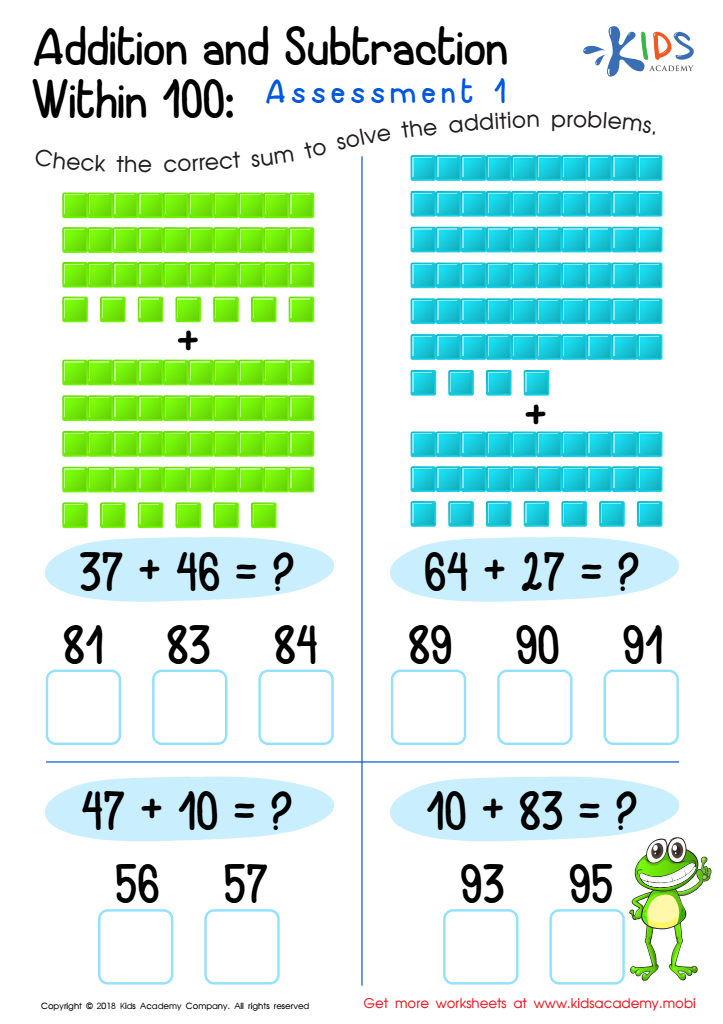
Addition and Subtraction Within 1: Assessment 1 Worksheet








Enhancing math skills in children aged 5-6 is crucial for their overall academic development and future success. Early math proficiency lays a strong foundation for critical thinking, problem-solving, and logical reasoning. At this age, children are naturally curious and eager to explore numbers and patterns, making it an ideal time to introduce fundamental concepts like counting, adding, and recognizing shapes.
When parents and teachers focus on developing these skills, they not only foster a love for math but also help children build confidence in their abilities. A solid grasp of math in early years can significantly diminish math anxiety later on, leading to improved performance in school. Engaging children in fun activities that involve numbers, such as games and hands-on projects, can enhance their learning experience and make math enjoyable.
Moreover, strong math skills are linked to better literacy outcomes, as both subjects require similar cognitive processes. As numbers increasingly influence the world around them, equipping children with these skills ensures they are prepared to navigate everyday tasks and future academic challenges. Ultimately, investing time and resources in early math education benefits children by broadening their learning opportunities and setting the stage for lifelong success.








