Understanding skip-counting Numbers Worksheets for Ages 5-6
3 filtered results
-
From - To
Discover the importance of skip-counting in early mathematics with our engaging worksheets designed specifically for children aged 5-6. Skip-counting helps young learners grasp number patterns and enhances their addition skills, laying a solid foundation for future math concepts. Our printable worksheets feature colorful visuals and interactive exercises that make learning fun and effective. Through activities that encourage skip-counting by 2s, 5s, and 10s, kids will develop number sense and improve their counting proficiency. Designed by educators, these worksheets aim to foster a love for math while providing valuable practice in a playful format. Get started today and support your child’s math journey!
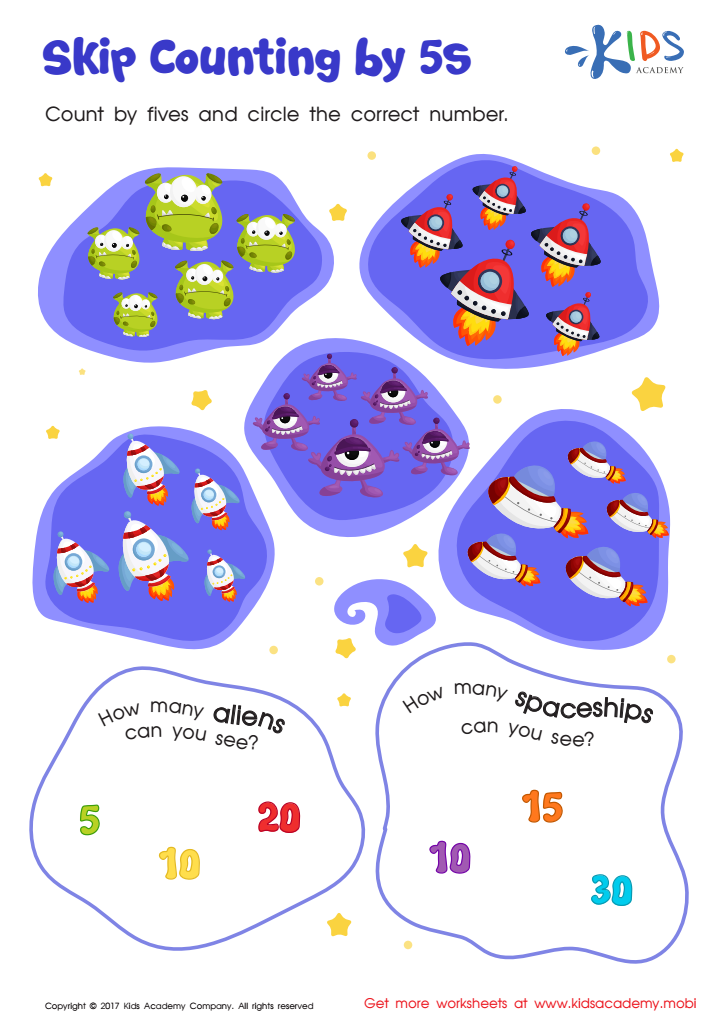
Skip Counting by 5s: Aliens and Spaceships Printable
 Assign to My Students
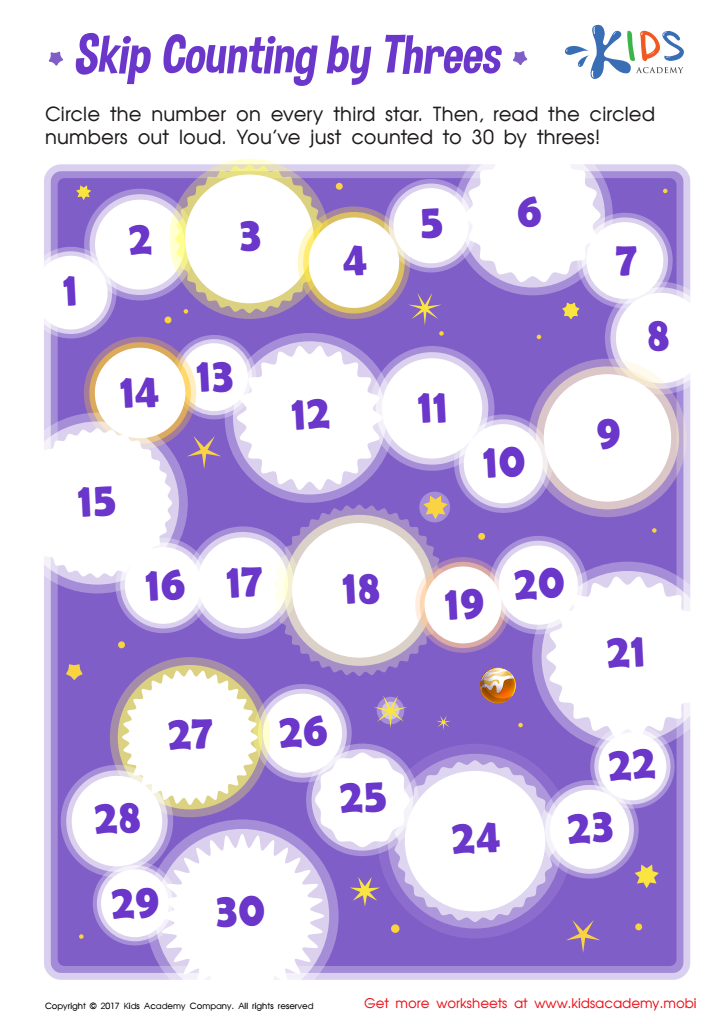
Skip Counting By Three Printable
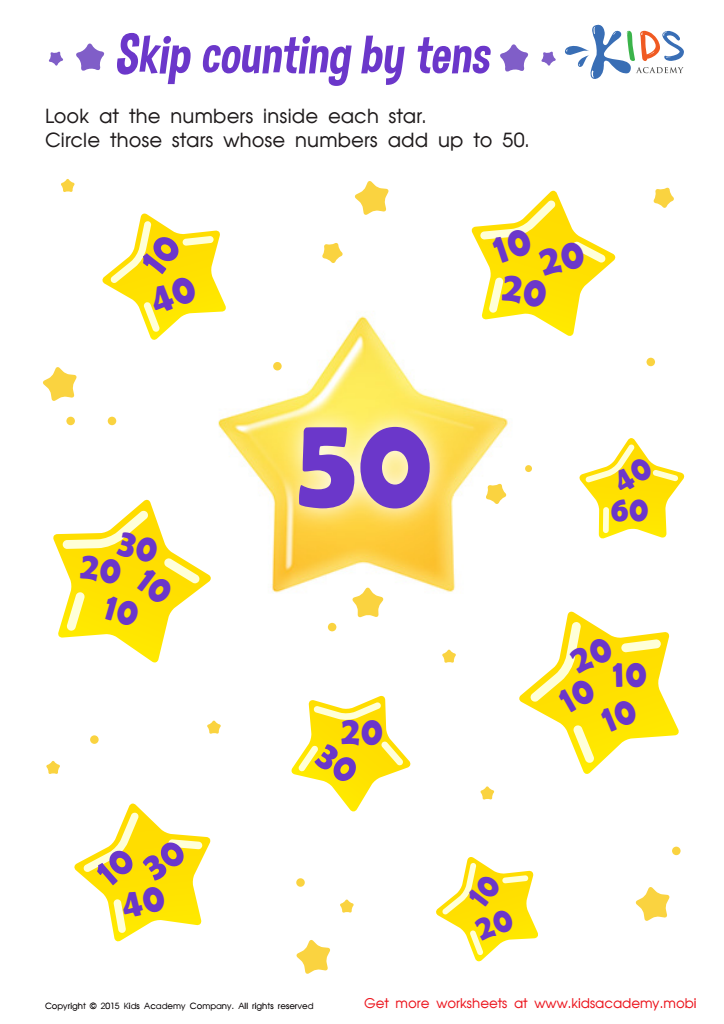
Learn Dozens: Skip Counting by Tens Printable




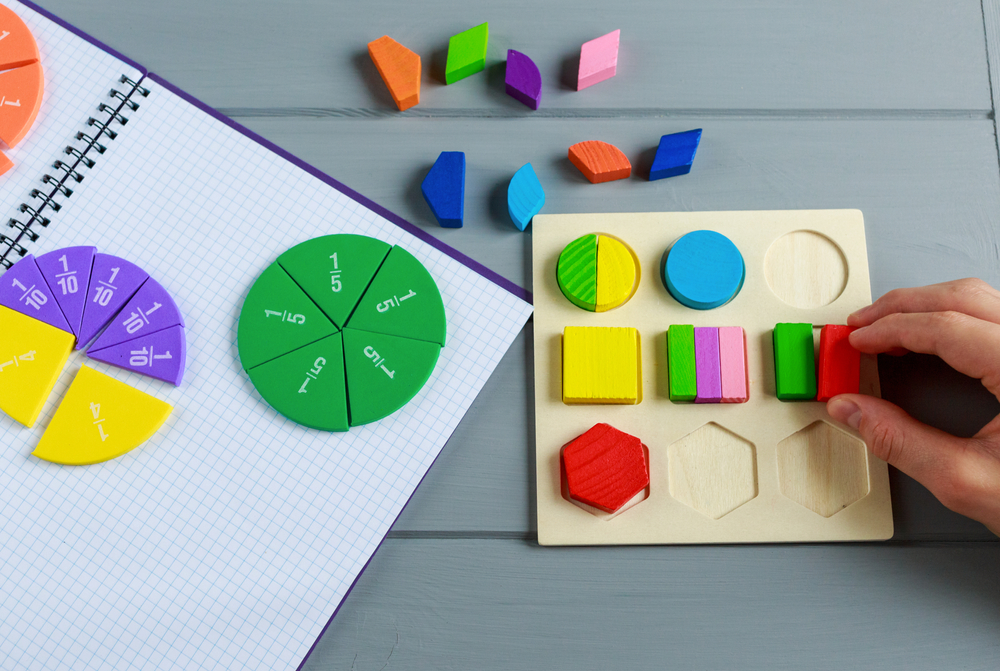



Understanding skip-counting is essential for children aged 5-6 as it lays the groundwork for more advanced mathematical concepts. Skip-counting, which involves counting by numbers other than one (like twos, fives, or tens), helps children develop number sense, a vital skill that enhances their ability to grasp the relationships between numbers. It aids in identifying patterns, which is critical in mathematics.
Moreover, skip-counting improves children's ability to perform addition and multiplication because it reinforces the idea that numbers can be grouped in versatile ways. This knowledge fosters mental math skills, allowing kids to solve problems more efficiently and confidently.
Beyond just mathematics, skip-counting has real-world applications, from understanding money to measuring time. It encourages problem-solving and critical-thinking skills that benefit all areas of learning.
By focusing on skip-counting, parents and teachers can create engaging learning experiences that are not only educational but also enjoyable for young learners, making them more enthusiastic about math. Ultimately, supporting children in mastering skip-counting equips them with the foundational skills they need for future academic success and everyday life. Understanding skip-counting truly goes beyond numbers; it cultivates a framework for logical thinking and comprehension.








