Understanding comparisons Math Worksheets for Ages 5-6
5 filtered results
-
From - To
Unlock your child’s mathematical potential with our "Understanding Comparisons" Math Worksheets designed specifically for ages 5-6! These engaging, age-appropriate worksheets focus on essential comparison concepts, helping young learners develop crucial skills in identifying "more than," "less than," and "equal to." Through exciting exercises and colorful visuals, children will learn to analyze and compare quantities, fostering their confidence in mathematics. Ideal for both classroom settings and at-home learning, our worksheets make mastering comparisons a fun and interactive experience. Start building a strong foundation in math today with our thoughtfully crafted resources that cater to young minds eager to learn!
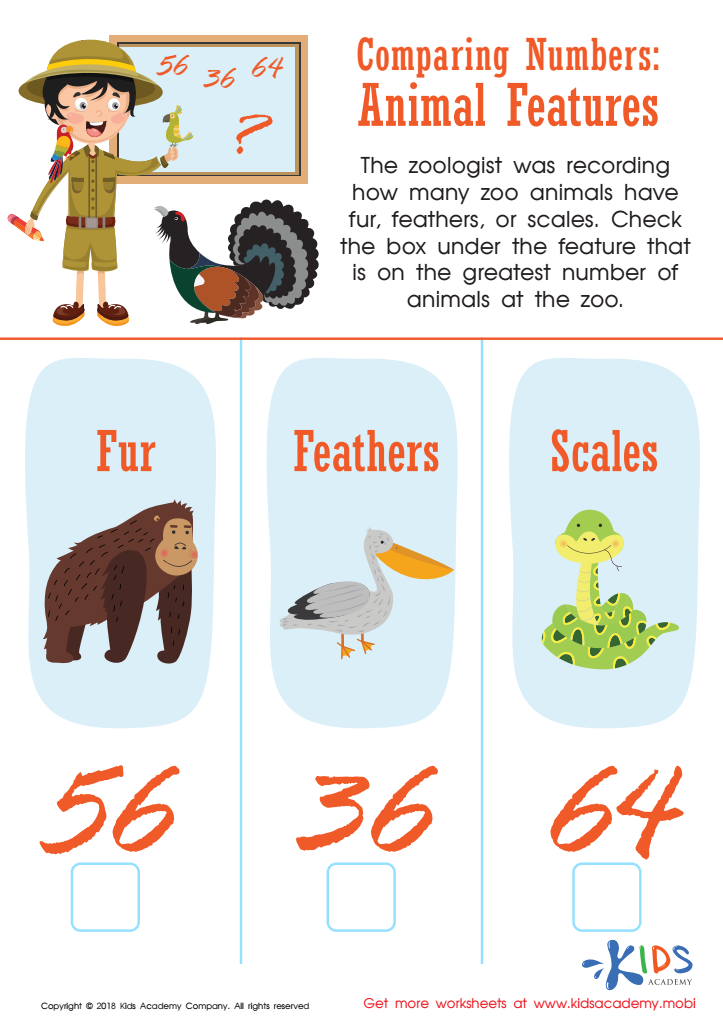
Animal Features Worksheet
 Assign to My Students
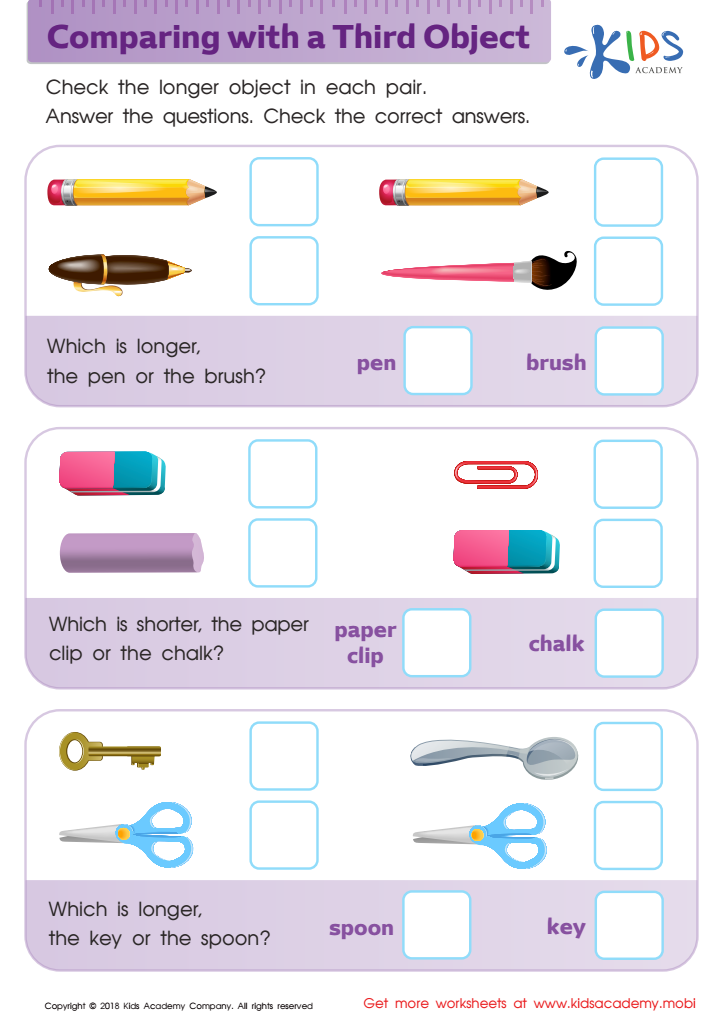
Comparing with a Third Object Worksheet
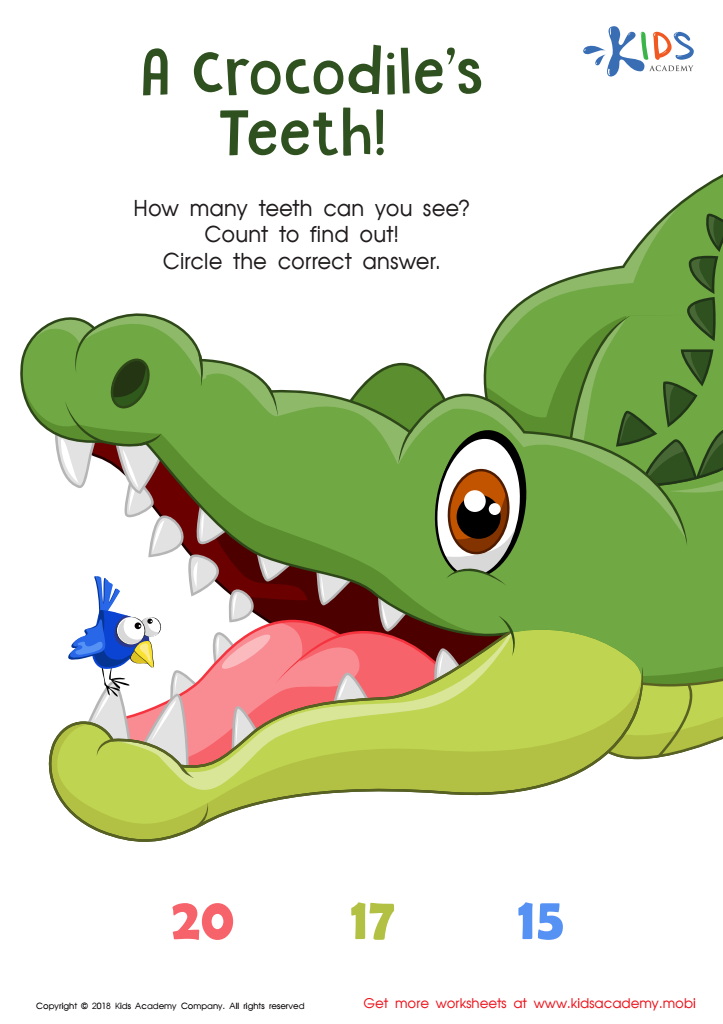
A Crocodile's Teeth Worksheet
Matching: Classifying Toys by Size Worksheet
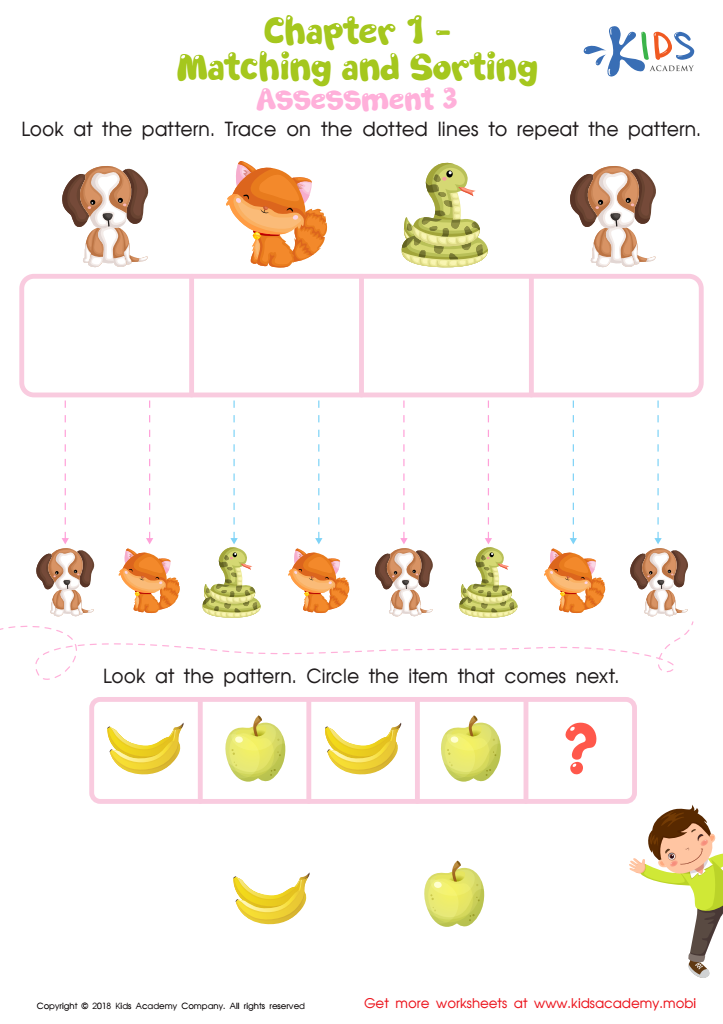
Matching and Sorting for Preschool: Assessment 3 Worksheet





Understanding comparisons in mathematics is crucial for children ages 5-6 as it forms a foundational skill that carries into more advanced mathematical concepts. At this age, children are naturally curious and excited to learn, making it an ideal time to introduce the concepts of more, less, and equal. Engaging with comparisons encourages critical thinking and helps children make sense of the world around them, enhancing their reasoning abilities in everyday scenarios, such as sharing snacks or assessing quantities while playing.
Parents and teachers should care about this because early exposure to these concepts builds a strong numeracy foundation essential for future success in math. When children grasp how to compare numbers, they develop better problem-solving skills and can tackle more complex operations later in their education. Moreover, understanding comparisons promotes cognitive development by allowing children to analyze and synthesize information.
Encouraging discussions about comparisons at home and in the classroom also boosts language skills, as children learn to articulate their thought processes. Ultimately, a strong foundation in comparison not only equips children with essential math skills but also cultivates curiosity and a love for learning, which are vital for lifelong academic success.








