Understanding measurements Math Worksheets for Ages 5-6
9 filtered results
-
From - To
Unlock your child's potential with our "Understanding Measurements Math Worksheets for Ages 5-6." These engaging and educational worksheets are designed to make learning fun, focusing on essential measurement concepts. Young learners will explore length, weight, volume, and more through colorful images and interactive activities. Perfect for developing critical thinking and practical math skills, these worksheets help kids grasp foundational measurement ideas in an enjoyable way. Tailored for preschoolers and kindergarteners, our worksheets are an excellent resource for parents and teachers aiming to support early mathematics proficiency. Get started today and see your child's confidence in math grow!
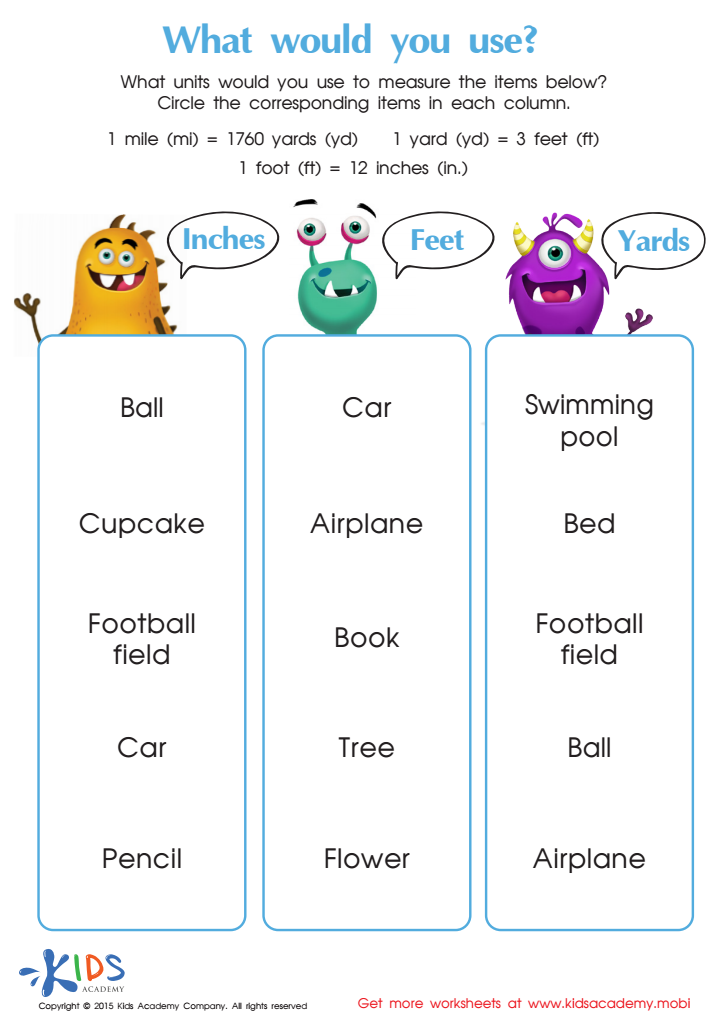
Learning about measuring objects in inches, feet and yards Worksheet
 Assign to My Students
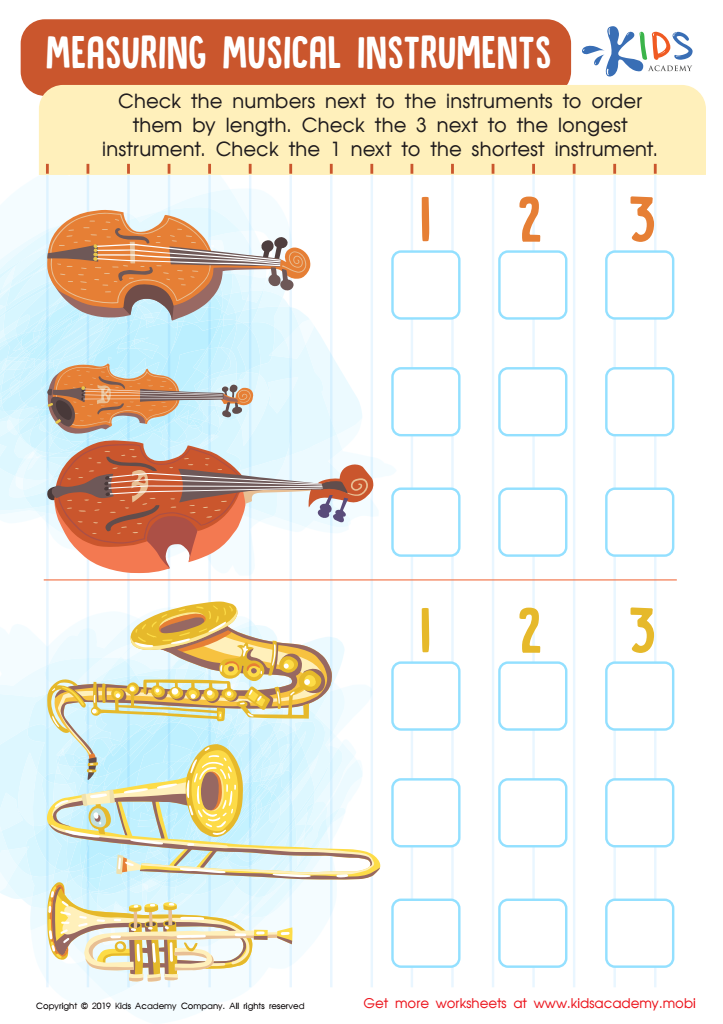
Measuring Musical Instruments Worksheet
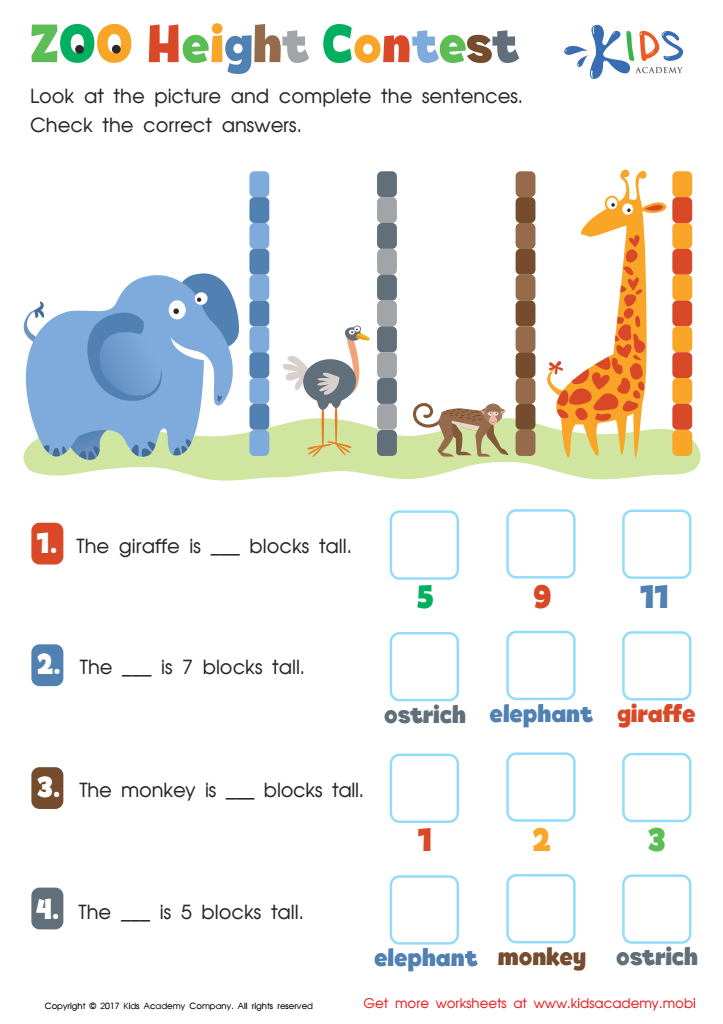
Zoo Height Contest Worksheet
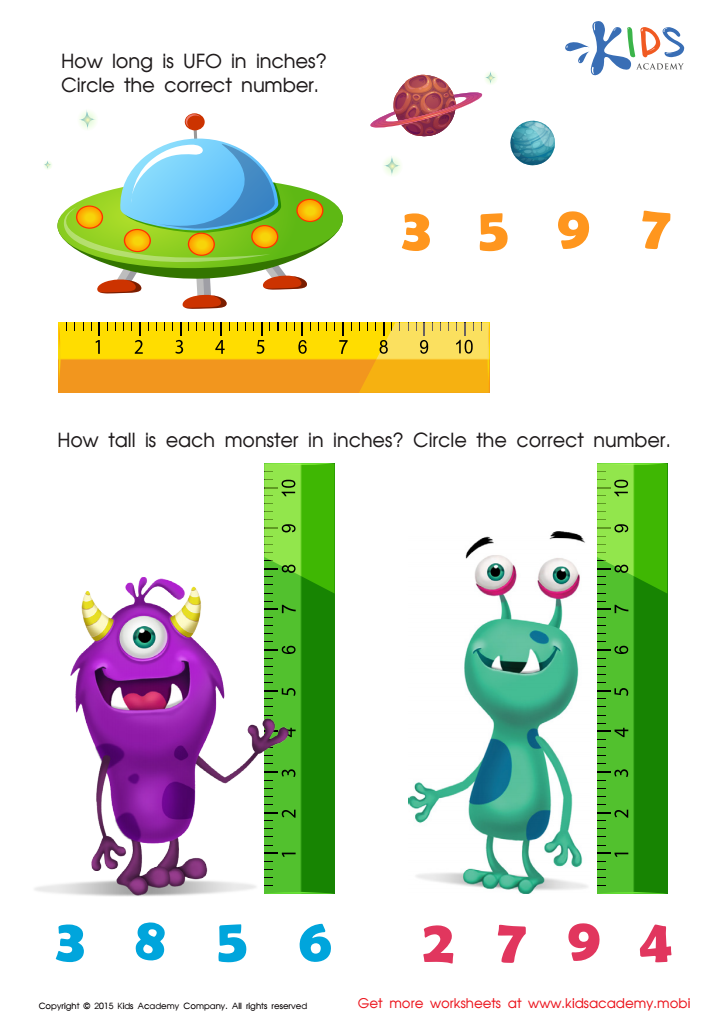
Measuring in Inches Worksheet
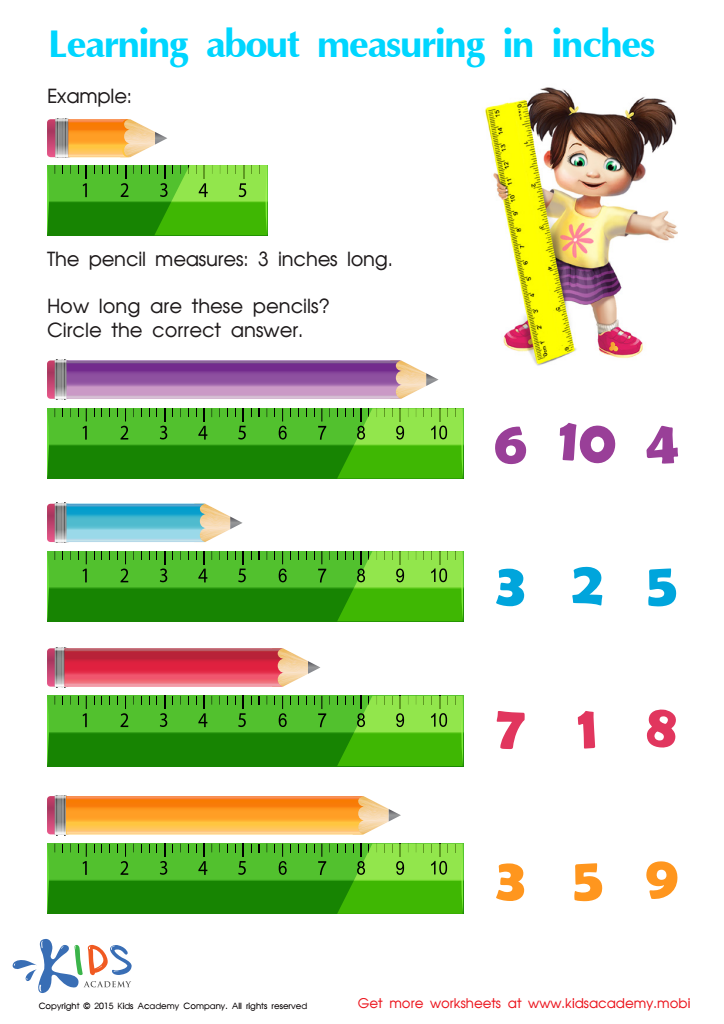
Learning About Measuring In Inches Printable
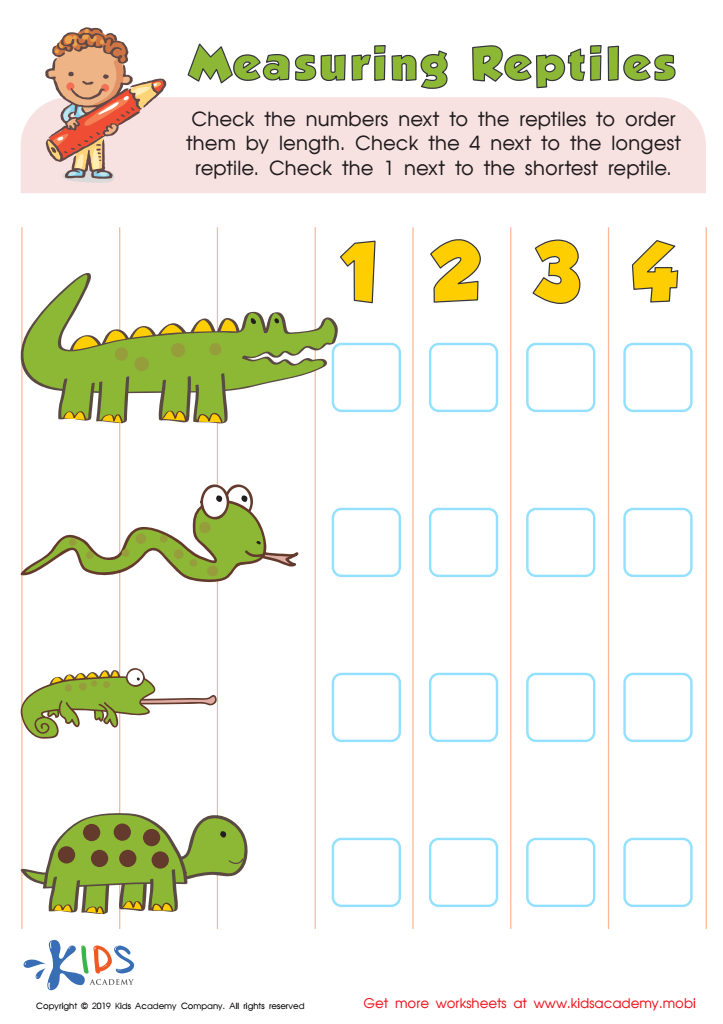
Measuring Reptiles Worksheet
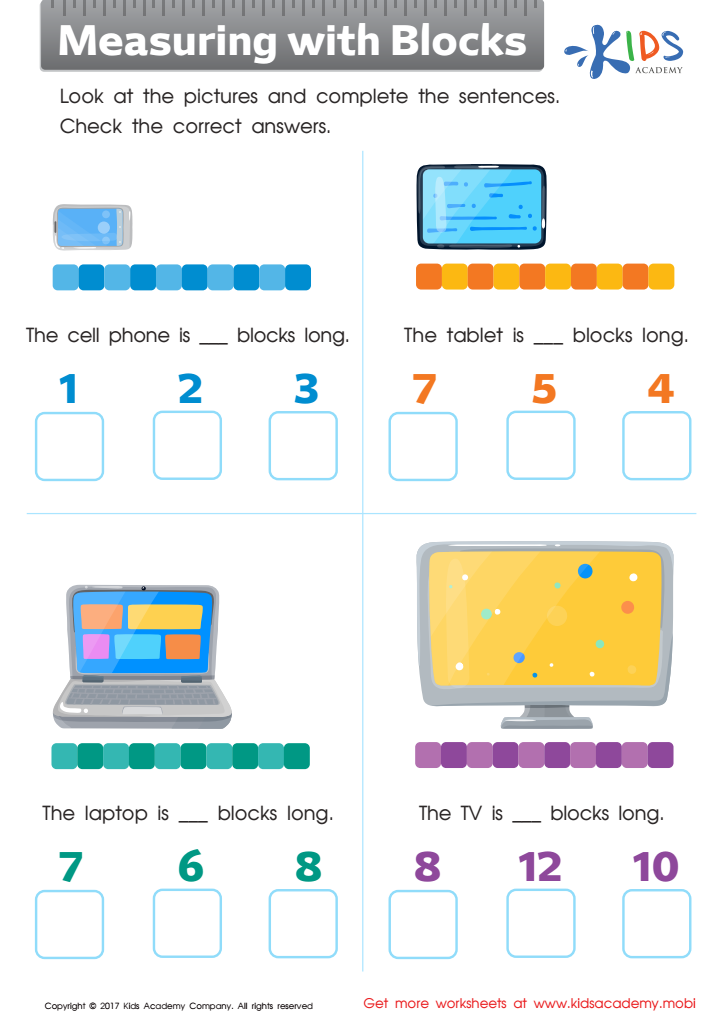
Measuring with Blocks Worksheet
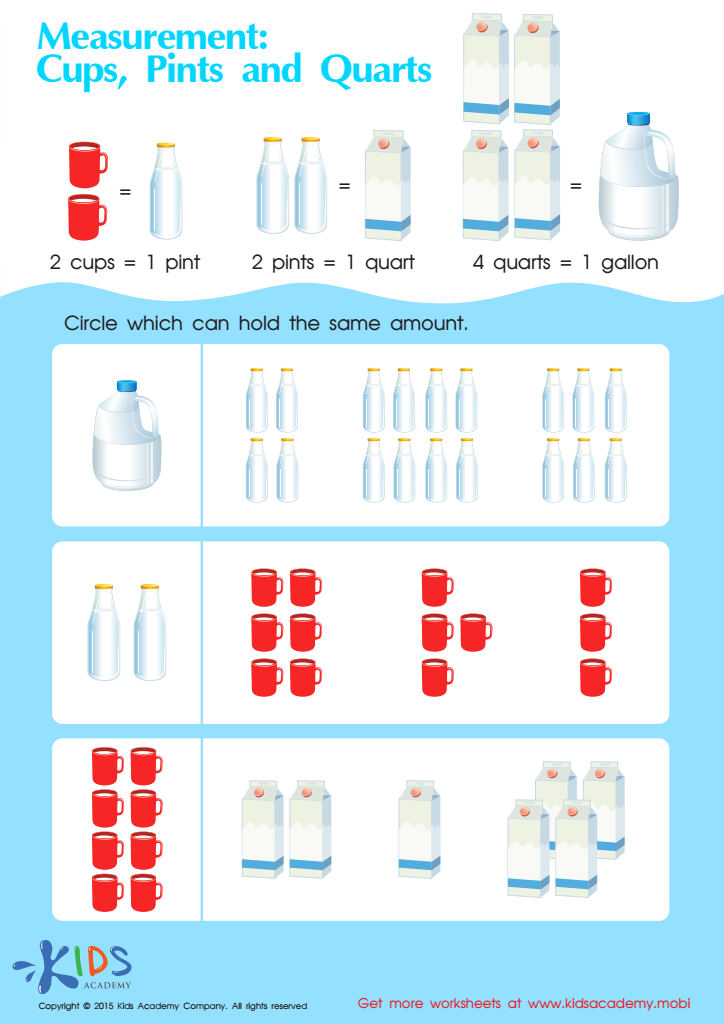
Cups, Pints and Quarts 2 Worksheet
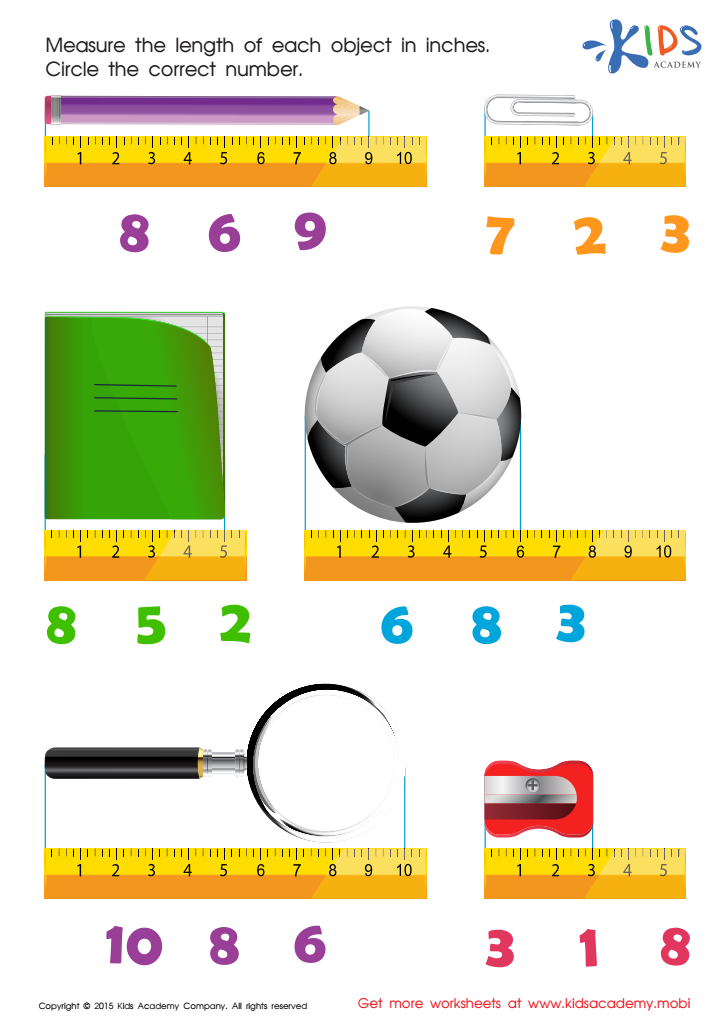
Learning measuring objects in inches Worksheet






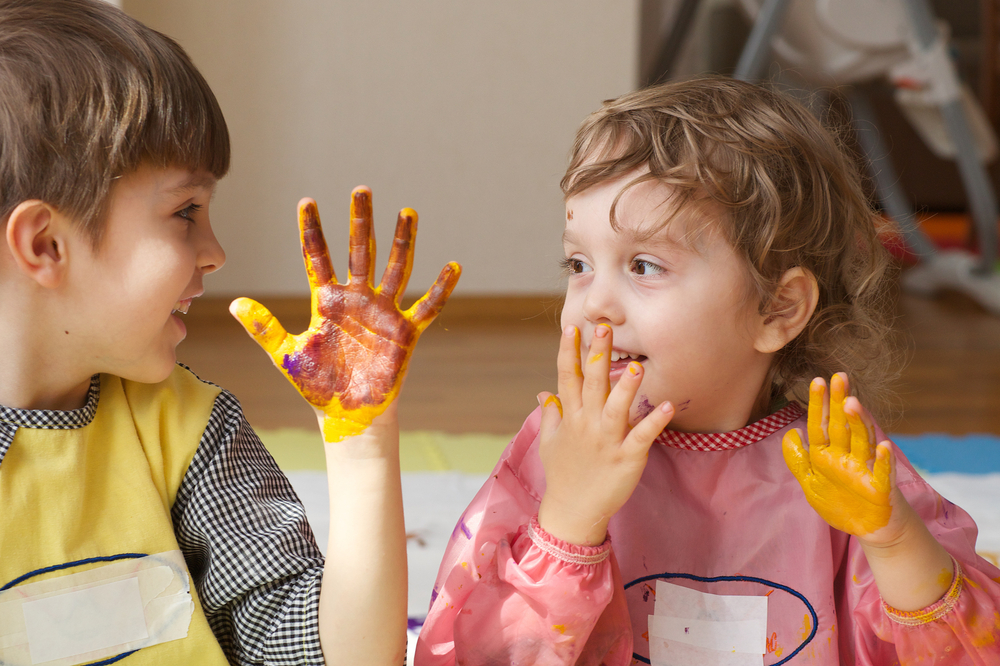

Understanding measurements is fundamental for young children, ages 5-6, as it lays the groundwork for essential math skills and practical life applications. At this developmental stage, children are like sponges, absorbing new concepts quickly. Introducing them to measurements helps develop their reasoning, problem-solving abilities, and spatial awareness.
When children learn about measurements, whether it's length, weight, volume, or time, they start to make sense of the world around them. For example, understanding how to measure the height of a plant or the length of a pencil fosters observational skills and nurtures curiosity. Also, these concepts are tied directly to real-life activities, such as baking, planning a day, or setting up simple science experiments, making math meaningful and fun.
Parents and teachers who emphasize measurement help reinforce other math skills, such as counting, addition, and subtraction. For instance, using a ruler or measuring cup involves counting numbers and understanding units. Additionally, this foundational knowledge aids in future learning; as mathematical concepts become more complex, early familiarity with measurement eases the transition.
Lastly, grasping measurements early boosts children's confidence and independence. It empowers them with the ability to quantify their surroundings, fostering a sense of accomplishment and motivating them to explore more complex concepts with enthusiasm. Therefore, adults play a pivotal role in shaping a child's mathematical journey through the introduction and application of measurements.








