Categorization skills Matching Worksheets for Ages 5-6
6 filtered results
-
From - To
Enhance your child's learning journey with our Categorization Skills Matching Worksheets designed for ages 5-6! These engaging and interactive worksheets provide a fun way for young learners to develop crucial categorization abilities. Through colorful visuals and relatable themes, children will practice sorting and matching items by shapes, colors, and categories, fostering their critical thinking and organizational skills. Ideal for both classroom and home settings, our worksheets promote hands-on learning that captures the imagination of your little ones. Empower your child's cognitive development today with these thoughtfully crafted worksheets that make learning enjoyable and effective! Download now and watch them thrive!
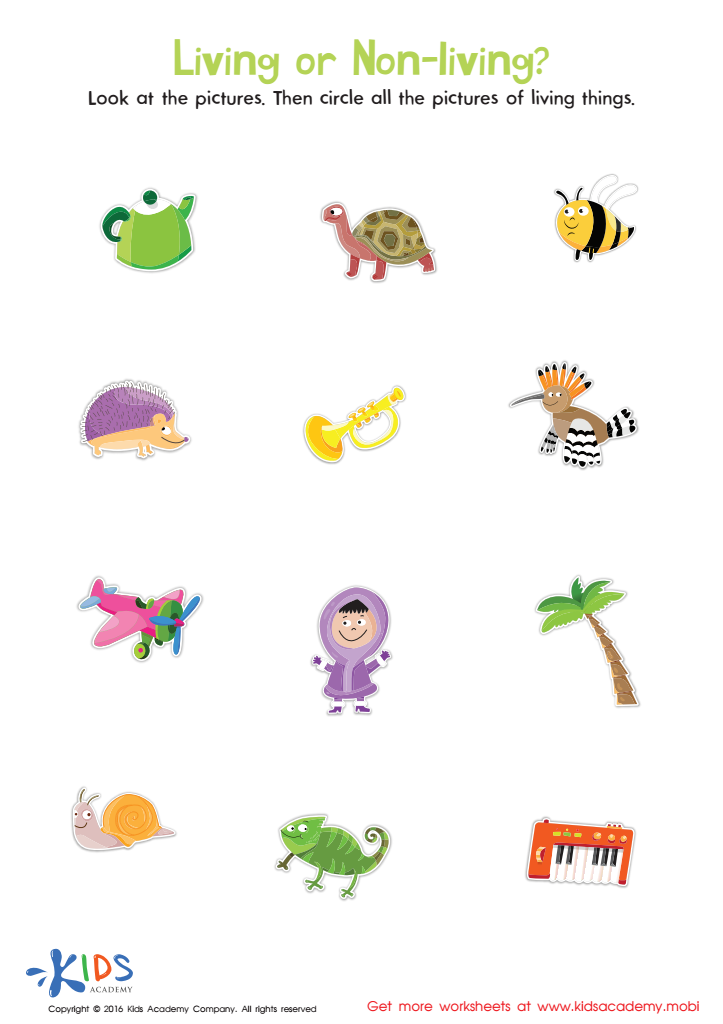
Identifying Living and Non–living Things Sorting Worksheet
 Assign to My Students
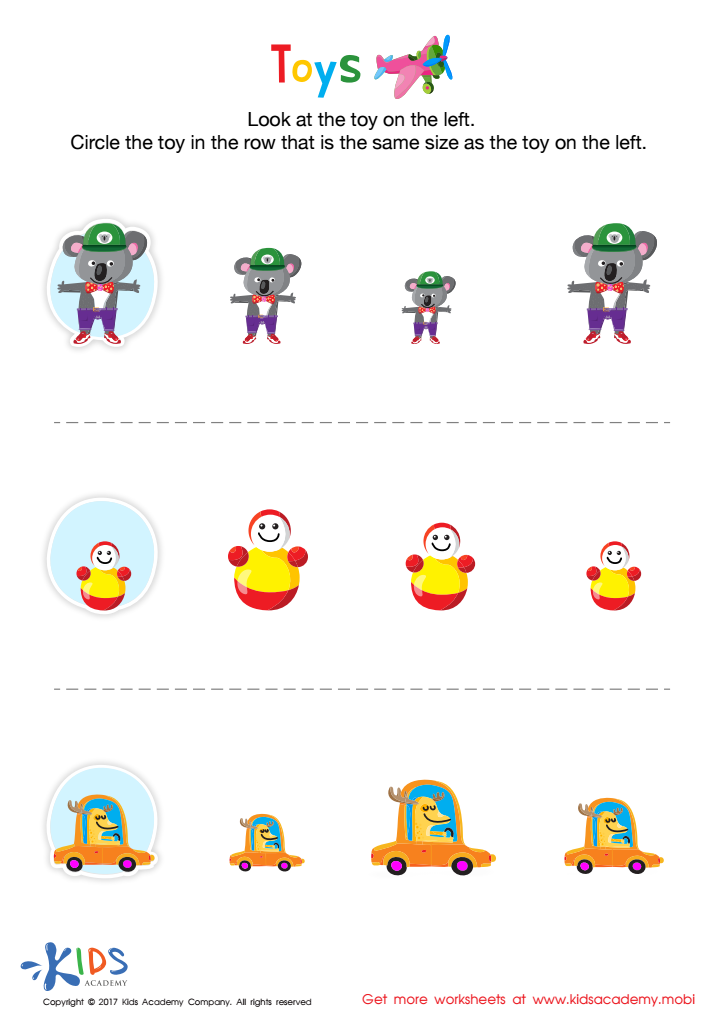
Matching: Classifying Toys by Size Worksheet
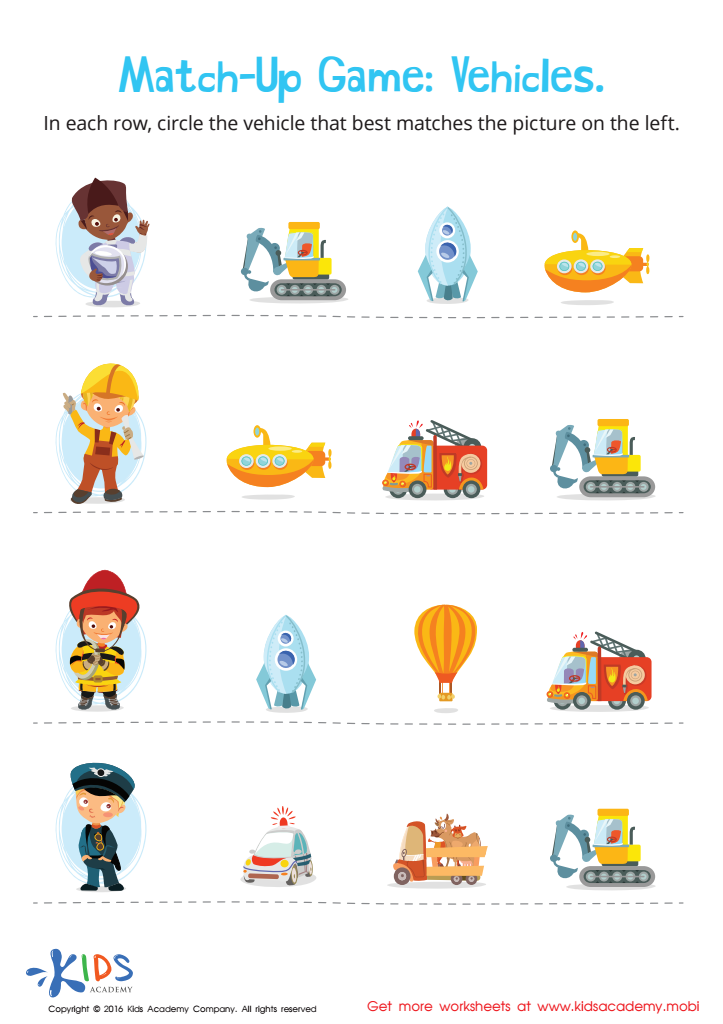
Vehicles Worksheet
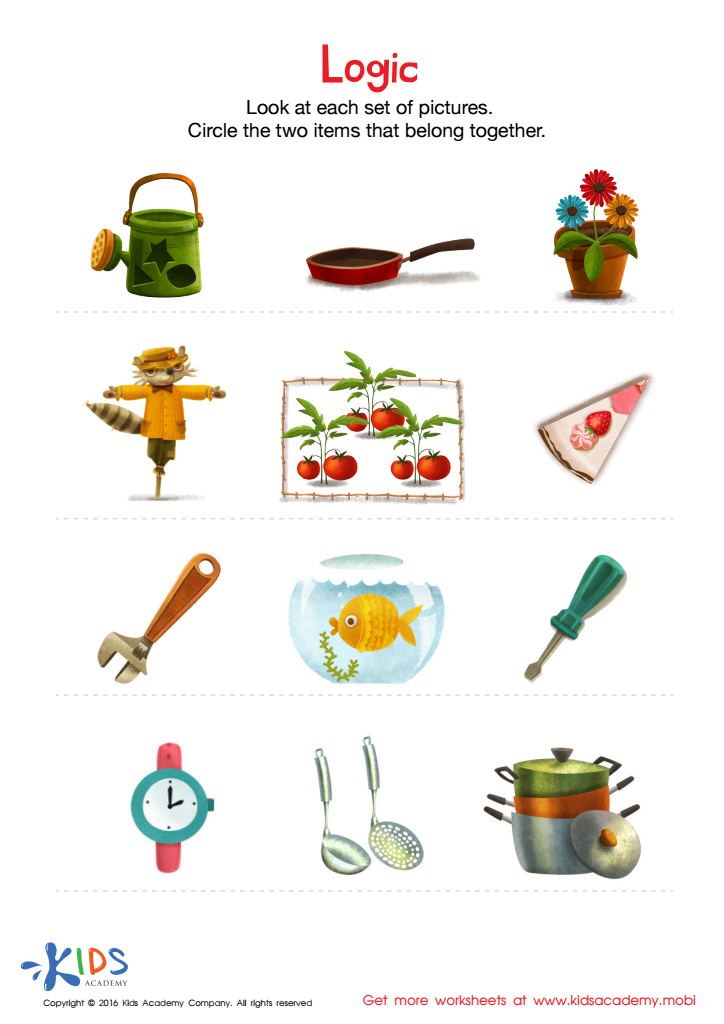
Logic Game Sorting Worksheet







Categorization skills, particularly matching, play a crucial role in the cognitive development of children aged 5-6. At this age, children are becoming more aware of their environment and establishing mental frameworks to understand the world around them. When children learn to classify objects based on attributes such as shape, color, or size, they enhance their ability to recognize patterns and make connections between different concepts.
For parents and teachers, fostering matching skills is vital for several reasons. First, it supports foundational learning in subjects like mathematics and science, where categorization is essential for sorting data and finding solutions. Second, it aids language development as children learn to articulate similarities and differences among items, thereby enriching their vocabulary.
Furthermore, engaging in matching activities promotes critical thinking and problem-solving abilities. These skills are instrumental in everyday decision-making and encourage independence. Also, as children participate in games and playful activities that involve categorization, their social skills are improved through collaboration and communication.
In conclusion, understanding and nurturing matching and categorization skills should be a priority for parents and teachers to equip children with the necessary tools for lifelong learning and successful social interactions.








