Matching skills Matching Worksheets for Ages 5-6
6 filtered results
-
From - To
Help your child develop essential matching skills with our engaging worksheets designed for ages 5-6. These printable resources are crafted to enhance visual recognition, understanding relationships, and boost cognitive abilities in a fun, interactive way. Each worksheet features vibrant illustrations and age-appropriate exercises that encourage children to match items, fostering important skills needed for early learning success. Ideal for classroom activities or at-home practice, our matching skills worksheets make learning enjoyable and productive. Empower your little ones with the foundation for critical thinking and problem-solving through these captivating and educational activities. Explore our collection and watch their confidence grow!
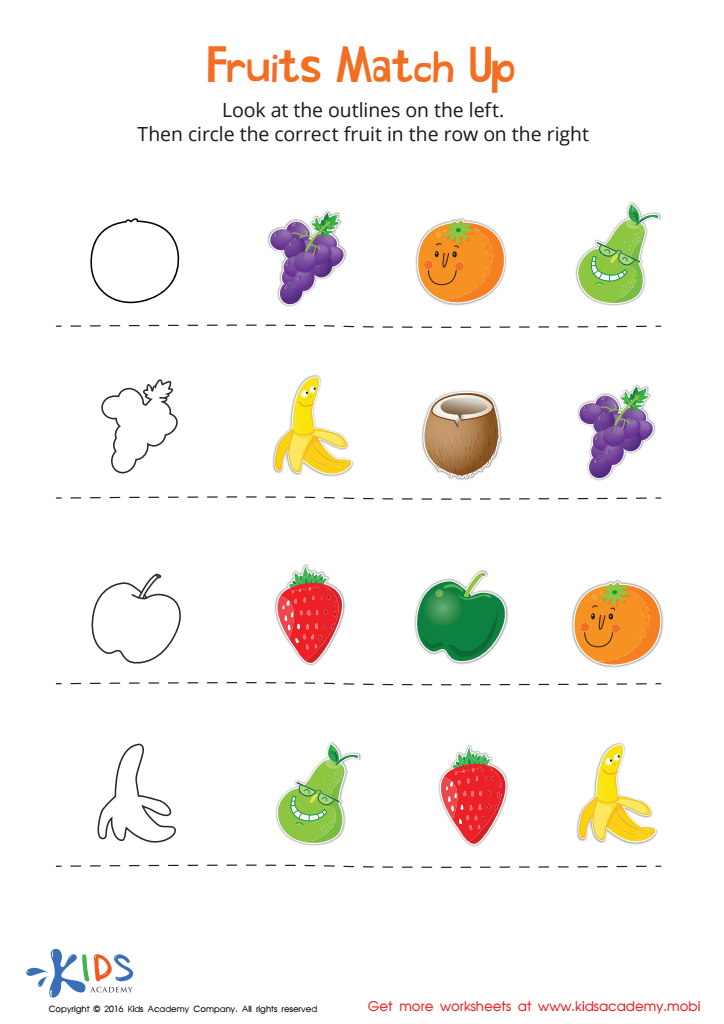
Fruits Match Up Worksheet
 Assign to My Students
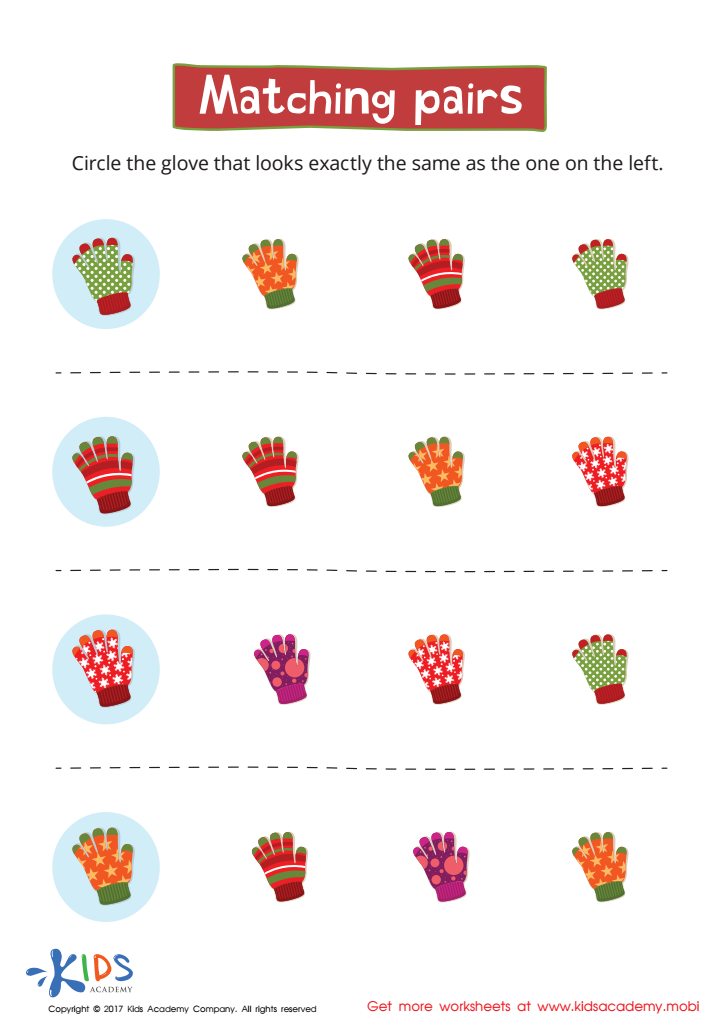
Matching: Matching Pairs Worksheet
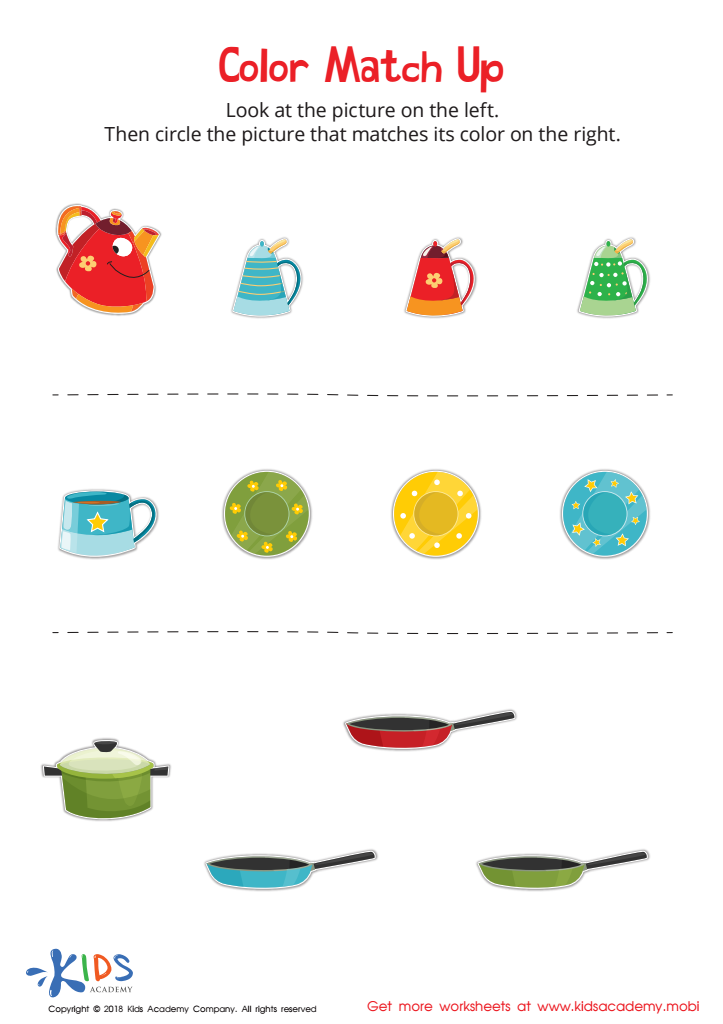
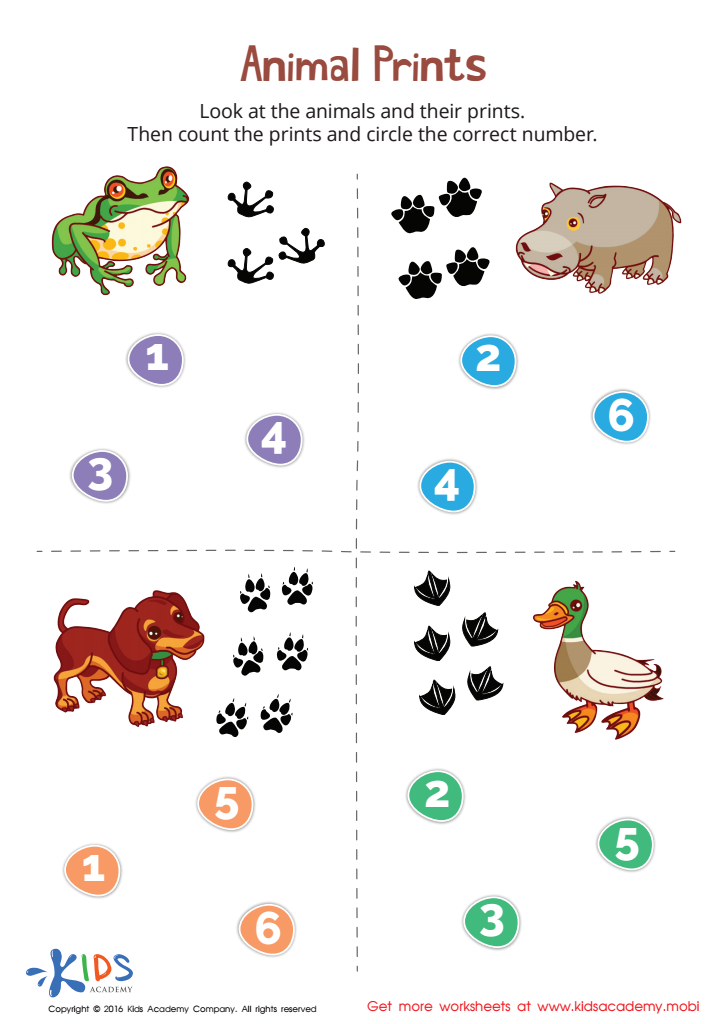
Animal Prints Match-Up Worksheet
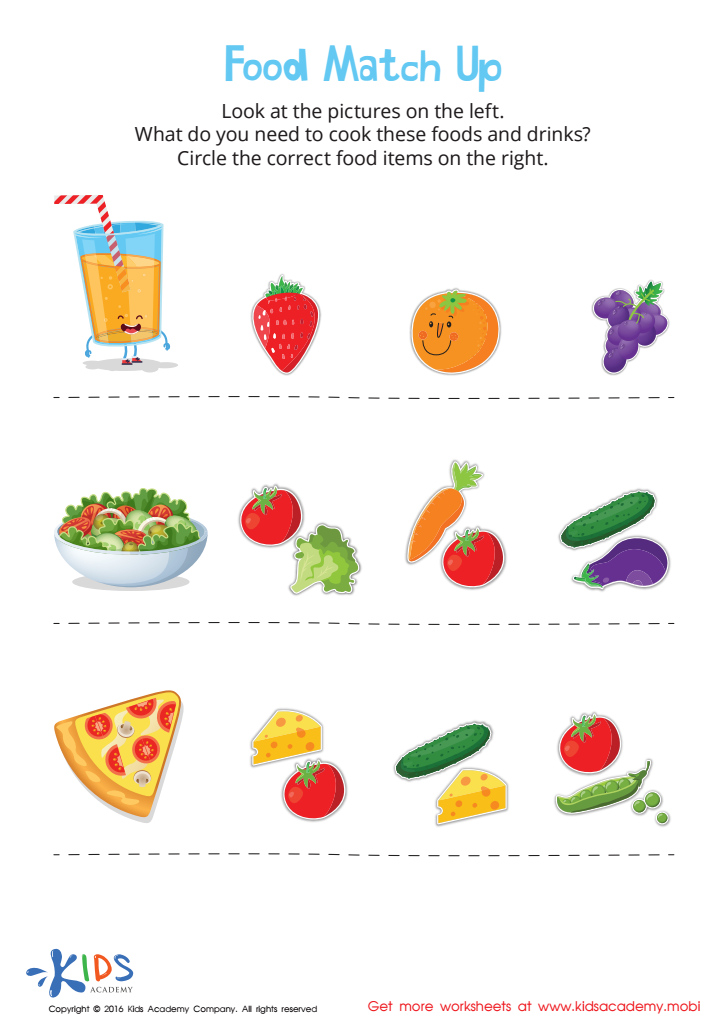
Food Match Up Worksheet
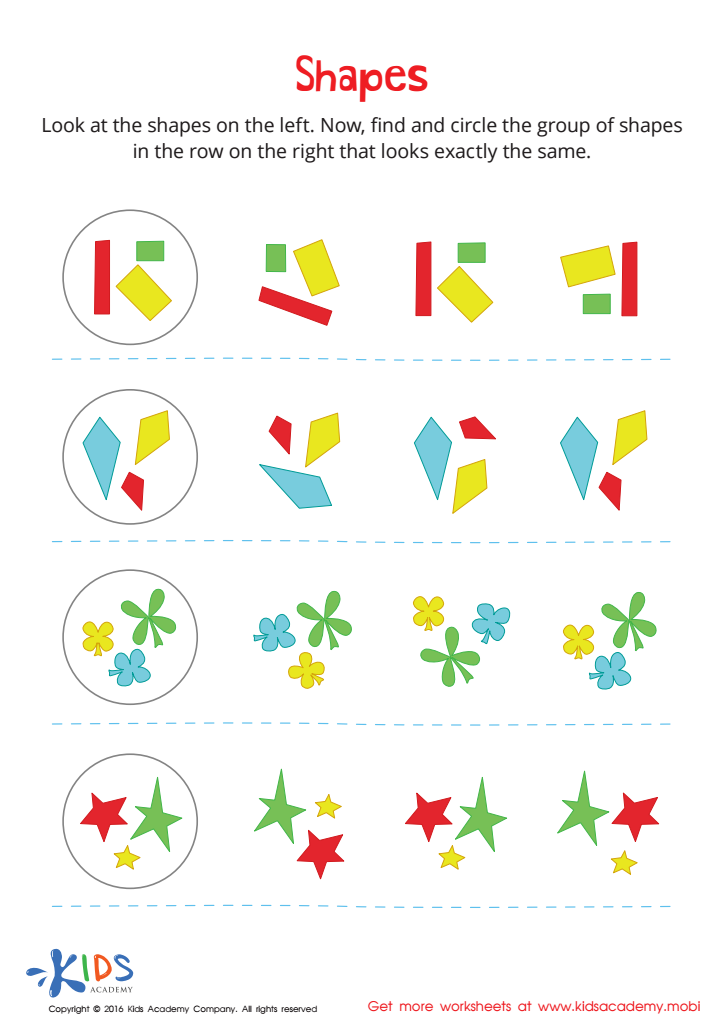
Shapes Worksheet








Matching skills are fundamental for children aged 5-6, laying the groundwork for essential cognitive and social development. At this age, children engage in learning activities that enhance their ability to recognize similarities and differences, an early form of analytical thinking. Teaching matching skills helps children enhance their memory and concentration, as they actively engage in sorting and identifying items based on specific criteria.
Parents and teachers should care about matching skills because they are closely linked to literacy and numeracy. For instance, matching letters to their sounds or numbers to visual representations is crucial for early reading and counting skills. Encouraging these skills helps children develop critical thinking and problem-solving abilities, which are vital throughout their educational journey.
Additionally, matching activities promote social interaction as children often participate in games with peers, nurturing teamwork and communication skills. These interactions build confidence and provide opportunities for children to express themselves and learn from others.
Overall, fostering matching skills in young children not only supports their academic success but also contributes to their personal and social growth. By recognizing its importance, parents and teachers can take proactive measures to integrate matching games and activities into everyday learning.








