Problem-Solving Skills Tracing Shapes Worksheets for Ages 5-6
4 filtered results
-
From - To
Enhance your child's problem-solving skills with our engaging Tracing Shapes Worksheets designed for ages 5-6. These interactive worksheets provide a fun and educational way for young learners to explore shapes and improve their fine motor skills. Each activity encourages critical thinking as children trace various geometric forms, helping them to recognize patterns and visual relationships. Our worksheets foster a love for learning through creative play, while simultaneously boosting confidence in math concepts. Perfect for classroom or homeschooling, these resources offer a wonderful opportunity for kids to develop essential problem-solving abilities while enjoying hands-on activities. Get started on their learning journey today!
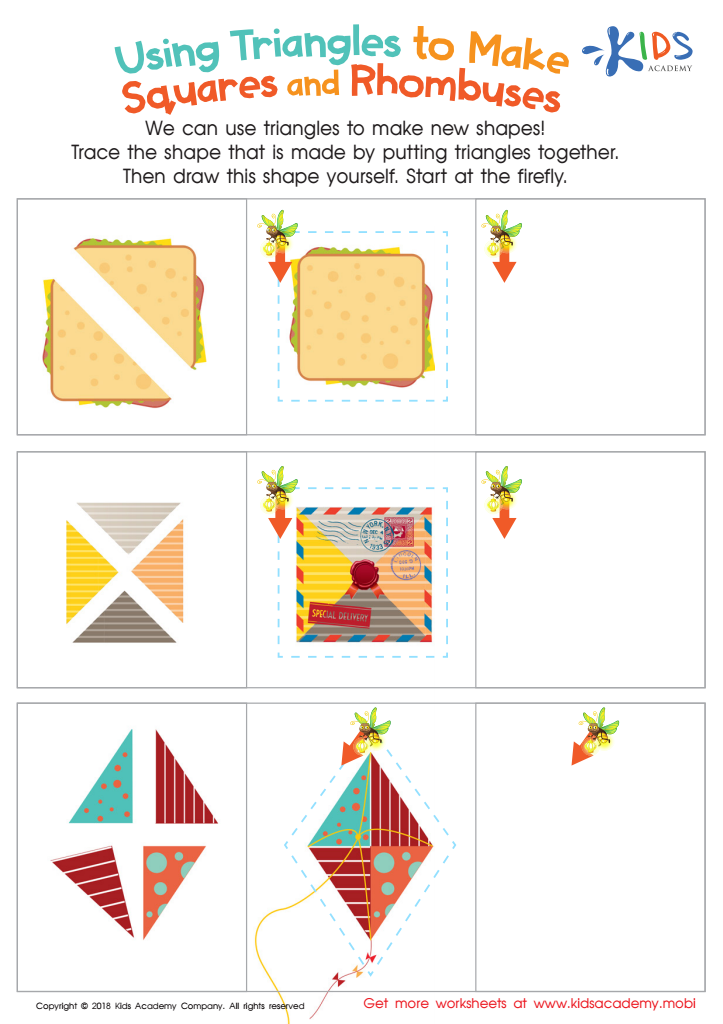
Using Triangles to Make Squares and Rhombuses Worksheet
 Assign to My Students
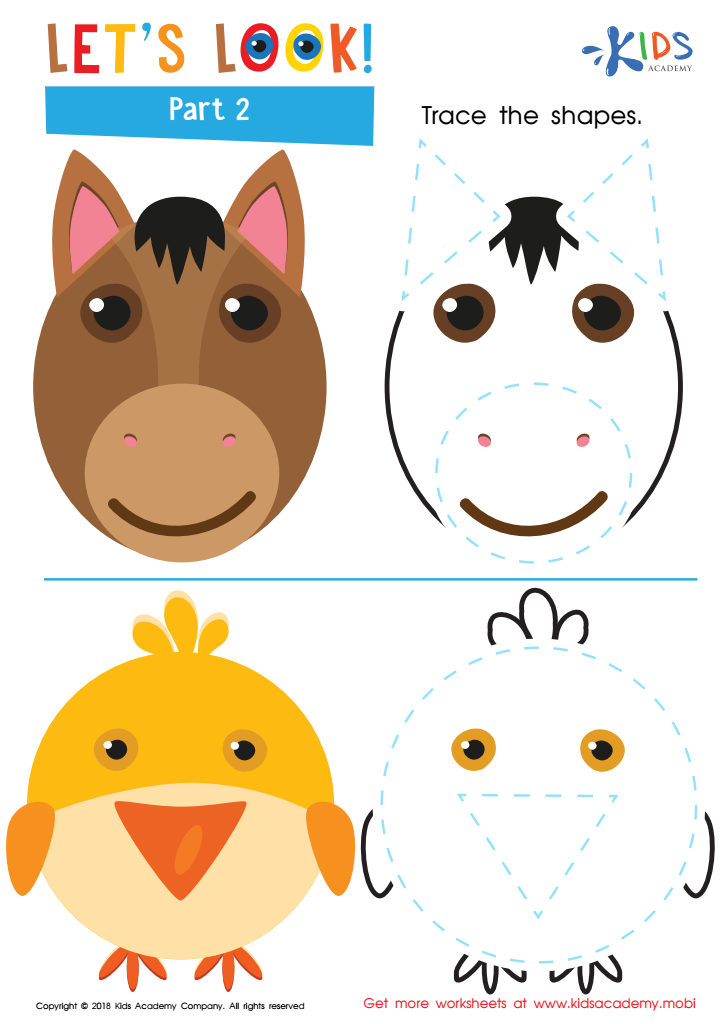
Let's Look! Part 2 Worksheet
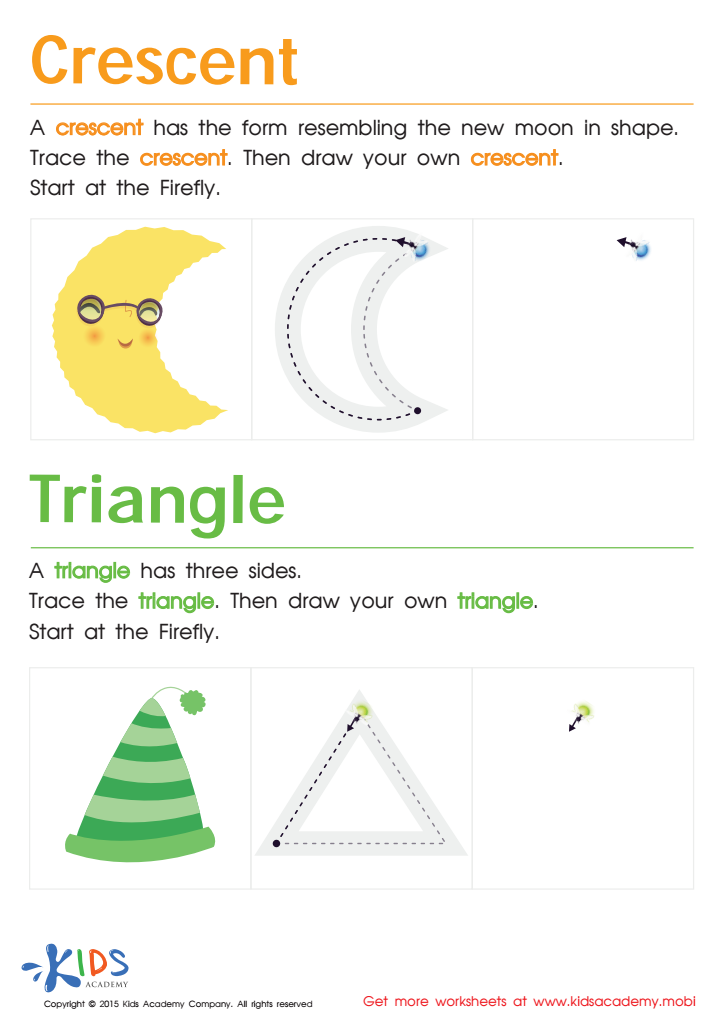
Learning to Draw Crescents And Triangles Worksheet

Matching 2D and 3D Shapes Worksheet








Problem-solving skills are crucial for early development, and tracing shapes provides a stimulating way for children ages 5-6 to enhance these abilities. At this age, children are naturally curious and eager to explore their environment, making it an ideal time to engage them in activities that develop critical thinking.
Tracing shapes helps children understand concepts of geometry and spatial awareness, foundational skills necessary for later math learning. As they practice, they learn to recognize patterns, differentiate between shapes, and relate them to real-world objects, fostering both cognitive and language development.
Moreover, this activity fosters fine motor skills as children work on hand-eye coordination, grip strength, and control, essential for tasks like writing. Parents and teachers can observe how children approach challenges while tracing—whether they take their time, try again after a mistake, or ask for help—providing insights into their problem-solving strategies and resilience.
By supporting the development of problem-solving skills through tracing shapes, parents and teachers not only prepare children for academic success but also nurture essential life skills, such as persistence, creativity, and adaptability, which are invaluable as they grow. Building these abilities now lays a foundation for future learning and problem-solving in various contexts.