Basic arithmetic skills Word Problems Worksheets for Ages 5-6
4 filtered results
-
From - To
Discover our engaging basic arithmetic skills word problems worksheets, designed specifically for ages 5-6! These interactive worksheets help young learners tackle foundational math concepts through fun and relatable scenarios. By solving age-appropriate word problems, children will enhance their critical thinking and problem-solving abilities while reinforcing addition and subtraction skills. Each worksheet features colorful visuals and playful themes to capture your child’s interest and keep them motivated. Perfect for homeschooling, in-class activities, or extra practice at home, our worksheets provide a supportive environment for young minds to thrive in math. Start exploring mathematics with confidence today!
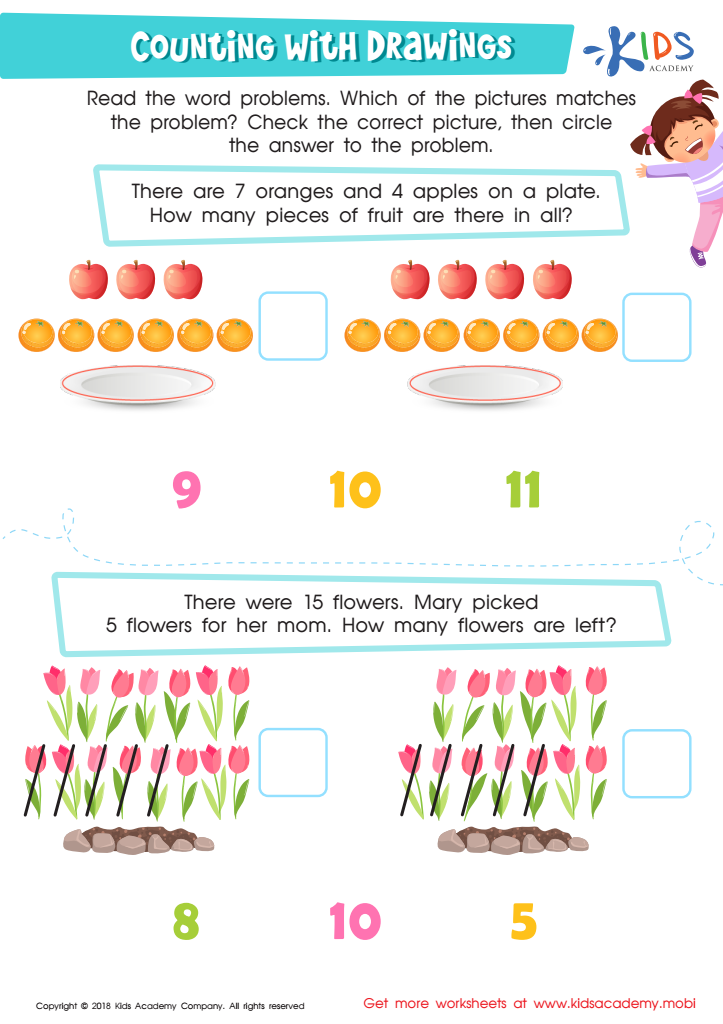
Counting with Drawings: Fruits & Chocolates Worksheet
 Assign to My Students
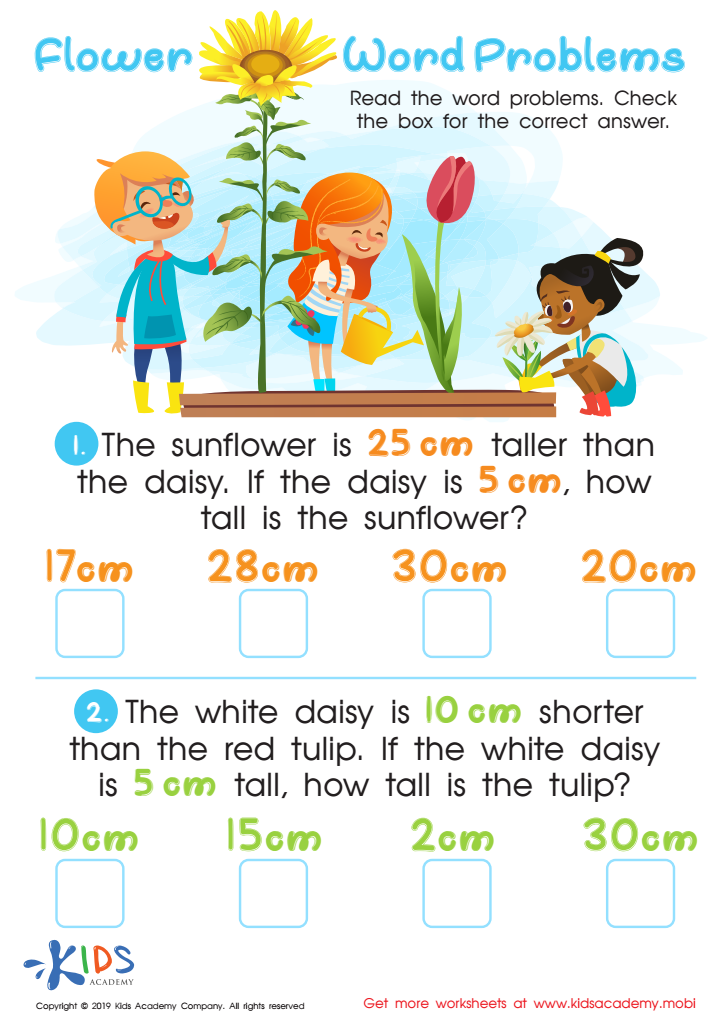
Flower Word Problems Worksheet
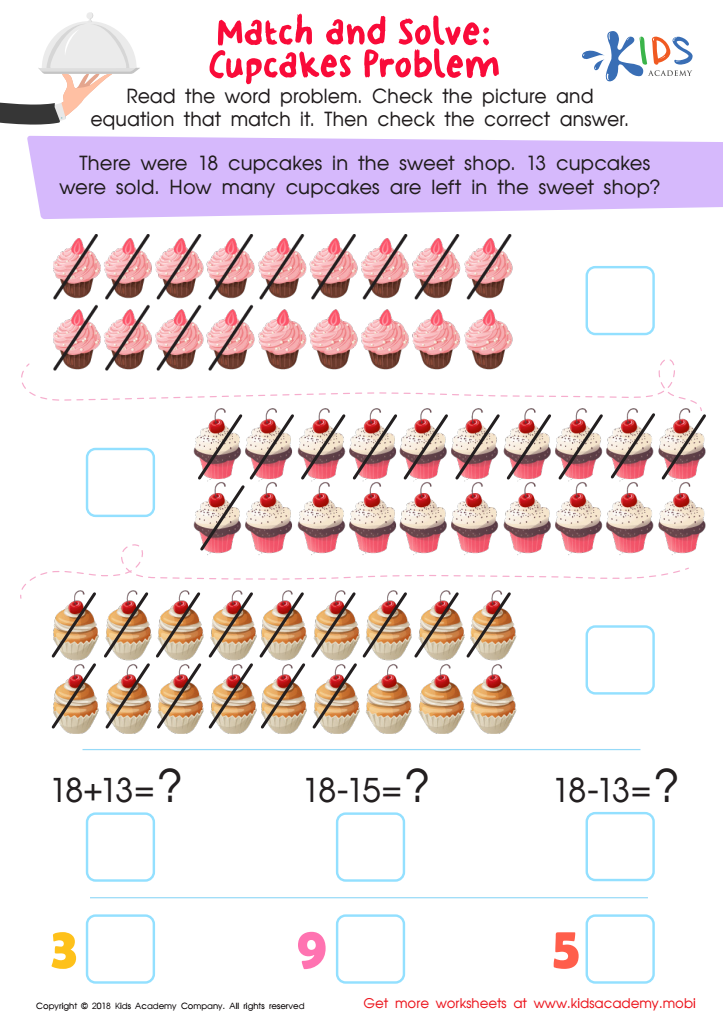
Match and Solve: Cupcakes Problem Worksheet
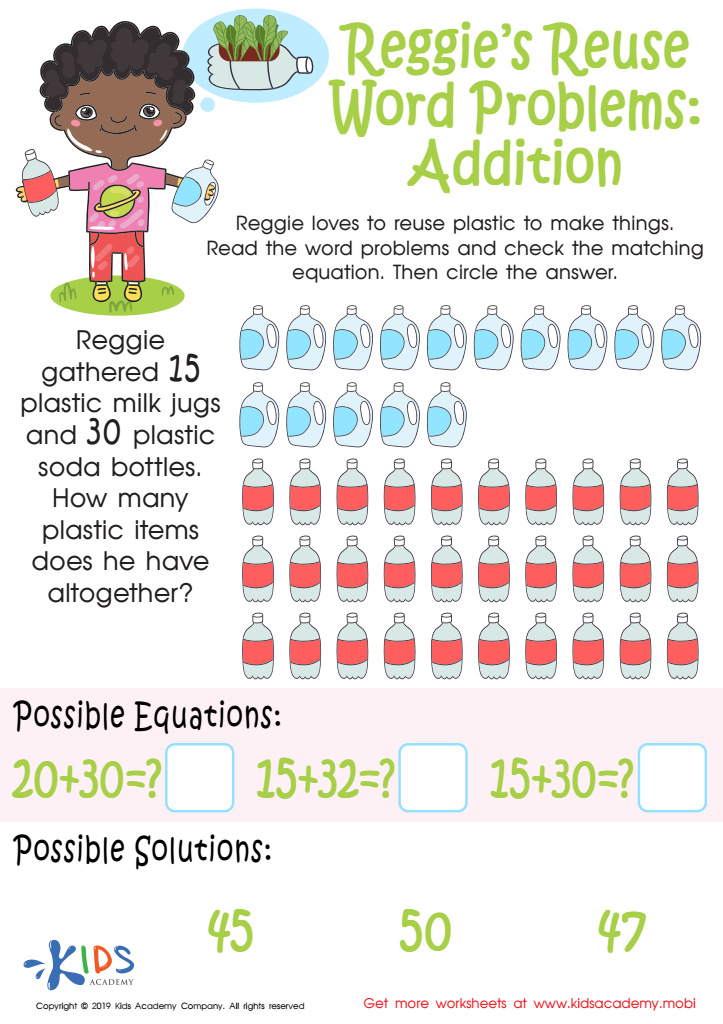
Reggie's Reuse Word Problems: Addition Worksheet








Basic arithmetic skills, particularly word problems, play a crucial role in early childhood education for children ages 5-6. At this developmental stage, children are building foundational cognitive skills that will serve them throughout their education. Word problems encourage critical thinking by requiring children to extract information from a narrative context, developing their comprehension abilities.
Understanding word problems helps children learn to translate real-world scenarios into mathematical concepts, fostering relevance and practical application of mathematics in everyday life. This not only engages children but also enhances their problem-solving skills, as they must analyze a situation, determine what information is necessary, and choose the appropriate operation to find a solution.
Moreover, word problems improve language skills, enabling children to better articulate their thoughts and reasoning, which is vital for academic success across disciplines. By integrating math with language, parents and teachers cultivate a holistic development approach that celebrates both numeracy and literacy.
In conclusion, focusing on basic arithmetic word problems at this age builds confidence and resilience in learners, encouraging a growth mindset that can spark a lifelong enthusiasm for math while equipping them for future educational challenges.








