
Attention to Detail Reading Worksheets for Ages 5-6
5 filtered results
Difficulty Level
Grade
Age
-
From - To
Subject
Activity
Standards
Enhance your child's reading skills with our Attention to Detail Worksheets, designed specifically for ages 5-6. These engaging worksheets promote critical thinking as young learners identify key details in texts and illustrations. By practicing observation and comprehension, children build essential literacy skills while having fun. Each worksheet features vibrant images and captivating themes, stimulating curiosity and encouraging interactive learning. Perfect for parents or educators, our worksheets provide targeted practice to help kids develop precision in reading and follow instructions closely. Dive into our collection and watch your child’s confidence soar as they master the art of paying attention to detail in reading!
Favorites
With answer key
Interactive
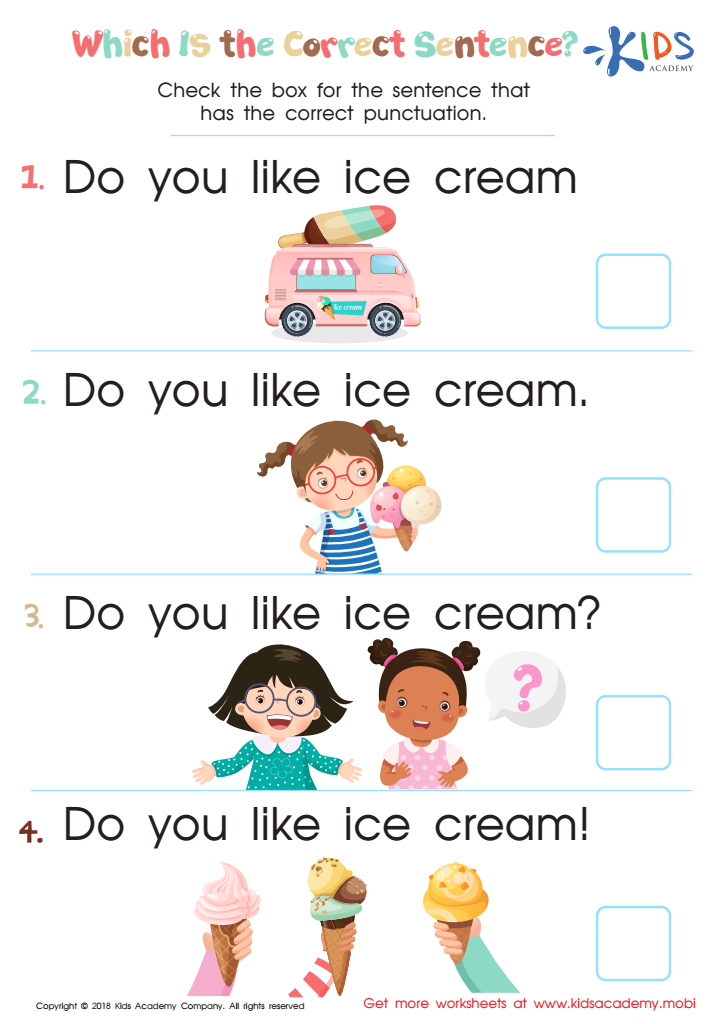
Which is the Correct Sentence? Worksheet
Punctuation is crucial in sentence formation. If your kid still doesn't grasp it, bigger hurdles await when writing sentences. Get them to read simple sentences, then ask if they know the right punctuation. Assist them in selecting the sentence that has the accurate punctuation.
 Assign to My Students
Which is the Correct Sentence? Worksheet
Worksheet
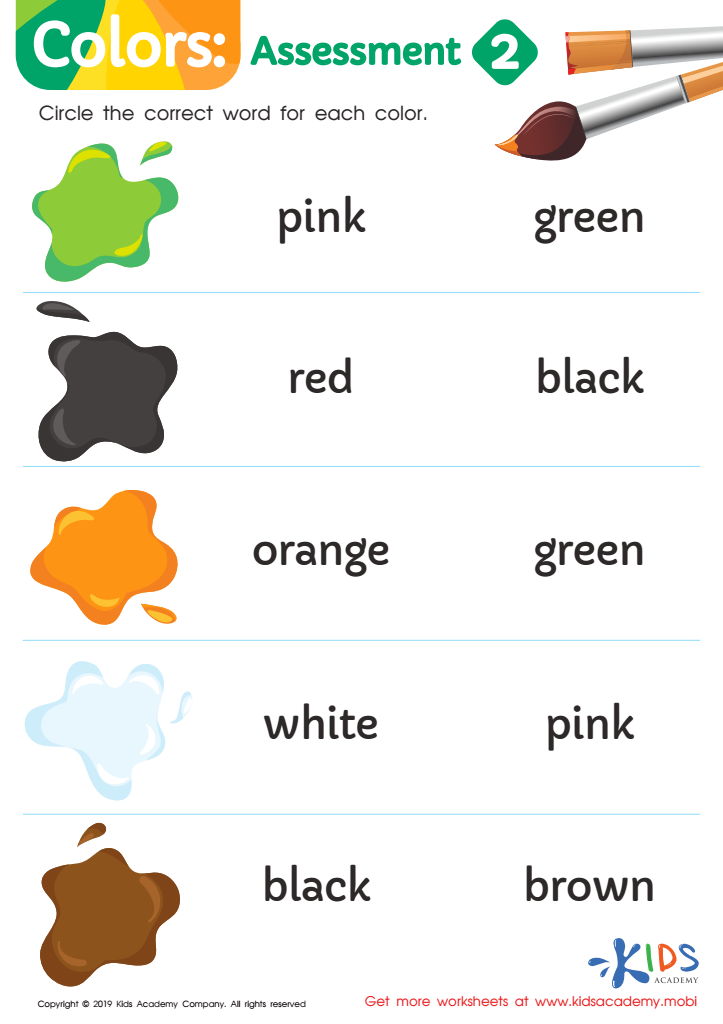
Colors: Assessment 2 Worksheet
Teach color words to young students to build fluency and confidence. Check knowledge with an assessment worksheet. Have students look at paint samples and circle the correct color word. This assessment helps parents and teachers measure a child’s accuracy when reading color words.
Colors: Assessment 2 Worksheet
Worksheet
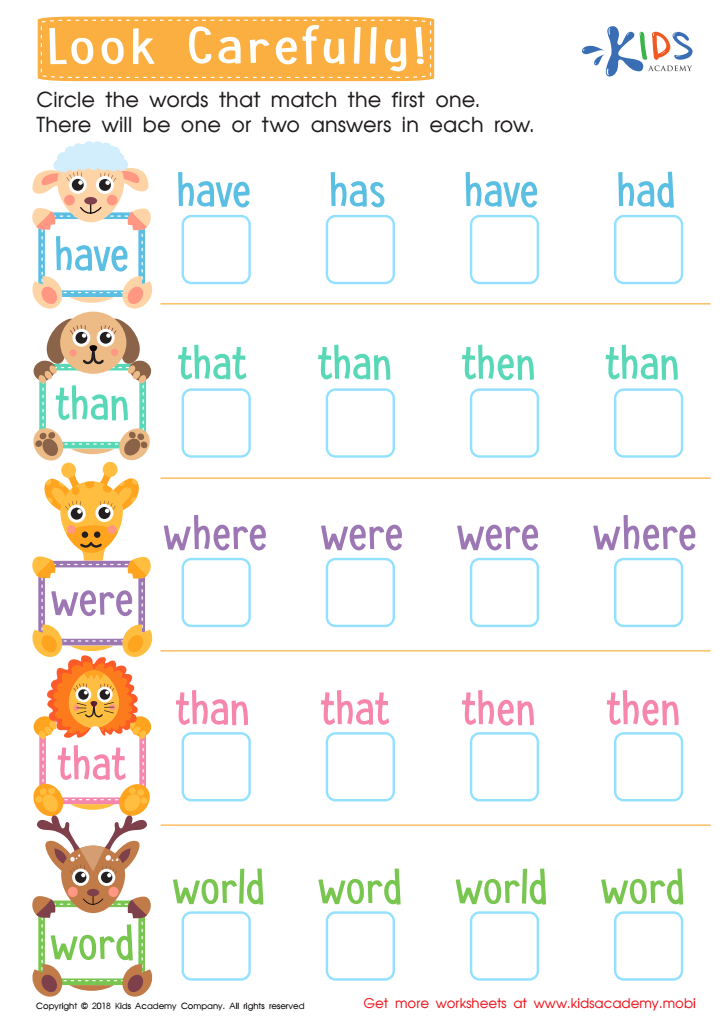
Look Carefully Worksheet
It's crucial to teach kids to identify sight words and become fluent readers. This free worksheet helps make it simpler for kids to learn the similarities and differences between similar words. They'll get practice by looking at the box word and selecting the one that matches from the row.
Look Carefully Worksheet
Worksheet
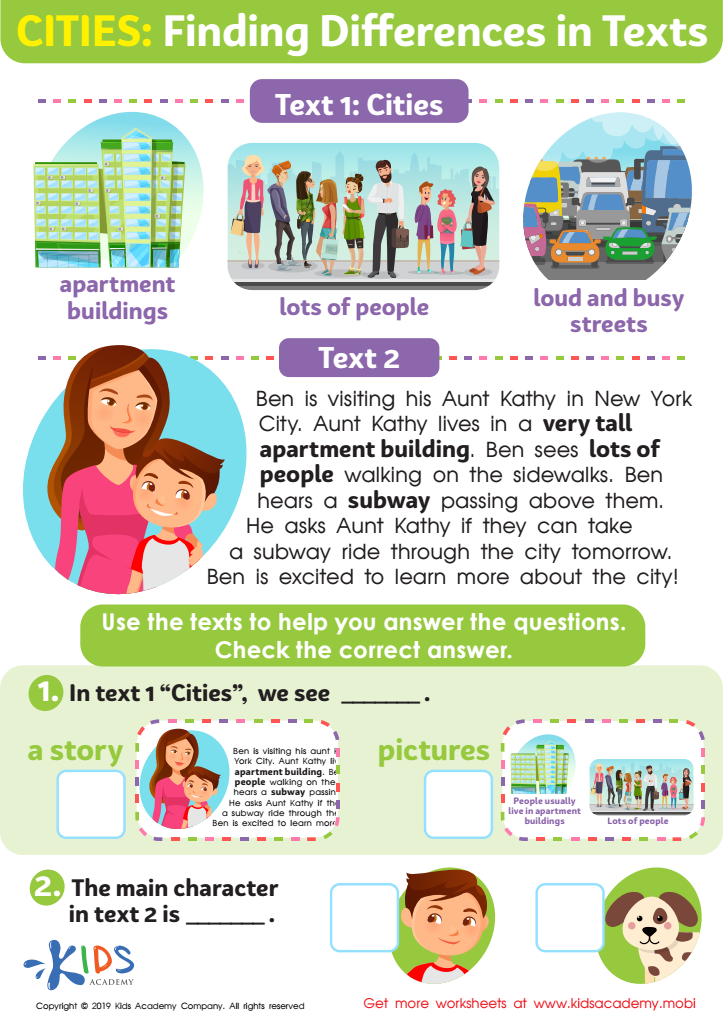
Cities: Finding Differences Worksheet
Critical thinking is essential for reading comprehension. New readers must be able to identify the key information in different text formats. This worksheet helps children learn what they might find in cities and how to differentiate between stories and pictures.
Cities: Finding Differences Worksheet
Worksheet
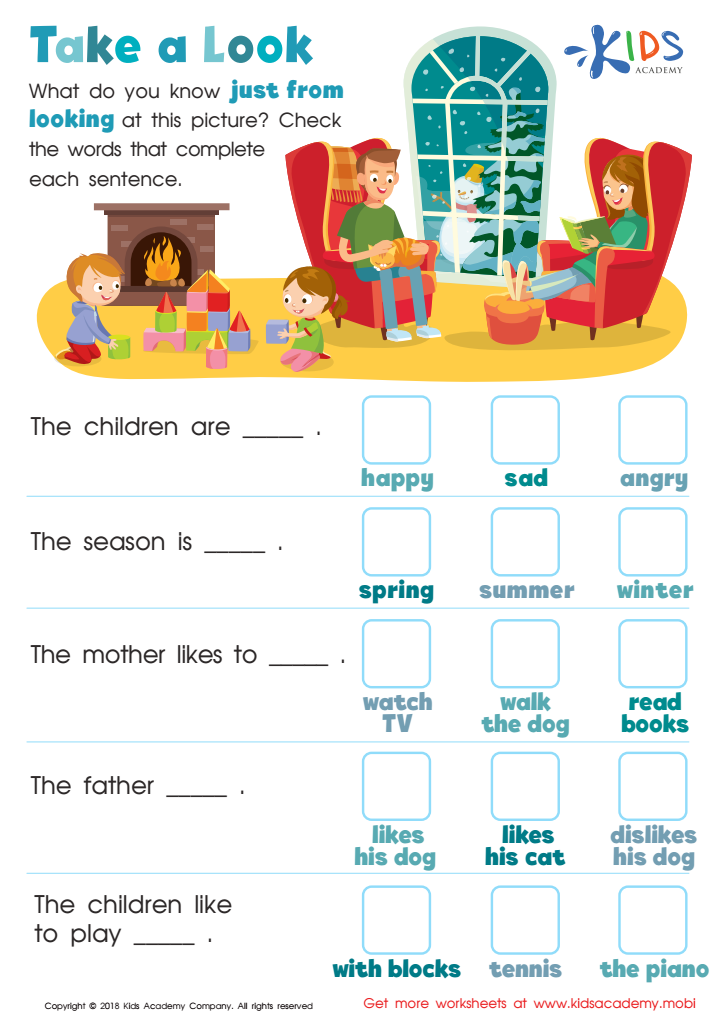
Take a Look - Part 1 Worksheet
Young learners gain understanding when using picture clues when reading. Looking at illustrations can help students learn the meaning of key vocabulary when reading fiction or informational text. Ask your students to look at the worksheet and observe what they can learn from the picture. It's a great comprehension strategy for early readers.
Take a Look - Part 1 Worksheet
Worksheet
Join Kids Academy for Free
Who is primarily going to use this learning content?







Attention to Detail Reading for ages 5-6 is crucial for early literacy development, as it lays the foundation for future reading success. At this age, children are rapidly acquiring language skills and developing comprehension abilities, which can significantly benefit from a focus on detail.
When parents and teachers emphasize attention to detail, they encourage young learners to notice specific elements within texts, such as characters, settings, and plot subtleties. This skill not only aids comprehension but also fosters critical thinking and analytical abilities. Children who can adequately process details tend to enhance their vocabulary, recognize narrative structures, and make connections between texts and the world around them.
Moreover, early attention to detail cultivates a habit of careful observation and active engagement in reading activities. As children learn to appreciate the nuances of a story or information text, they become more motivated readers, developing a lifelong love for literacy. This focus also correlates with improvements in spelling, writing, and overall academic performance.
In summary, nurturing attention to detail in reading equips young children with essential skills needed for holistic educational success and supports their cognitive and emotional growth, ultimately shaping them into confident, proficient readers.








