Rhyming skills development Reading Worksheets for Ages 5-6
3 filtered results
-
From - To
Enhance your child's reading abilities with our engaging Rhyming Skills Development Worksheets designed specifically for ages 5-6. These printable activities encourage creativity and help children understand the nuances of sound patterns in language. Through fun exercises, children will practice identifying, generating, and matching rhyming words, boosting their vocabulary and phonemic awareness. Our worksheet collection fosters early literacy skills while keeping learning enjoyable. Parents and educators can easily download and print these resources, providing an effective way to make reading skills fun. Empower your child’s learning journey with our dynamic and interactive rhyming worksheets today!
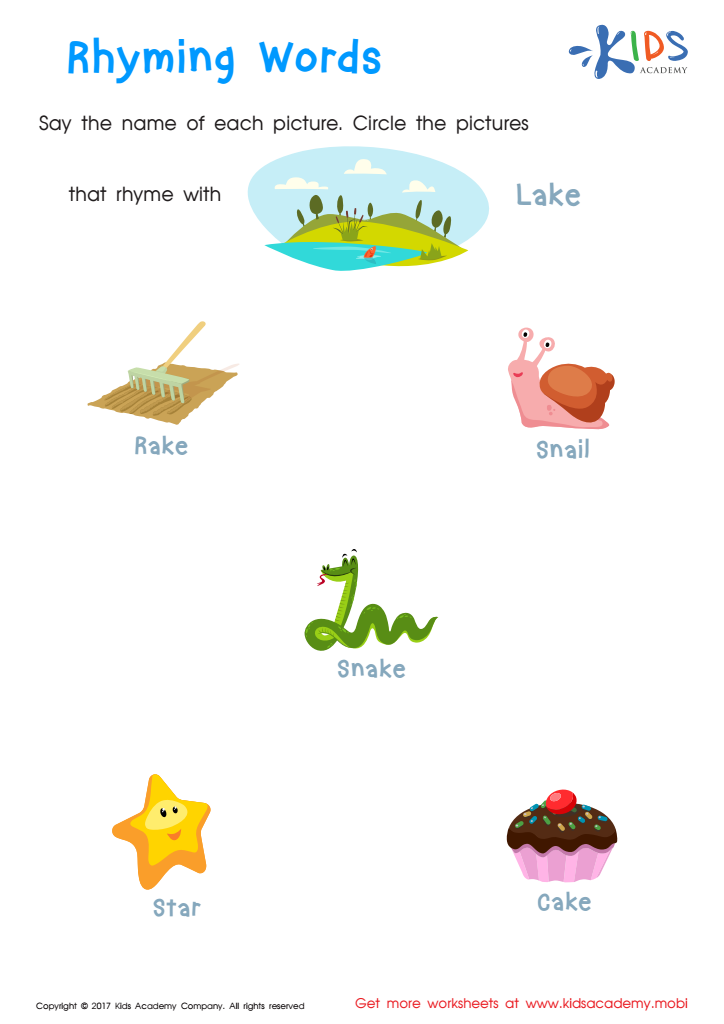
Rhyming Words Rhyming Worksheet
 Assign to My Students
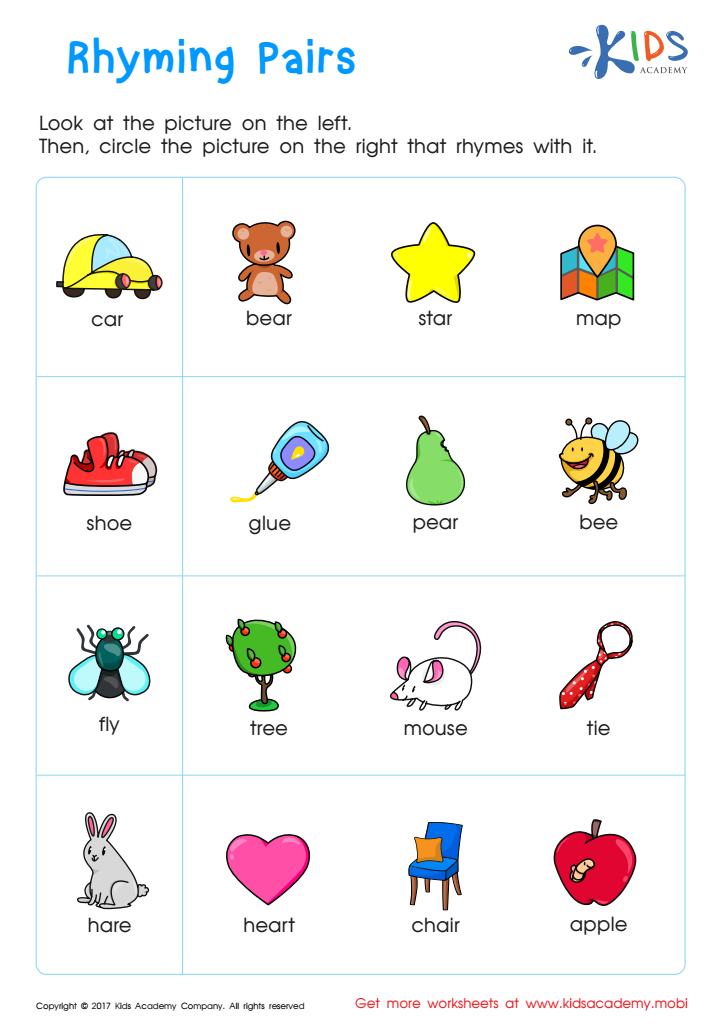
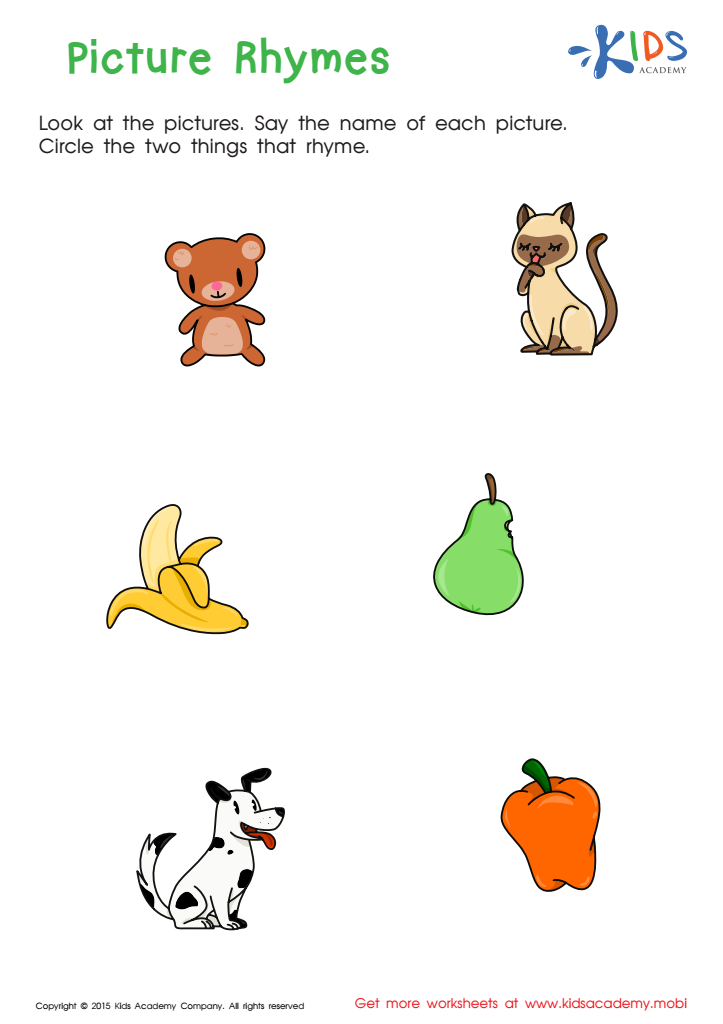
First Words: Picture Rhymes Worksheet







Rhyming skills play a crucial role in early reading development for children aged 5-6, and it's important for parents and teachers to engage with this aspect of literacy. Rhyming helps children develop phonemic awareness, the ability to hear and manipulate sounds in words. This foundational skill is essential for reading success, as it aids in the recognition of word patterns and promotes decoding skills.
When children identify rhyming words, they enhance their auditory discrimination abilities, which further supports reading fluency and comprehension. Rhymes also make learning fun and engaging, capturing children's interest and encouraging them to explore language through poetry, songs, and stories.
Moreover, incorporating rhyming activities, such as games or songs, can strengthen vocabulary development and foster a love for reading. Storybooks filled with rhyme can also boost memory retention, as children are more likely to remember their favorite rhyming stories.
Ultimately, by prioritizing rhyming skills, parents and teachers can help create a solid foundation for literacy that supports academic achievement and boosts confidence in young learners. Cultivating these skills ensures that children will be better prepared for future reading challenges and enjoy a lifetime of literacy exploration.








