Filters

16 filtered results

Clear all filters
Favorites
With answer key
Interactive

16 filtered results

Difficulty Level

Grade


Explore our engaging Vocabulary Building Reading Worksheets designed specifically for children aged 5-6. These worksheets nurture essential language skills through fun and interactive activities, helping young learners enhance their vocabulary and comprehension. With colorful illustrations and kid-friendly content, your child will enjoy expanding their word bank while developing a love for reading. From matching words to images to filling in the blanks, our resources provide a comprehensive approach to vocabulary enrichment. Perfect for parents, teachers, and homeschoolers, our worksheets are a valuable tool in promoting literacy in early childhood education. Unlock your child's language potential today!

Check out this FREE Trial Lesson on Reading for age 5-6!

Recognize Words that Rhyme

Favorites
With answer key
Interactive
  • 5-6
  • Vocabulary Building
  • Reading
Poem: My New Kite Worksheet

Poem: My New Kite Worksheet

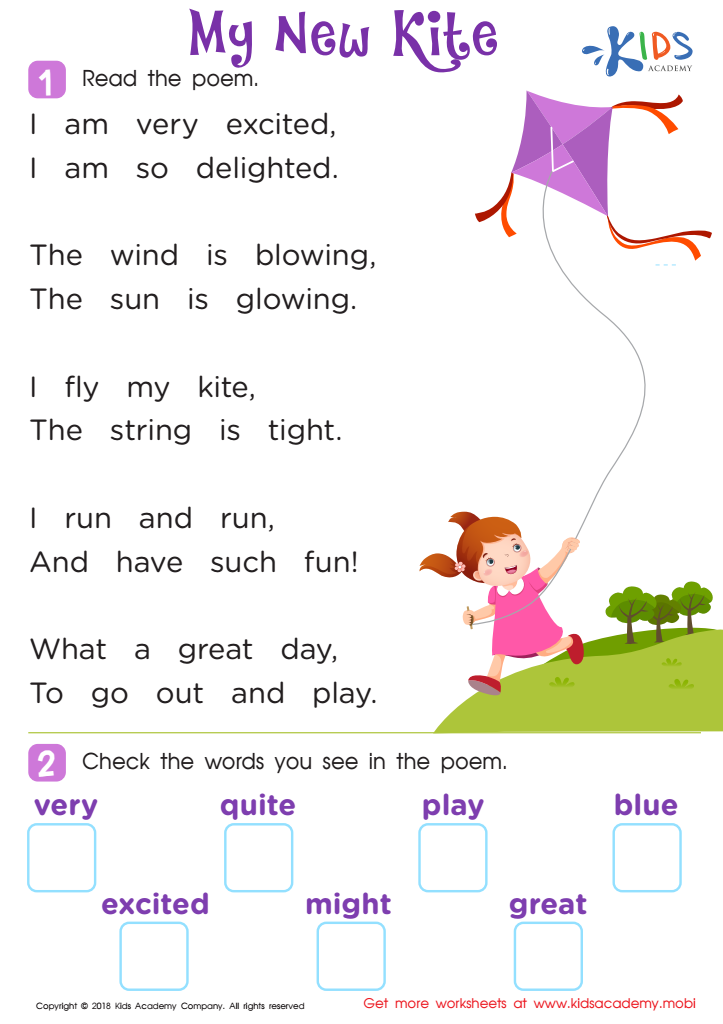
Read a cheerful poem with your child and have them check the boxes next to the words that appear. Then, ask them to identify rhyming words, noting that these won't appear at the bottom of the page. This is a delightful reading activity to help your child remember what they read.
Poem: My New Kite Worksheet
Worksheet
Printable Rhyming Words Worksheet

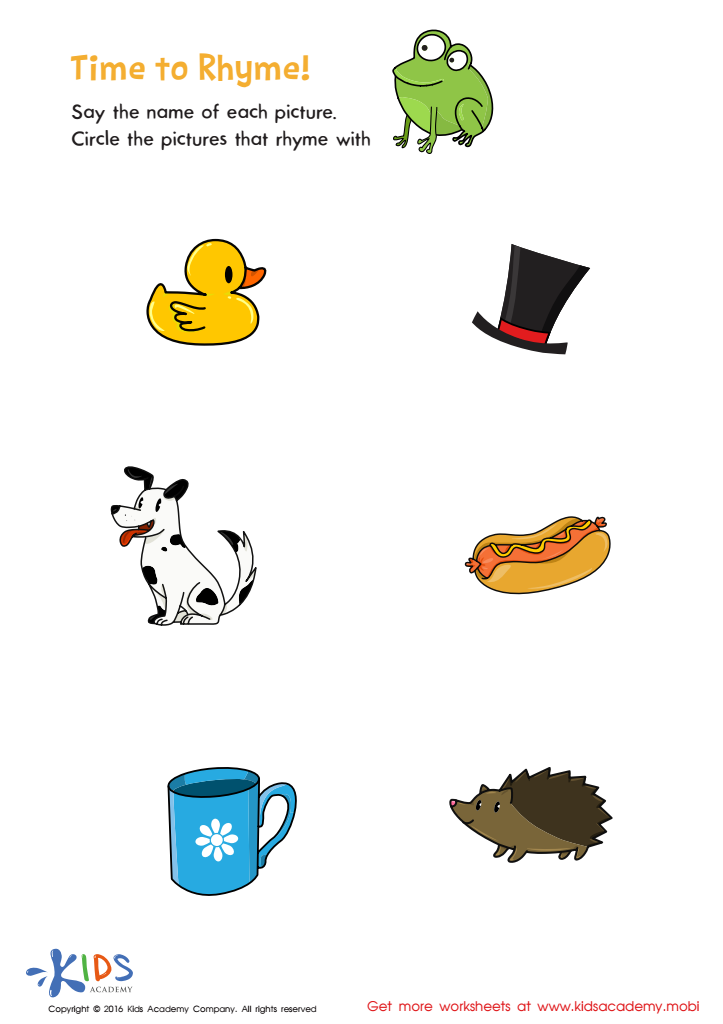
Rhyming Worksheet: Time to Rhyme Rhyming Worksheet
This worksheet offers learning, cognition and creative fun! It recognizes and identifies rhyming words, encourages mental tasks to improve focus and lets your child express their creativity through coloring. Writing the word for each picture adds to the fun and helps them identify rhyming words. Have them circle matching rhyming words for more coloring fun!
Rhyming Worksheet: Time to Rhyme Rhyming Worksheet
Worksheet
Positional Words Worksheet

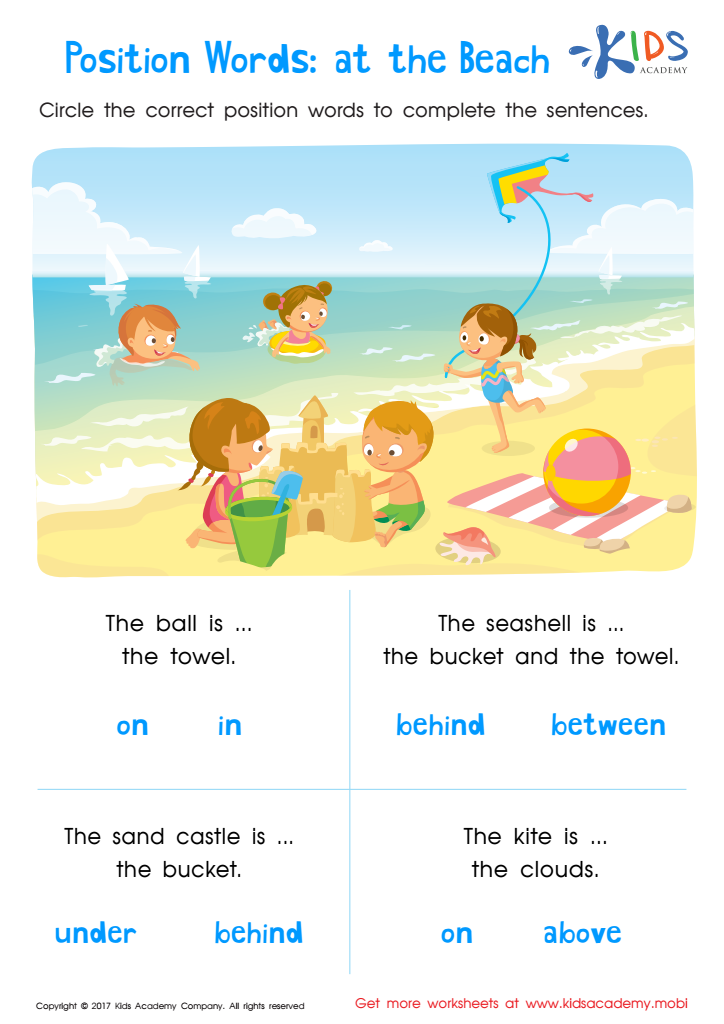
At the Beach Printable Sight Words Worksheet

At the Beach Printable Sight Words Worksheet
Worksheet
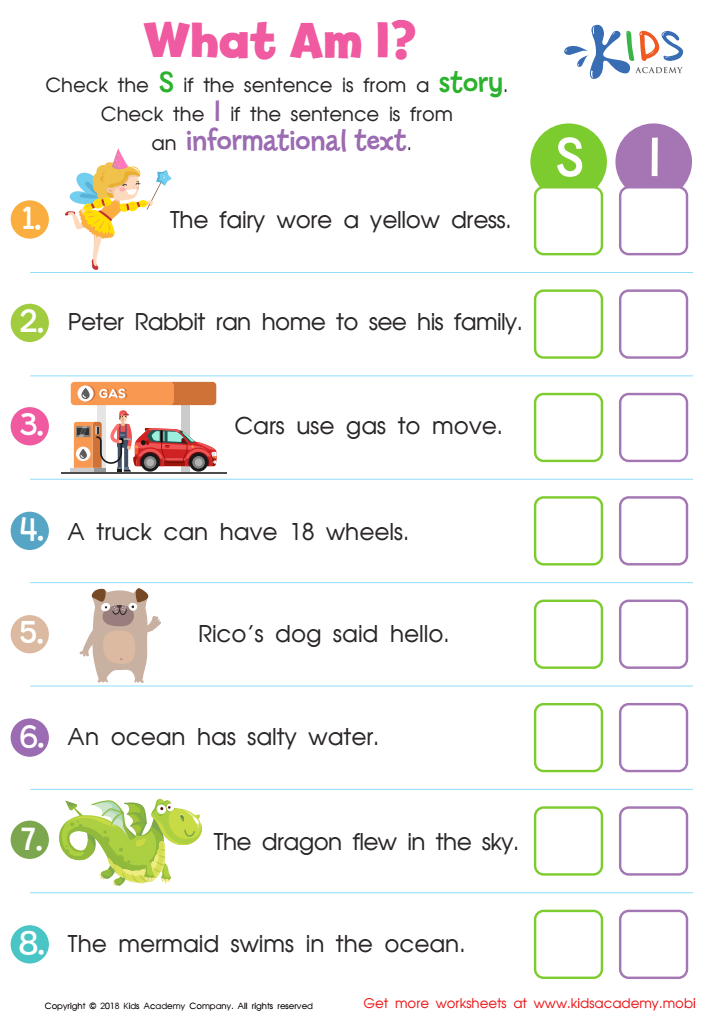
What Am I? Worksheet

What Am I? Worksheet

This worksheet assesses students' ability to differentiate between stories and texts they read for facts. Students learn to distinguish between reading for pleasure and reading for information. It includes statements from both a story and an informational text, and students must decide what type of text it is.
What Am I? Worksheet
Worksheet
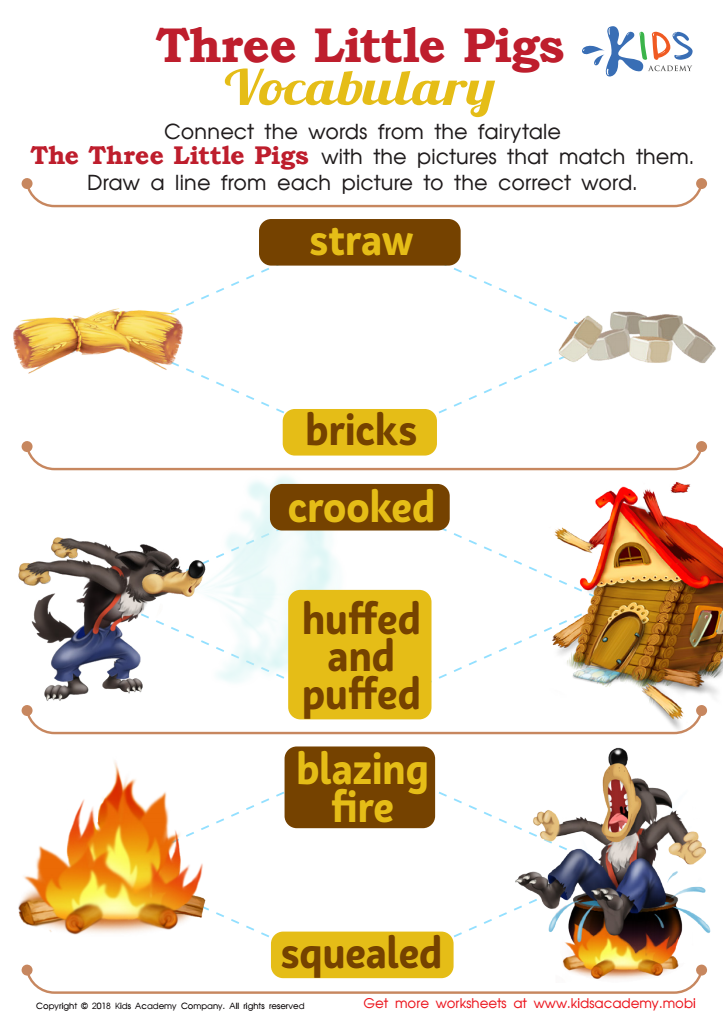
Three Little Pigs Vocabulary Worksheet

Three Little Pigs Vocabulary Worksheet

Read the Three Little Pigs to your children. Have them use the tracing sheet to connect the story words with the pictures. This is a fun and educational way to help them build their vocabulary.
Three Little Pigs Vocabulary Worksheet
Worksheet
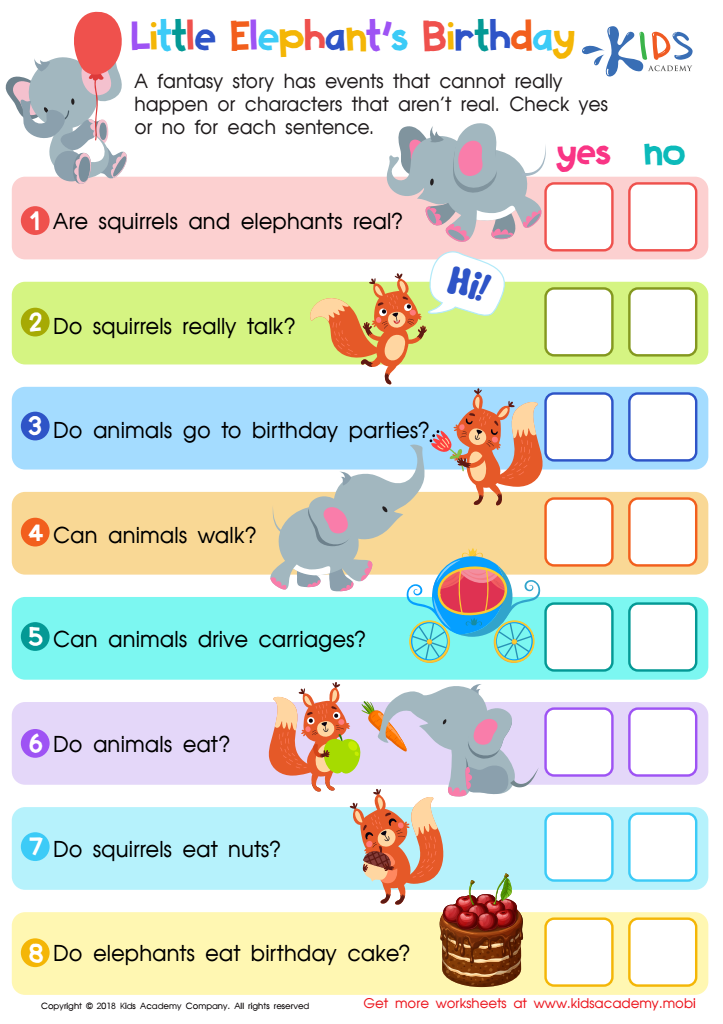
Little Elephant's Birthday Worksheet

Little Elephant's Birthday Worksheet

It's Little Elephant's birthday! Help your students celebrate with this fun worksheet full of colors and pictures. Deciding which questions are facts and which are fiction will help them differentiate between fantasy stories and reality. Let them have fun learning why certain elements of fantasy can't be true!
Little Elephant's Birthday Worksheet
Worksheet
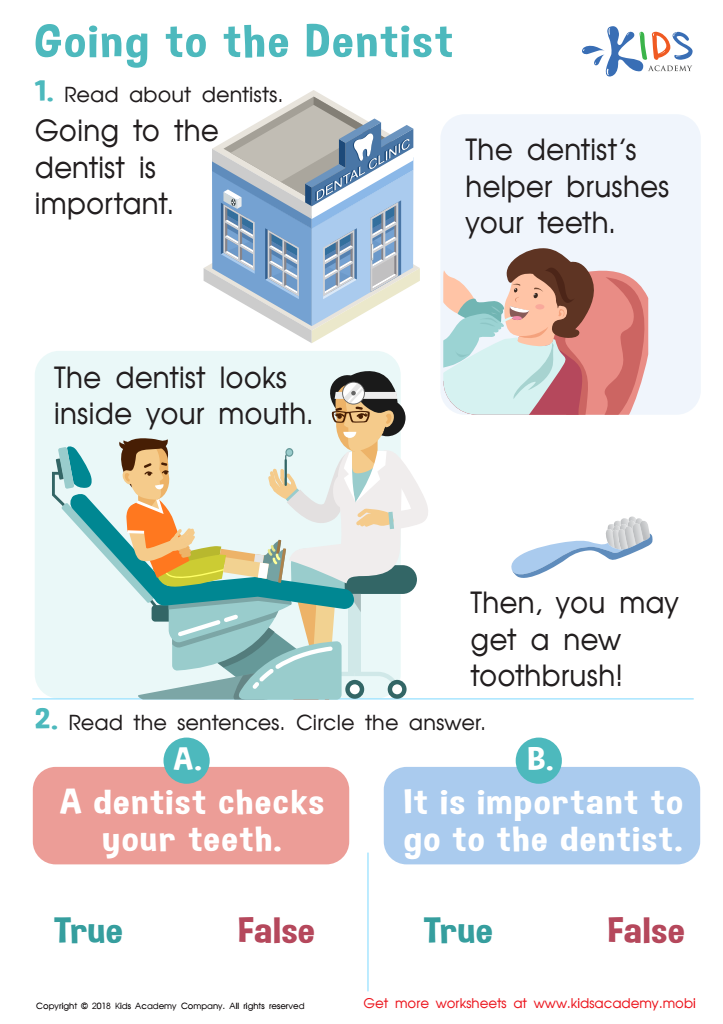
Going to the Dentist Part 2 Worksheet

Going to the Dentist Part 2 Worksheet

Visiting the dentist can be nerve-wracking for children. This informative PDF will not only explain what the dentist does, but also use pictures to assure children. They'll learn why seeing the dentist is important and be able to verify their understanding through true/false questions.
Going to the Dentist Part 2 Worksheet
Worksheet
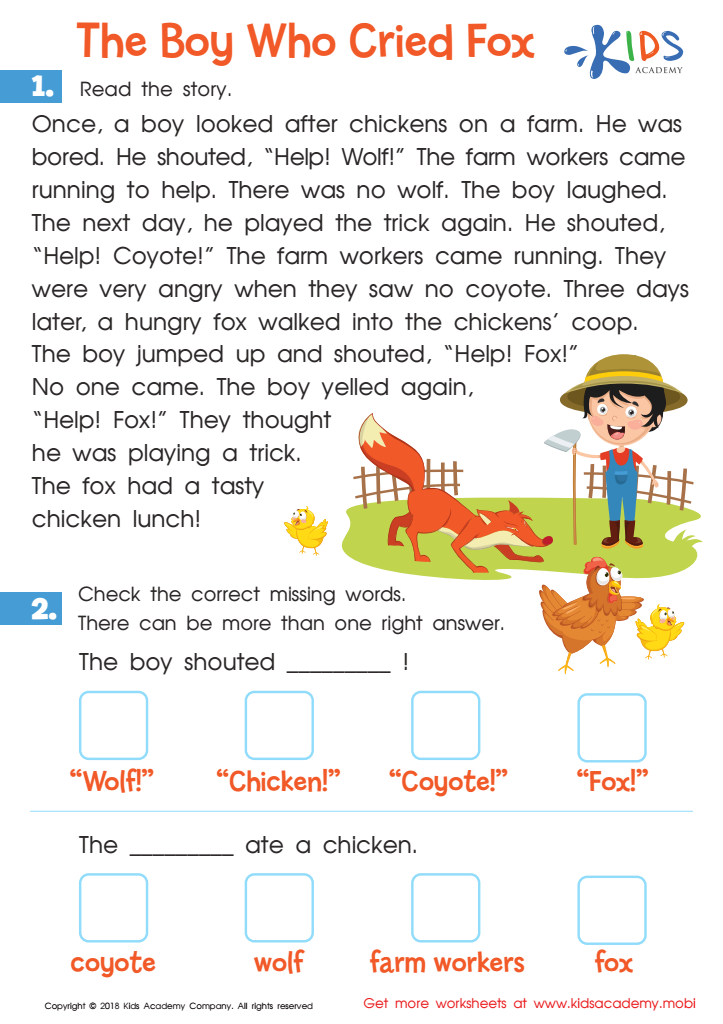
The Boy Who Cried Fox Worksheet

The Boy Who Cried Fox Worksheet

This worksheet encourages students to recall details from a story and answer questions to test their comprehension. Perfect for reading lessons, enrichment, or extra help.
The Boy Who Cried Fox Worksheet
Worksheet
Picture Words Worksheet

Picture Words Worksheet

Pictures are key for early reading skills. Remind children to use all resources when reading passages to understand meaning. With the free PDF, kids can learn through pictures & words, then answer questions based on what they learned. This hits home that all info in text is valuable, pics included!
Picture Words Worksheet
Worksheet
Rhyming Words PDF Worksheets, Bat

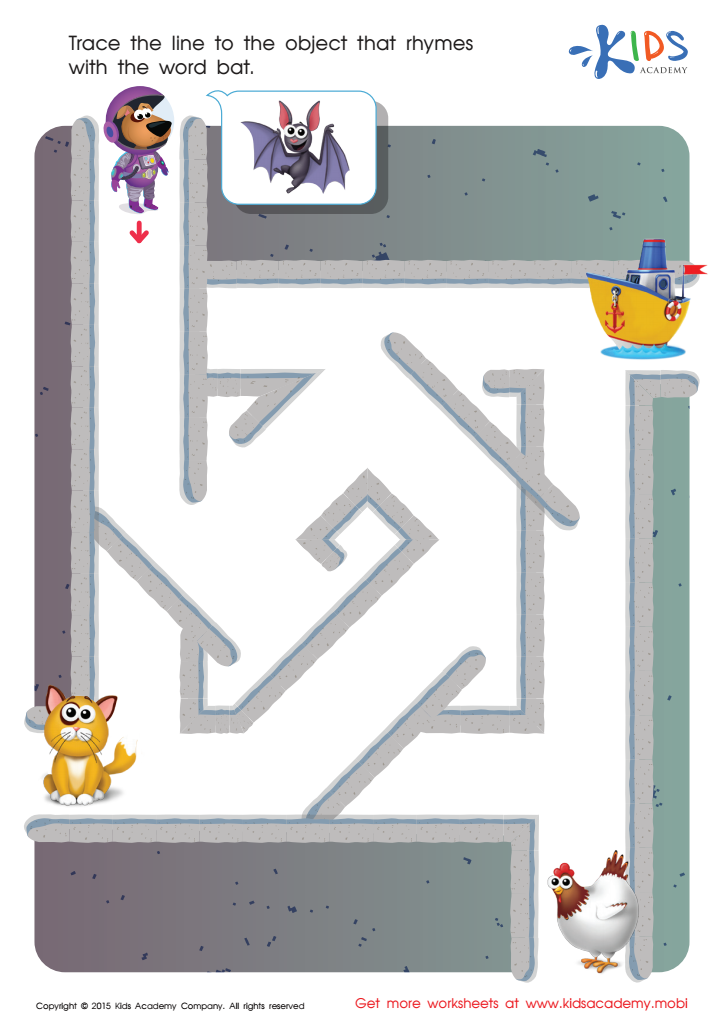
Bat Rhyming Words Worksheet

Get new reading and vocabulary worksheets to help make learning enjoyable for you and your kids. Join the dog and match the objects that rhyme. Have a blast!
Bat Rhyming Words Worksheet
Worksheet
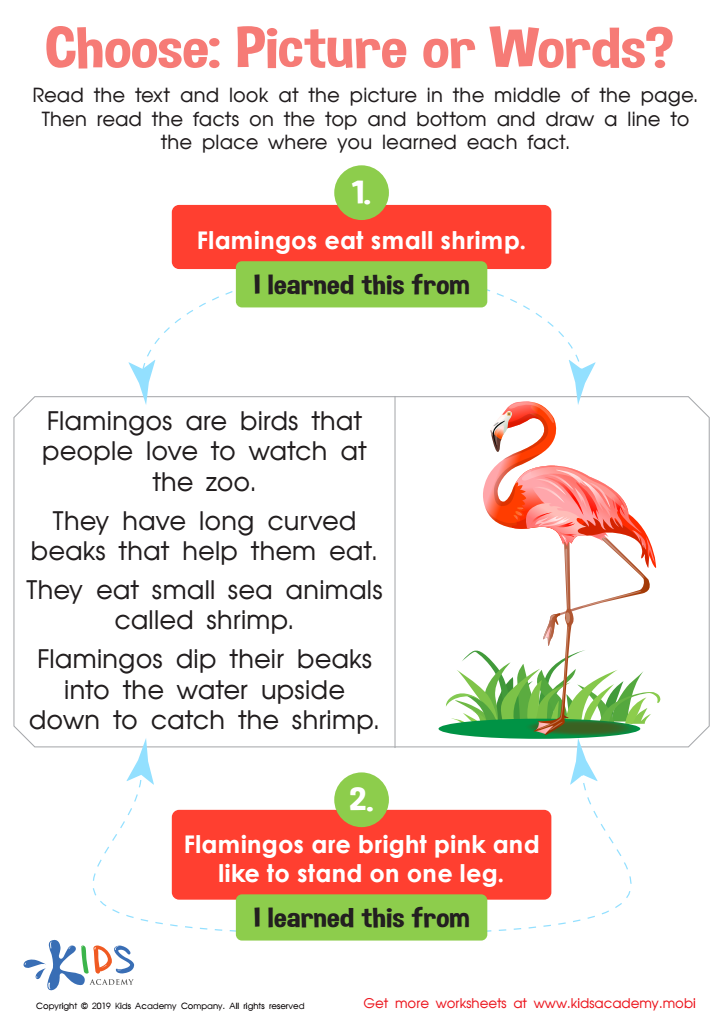
Choose Picture Words Worksheet

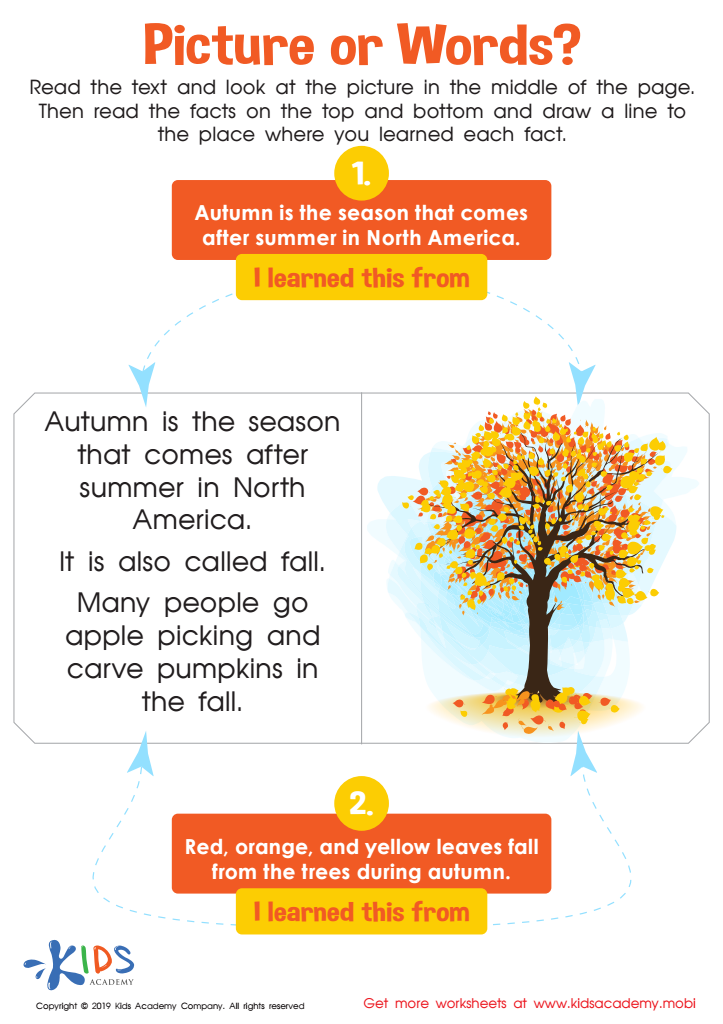
Choose Picture Words Worksheet

Pictures are powerful tools for children learning to read. Early readers apply their prior knowledge and pictures to create understanding. This PDF worksheet lets them understand the combined power of pictures and words, by having them choose one to answer how they learned the facts about flamingoes.
Choose Picture Words Worksheet
Worksheet
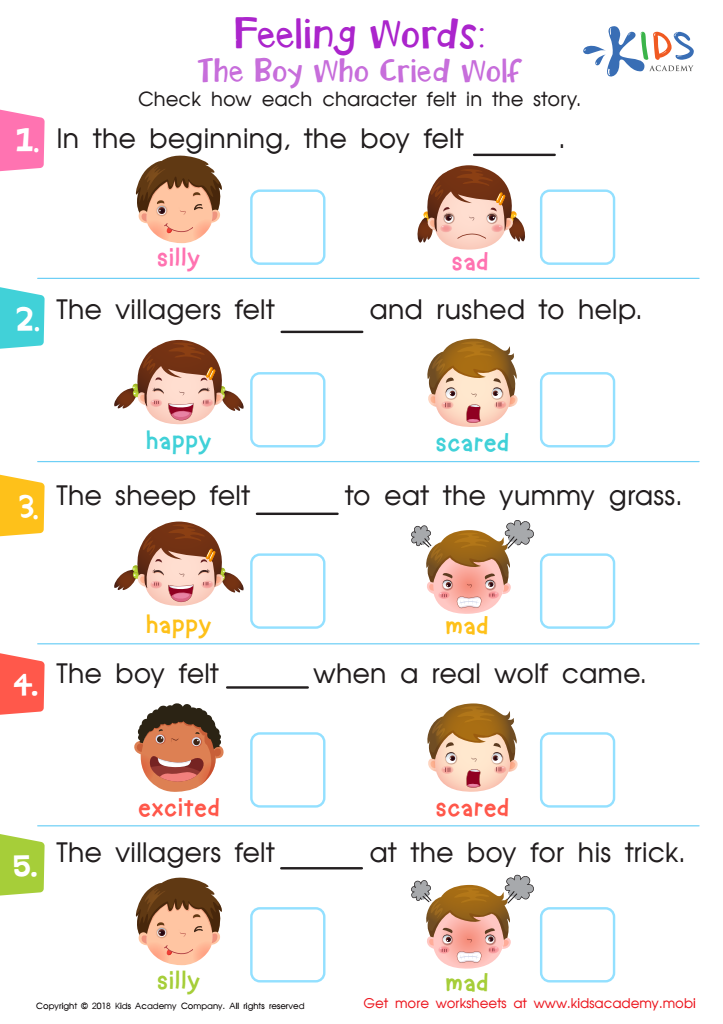
Feeling Words: The Boy Who Cried Wolf Worksheet

Feeling Words: The Boy Who Cried Wolf Worksheet

This worksheet helps students infer characters' traits and feelings by reading The Boy Who Cried Wolf. They choose the correct emotion for each character to improve their story comprehension. A great resource for the reading classroom, it teaches an essential comprehension skill.
Feeling Words: The Boy Who Cried Wolf Worksheet
Worksheet
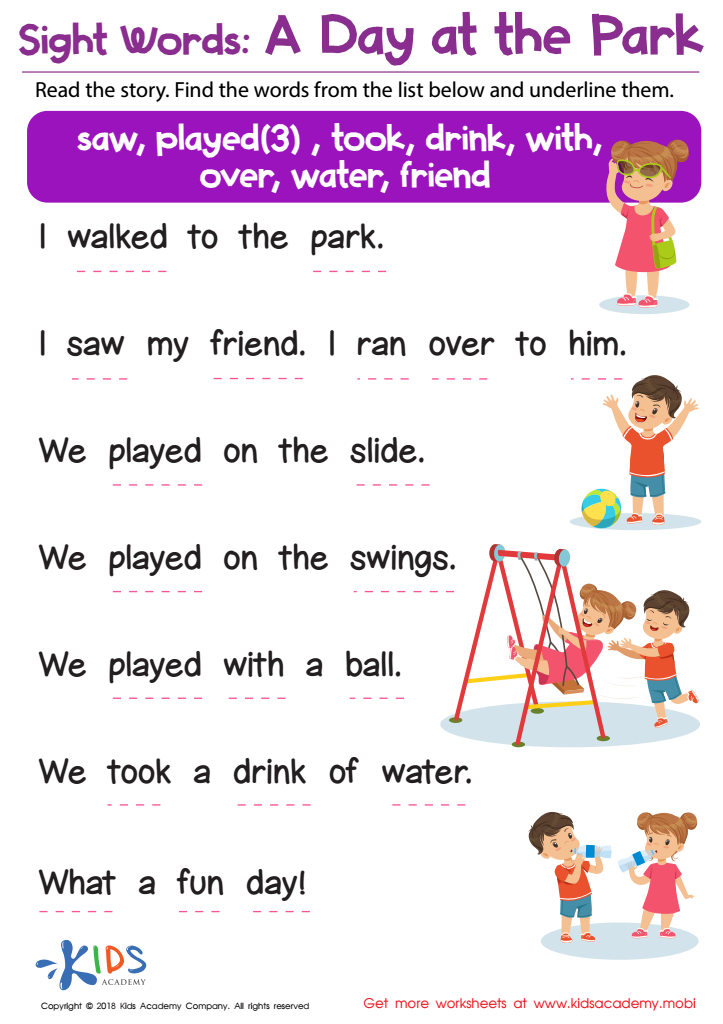
Sight Words: A Day at the Park Worksheet

Sight Words: A Day at the Park Worksheet

This worksheet offers kids practice reading sight words in a story. With picture clues and repetitive wording, they'll work with words that can't be sounded out to reinforce their learning. This is an important step in the reading process that helps kids become more confident readers.
Sight Words: A Day at the Park Worksheet
Worksheet
Worksheet: The Boy Who Cried Wolf

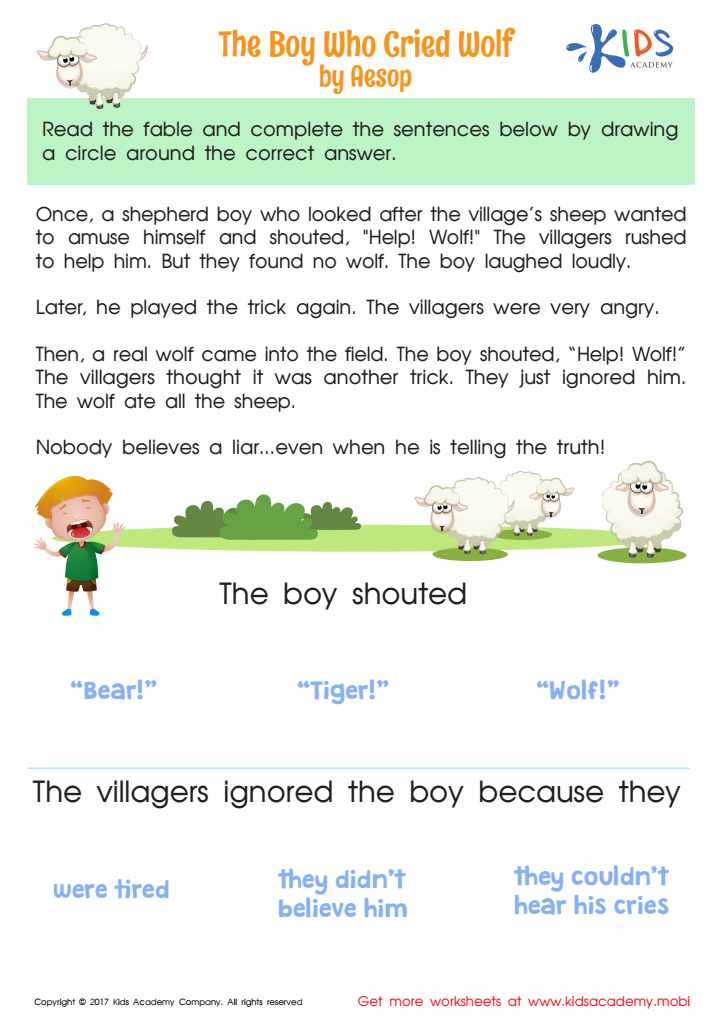
The Boy Who Cried Wolf Worksheet

Test your child's reading comprehension with The Boy Who Cried Wolf worksheet. Read the fable, then answer the questions. Use the text to help your child check their answers are correct. Boost reading skills in a fun, interactive way!
The Boy Who Cried Wolf Worksheet
Worksheet
Animal Word Search Worksheet

Animal Word Search Worksheet

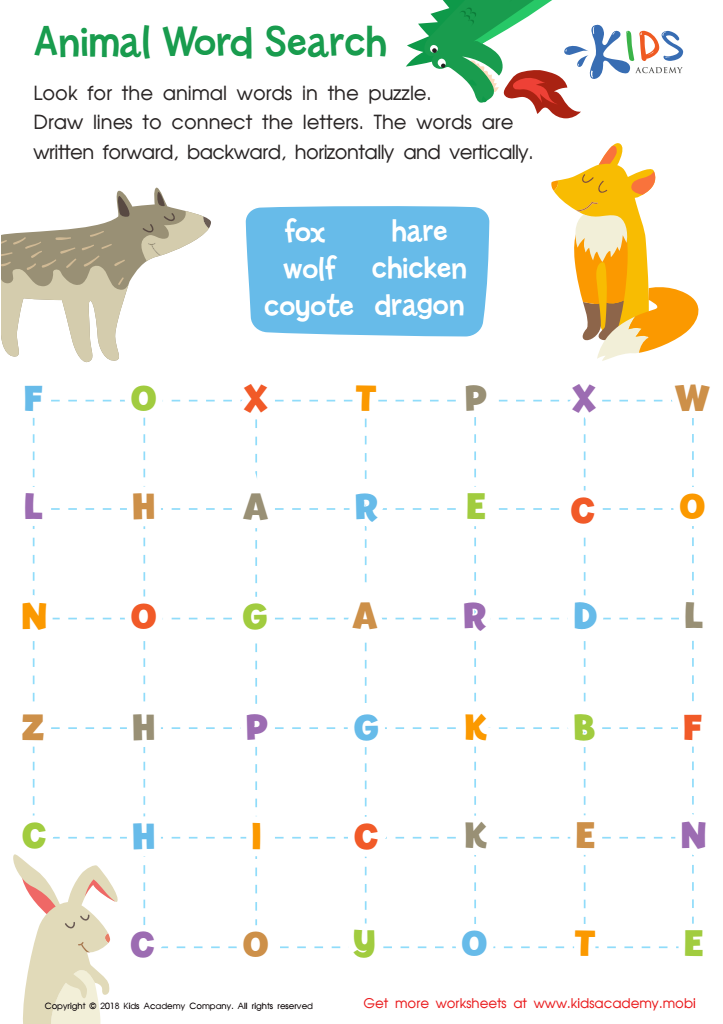
Students can have fun and strengthen spelling and vocabulary skills with this word search worksheet. Search for animal words and circle the letters in the puzzle. Words can be found forwards, backwards, horizontally or vertically, providing a great challenge to foster critical thinking skills. An enriching activity for all ages!
Animal Word Search Worksheet
Worksheet
And Worksheet Sight Words Worksheet

And Worksheet Sight Words Worksheet

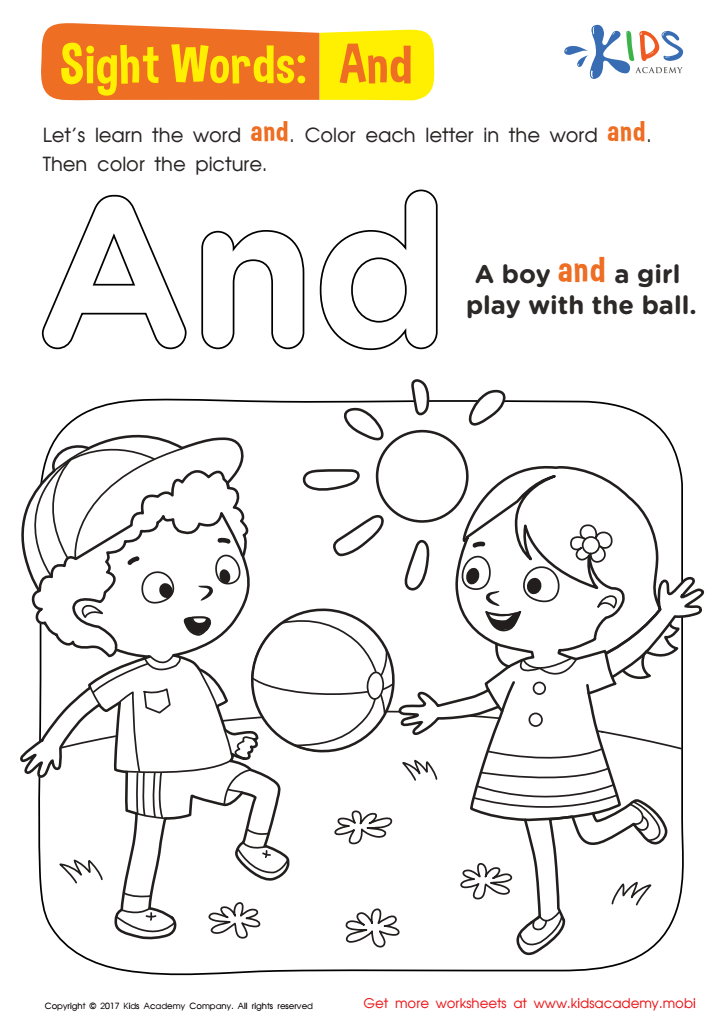
Help your child get a jumpstart on reading with sight words! Print out this fun worksheet and get your child to read the sentence. Point out the word "and", then color the word and enjoy the rest of the scene! It's a great way to introduce sight words and get their early reading skills going!
Download (PDF)
Assign to My Students
And Worksheet Sight Words Worksheet
Worksheet


Vocabulary building is crucial for children aged 5-6 as it serves as a foundation for their overall literacy development. During this stage, children's brains are highly receptive to language, making it an optimal time for expanding their vocabulary. A rich vocabulary enhances reading comprehension, allowing children to grasp concepts and ideas more effectively, which is vital for their academic success.

Parents and teachers play a pivotal role in this process by providing varied linguistic experiences. Through read-aloud sessions, engaging storytelling, and conversations about diverse topics, they can introduce new words in context, making them more relatable and easier to remember. Furthermore, a strong vocabulary not only prepares children for reading but also enhances their communication skills. It enables them to express themselves clearly and confidence, which is essential for social interactions.

Additionally, early vocabulary exposure can lead to improved performance in school and higher self-esteem, as children feel more capable in their learning endeavors. In essence, investing time and effort into vocabulary building during these formative years can have long-lasting benefits, shaping confident readers and eager learners who tackle challenges with enthusiasm, paving the way for lifelong literacy and learning success.