Animal identification Science Worksheets for Ages 5-6
6 filtered results
-
From - To
Encourage young learners to explore the fascinating world of animals with our Animal Identification Science Worksheets for Ages 5-6. These engaging and interactive worksheets are perfect for fostering an early love of science and nature. Designed specifically for kindergarten and first-grade students, they help kids recognize and identify various animals, understand their unique characteristics, and learn interesting facts. By developing observational and critical thinking skills through fun, hands-on activities, our worksheets lay a strong foundation for future scientific learning. Visit [website] to download and print these educational resources today, and embark on a thrilling journey of discovery and learning!
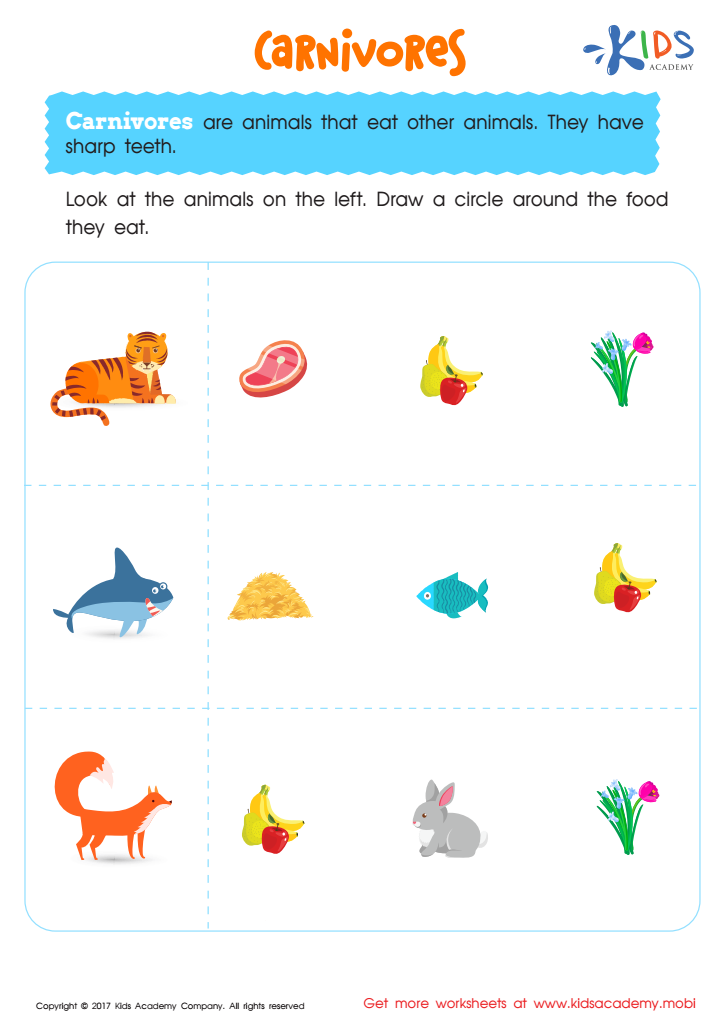
Carnivores Worksheet
 Assign to My Students
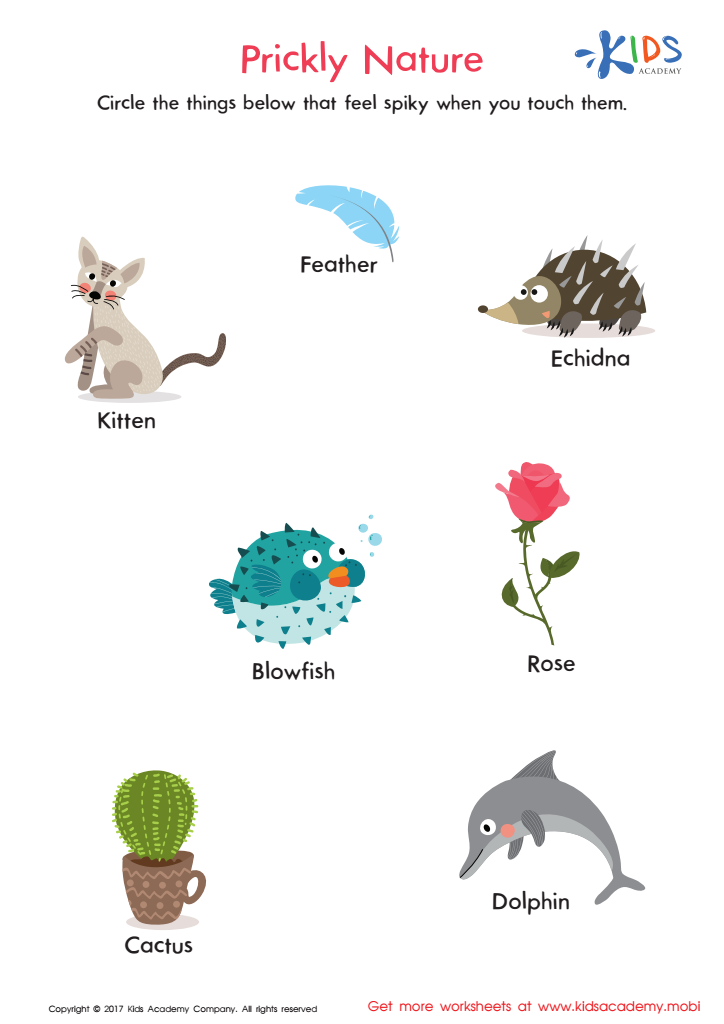
Prickly Nature Worksheet
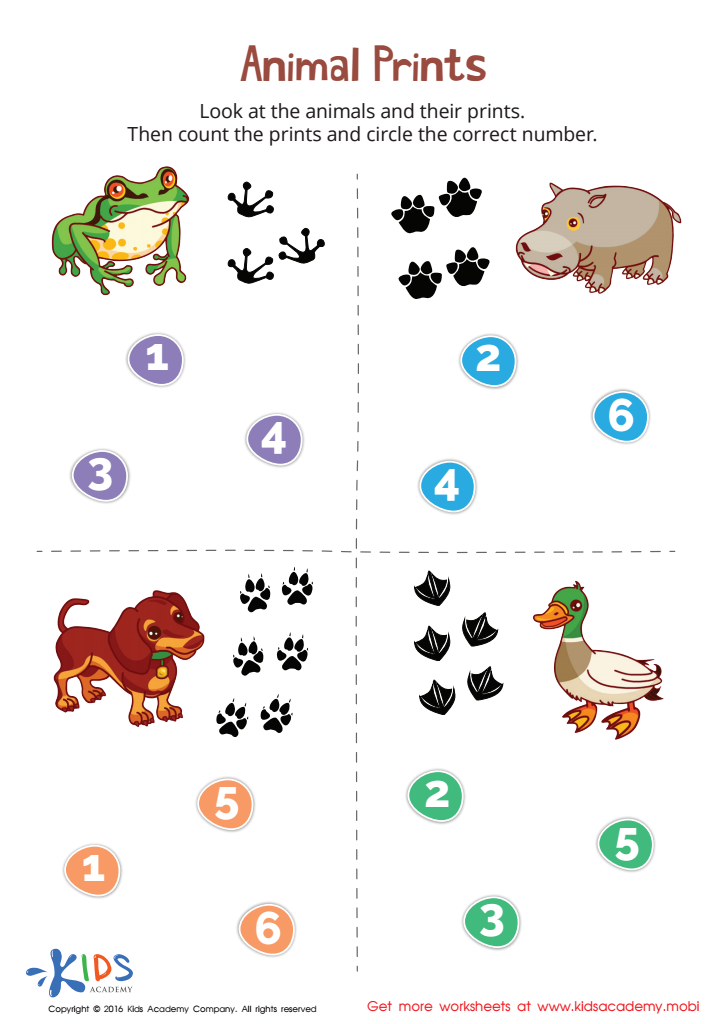
Animal Prints Match-Up Worksheet
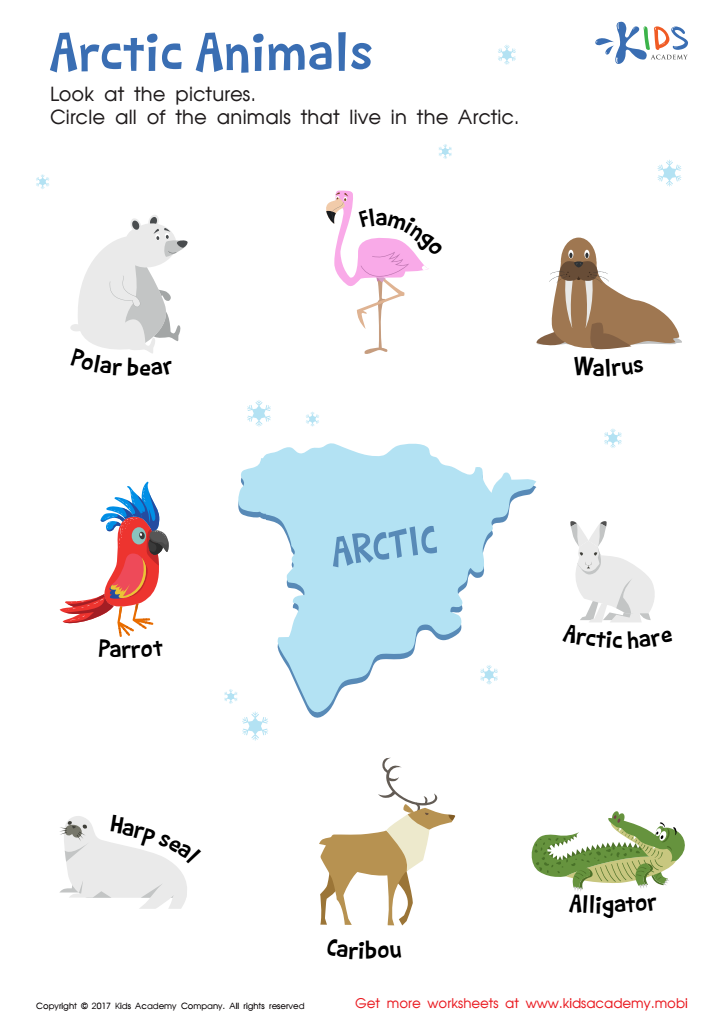
Arctic Animals Worksheet
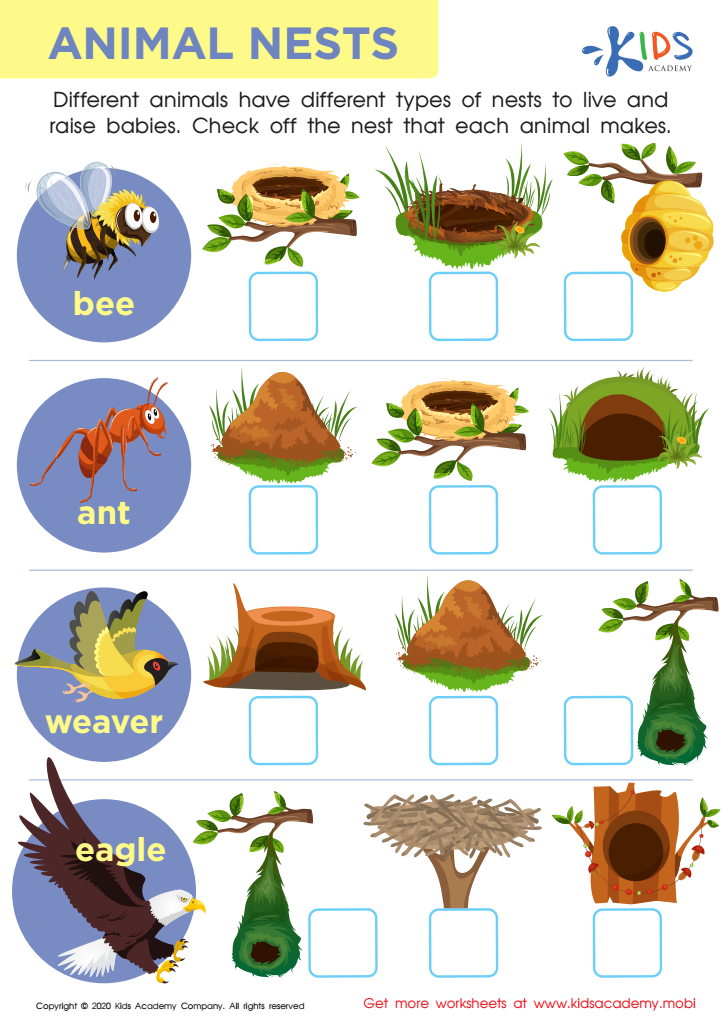
Animal Nests Worksheet
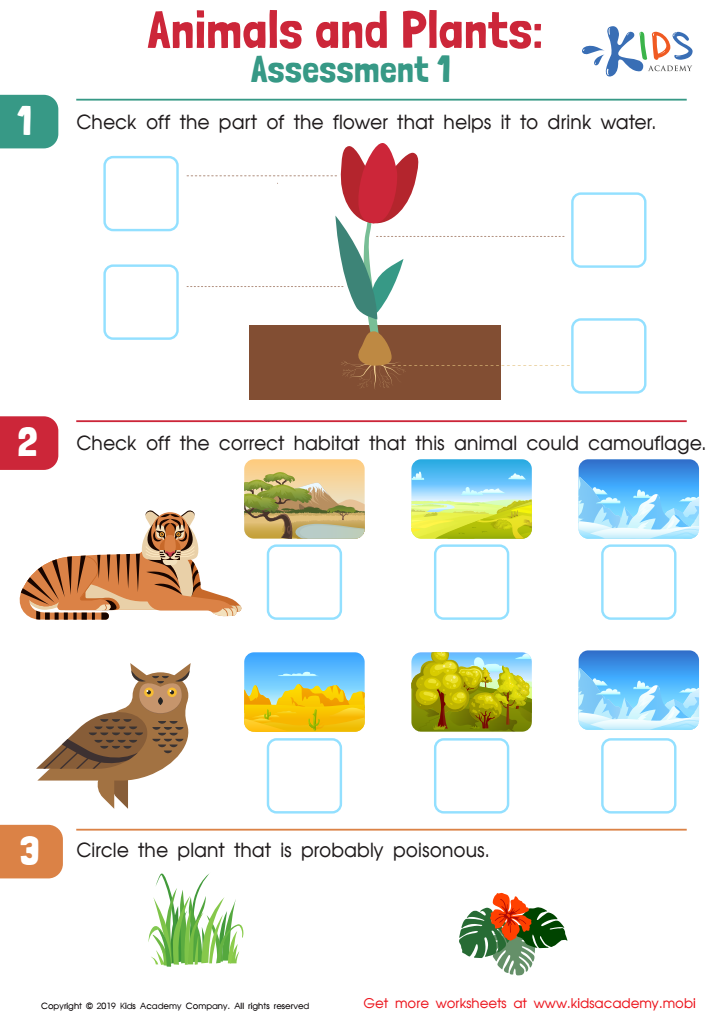
Animals and Plants: Assessment 1 Worksheet








Animal identification science at ages 5-6 is vital for several reasons. First, understanding different animals and their characteristics fosters a child's sense of wonder and curiosity about the natural world, laying the foundation for a lifelong interest in science and the environment. Also, it enhances cognitive skills such as classification, comparison, and critical thinking, essential to early education. Through learning to identify animals, children also develop language skills by expanding their vocabulary and learning descriptive words.
Moreover, teaching young children to recognize various animal species instills empathy and respect for living things, promoting responsible behavior towards the environment. It teaches basic principles of biodiversity and conservation, which are crucial in an era of increasing environmental challenges. Social skills can also be honed during group activities related to animal study, encouraging teamwork and the sharing of knowledge.
In addition, hands-on activities, such as using picture books, visiting zoos, or exploring nature, make learning interactive and engaging, keeping children motivated. Finally, it listens and abides by early childhood education standards which emphasize holistic learning experiences to nurture well-rounded individuals. Therefore, both parents and teachers should recognize and support animal identification science as a key component of early education.







