Basic Addition Science Worksheets for Ages 5-6
3 filtered results
-
From - To
Discover our "Basic Addition Science Worksheets for Ages 5-6," designed to make learning addition fun and engaging! These worksheets blend fundamental math skills with exciting science themes, perfect for young learners. Each activity encourages children to count, add, and solve simple problems while integrating interesting scientific facts and illustrations. Created to support early academic growth, our printable materials make both math and science enjoyable and accessible. Ideal for preschool and kindergarten students, these worksheets improve number sense, enhance problem-solving skills, and spark curiosity. Start your child's fun-filled journey into basic addition and science exploration today!

African Wildlife: Giraffe Worksheet
 Assign to My Students
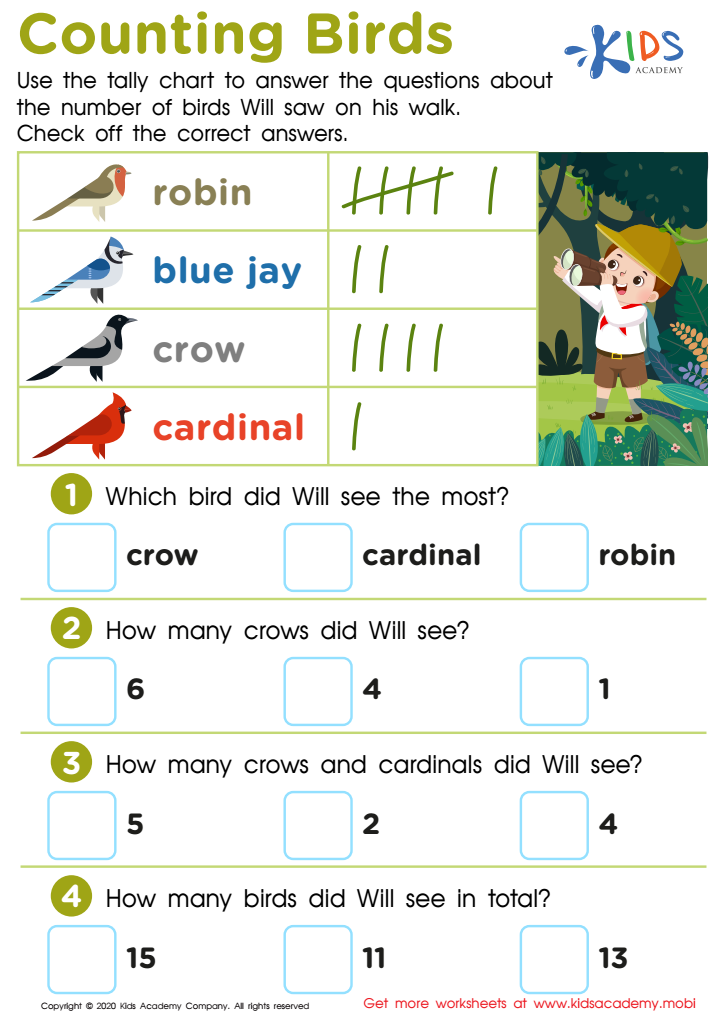
Counting Birds Worksheet
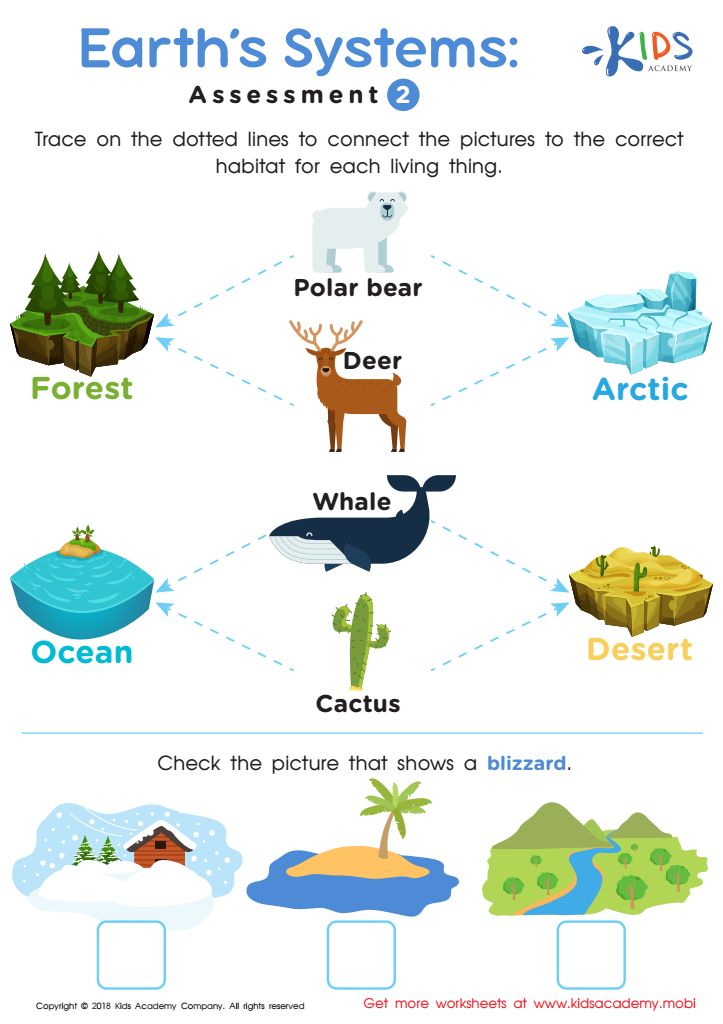
Earth's Systems: Assessment 2








Parents and teachers should care about basic addition science for ages 5-6 because it's a cornerstone for all future mathematical learning and cognitive development. At this young age, children’s brains are highly adaptable, making it the perfect time to introduce foundational concepts that will support more complex problem-solving skills later on. Mastering basic addition helps young learners develop critical numeracy skills, encouraging them to recognize patterns, understand quantity, and facilitate logical thinking in everyday tasks.
Moreover, early proficiency in addition offers both educational and emotional benefits. When children easily grasp addition, they build confidence in their abilities, which fosters a positive attitude towards mathematics and learning in general. This confidence can lead to increased engagement and proactive learning, setting them up for success in more challenging subjects as they grow older.
Engagement with early math also typically involves interactive activities, providing opportunities for social development. Collaborative play and problem-solving with peers or guided help from parents reinforce not only math skills but also teamwork, communication, and patience. Investing time in the basics of addition enriches a child’s educational experience, providing a strong framework upon which a solid academic and emotional edifice can be built.







