Shape Recognition Science Worksheets for Ages 5-6
5 filtered results
-
From - To
Unlock a world of learning with our Shape Recognition Science Worksheets tailored specifically for children ages 5-6. These engaging and educational worksheets are designed to enhance your child’s understanding of basic shapes while fostering crucial science skills. Through fun activities and colorful illustrations, kids effortlessly learn to identify and differentiate between shapes, paving the way for future math and science success. Perfect for both classroom and home use, our printable worksheets offer an excellent foundation in shape recognition. Watch as your child's confidence and curiosity grow, one shape at a time. Discover the joy of learning today!
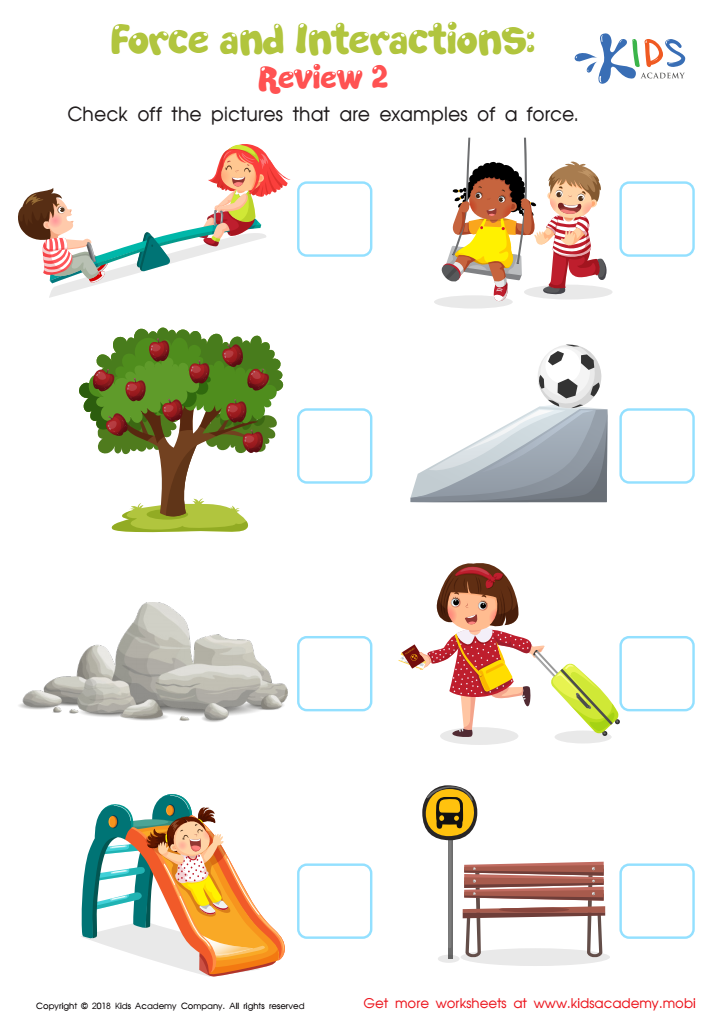
Force and Interactions: Review 2 Worksheet
 Assign to My Students
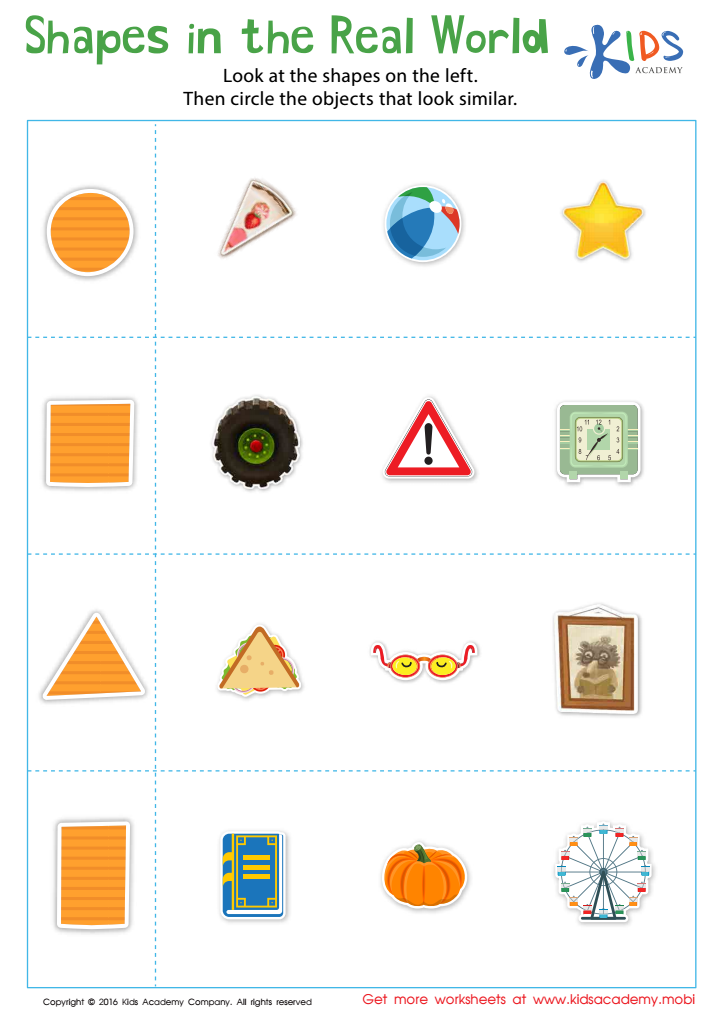
Shapes in the Real World Worksheet
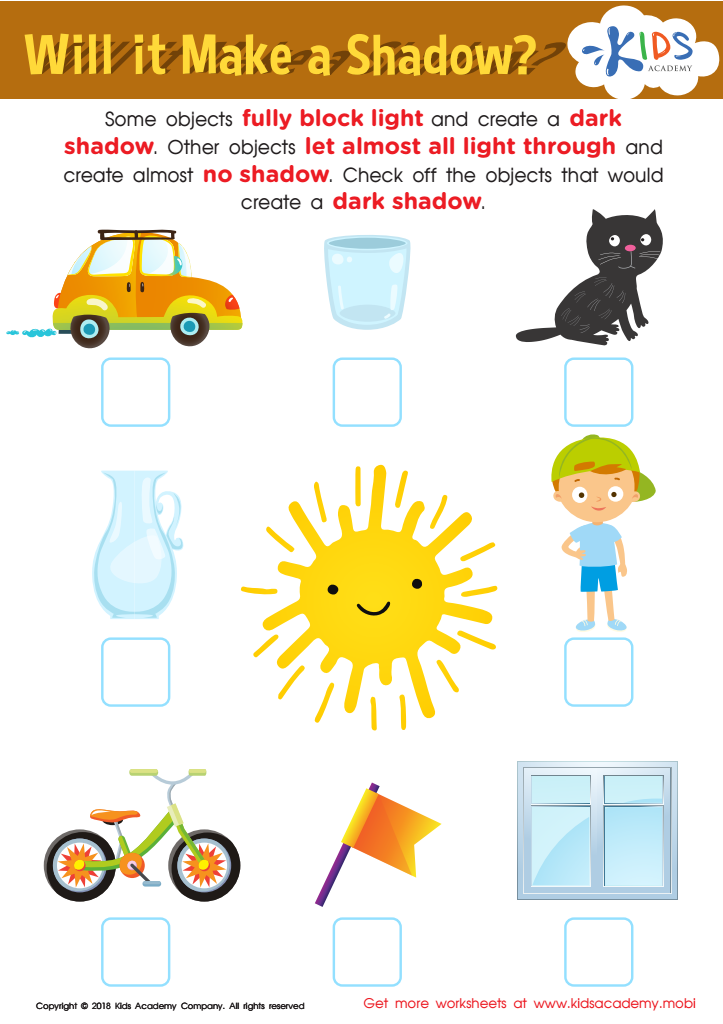
Will It Make a Shadow? Worksheet
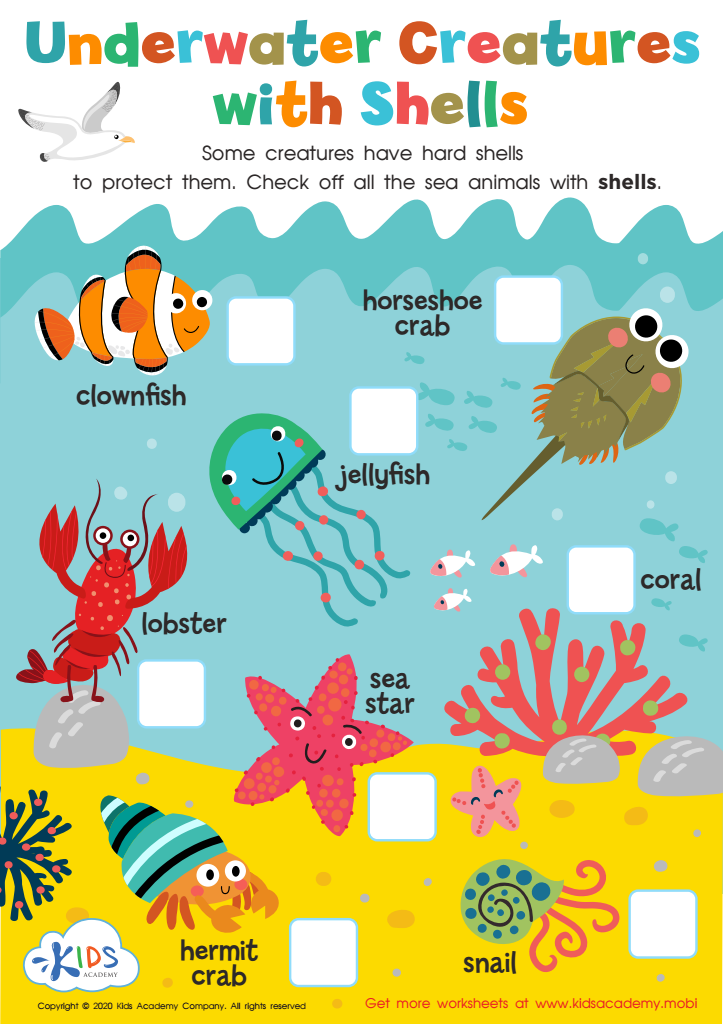
Underwater Creatures with Shells Worksheet
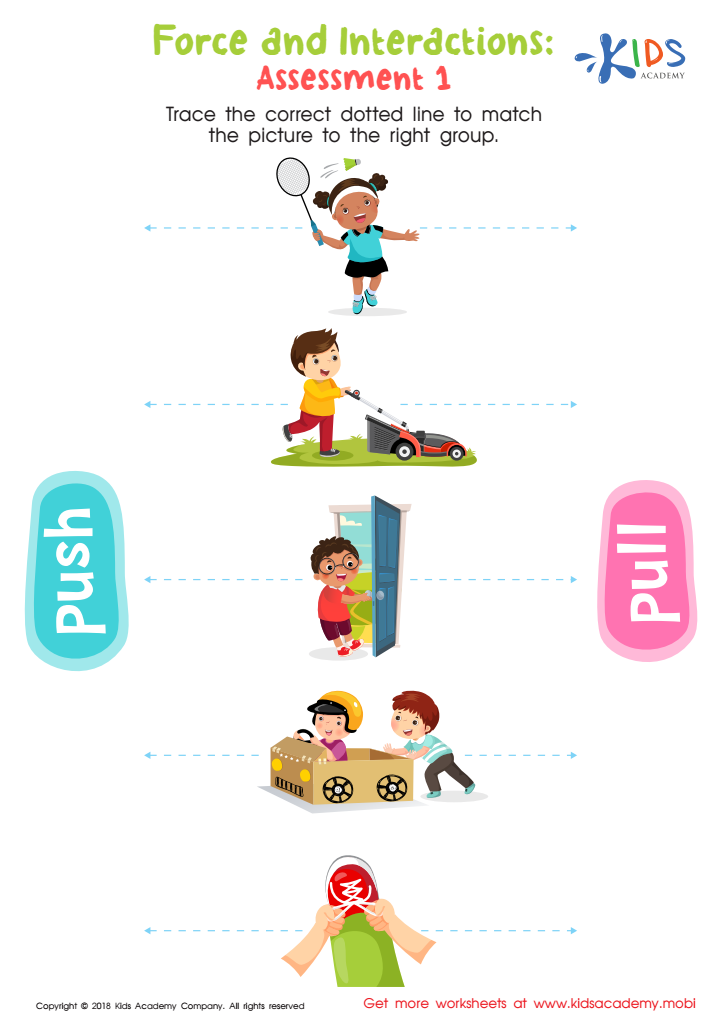
Force and Interactions: Assessment 2 Worksheet








Shape recognition is more than just a basic skill; it's a cornerstone of early cognitive development that profoundly impacts a child's academic success. For ages 5-6, shape recognition fosters critical thinking, observational skills, and spatial awareness. When children learn to identify and differentiate shapes, they enhance their visual discrimination abilities, crucial for reading and writing. Recognizing shapes in letters and numbers aids in understanding the structural aspects of words, contributing to literacy and numeracy skills.
Moreover, engaging with shapes boosts problem-solving abilities. Puzzles and building blocks, which often involve shapes, require kids to think critically and integratively. This not only sharpens their analytical faculties but also familiarizes them with geometric concepts, a foundation for future math learning.
Practicing shape recognition also enhances fine motor skills. Activities like drawing shapes or cutting out forms improve hand-eye coordination and precision. By doing so, children are not just limited to academic skillsets; they are prepared for everyday tasks requiring fine motor control.
Parents and teachers play an essential role by incorporating shapes into routines through playful activities, encouraging exploration and discussion about shapes found in the environment. This helps children see the world methodically, enhancing both cognitive and social-emotional development, making shape recognition an invaluable part of early childhood education.







