
Understanding ecosystems Science Worksheets for Ages 5-6
5 filtered results
Difficulty Level
Grade
Age
-
From - To
Subject
Activity
Standards
Explore the fascinating world of ecosystems with our "Understanding Ecosystems" Science Worksheets designed specifically for ages 5-6. These engaging worksheets help young learners discover the vital relationships between plants, animals, and their environments through colorful illustrations and interactive activities. Through fun exercises, children will grasp key concepts such as habitats, food chains, and the importance of biodiversity. These resources are perfect for enhancing critical thinking skills while sparking curiosity about nature. Foster a love for science and nature in your little ones, encouraging them to observe the world around them. Start their journey into the wonders of ecosystems today!
Favorites
With answer key
Interactive
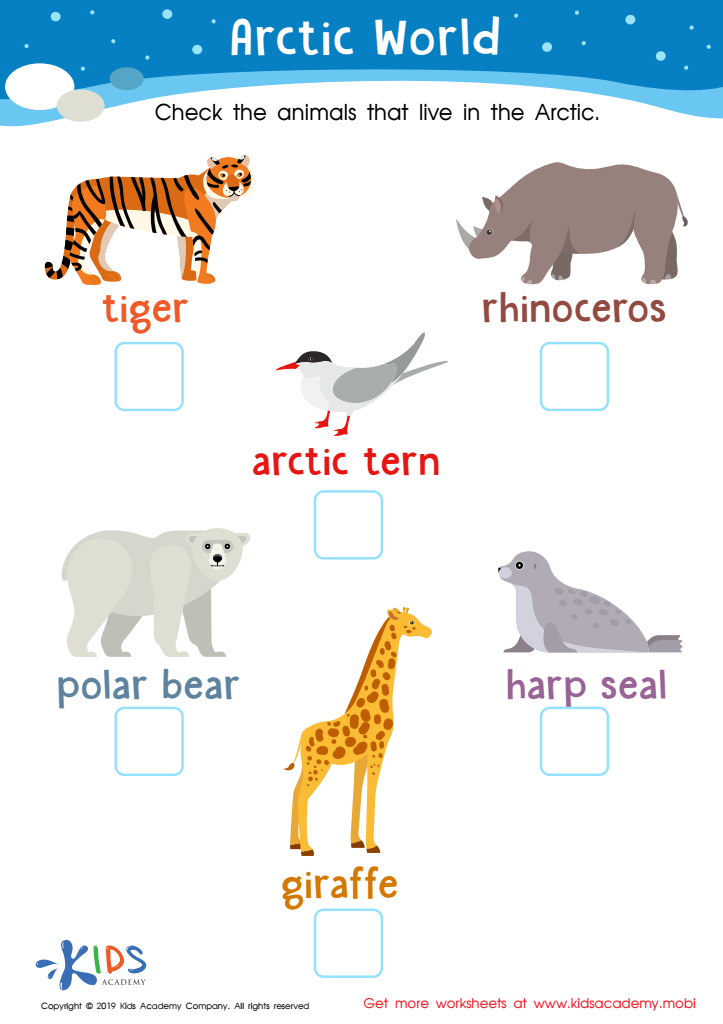
Arctic World Worksheet
Ask your students if they know where the Arctic is located and what lives there. If not, use a world atlas to show them. The Arctic is very cold and snow-covered; native animals have adapted to survive the harsh conditions. Look at the animals in the worksheet and help your students decide which ones live in the Arctic.
 Assign to My Students
Arctic World Worksheet
Worksheet
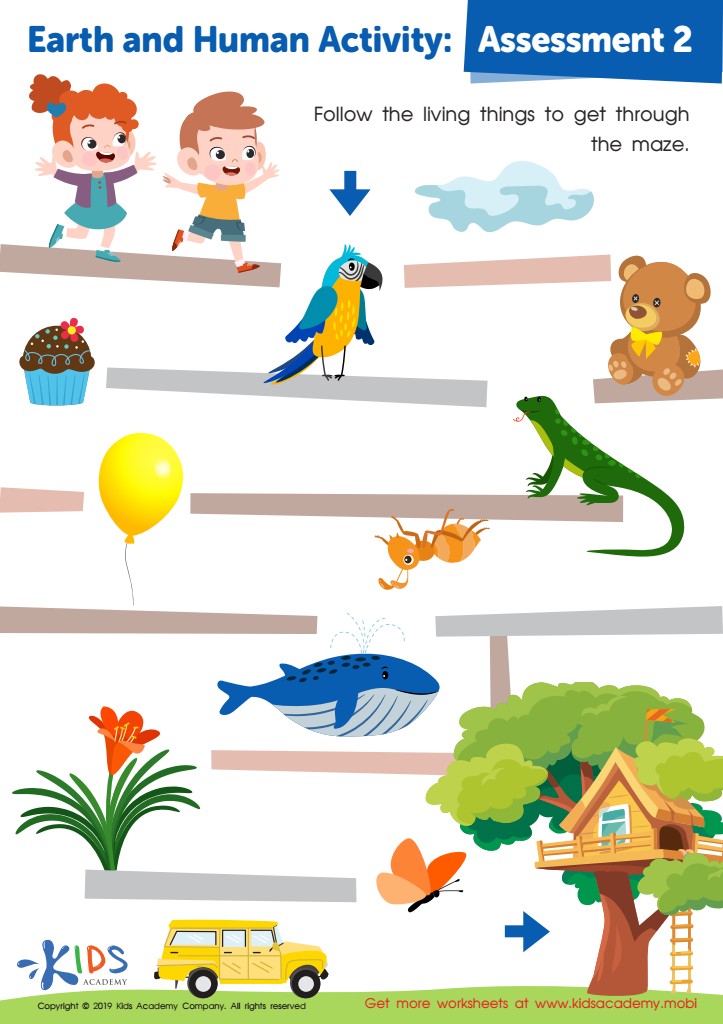
Earth and Human Activity: Assessment 2 Worksheet
Earth is alive with birds, trees, insects, and animals. Explain to your kids that the environment on Earth supports life. Ask for examples, then use the worksheet pictures to help them identify living things and complete the maze.
Earth and Human Activity: Assessment 2 Worksheet
Worksheet
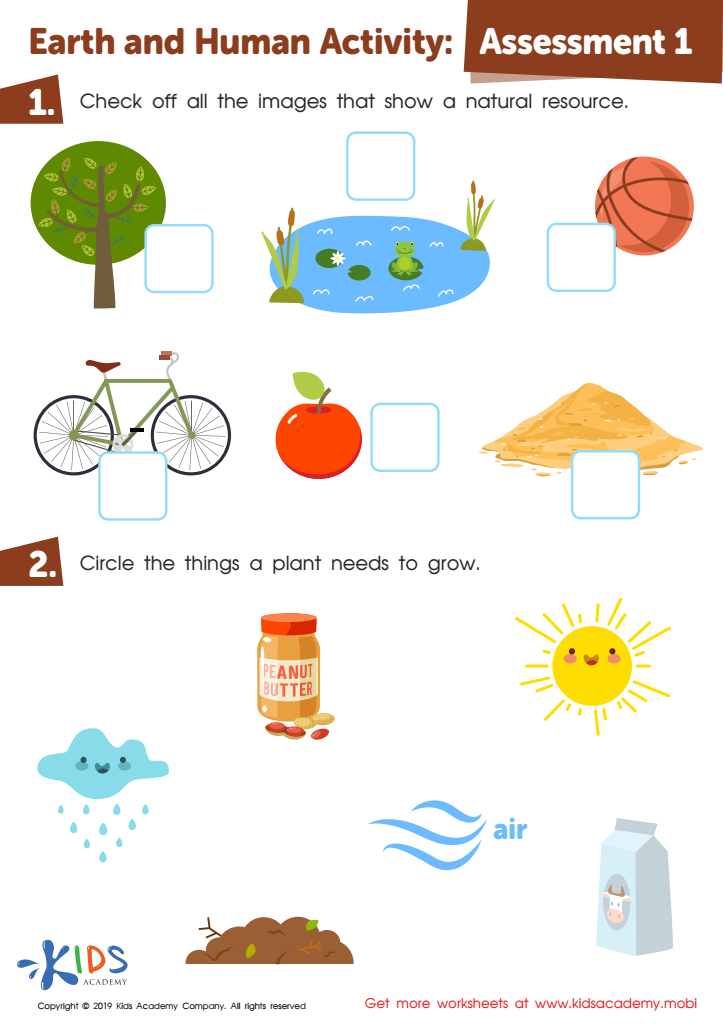
Earth and Human Activity: Assessment 1 Worksheet
Natural resources are gifts from Mother Nature that exist without man-made intervention. We use them to make essential items we use daily. Ask your kids for examples and have them check off images of natural resources on this worksheet.
Earth and Human Activity: Assessment 1 Worksheet
Worksheet
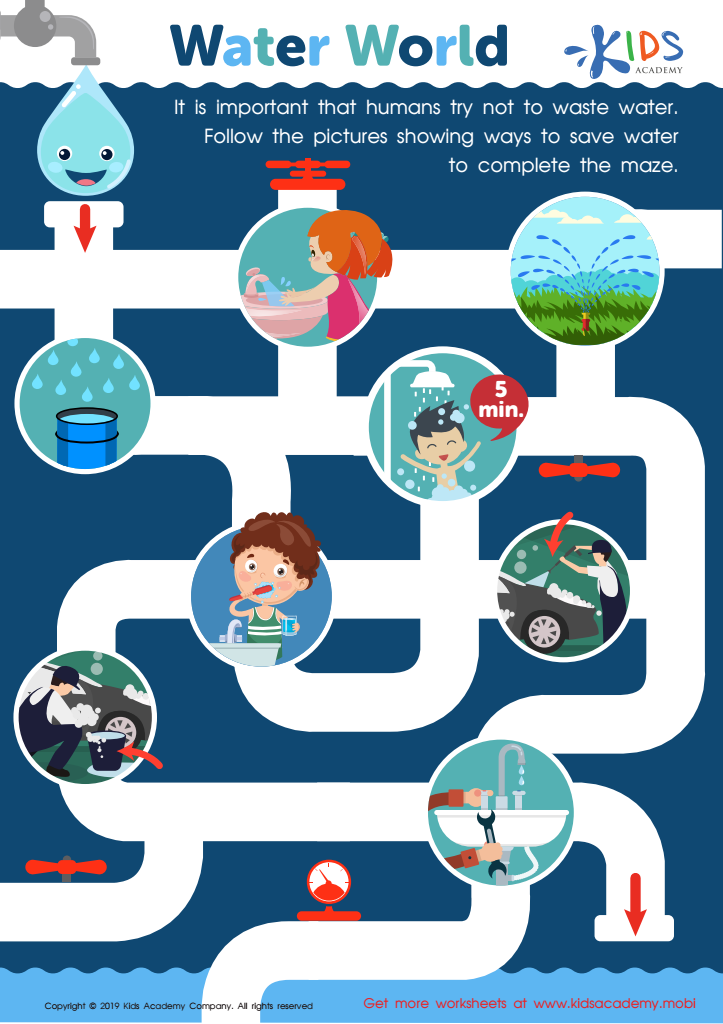
Water World Worksheet
Water is a vital necessity for living. Our bodies depend on it to stay healthy and survive. When we don't drink enough water, we become thirsty and run the risk of getting sick. Luckily, our planet is full of water and natural sources to stay hydrated. To prevent water waste, use this worksheet to teach your students how to conserve it and complete the maze.
Water World Worksheet
Worksheet
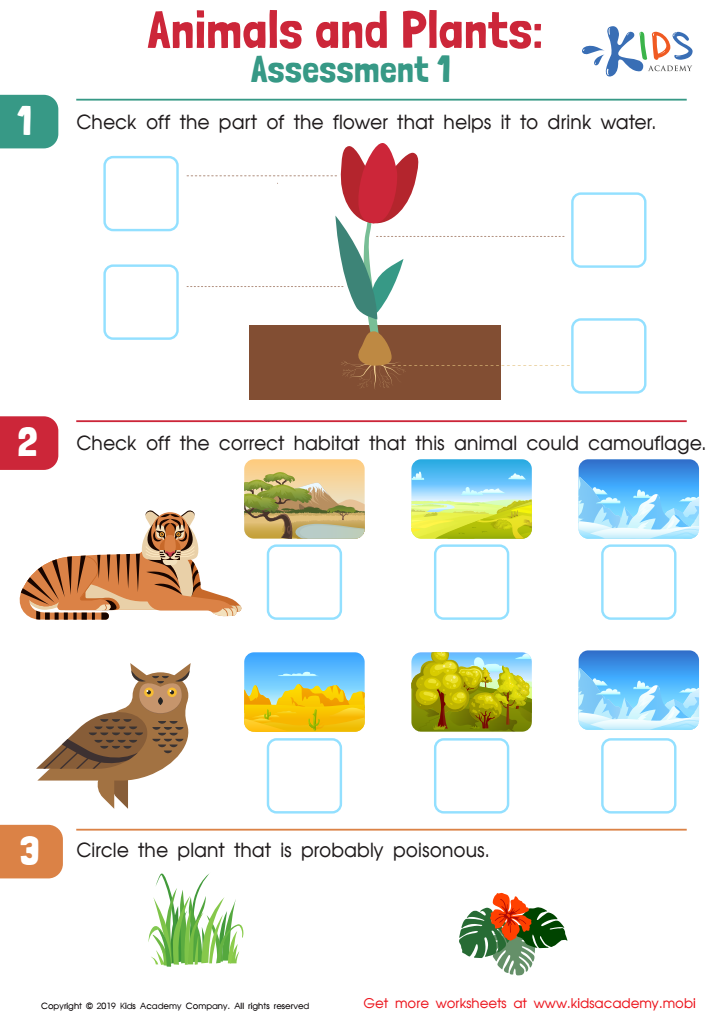
Animals and Plants: Assessment 1 Worksheet
Do you want to easily assess your child's understanding of basic science concepts? This colorful PDF offers a free opportunity for them to test their knowledge about parts of a flower, poisonous plants, animal habitats and more! Bright pictures make it fun and easy for you to see what they know.
Animals and Plants: Assessment 1 Worksheet
Worksheet
Join Kids Academy for Free
Who is primarily going to use this learning content?








Understanding ecosystems is crucial for children aged 5-6 as it lays the foundation for their awareness of the natural world and our place within it. At this young age, children are naturally curious about their environment, and teaching them about ecosystems fosters this curiosity. It helps them appreciate the interconnectedness of living organisms—including plants, animals, and humans—and their surroundings.
Parents and teachers should care about this subject because early education in science encourages critical thinking and problem-solving skills. By introducing these concepts, children learn the importance of biodiversity, conservation, and sustainability. These foundational lessons can instill a sense of stewardship, empowering them to respect and protect the environment as they grow.
Incorporating hands-on activities, such as observing local wildlife or planting a small garden, enhances engagement and understanding. By nurturing a sense of wonder about ecosystems, parents and teachers can inspire future generations to become environmentally responsible citizens.
Emphasizing ecosystems science at this early stage can shape young minds to value life and nurture an enthusiasm for discovering the world around them, setting the stage for lifelong learning and environmental advocacy.







