Understanding life cycles Plants and Animals Worksheets for Ages 5-6
3 filtered results
-
From - To
Explore our engaging "Understanding Life Cycles: Plants and Animals Worksheets" designed specifically for children ages 5-6. These interactive resources make learning fun as kids discover the fascinating stages of growth and development in both plants and animals. Our worksheets encourage creativity and critical thinking, allowing young learners to draw, label, and match different life cycle stages. With colorful illustrations and simple activities, these worksheets promote a hands-on understanding of nature's processes while enhancing foundational science skills. Perfect for home or classroom use, these materials spark curiosity and nurture a love for learning about the world around them!
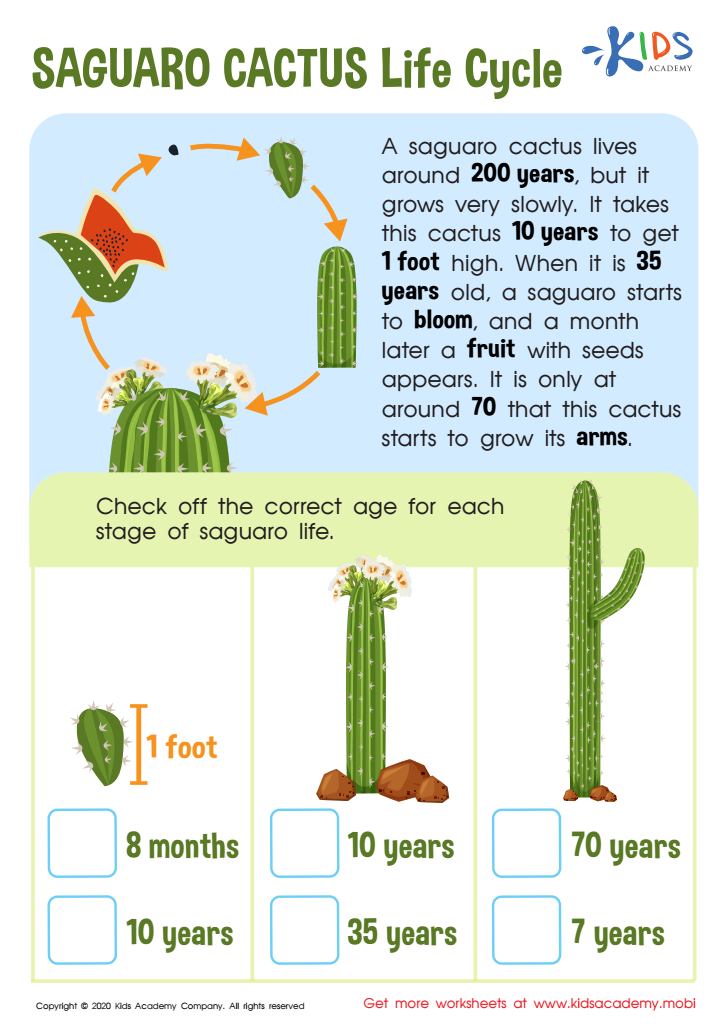
Saguaro Cactus Life Cycle Worksheet
 Assign to My Students











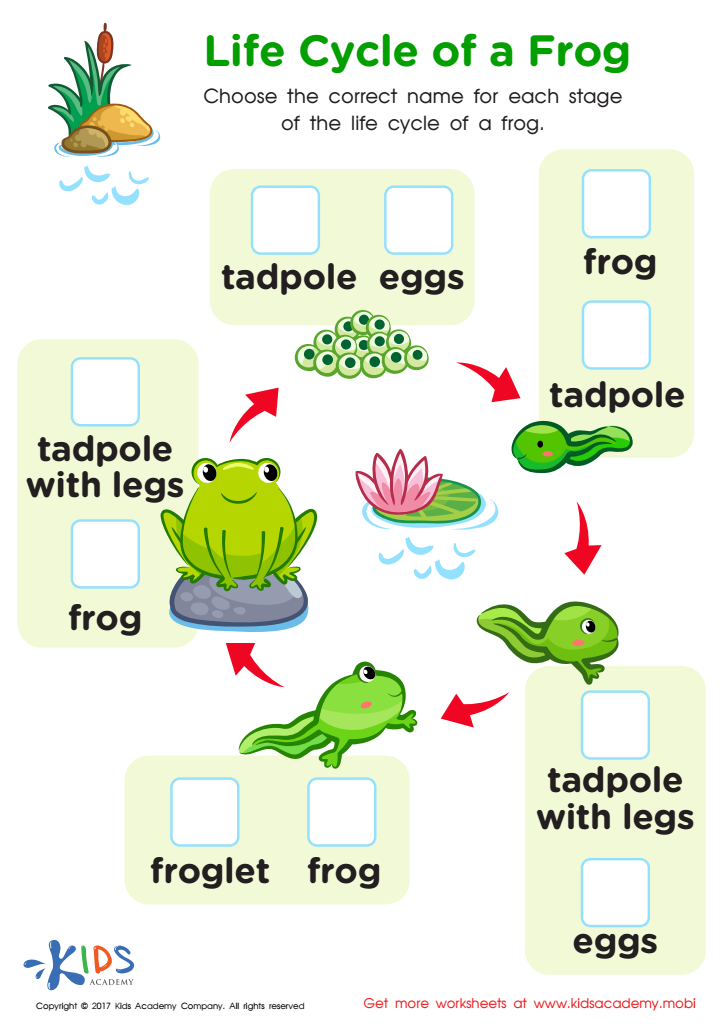
Life Cycle Frog Printable
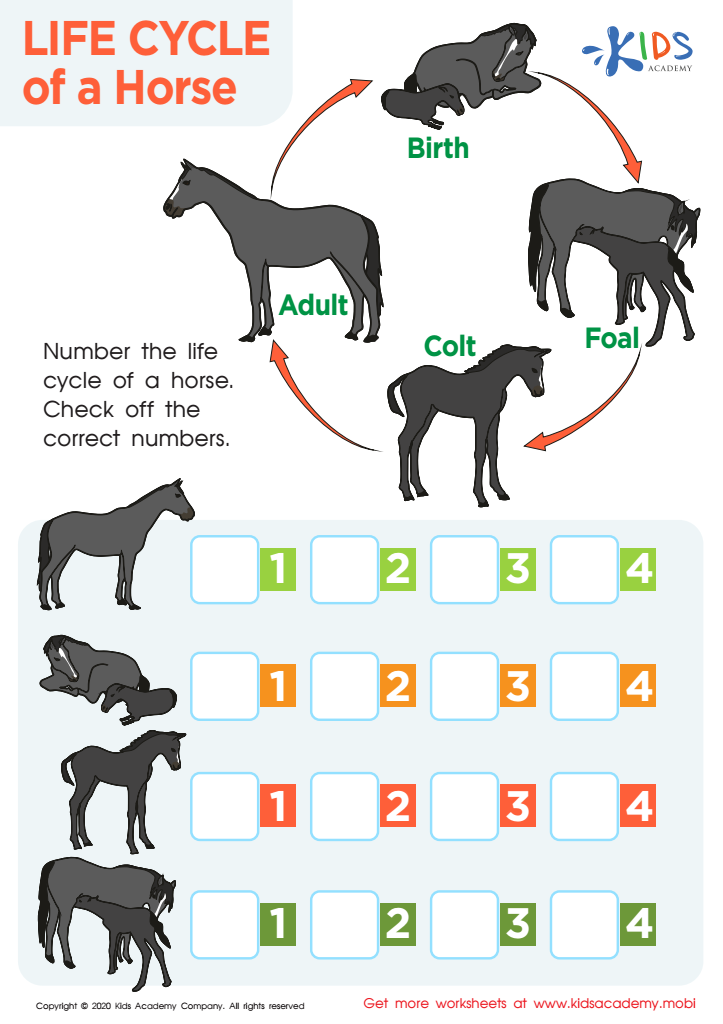
Life Cycle of a Horse Worksheet








Understanding life cycles of plants and animals is vital for children ages 5-6, fostering a deep appreciation for nature and instilling curiosity about the world. For parents and teachers, focusing on this topic enriches early childhood education in several ways.
Firstly, learning about life cycles helps kids make connections between their own growth and changes in the environment. By observing how a seed grows into a plant or a caterpillar transforms into a butterfly, children witness the wonders of growth, adaptation, and interdependence in nature. This fosters a sense of responsibility and care for living things.
Moreover, teaching life cycles enhances critical thinking skills. Kids learn to ask questions, make predictions, and engage in experiments, all of which are foundational skills in science. It encourages explorations, discussions, and hands-on activities, making learning interactive and enjoyable.
Additionally, understanding life cycles promotes environmental awareness and conservation. As children learn about different species and their habitats, they develop empathy for animals and concerns for ecological balance. This foundational knowledge lays the groundwork for responsible stewardship of our planet, ensuring that future generations value biodiversity and sustainability. Emphasizing life cycles equips young learners with crucial life skills and a lifelong love of nature.








