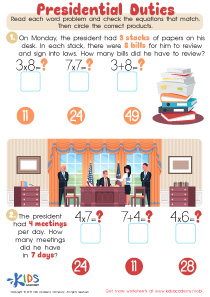
Critical Thinking Community Worksheets for Ages 5-6
5 filtered results
-
From - To
Unlock your child's potential with our engaging Critical Thinking Community Worksheets designed specifically for ages 5-6. These fun and interactive worksheets foster essential cognitive skills while encouraging children to explore their communities. Each activity promotes curiosity, problem-solving, and decision-making, allowing young learners to think critically about the world around them. From identifying community helpers to understanding roles, these worksheets inspire creativity and boost confidence. Ideal for homeschooling, distance learning, or classroom settings, they provide a solid foundation for lifelong critical thinking skills. Help your child develop the ability to analyze and interpret information with our thoughtfully crafted worksheets today!
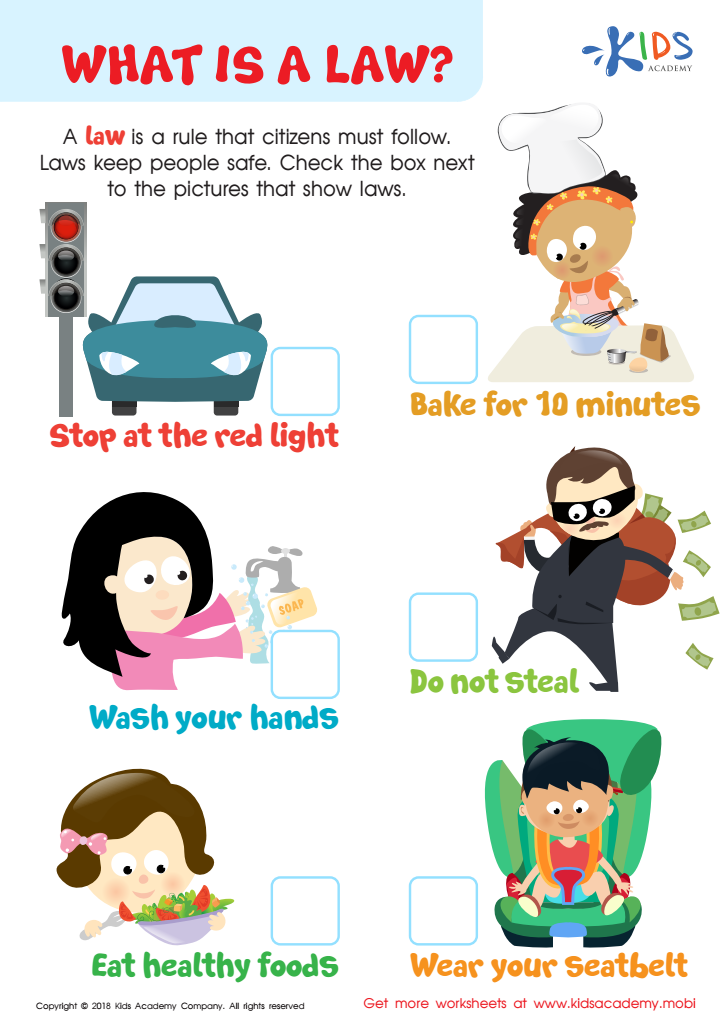
What is a Law? Worksheet
 Assign to My Students
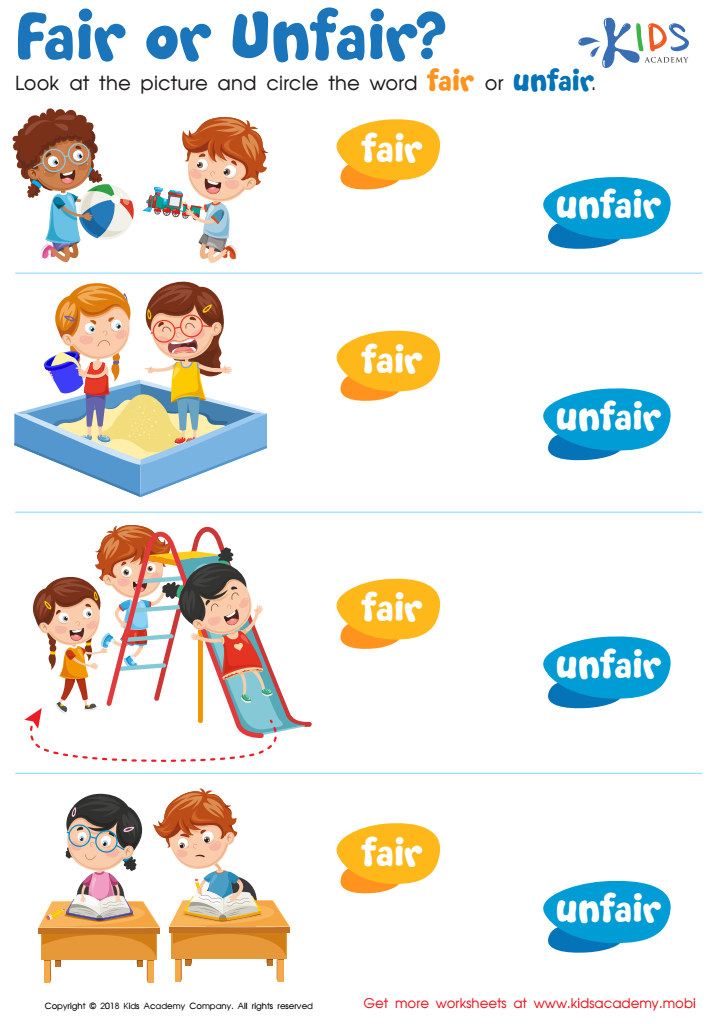
Fair or Unfair Worksheet
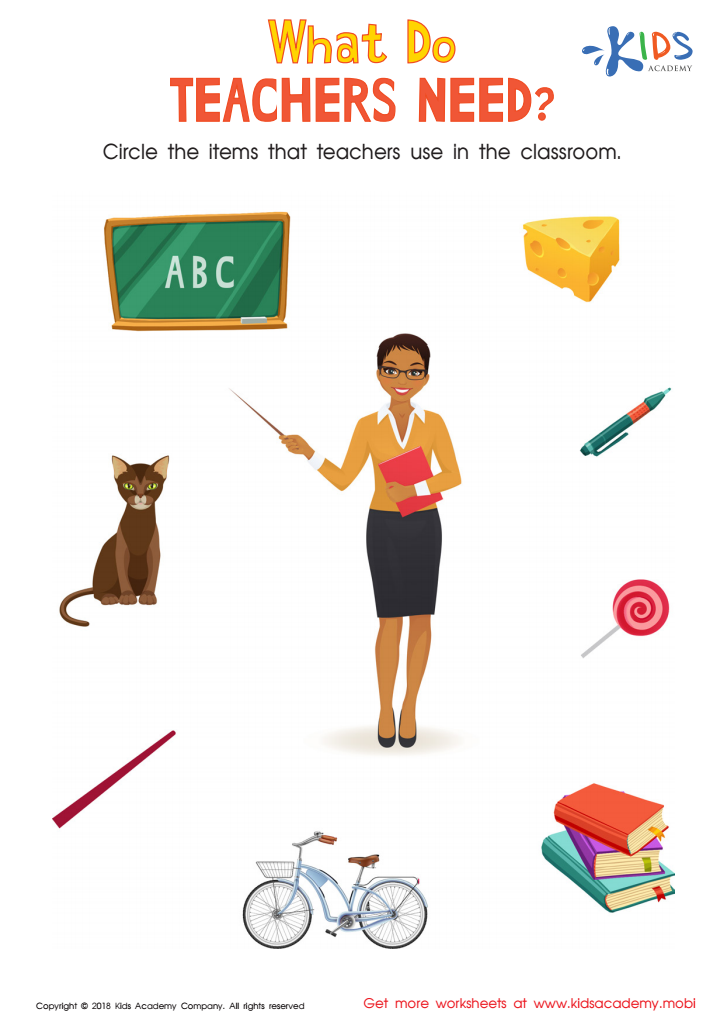
What Do Teachers Need Worksheet

Traditional Music Worksheet
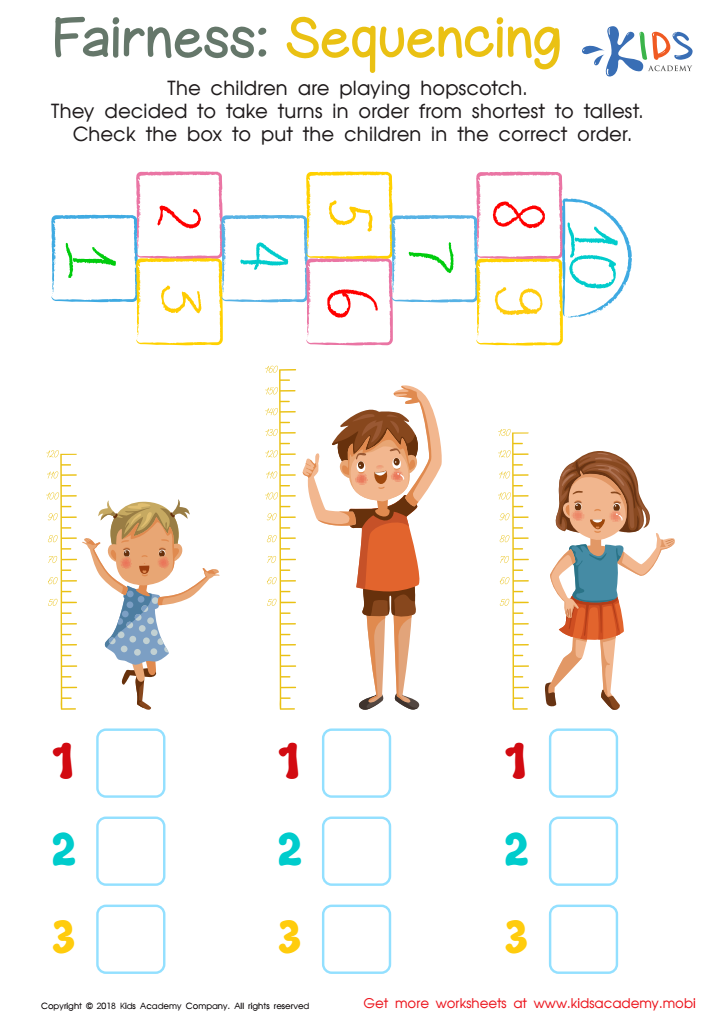
Fairness: Sequencing Worksheet








Parents and teachers should care about the Critical Thinking Community for Ages 5-6 because it lays the foundation for students’ cognitive development and future success. At this age, children are naturally curious and eager to explore the world around them. By fostering critical thinking skills early on, we encourage them to ask questions, analyze information, and develop the ability to think independently.
Engaging in critical thinking helps young learners become problem-solvers and effective decision-makers. It cultivates skills such as reasoning, inquiry, and creativity, which are essential not only in academic settings but also in everyday life. A strong start in critical thinking can lead to enhanced academic performance and greater confidence as children progress through their education.
In addition, the Critical Thinking Community provides resources and strategies tailored specifically for this age group. These tools empower educators and parents to create enriching environments that stimulate curiosity and encourage discussion. By participating in a community focused on critical thinking, adults can collaborate, share experiences, and innovate teaching methods that benefit young learners. Ultimately, promoting critical thinking skills sets a lifelong trajectory for learning and helps pave the way for informed and engaged citizens in the future.