Understanding communities Social Studies Worksheets for Ages 5-6
3 filtered results
-
From - To
Discover an engaging collection of "Understanding Communities" Social Studies worksheets tailored for children ages 5-6. These educational resources from Kids Academy feature interactive activities designed to introduce young learners to the concept of communities while fostering critical learning skills. Children will explore the roles and importance of various community members, helping them develop an understanding of societal functions. The fun and colorful worksheets enhance fine motor skills, shape recognition, and sociocultural awareness through easy-to-follow exercises. Perfect for classroom and home learning, these activities are a great way to build foundational knowledge of the world around them.
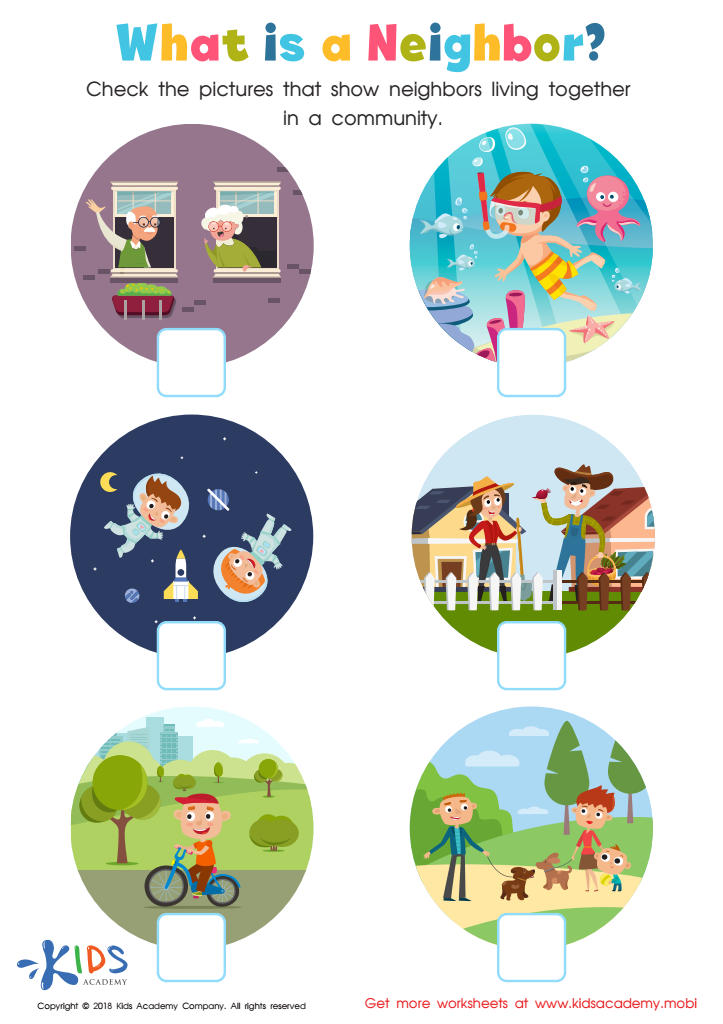
What is a neighbor Worksheet
 Assign to My Students
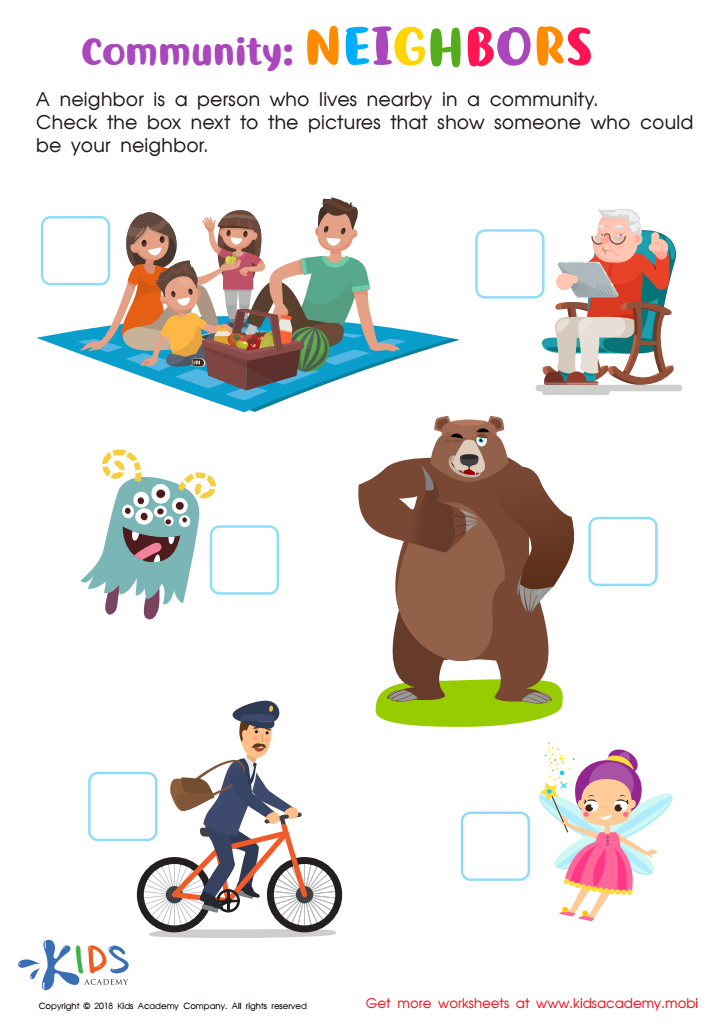
Community: Neighbors Worksheet
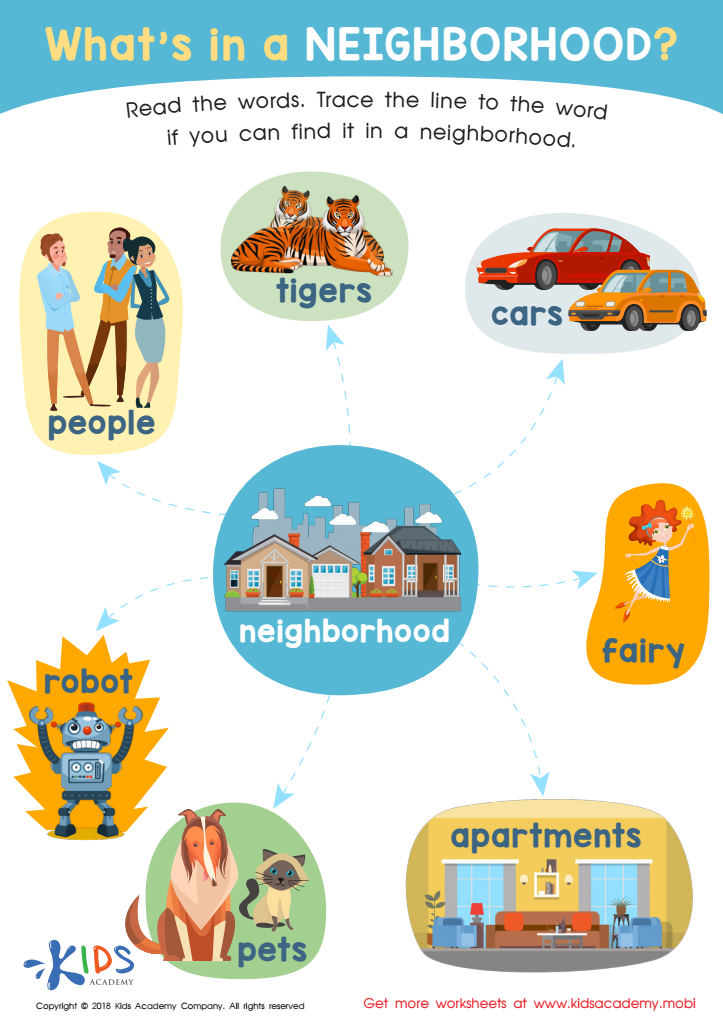
What's in a Neighborhood? Worksheet








Understanding communities through Social Studies is essential for young children, aged 5-6, as it lays the foundation for nurturing informed, empathetic, and socially responsible individuals. At this formative age, children are naturally curious about the world around them. By introducing them to the concept of communities, parents and teachers can help them start to understand their roles within both their immediate and broader social environments.
Learning about communities teaches young children the importance of cooperation, respect, and kindness towards others. It encourages them to appreciate differences and recognize the value of diverse contributions, fostering a sense of belonging and inclusivity. Additionally, it equips them with basic social skills that are crucial for effective interpersonal interactions.
Early exposure to the principles of communities aids in developing critical thinking and problem-solving skills. Children learn to ask questions, seek information, and think about how people live and work together. These skills are fundamental not only for academic success but also for navigating real-life situations as they grow.
Moreover, understanding communities nurtures a sense of civic responsibility and an early appreciation for societal structures and functions. Children begin to see their part in the larger context, promoting positive attitudes towards participation and contribution to community well-being. Thus, fostering this knowledge should be a priority for both parents and teachers.








