
Letter Tracing Practice ABC Letters Worksheets for Ages 5-7
3 filtered results
Difficulty Level
Grade
Age
-
From - To
Subject
Activity
Standards
Discover our engaging "Letter Tracing Practice ABC Letters Worksheets" designed specifically for children aged 5 to 7! These printable worksheets provide a fun and interactive way for young learners to develop their handwriting skills while becoming familiar with the alphabet. Each page focuses on a different letter, encouraging children to trace both uppercase and lowercase letters. With bright visuals and engaging activities, our worksheets promote fine motor skills and letter recognition, laying a strong foundation for future literacy. Ideal for classroom learning or at-home practice, these resources are perfect for parents and teachers striving to cultivate young learners' confidence in writing.
Favorites
With answer key
Interactive
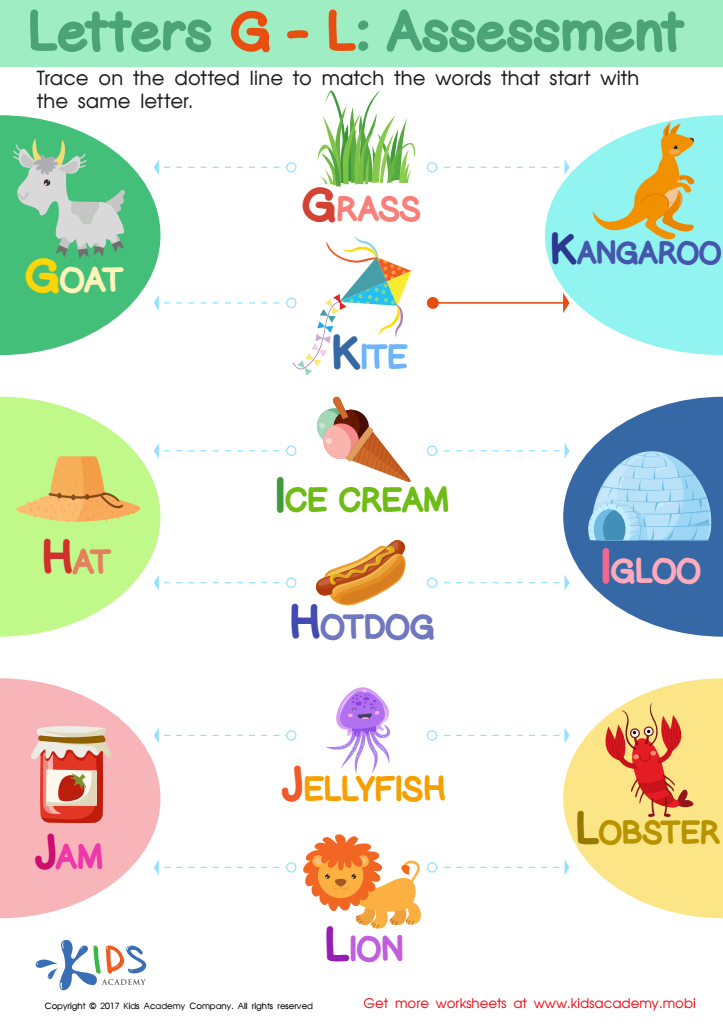
Letters G-L Worksheet
This fun worksheet helps preschoolers develop reading and phonics skills. It gets kids to match G-L words that start with the same letter, making it engaging and educational.
Letters G-L Worksheet
Worksheet





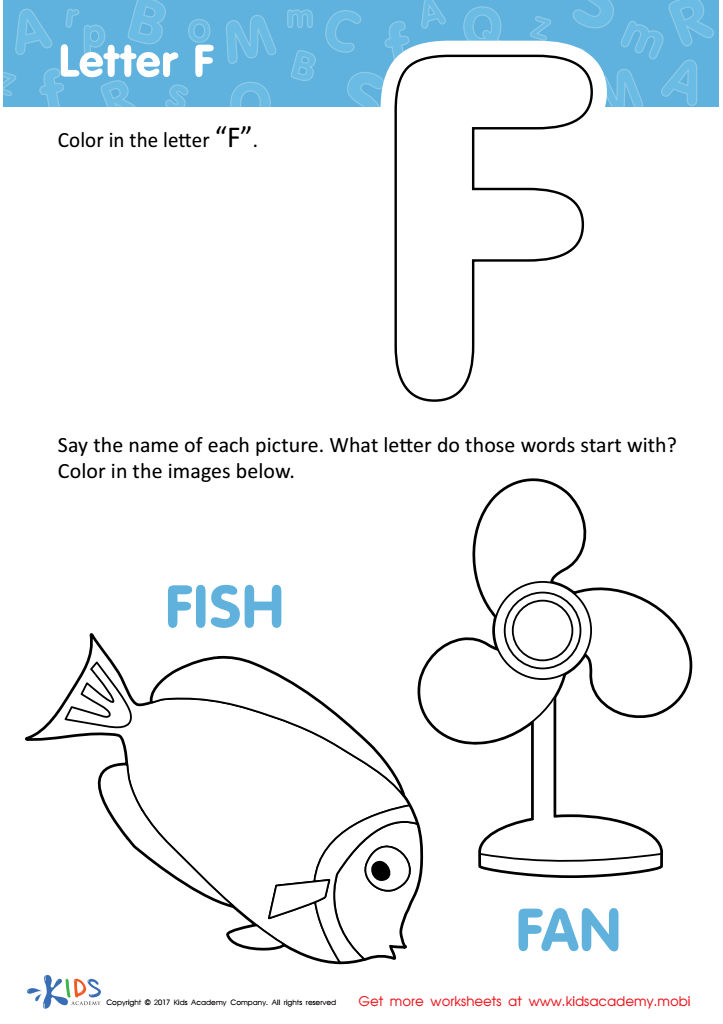
Letter F Coloring Sheet
Coloring pages help kids learn to recognize letters and sounds. Our "F" page has kids color a fish and a fan. It's a great way to introduce them to the letter "F" using words they already know.
Download (PDF)
 Assign to My Students
Assign to My Students
Letter F Coloring Sheet
Worksheet
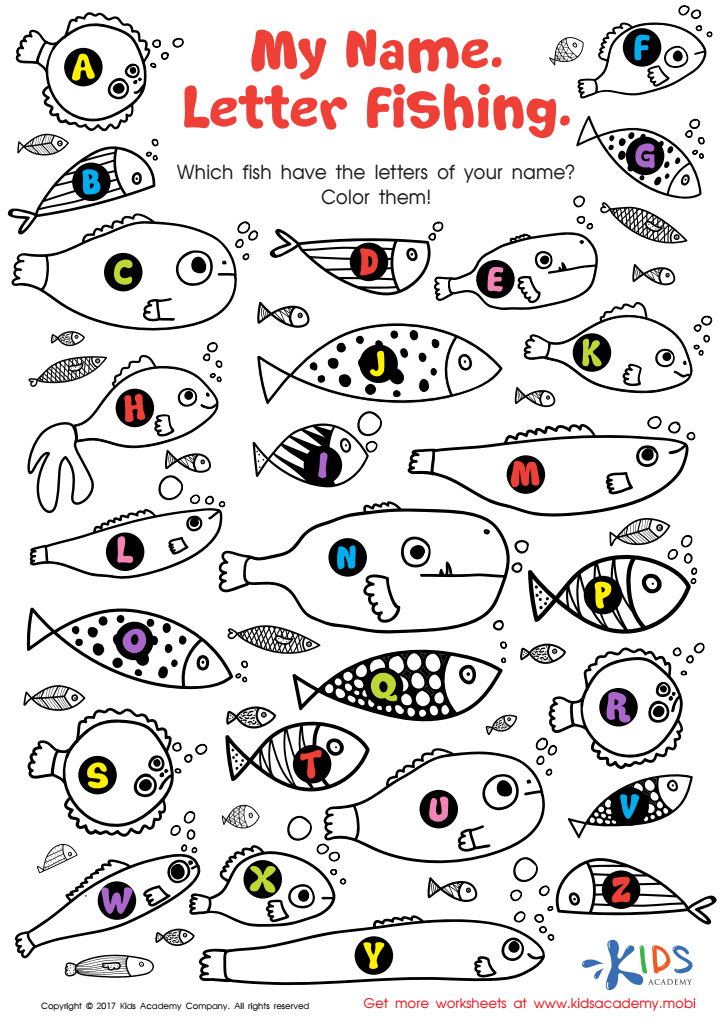
My Name: Letter Fishing Worksheet
Dive into the deep sea and search for fish with a letter on them. Can you find all the letters from your name? Color your favorite fish with crayons and be creative! On the other side, use the letters you found to write your name. Have fun coloring and finding the letters of your name! (80 words)
Download (PDF)
Assign to My Students
Assign to My Students
My Name: Letter Fishing Worksheet
Worksheet
Join Kids Academy for Free
Who is primarily going to use this learning content?






Letter tracing practice is crucial for children aged 5-7 as they embark on their literacy journey. This foundational skill not only aids in letter recognition but also enhances fine motor skills, which are essential for writing and other classroom activities. For parents and teachers, encouraging tracing activities helps instill confidence in young learners, making them more comfortable with writing as they transition from recognizing letters to forming them independently.
Moreover, consistent letter tracing reinforces cognitive connections between the visual representation of letters and their phonetic sounds, promoting phonemic awareness. This, in turn, bolsters early reading skills, setting the stage for future literacy success. Letter tracing can be an engaging activity that fosters a love for learning when paired with fun themes or creative materials, making it appealing for both children and educators alike.
Additionally, practicing letter formation can improve handwriting quality, which is often a concern in primary education. As children master their ABCs through tracing, they not only develop critical academic skills but also gain a sense of accomplishment, motivating them to tackle more complex tasks. Ultimately, engaging in letter tracing is a vital component of early education that benefits children’s linguistic and motor development, paving a pathway for lifelong learning.







