Vowel Recognition ABC Letters Worksheets for Ages 5-7
3 filtered results
-
From - To
Enhance your child's reading skills with our "Vowel Recognition ABC Letters Worksheets" specially designed for ages 5-7. These engaging, printable worksheets introduce young learners to the basics of vowel recognition through colorful activities and fun exercises. Children will enjoy matching vowels with corresponding pictures, completing fill-in-the-blank exercises, and engaging in vibrant letter games. Our resources not only boost vowel identification but also lay a strong foundation for phonics and literacy development. Perfect for homeschooling or classroom use, these worksheets make learning vowels fun and interactive. Help your child succeed in reading with our exciting vowel recognition activities today!
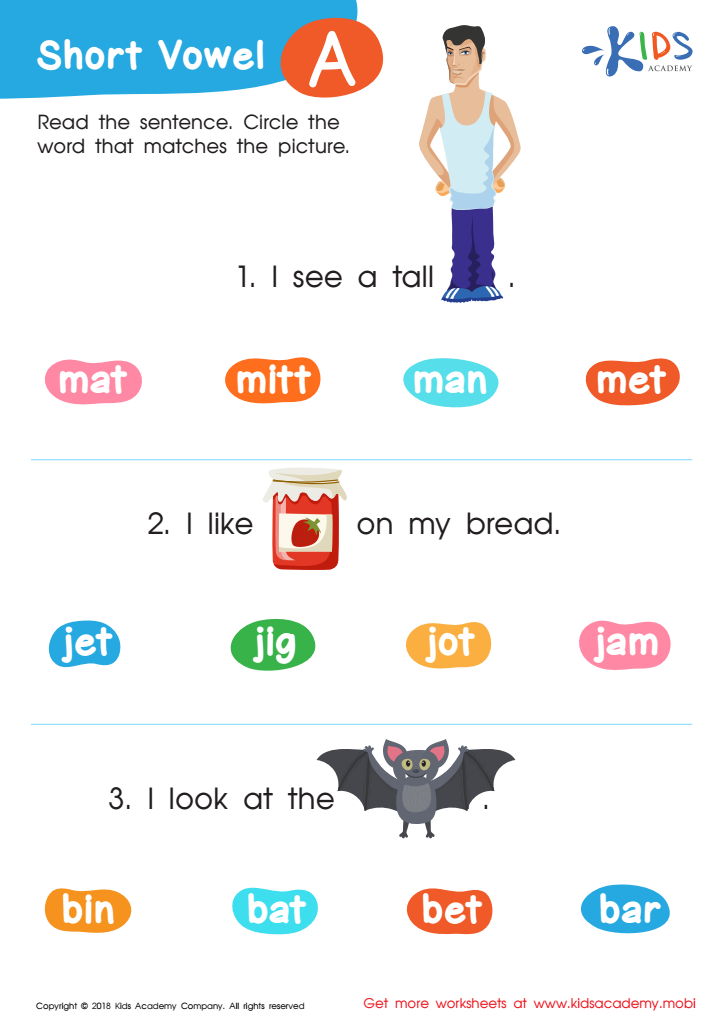
Short Vowel /a/ Worksheet
 Assign to My Students
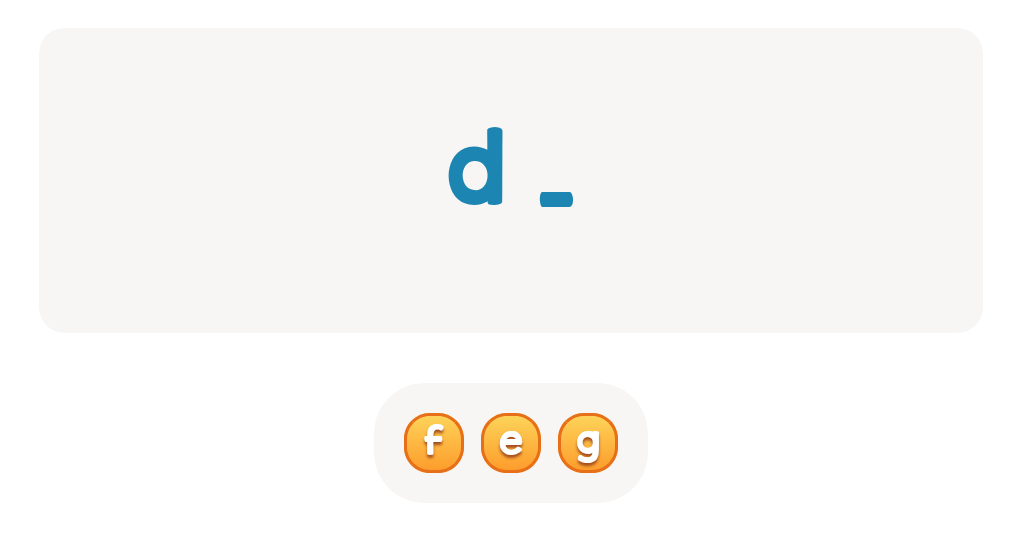


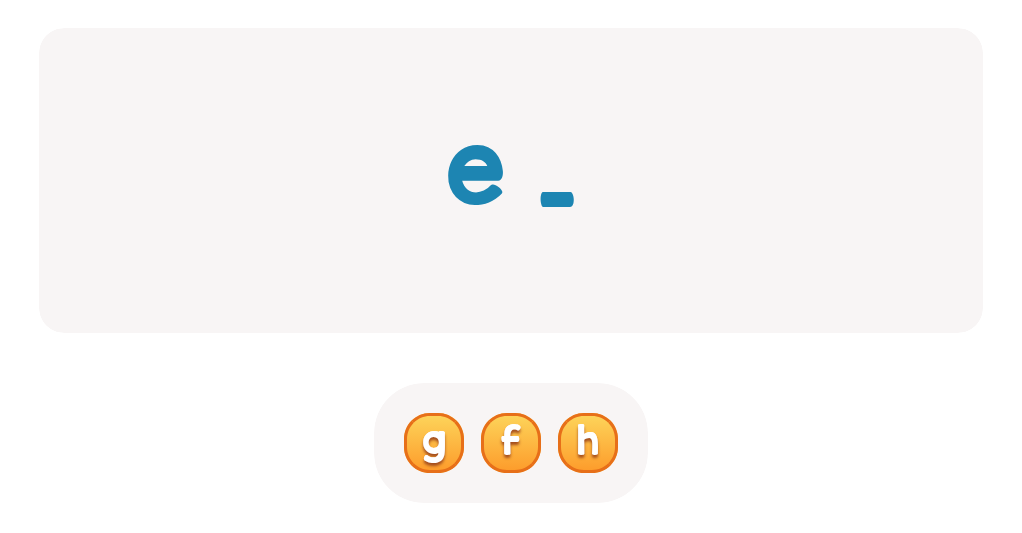
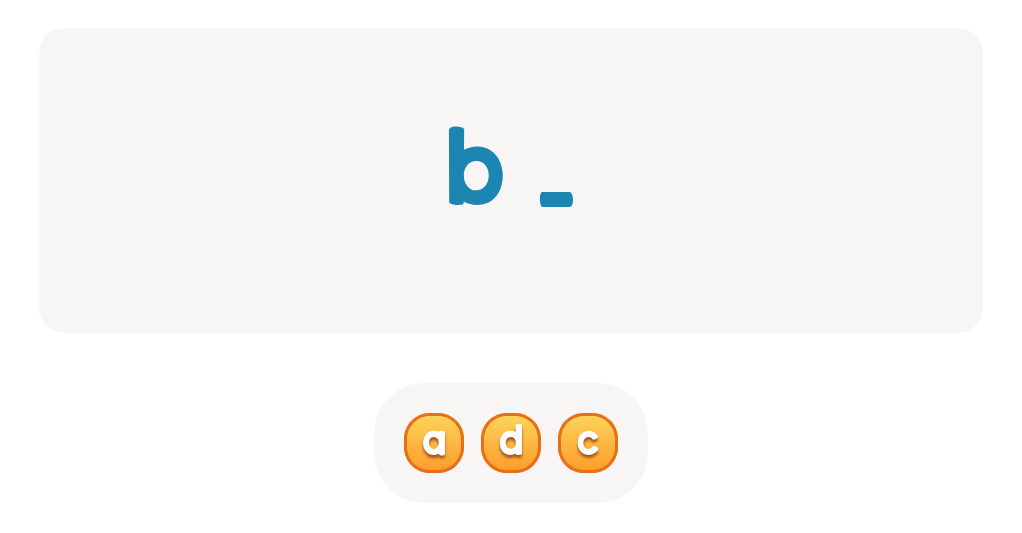




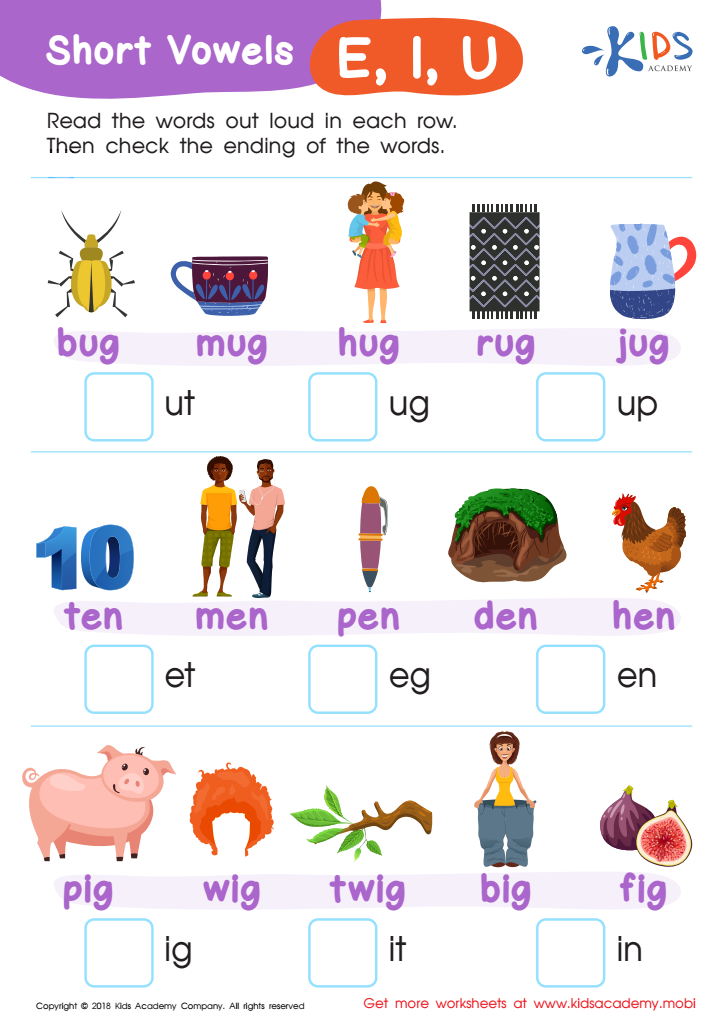
Short Vowels /e/, /i/, and /u/ Worksheet
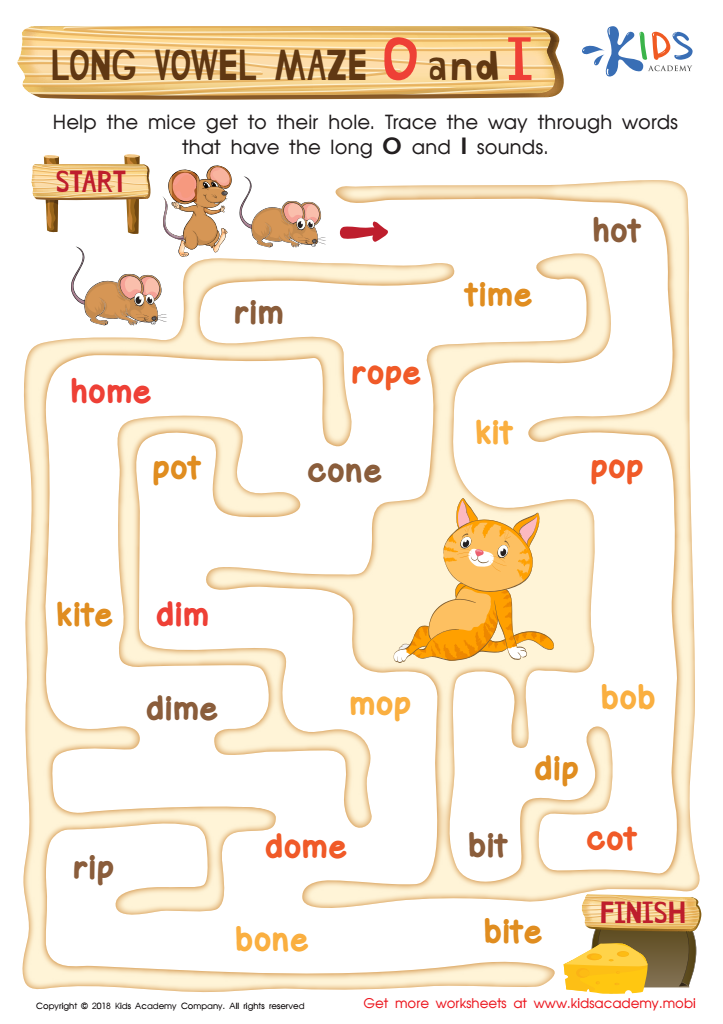
Long Vowel Maze /o/ and /i/ Worksheet







Vowel recognition is crucial for early literacy development among children aged 5-7. As fundamental building blocks of language, vowels are essential for reading and writing proficiency. Children equipped with strong vowel recognition skills can decode words more effectively, leading to improved reading fluency and comprehension. This foundation enables them to transition from kindergarten readiness to success in later grades.
Additionally, understanding vowel sounds helps children develop phonemic awareness, which is the ability to hear, identify, and manipulate sounds in words. This skill is key in learning to spell and create words, enhancing their overall communication abilities.
For parents and teachers, fostering vowel recognition serves multiple purposes. It nurtures a child's confidence, inciting a love for reading and learning that can last a lifetime. Furthermore, recognizing the different vowel sounds reinforces their phonics knowledge, which is integral during this critical stage of literacy development.
Engaging activities—like singing vowel songs, reading vowel-centered books, or playing games focused on letters—allow for enjoyable and effective learning. By prioritizing vowel recognition, adults provide essential support for children's educational journeys, ensuring they are well-equipped to tackle the complexities of language in their future academic pursuits.







