Phonics practice Consonants Worksheets for Ages 5-7
5 filtered results
-
From - To
Enhance your child's reading skills with our Phonics Practice Consonants Worksheets for ages 5-7! These engaging, printable worksheets focus on consonant sounds, essential for early literacy development. Each activity is designed to make learning fun and effective, helping young learners recognize, pronounce, and write consonants accurately. Ideal for both classroom and home use, our expertly crafted exercises provide a solid foundation in reading and writing. Boost your child's confidence and proficiency in phonics with our user-friendly worksheets. Visit Kids Academy for a delightful and educational phonics adventure today!
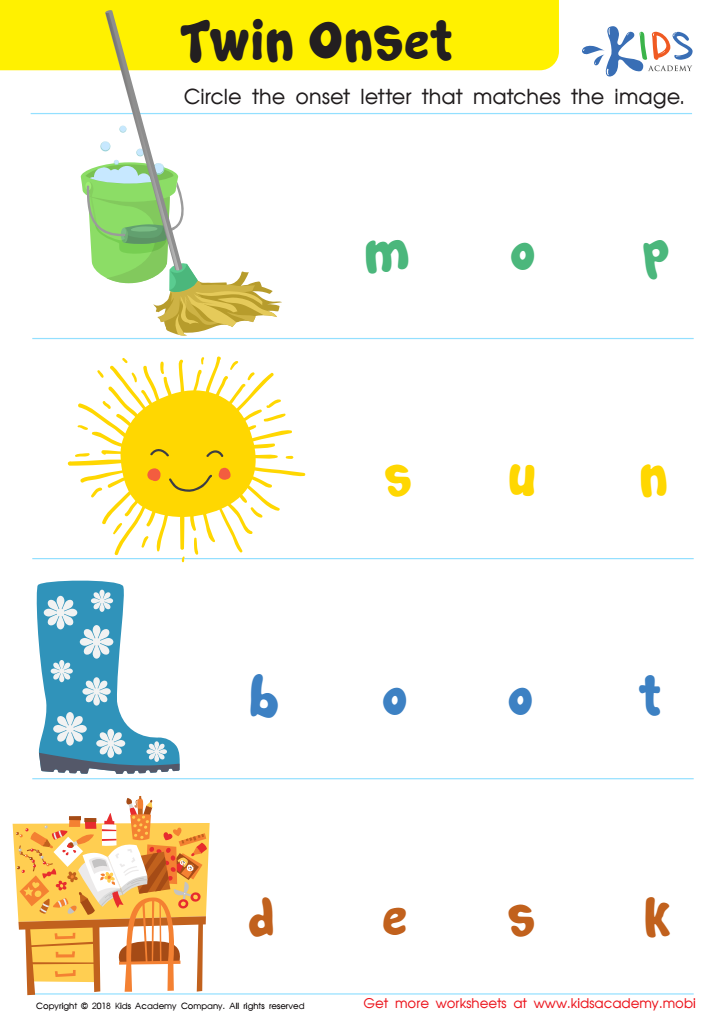
Twin Onset Worksheet
 Assign to My Students
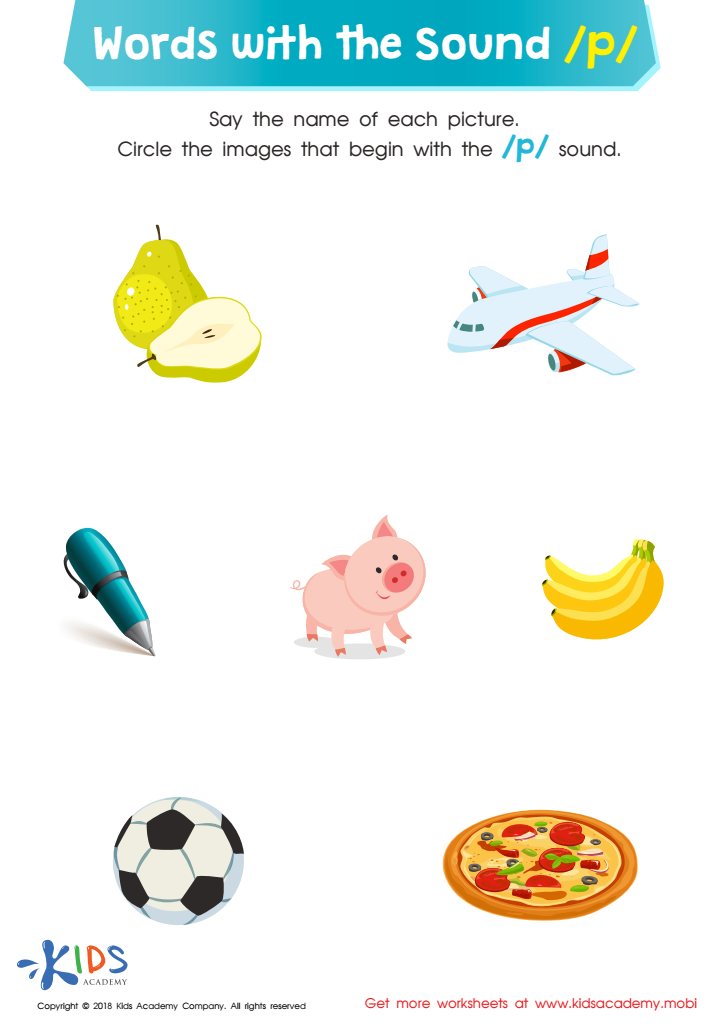
Words with sound p Reading Worksheet
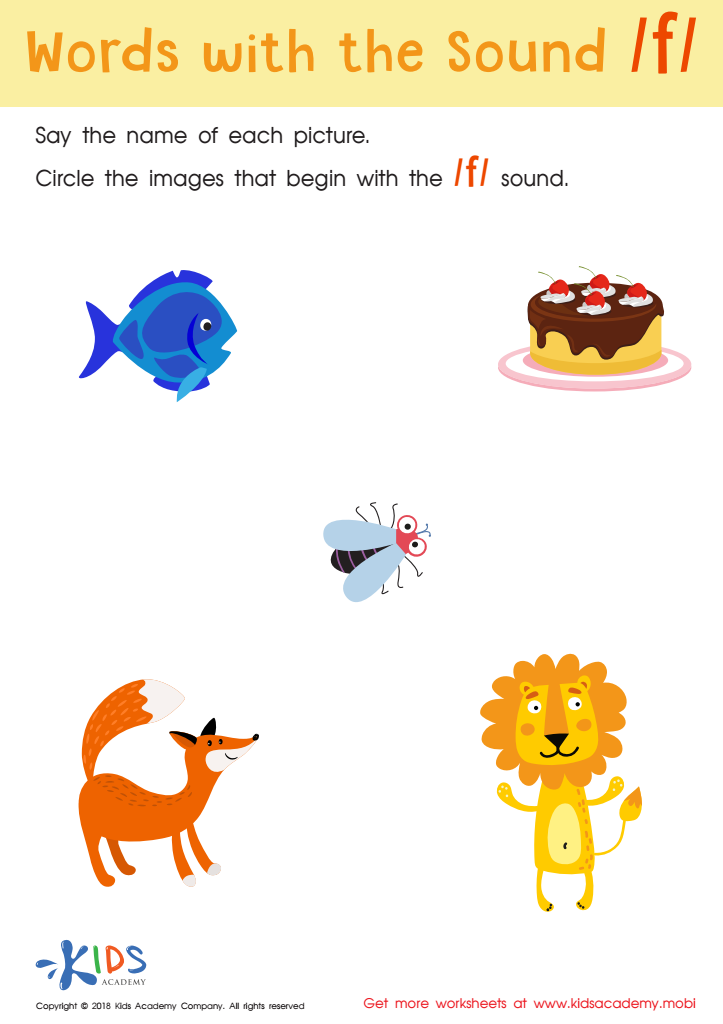
Words with sound f Reading Worksheet
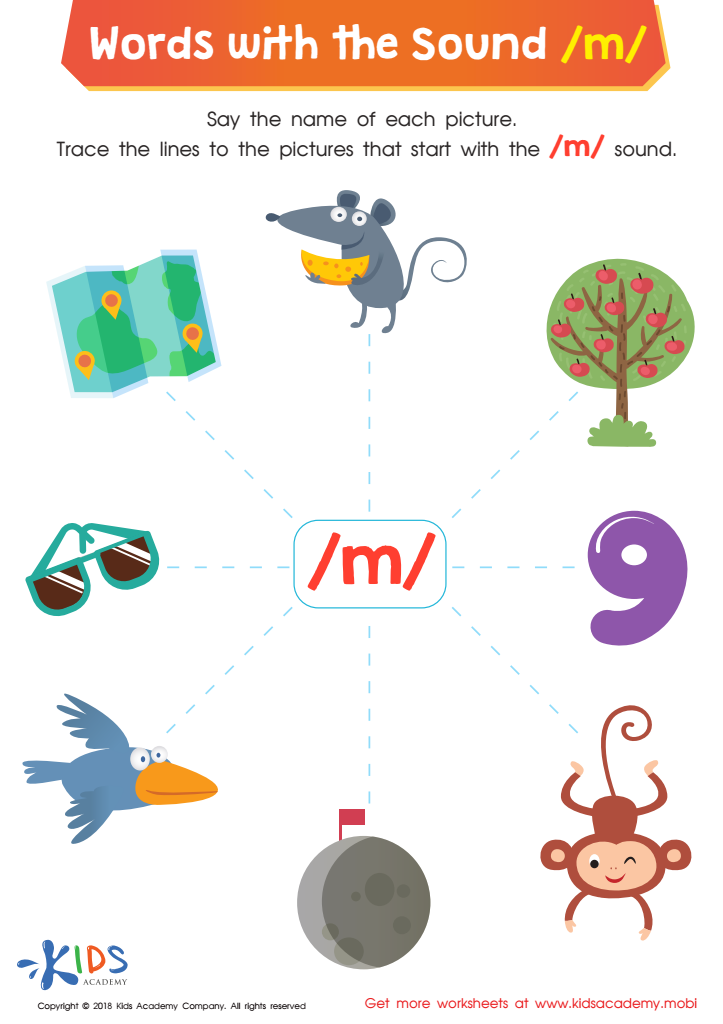
Words with Sound M Reading Worksheet
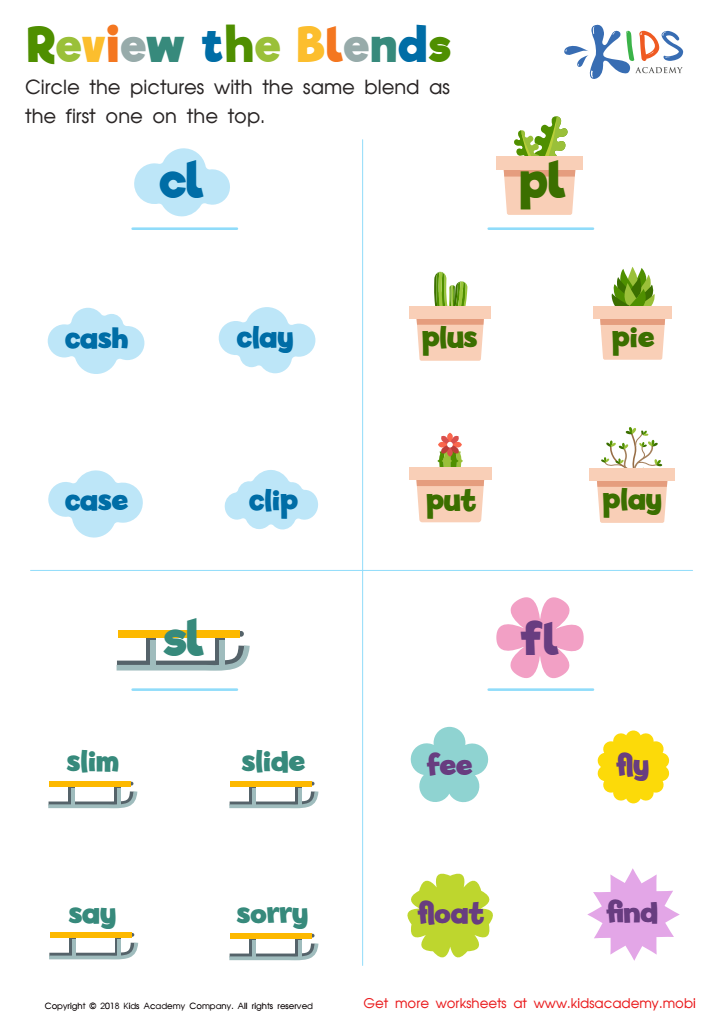
Review the Blends Worksheet



Phonics practice with consonants is crucial for children ages 5-7 as it lays the foundational skills necessary for proficient reading and writing. During these formative years, young learners are at a critical stage where their brains are exceptionally receptive to understanding sound patterns and letter recognition. Phonics helps them decode words by associating specific sounds (phonemes) with corresponding letters or groups of letters (graphemes), which is essential for phonemic awareness.
Engaging in regular phonics activities with consonants aids children in distinguishing different sounds, promoting better pronunciation and articulation. This practice enhances their ability to recognize words, which is vital for reading fluency and comprehension. When children can efficiently decode words, their reading becomes smoother and more enjoyable, fostering a love for books and learning.
Moreover, a strong grasp of consonant sounds supports early spelling and writing skills. As they practice consonant sounds, children begin to identify patterns and rules within the language, which they can then apply to unfamiliar words. Teachers and parents setting a focus on this area of learning can provide crucial support and encouragement, ensuring that children build a solid literacy foundation, which is indispensable for their ongoing academic success and overall confidence in communication.







