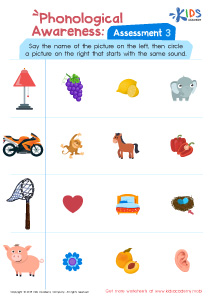
Sound recognition Consonants Worksheets for Ages 5-7
5 filtered results
-
From - To
Boost your child's phonemic awareness with our Sound Recognition Consonants Worksheets for Ages 5-7. These engaging, expertly-designed worksheets from Kids Academy help young learners identify and differentiate between various consonant sounds, laying a strong foundation for reading and spelling skills. Developed by educational professionals, each activity is both fun and challenging, using pictures, letters, and simple words to make learning interactive and enjoyable. Perfect for classroom use or additional home practice, our worksheets ensure children build essential literacy skills while having fun, setting them up for future academic success. Unlock your child’s potential today!
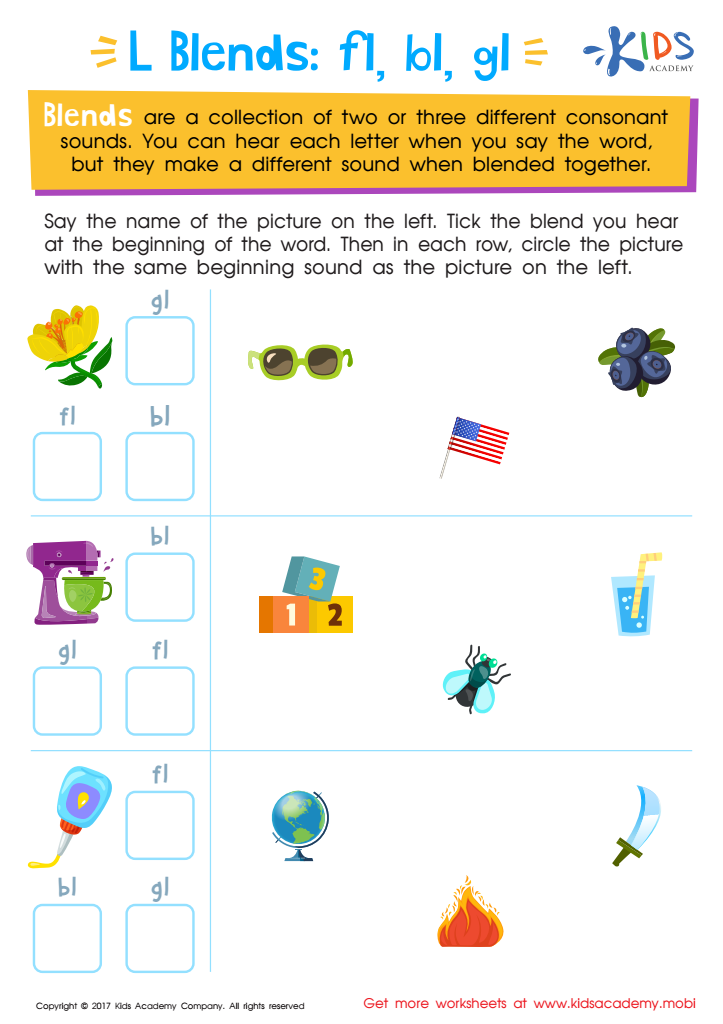
Blending Consonants: "Fl", "Bl" and "Gl" Printable
 Assign to My Students
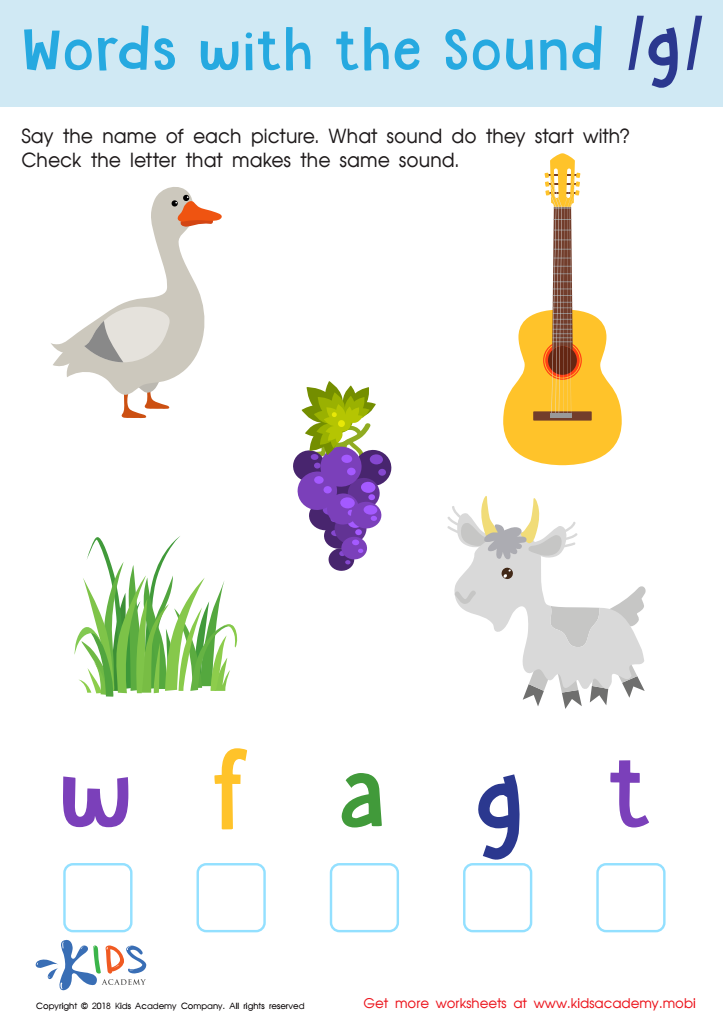
Words with sound g Reading Worksheet
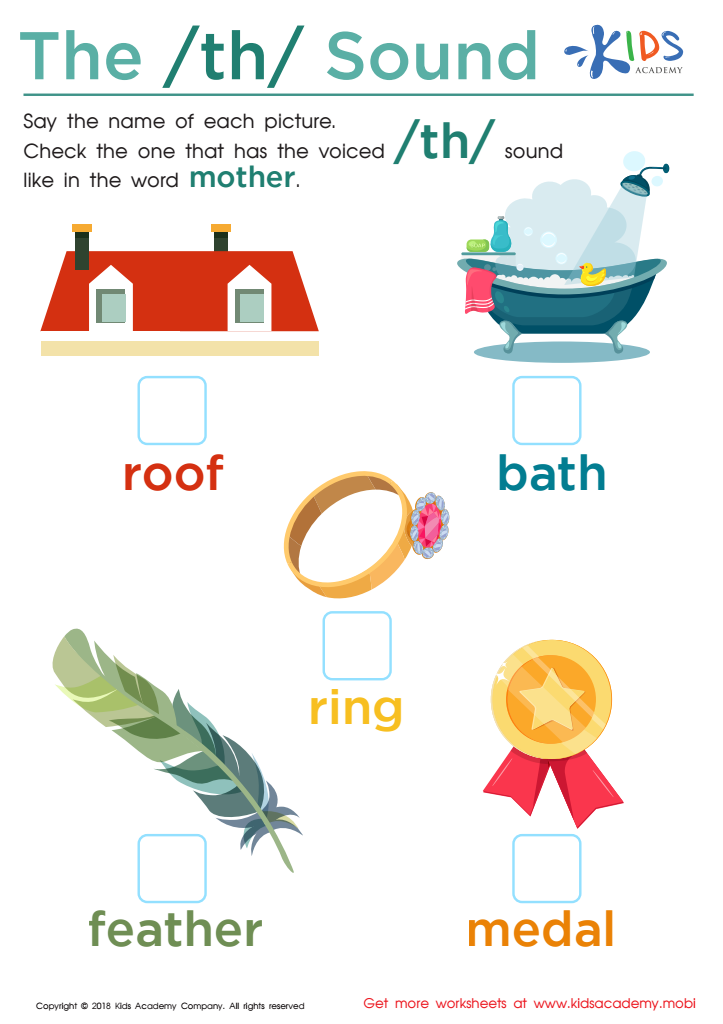
The /th/ Sound Worksheet
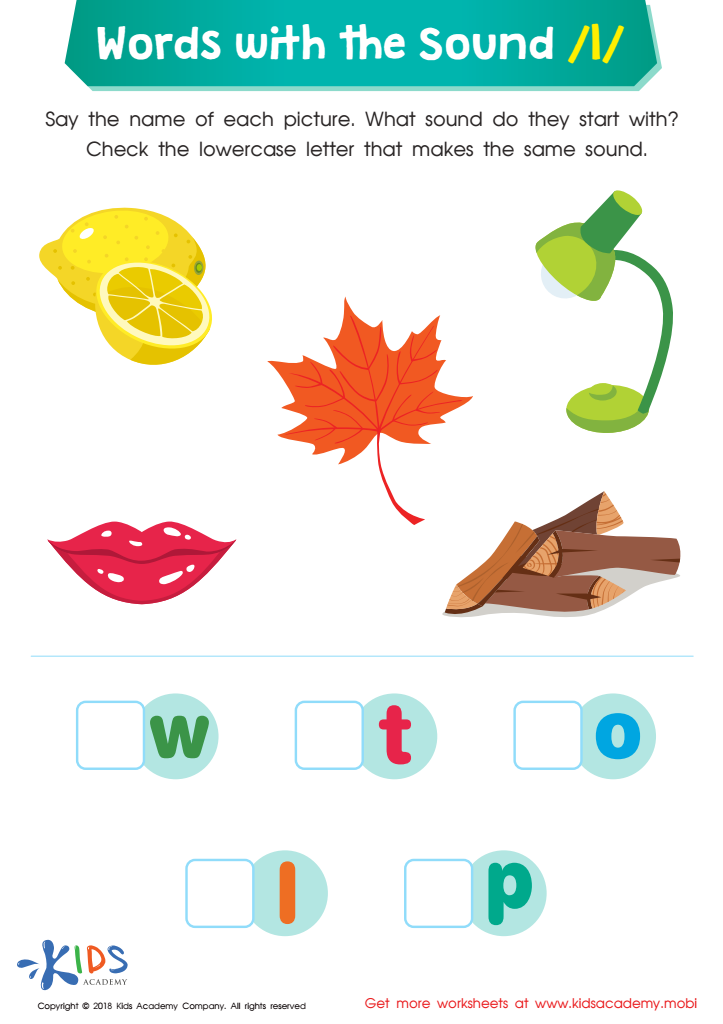
Words with Sound L Reading Worksheet
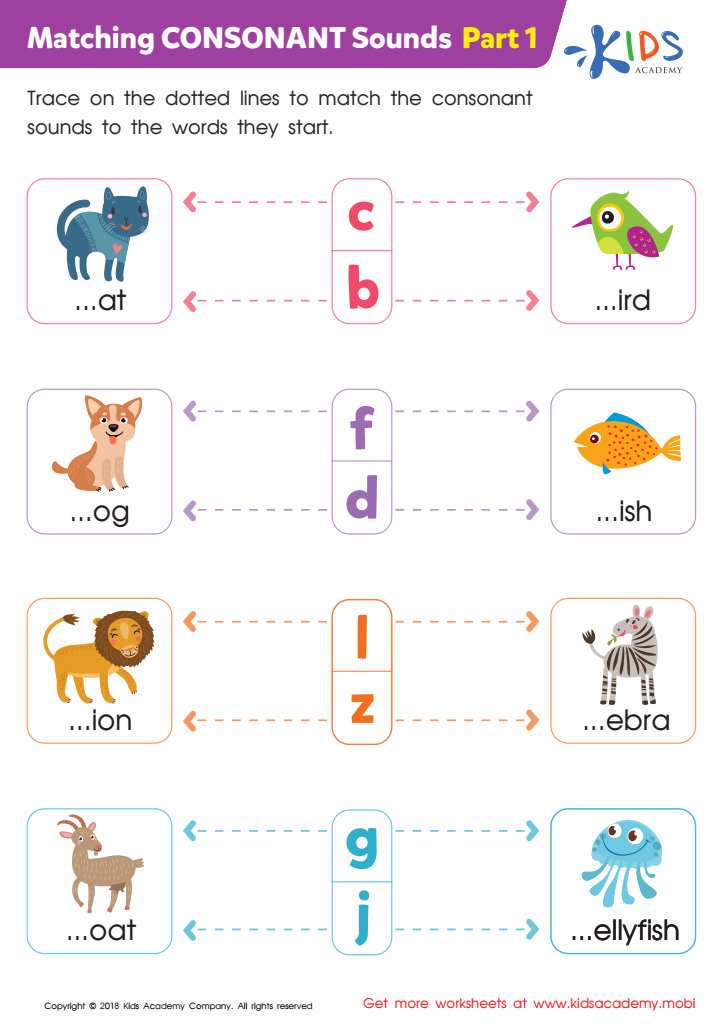
Matching Consonant Sounds: Part 1 Worksheet



Sound recognition of consonants is a foundational skill that supports early literacy development in children aged 5-7. At this stage, children are transitioning from recognizing simple letters and sounds to blending them into words, which is essential for reading fluency and comprehension. Parents and teachers should understand that recognizing consonant sounds enhances phonemic awareness, a critical component of learning to read.
Phonemic awareness involves the ability to hear, identify, and manipulate individual sounds—phonemes—in spoken words. When children grasp the distinct sounds that consonants make, they can begin to decode new words by breaking them down into smaller, manageable parts. This skill directly supports their ability to spell, write, and eventually read longer texts with greater independence and confidence.
Consonant sound recognition also helps children differentiate between similar-sounding words, thereby improving their vocabulary and understanding. For example, distinguishing between "pat" and "bat" sharpens their listening and pronunciation skills, further enhancing their communication abilities.
Early mastery of consonant sounds sets a strong foundation for more advanced literacy skills and academic success. By fostering these skills at an early age, parents and teachers can nurture a positive, lifelong relationship with language and learning in children. Prioritizing sound recognition of consonants thus becomes a crucial investment in every child’s educational journey.