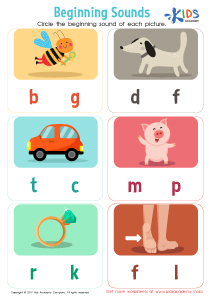
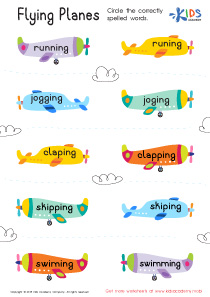
Sound identification Elementary Phonics Worksheets for Ages 5-7
4 filtered results
-
From - To
Unlock your child's reading potential with our "Sound Identification Elementary Phonics Worksheets," designed for ages 5-7. These engaging worksheets focus on helping young learners recognize and differentiate sounds associated with letters and words, building a strong phonics foundation. Each printable activity is crafted to enhance listening skills and foster sound-to-letter connections through interactive exercises. Perfect for home or classroom use, these worksheets promote independent learning while making phonics fun! Whether your child is just starting their reading journey or needs a little extra practice, our sound identification resources will guide them toward becoming confident readers. Explore our collection today!
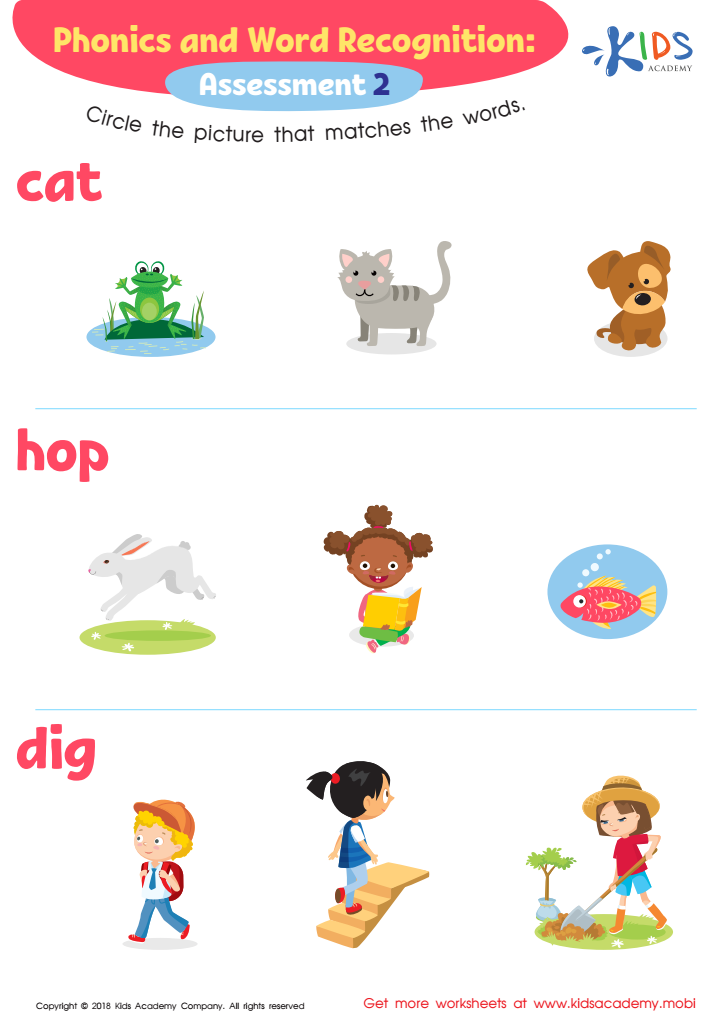
Phonological Awareness: Assessment 2 ELA Worksheet
 Assign to My Students
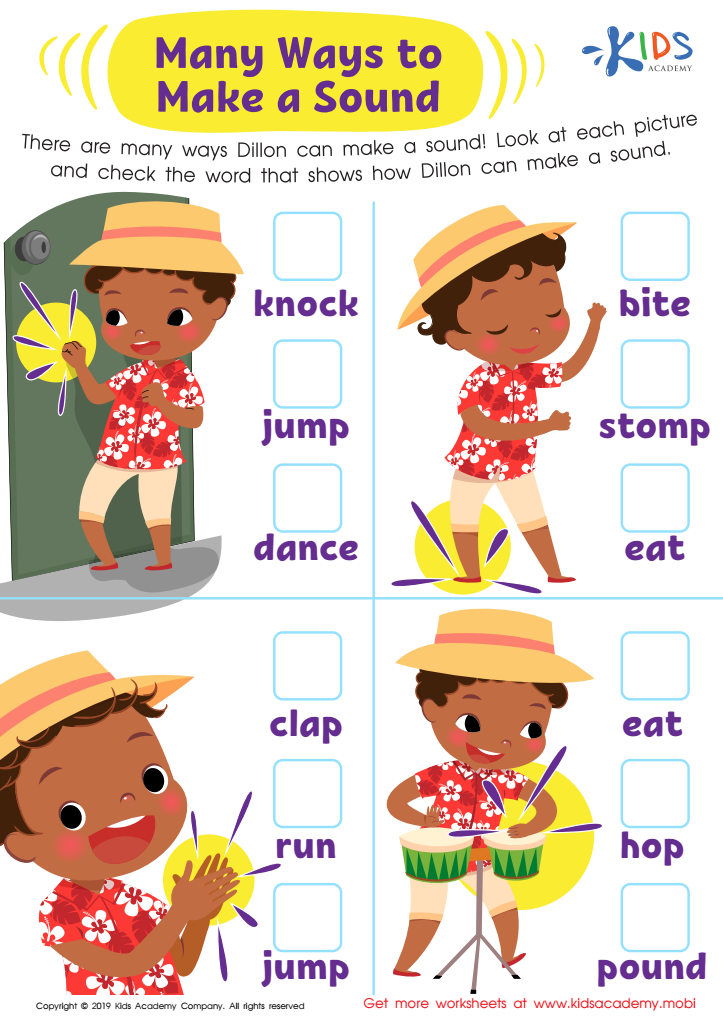
Many Ways to Make a Sound Worksheet
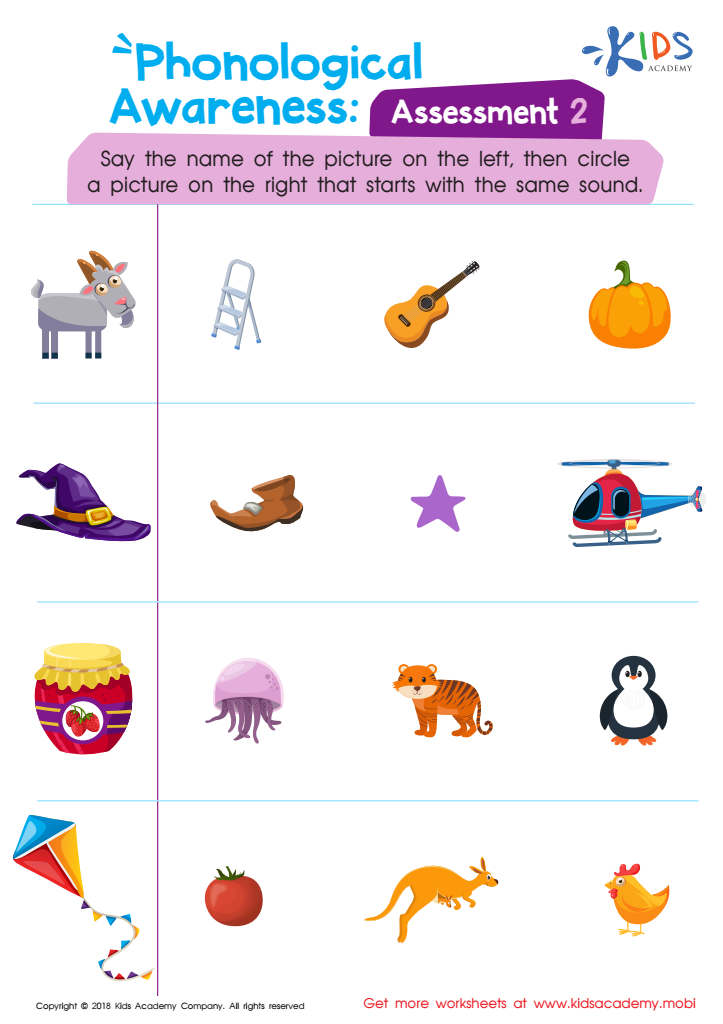
Phonological Awareness: Assessment 2 Worksheet
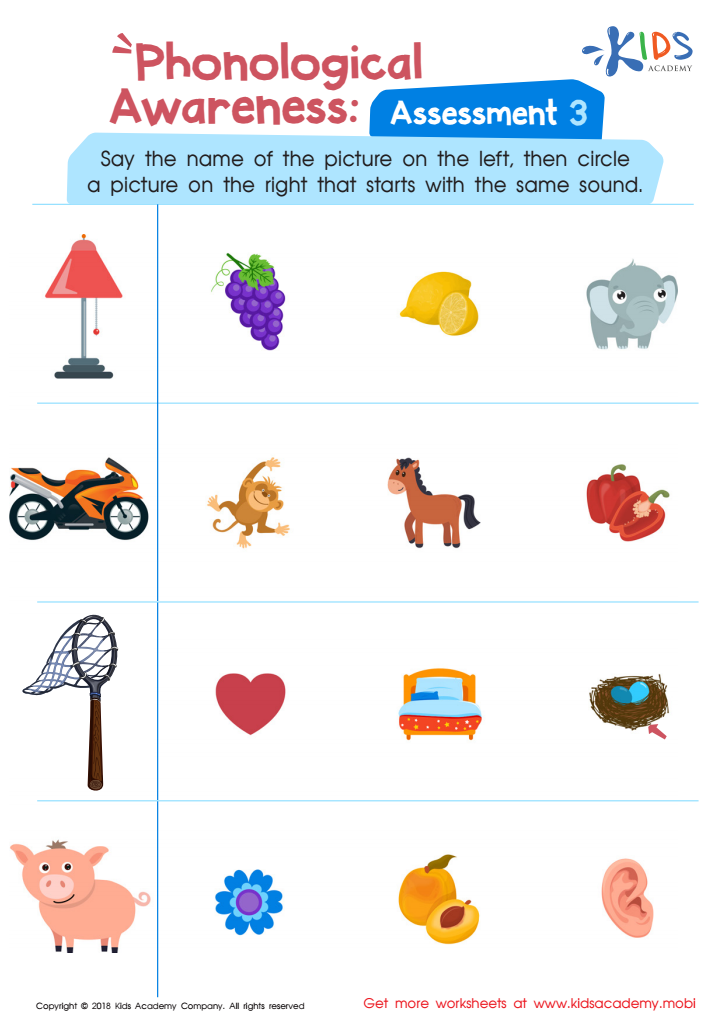
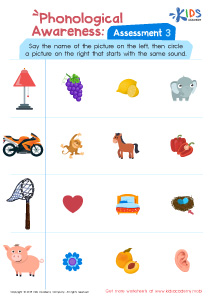
Phonological Awareness: Assessment 3 Worksheet




Sound identification is a crucial component of early literacy for children ages 5-7, laying the foundation for fluent reading and writing. At this developmental stage, children are beginning to connect sounds with letters, a process known as phonemic awareness. When parents and teachers emphasize sound identification, they help children recognize individual phonemes—the smallest units of sound in speech—which is vital for reading and spelling.
Research shows that strong phonemic awareness correlates with successful reading skills, making it essential for academic achievement. By mastering sound identification, children can decode words more efficiently, enhancing their reading comprehension and confidence. Additionally, it fosters curiosity and a love for language, encouraging students to engage with books and storytelling.
Moreover, involving parents in phonics activities at home reinforces what children learn in the classroom. It creates a supportive learning environment, demonstrating the importance of reading and literacy. Overall, prioritizing sound identification not only equips children with necessary skills for educational success but also nurtures their communication abilities and cognitive development, making it a fundamental focus for educators and families alike.