Matching skills Alphabet Worksheets for Ages 5-7
3 filtered results
-
From - To
Enhance your child's learning experience with our Matching Skills Alphabet Worksheets designed specifically for ages 5-7. These engaging worksheets foster early literacy by helping young learners recognize and associate letters with words and pictures. Children will develop crucial matching skills while identifying uppercase and lowercase letters, reinforcing their understanding of the alphabet. Each worksheet features colorful illustrations and interactive activities that make learning fun and enjoyable. Perfect for at-home practice or classroom use, our worksheets support foundational literacy skills and prepare children for future academic success. Download now and watch your child's confidence in reading and writing grow!
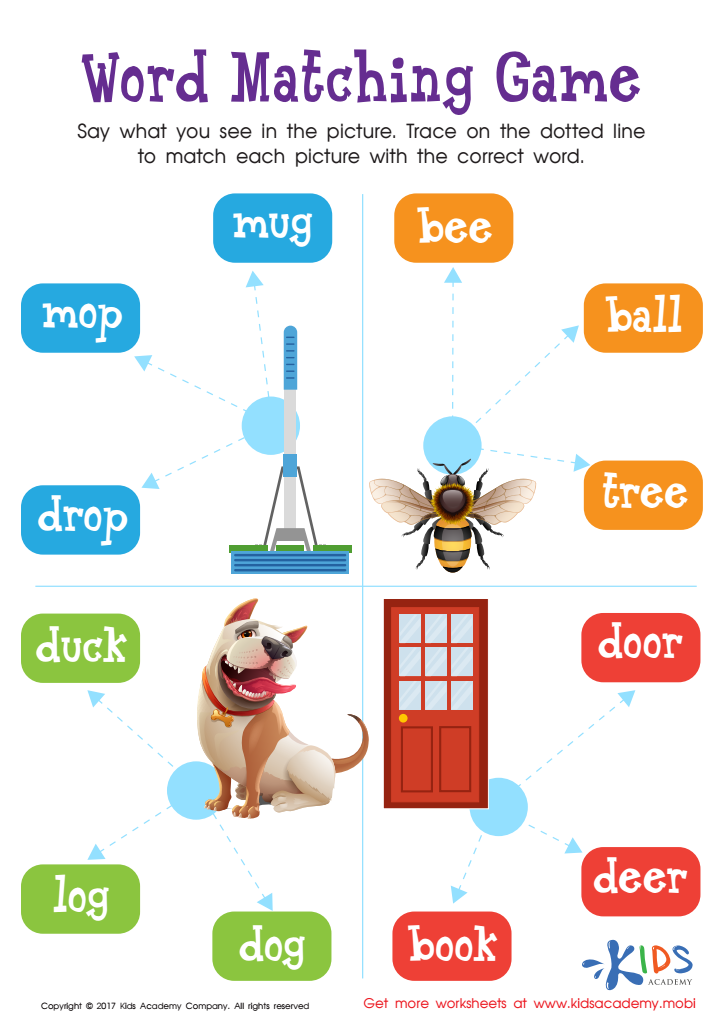
Word Matching Game Worksheet
 Assign to My Students
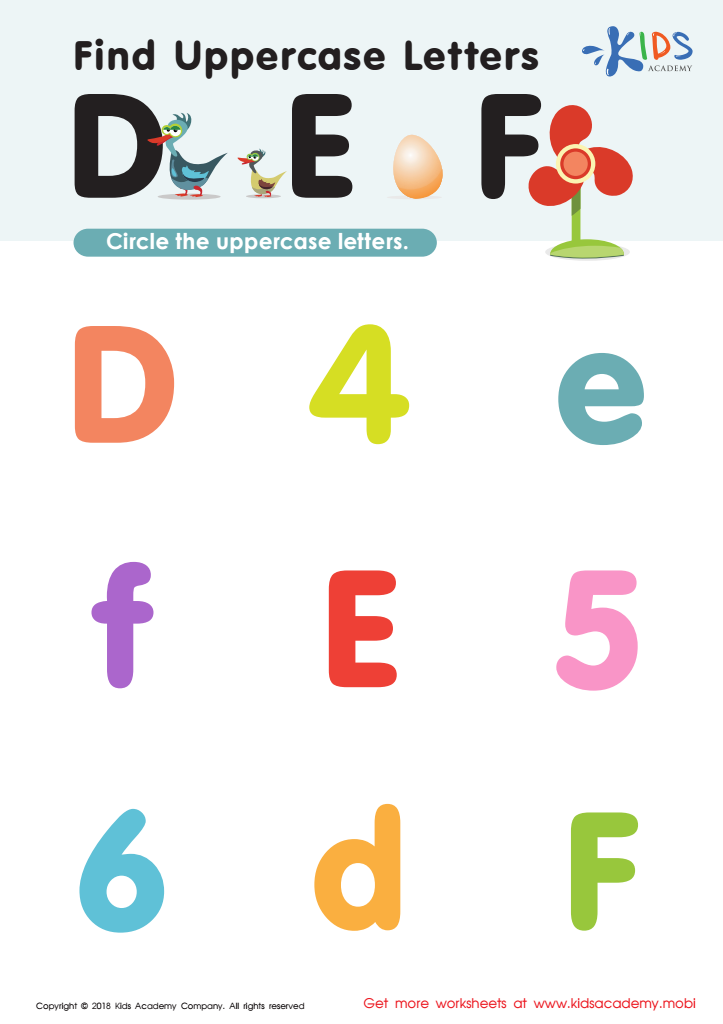
Find Uppercase Letters D, E, and F Worksheet
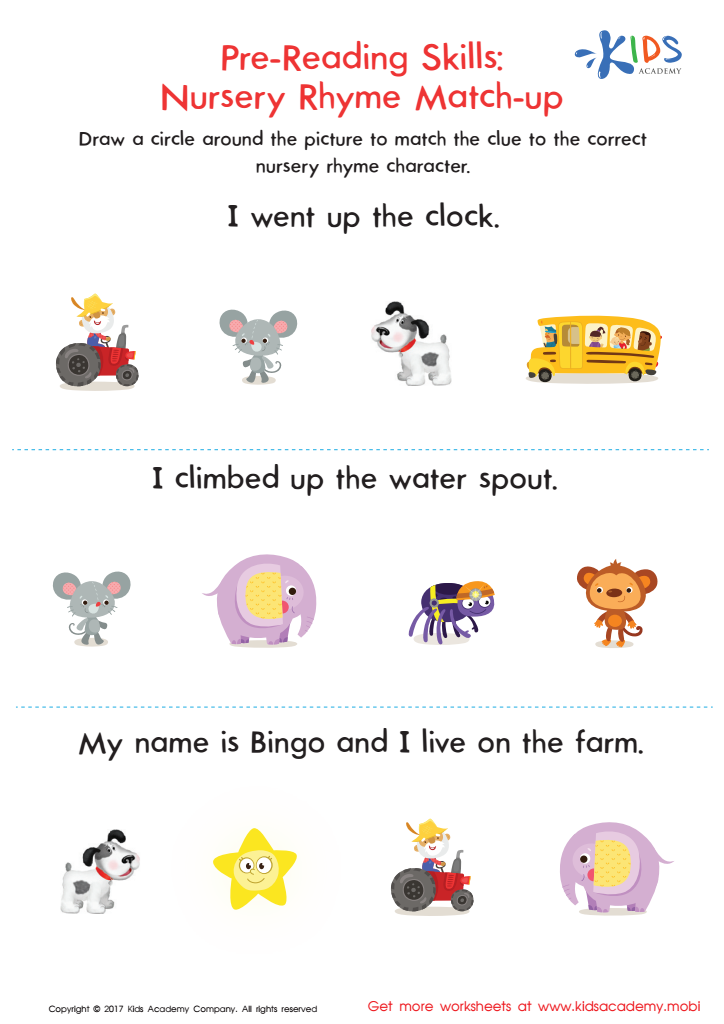
Nursery Rhyme Match–Up Worksheet



.jpg)


Parents and teachers should prioritize matching skills, particularly in the context of the alphabet, for children aged 5-7 because these skills form the foundation for early literacy development. At this age, children are eager to engage with letters and words, making it the ideal time to enhance their recognition of uppercase and lowercase letters through matching activities. These exercises promote cognitive skills, encouraging children to classify, compare, and differentiate between similar shapes.
Furthermore, matching skills help improve memory and attention spans, as children must focus on attributes to successfully pair letters. As they engage in playful matching games, they also develop fine motor skills, which are essential for writing. Additionally, mastering matching activities can boost confidence, cultivating a love for learning as children become more proficient in their understanding of the alphabet.
Beyond the classroom, strong matching skills can benefit social play and collaboration, as children often work together in teams during such activities. It reinforces critical communication skills, creating a supportive learning environment. Overall, focusing on matching skills with the alphabet lays the groundwork for successful reading and writing in the future, making it a crucial activity for parents and educators alike.







