Visual discrimination Alphabet Worksheets for Ages 5-7
5 filtered results
-
From - To
Enhance your child's learning with our Visual Discrimination Alphabet Worksheets designed for ages 5-7! These engaging worksheets help children develop crucial visual perception skills necessary for recognizing letters and improving reading and writing abilities. Packed with fun activities, kids will compare, contrast, and identify letters, fostering their attention to detail while enjoying the learning process. Perfect for homeschool or classroom use, these worksheets make learning the alphabet interactive and enjoyable. With colorful illustrations and age-appropriate tasks, our resources ensure that every child builds a strong foundation in literacy. Boost your child’s confidence and skills with our delightful worksheets today!

Find Lowercase Letters g h i Worksheet
 Assign to My Students
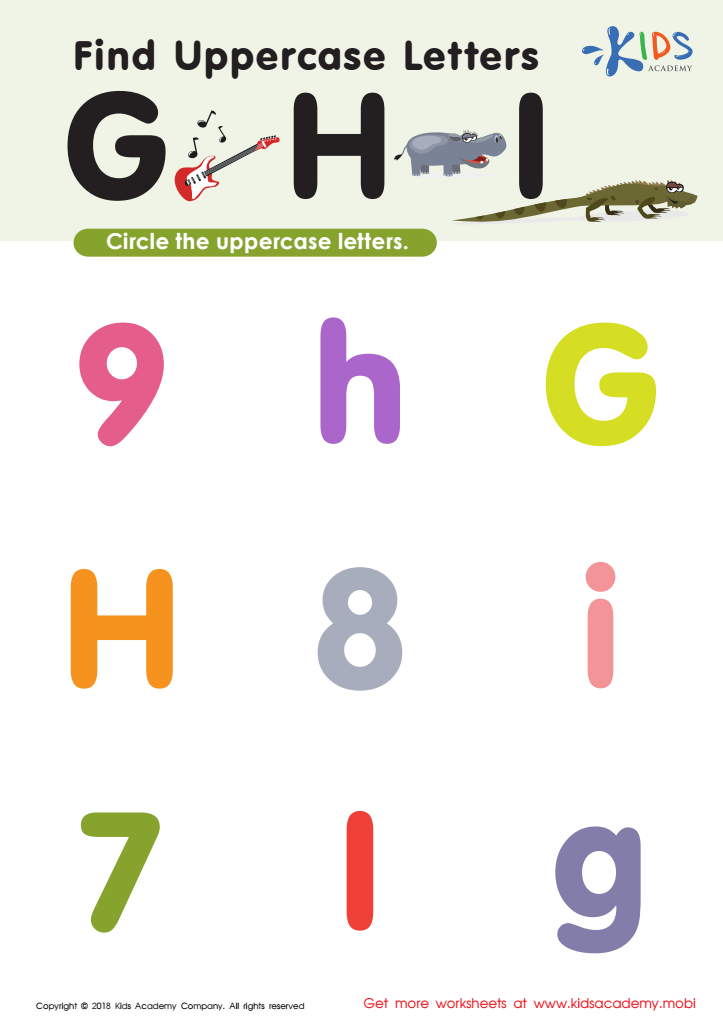
Find Uppercase Letters G, H, and I Worksheet
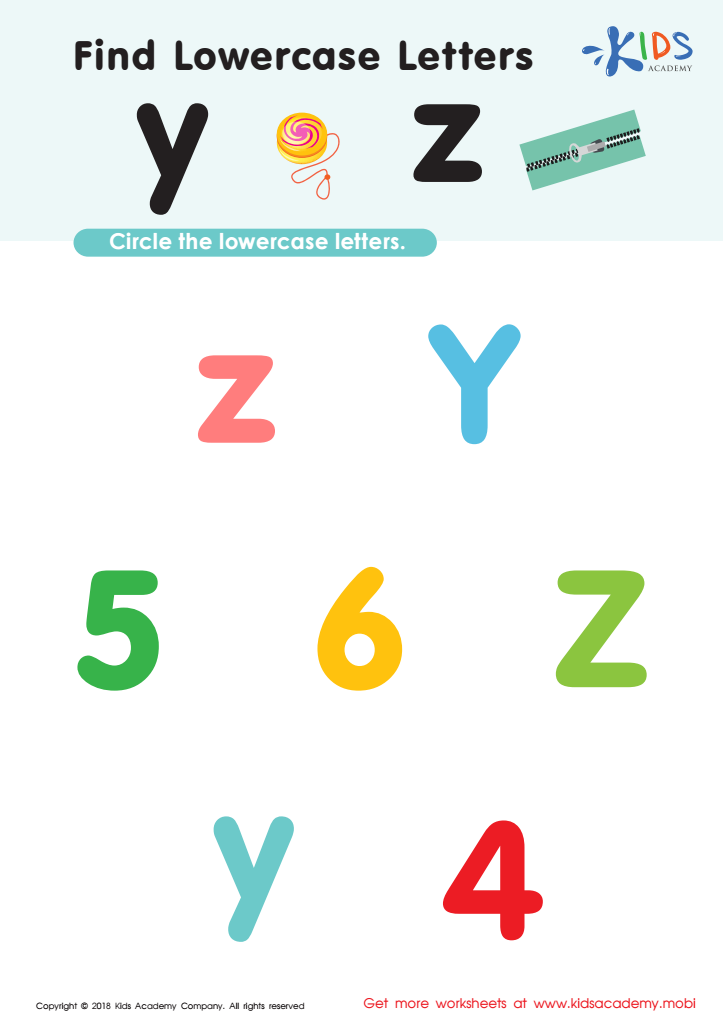
Find Lowercase Letters y z Worksheet
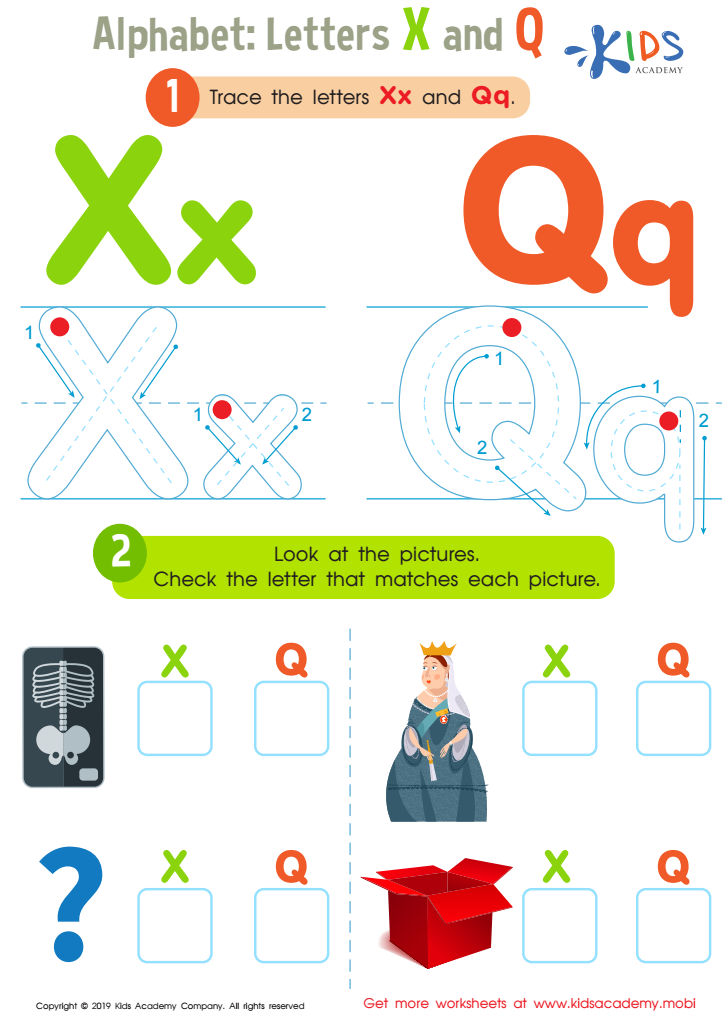
Letters X and Q Tracing Worksheet
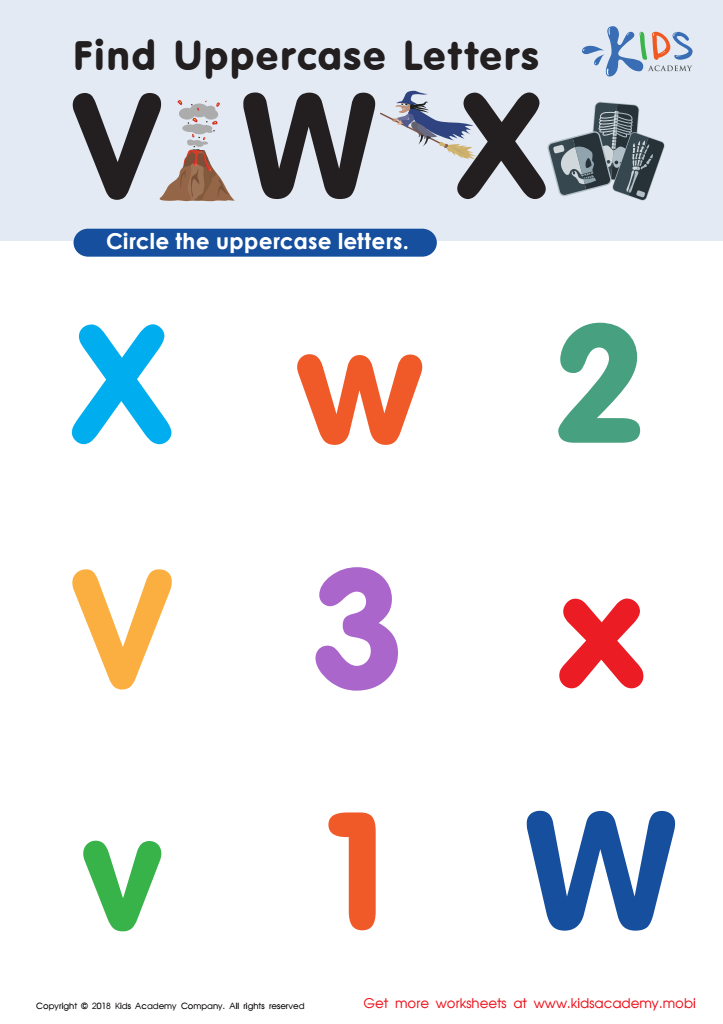
Find Uppercase Letters V, W, X Worksheet






Visual discrimination is a vital skill for children aged 5-7, significantly impacting their reading, writing, and overall learning abilities. It refers to the ability to notice differences and similarities in shapes, letters, and symbols. Developing visual discrimination skills helps young learners distinguish between letters such as "b" and "d" or between similar-looking words, which is crucial for reading fluency.
Parents and teachers should prioritize visual discrimination for several reasons. Firstly, strong visual discrimination fosters confidence in literacy skills, allowing children to engage more enthusiastically in reading activities. Secondly, it aids in handwriting, as children learn to accurately form letters and numbers, promoting better communication.
Additionally, visual discrimination is not limited to academic applications—it's fundamental to everyday tasks, such as recognizing traffic signs or sorting items, fostering essential life skills. By enhancing this ability, educators and parents lay the groundwork for children to succeed academically and socially.
Implementing activities that promote visual discrimination can make learning enjoyable. Engaging games, puzzles, and even art activities can help build this skill seamlessly. In short, investing attention in visual discrimination equips young learners with the tools they need for future academic achievements and daily interactions.







