Vocabulary enhancement Alphabet Worksheets for Ages 5-7
62 filtered results
-
From - To
Boost your child's vocabulary with our engaging Vocabulary Enhancement Alphabet Worksheets for Ages 5-7! These worksheets are designed to creatively introduce children to new words while reinforcing their understanding of the alphabet. Each activity encourages exploration and learning through fun exercises that stimulate young minds. Whether tracing letters or matching objects with words, children will build essential vocabulary skills in an interactive way. Perfect for homeschooling or supplementary learning, our resources ensure that children develop a passion for reading and language. Introduce your little learners to the joy of words today with our thoughtfully created worksheets!
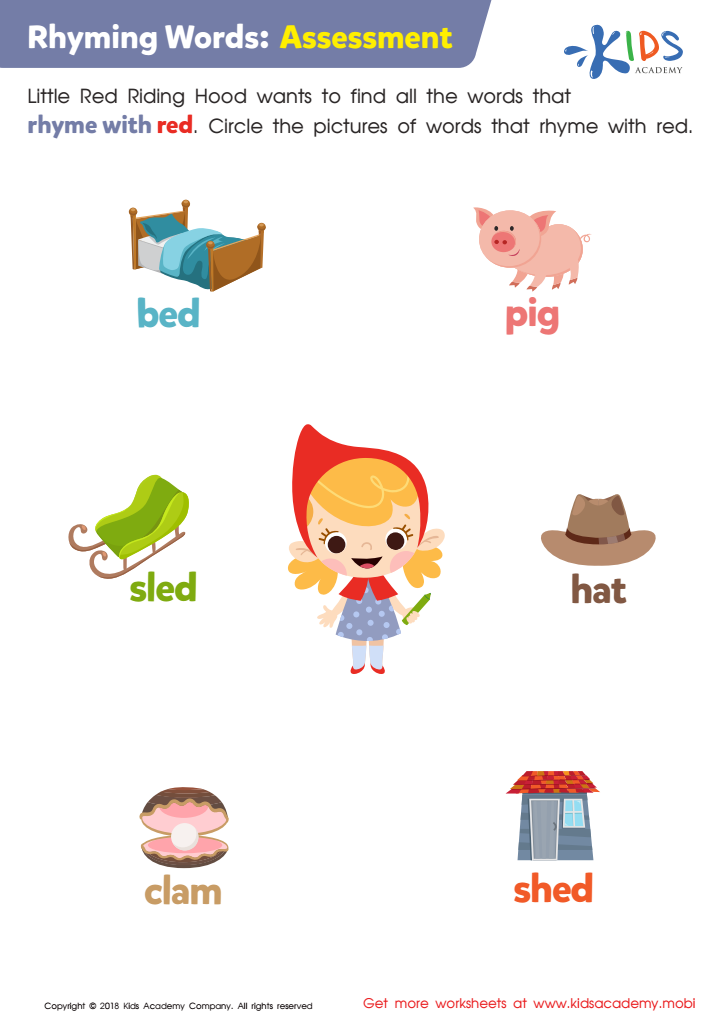
Rhyming Words: Assessment Worksheet
 Assign to My Students
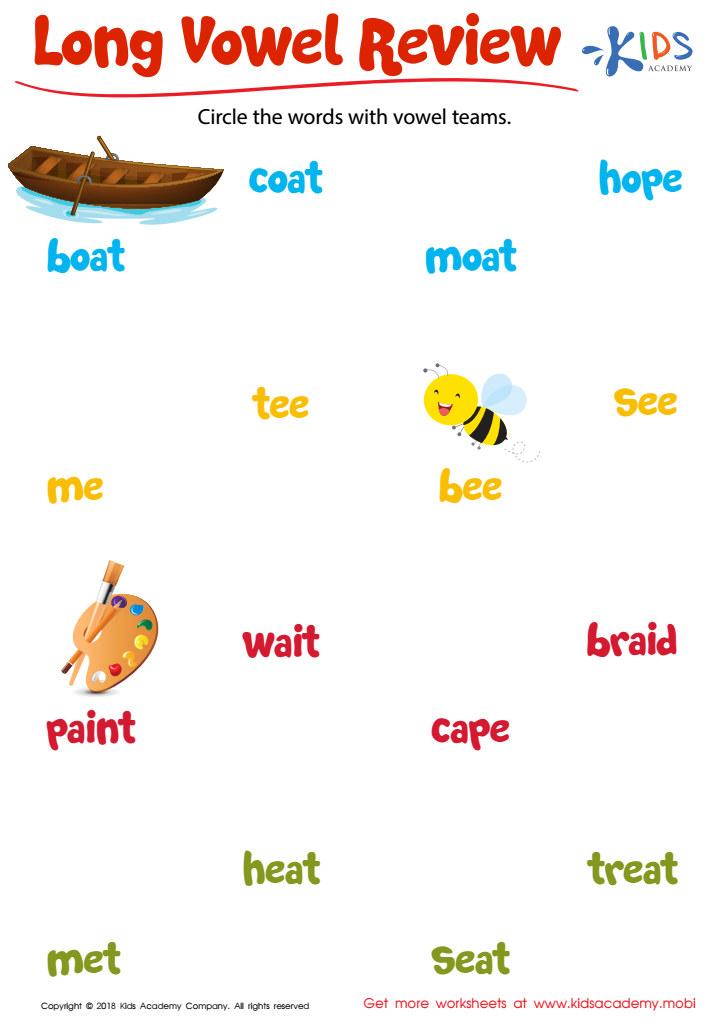
Long Vowel Review Worksheet
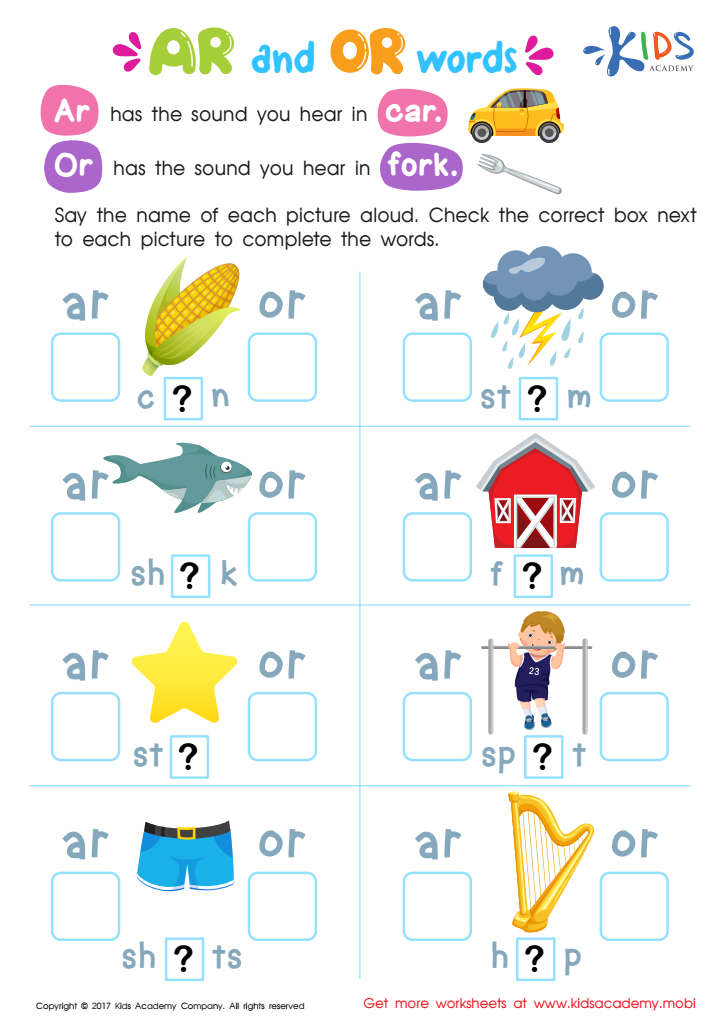
Ar and Or Words Phonics Worksheet
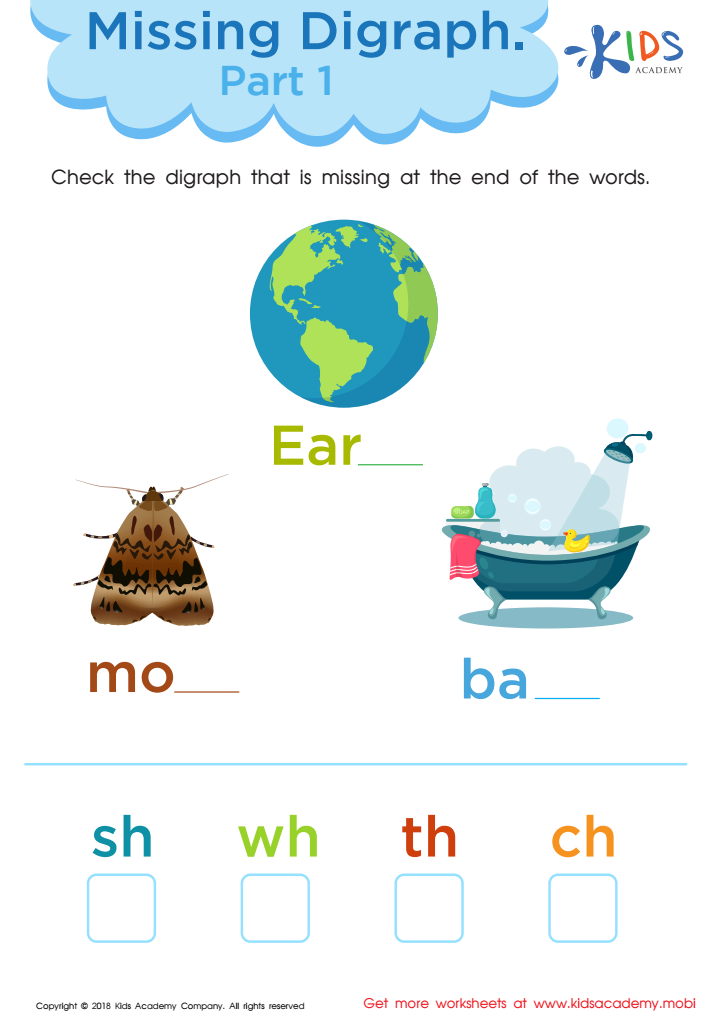
Missing Digraph: Part 1 Worksheet
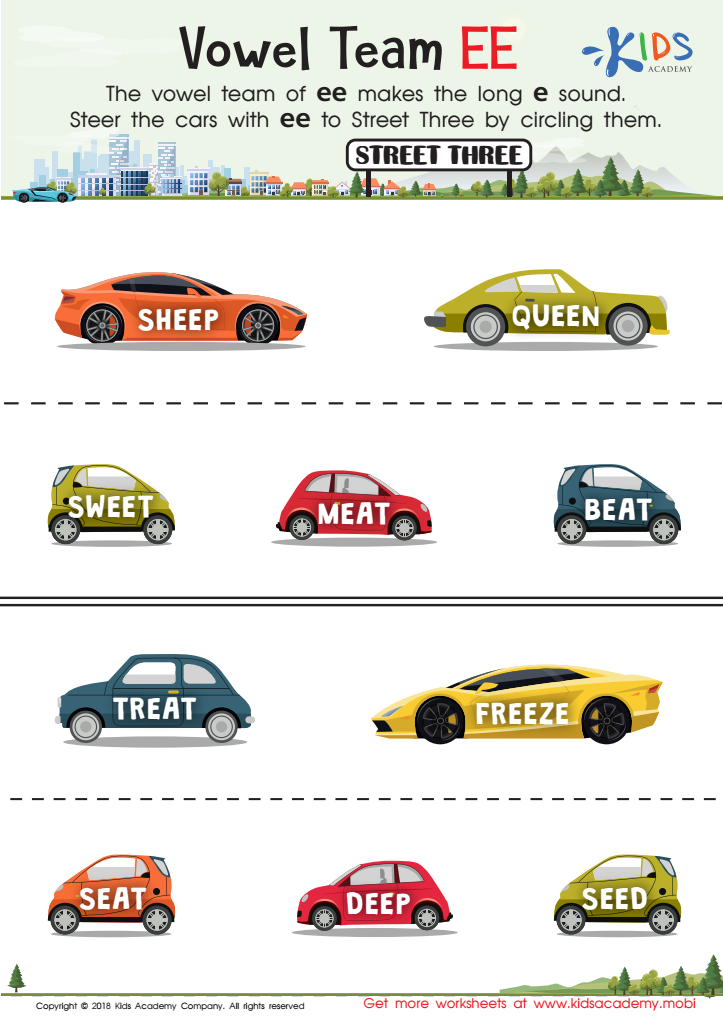
Vowel team ee Worksheet
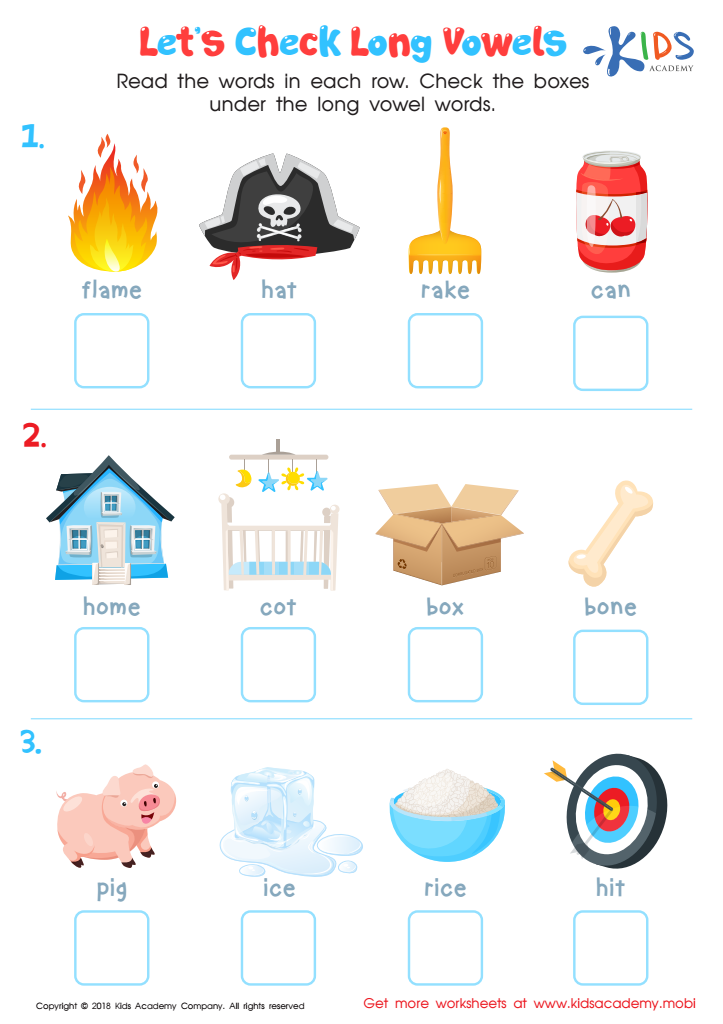
Let's Check Long Vowels: Assessment Worksheet
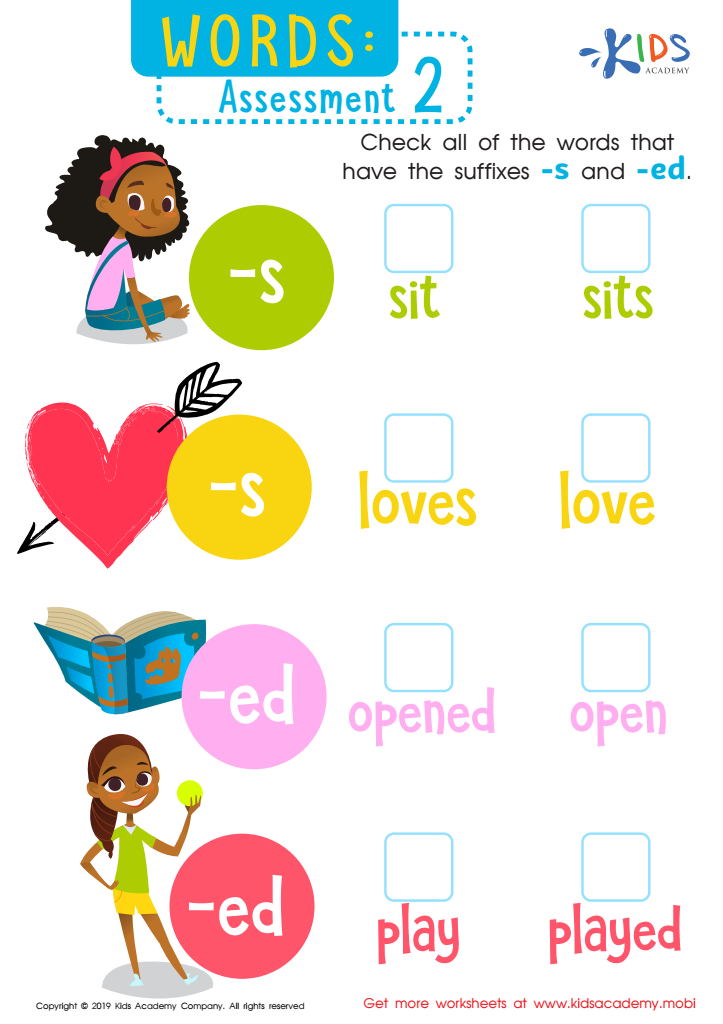
Words: Assessment 2 Worksheet
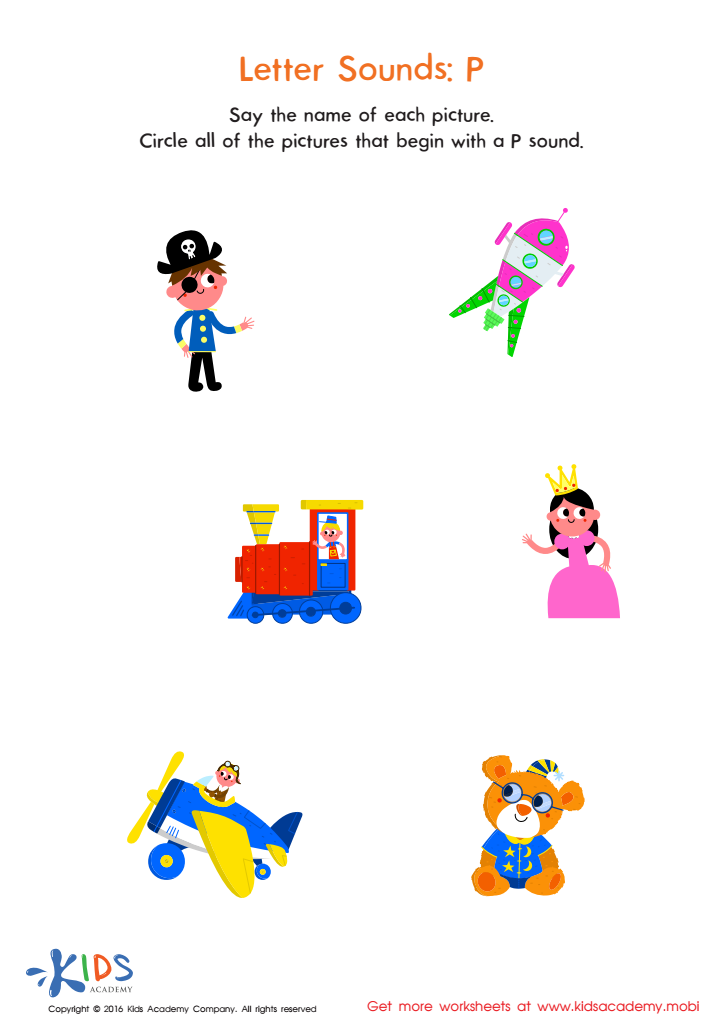
Letter P Sound Worksheet
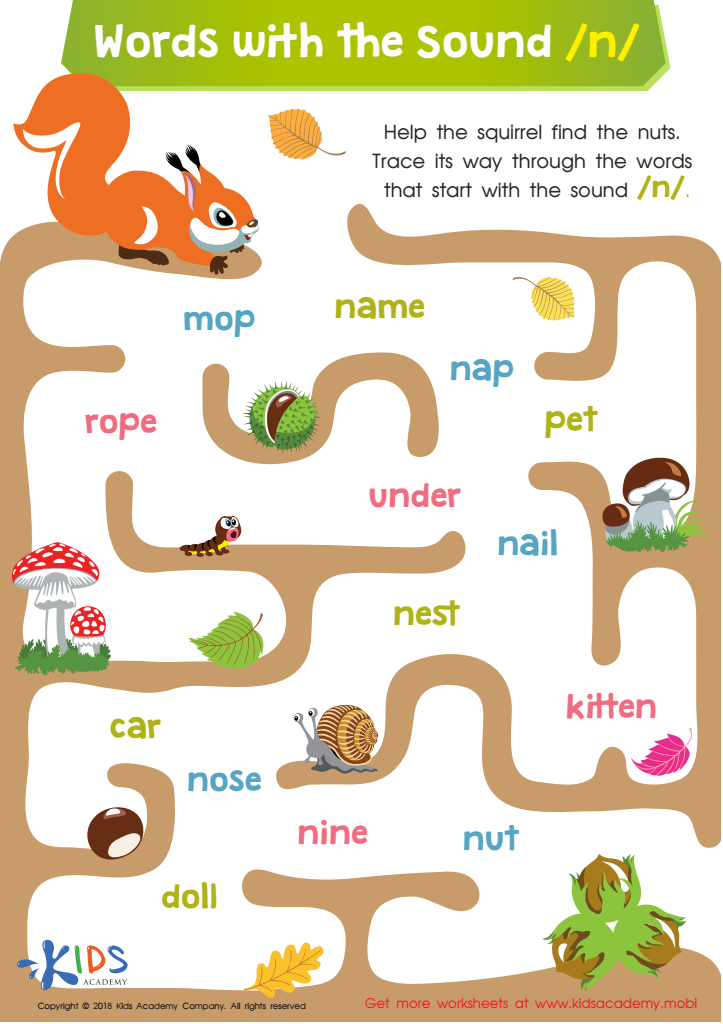
Words with Sound N Reading Worksheet
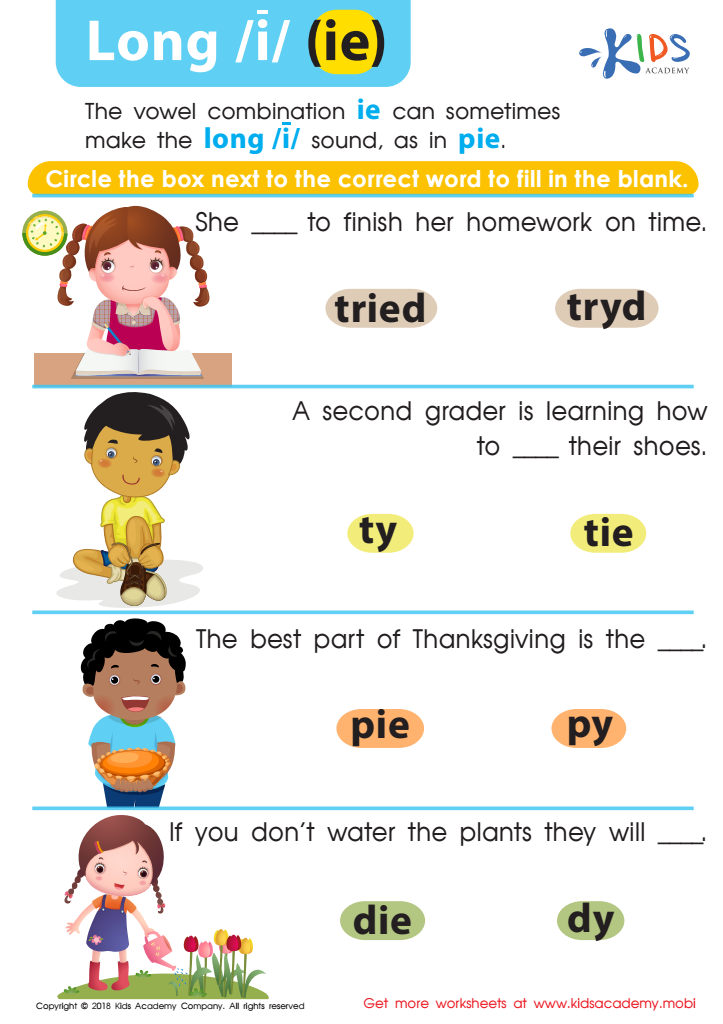
Reading: Long I and IE Worksheet
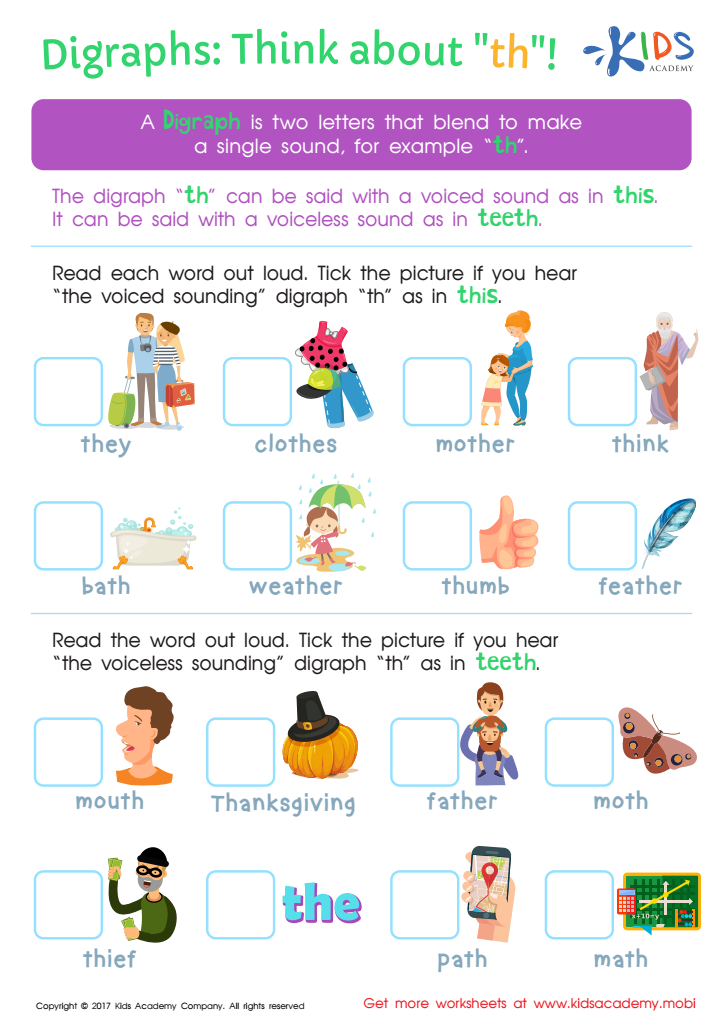
Digraphs: Think About "th" Worksheet
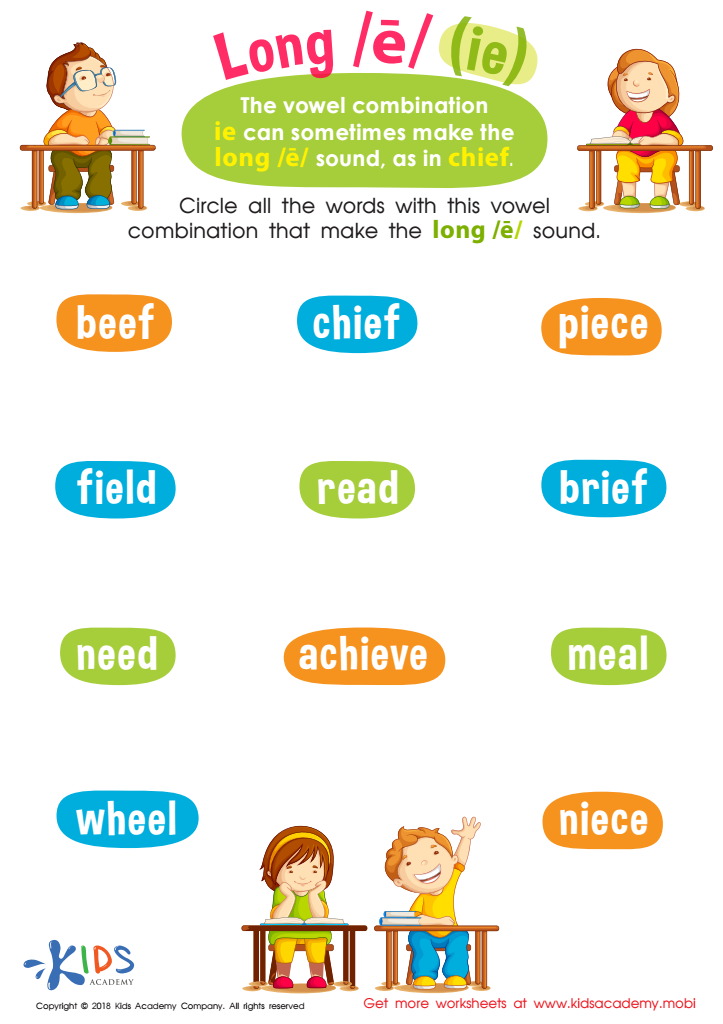
Reading: Long E and IE Worksheet
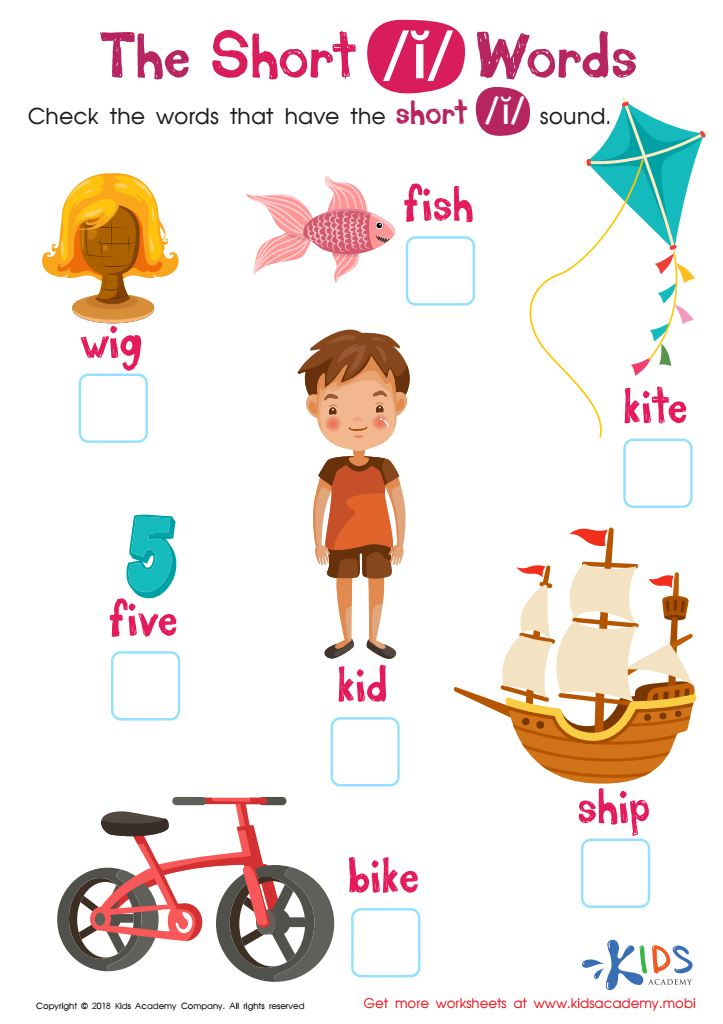
The Short I Words Reading Worksheet
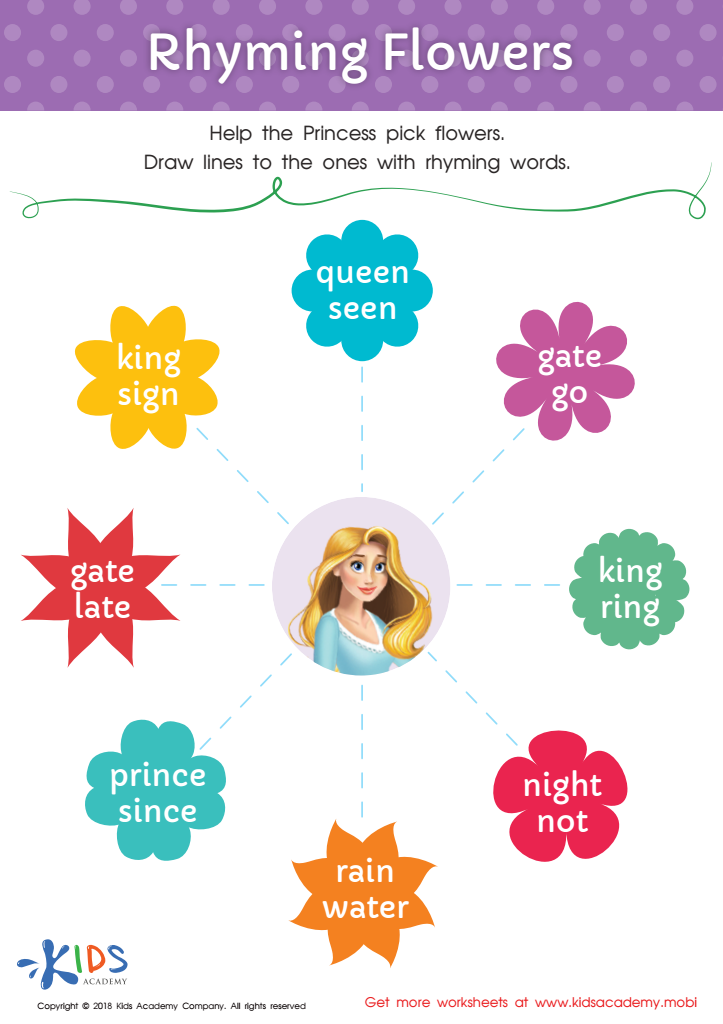
Rhyming Flowers Worksheet
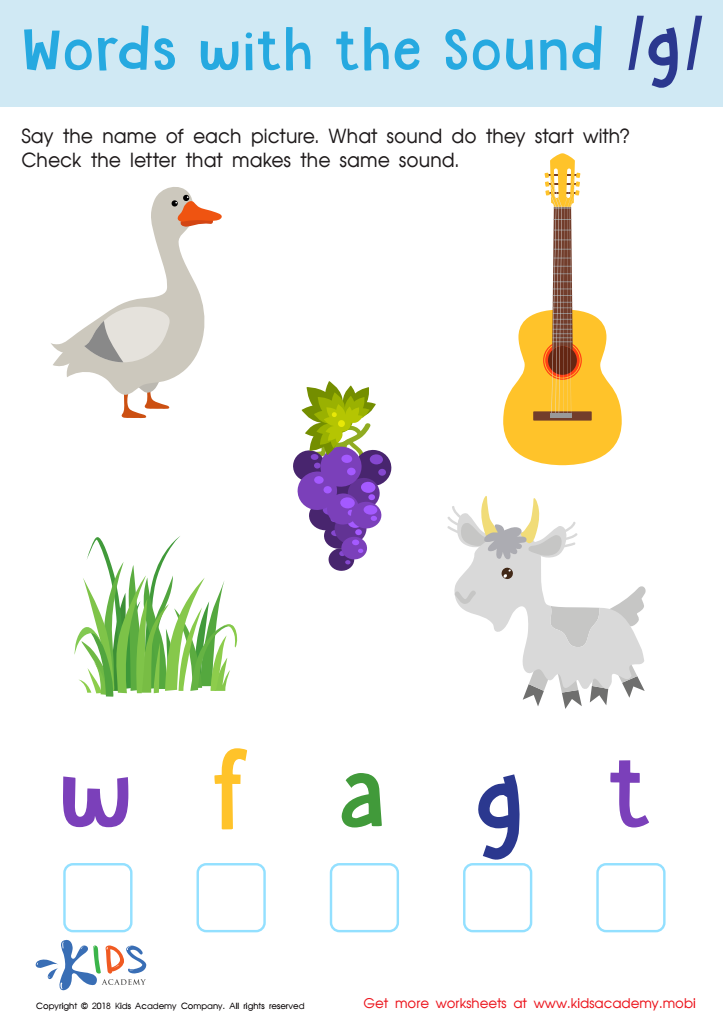
Words with sound g Reading Worksheet
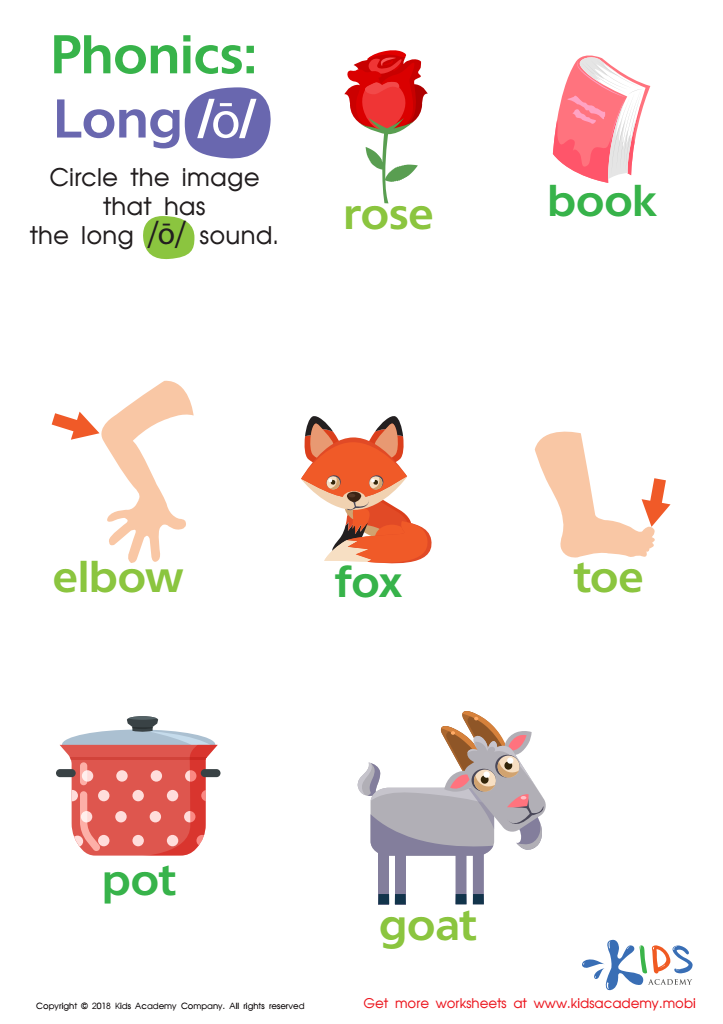
Phonics Long O Reading Worksheet
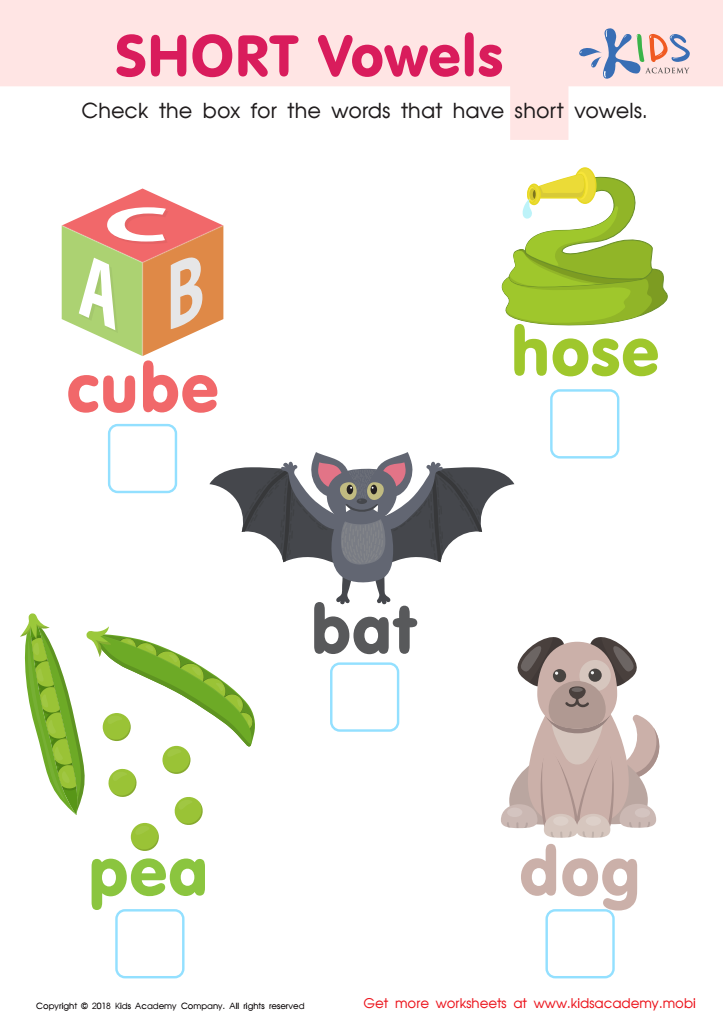
short vowels Worksheet
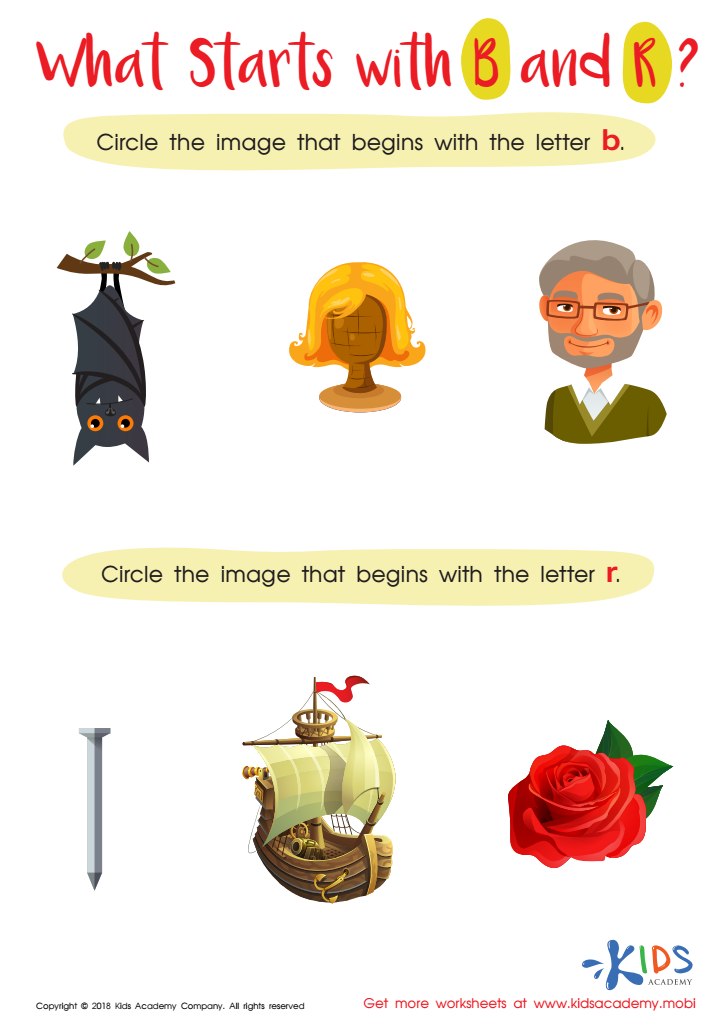
What Starts with B and R? Worksheet
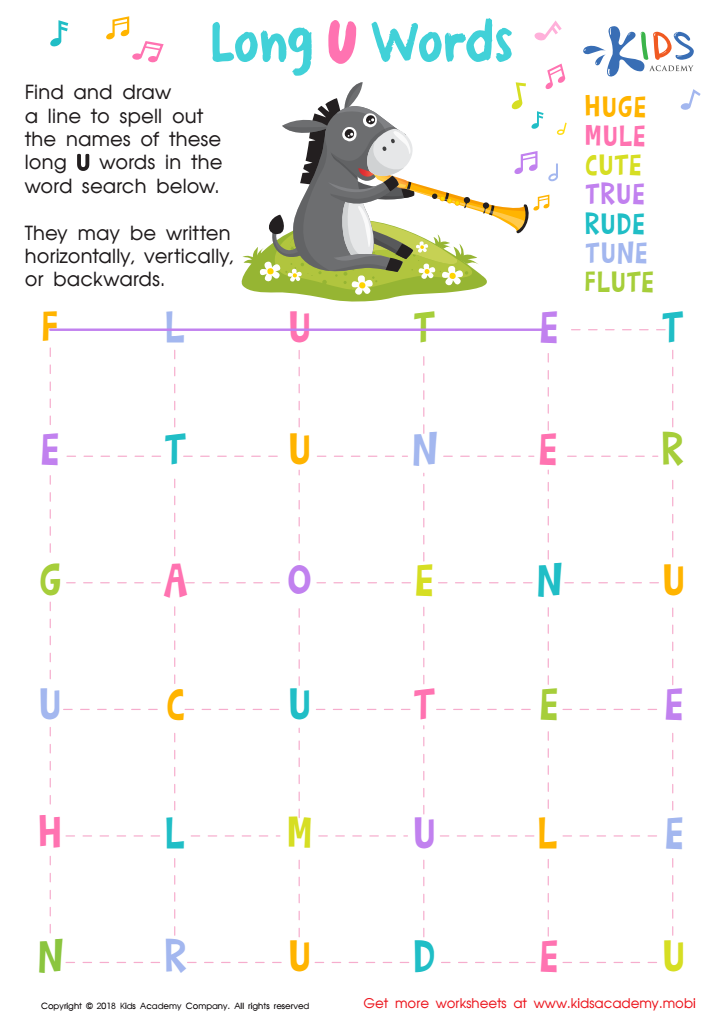
Long /u/ Words Worksheet
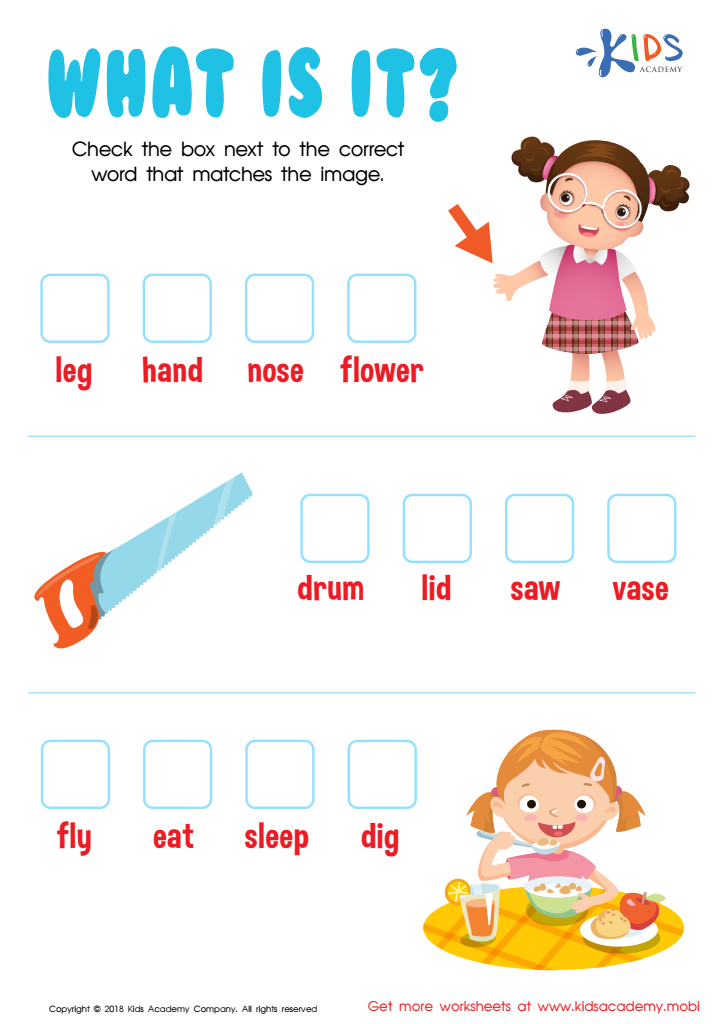
What Is It? Worksheet
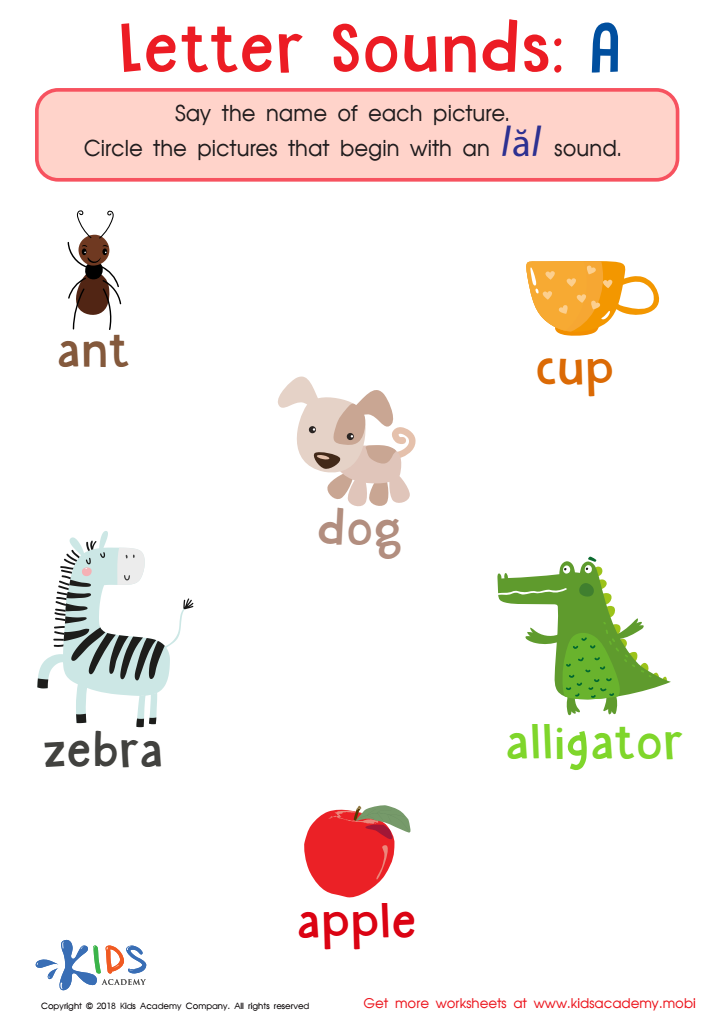
Letter A Sounds Worksheet
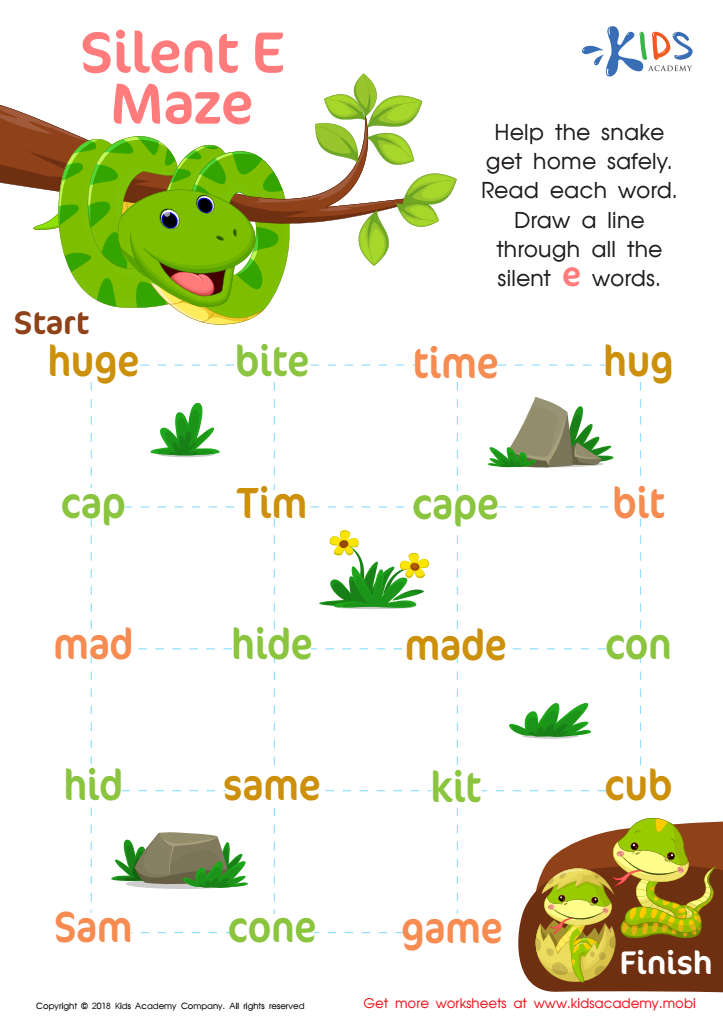
Silent E Maze Worksheet
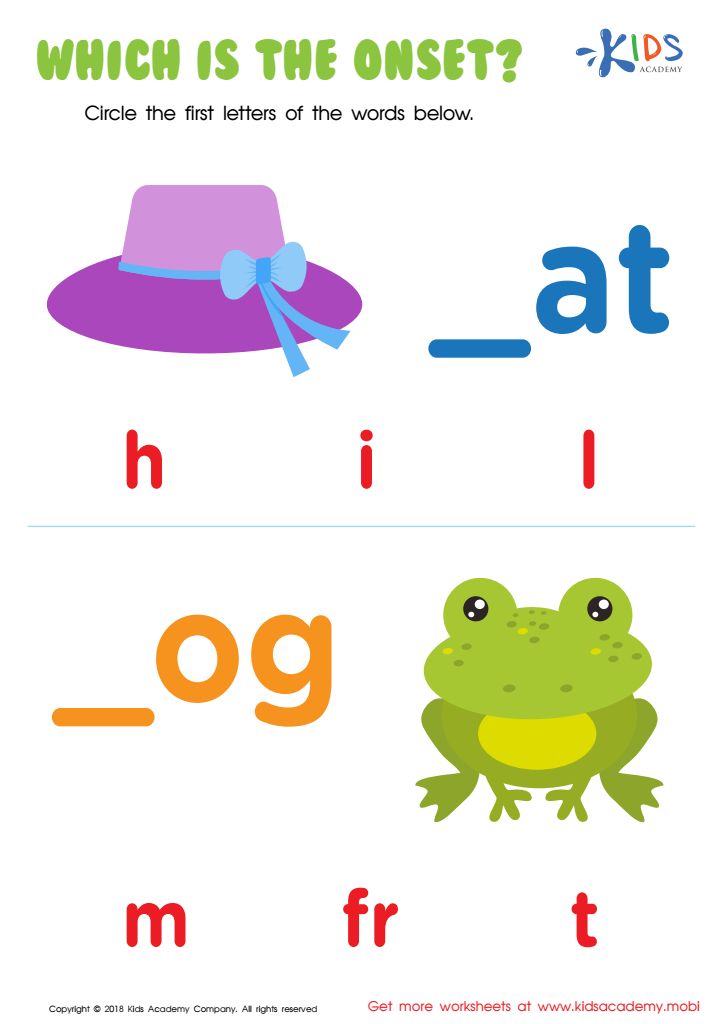
Which Is the Onset? Worksheet
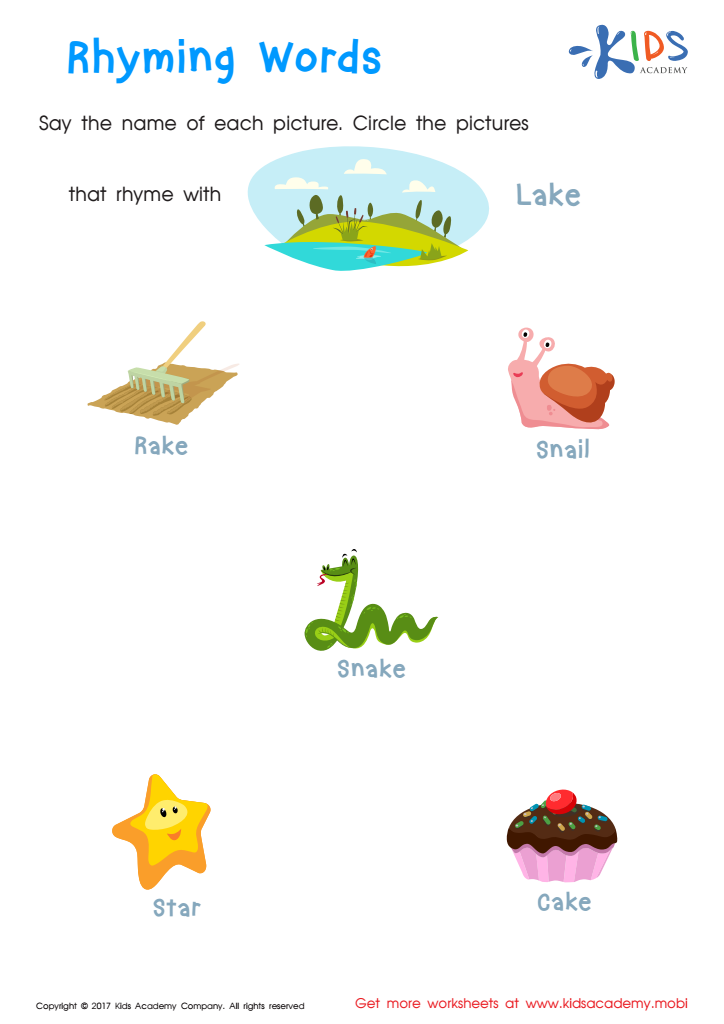
Rhyming Words Rhyming Worksheet







Vocabulary enhancement for children aged 5-7 is crucial for their overall development and success in learning. During these formative years, children are beginning to expand their language skills, and a robust vocabulary plays a significant role in their ability to communicate effectively, comprehend reading materials, and express their thoughts and feelings clearly.
First, a strong vocabulary is directly linked to improved reading comprehension. As children learn to read, the familiarity with words allows them to decode texts more effectively, setting the foundation for academic achievement. When parents and teachers emphasize vocabulary enrichment, they provide children with essential tools to engage with literature, which fosters a lifelong love of reading.
Second, vocabulary enhancement encourages critical thinking and creativity. Children equipped with a diverse vocabulary can articulate ideas, feelings, and opinions more effectively, enhancing their interactions with peers. This also boosts their ability to participate in discussions and collaborate on projects, building social skills and confidence.
Most importantly, vocabulary development contributes to emotional intelligence, as children learn to identify and express their emotions appropriately. Investing in vocabulary enhancement tools, such as games, activities, and reading initiatives, equips young learners with the skills necessary for navigating both academic and social environments successfully. Therefore, prioritizing vocabulary development should be a shared goal for parents and teachers alike.







