
Sound Association Letter Recognition Worksheets for Ages 5-7
5 filtered results
Difficulty Level
Grade
Age
-
From - To
Subject
Activity
Standards
Boost your child's literacy skills with our Sound Association Letter Recognition Worksheets, designed specifically for ages 5-7! These engaging worksheets help young learners connect letters with corresponding sounds through fun activities and colorful illustrations. Children will strengthen their phonemic awareness as they practice identifying letters, recognizing sounds, and associating visuals with textual representations. Perfect for home or classroom use, our worksheets foster independent learning while developing essential pre-reading skills. Encouraging a love of learning, these resources pave the way for confident, enthusiastic readers. Explore our collection and watch your child thrive in their early literacy journey today!
Favorites
With answer key
Interactive
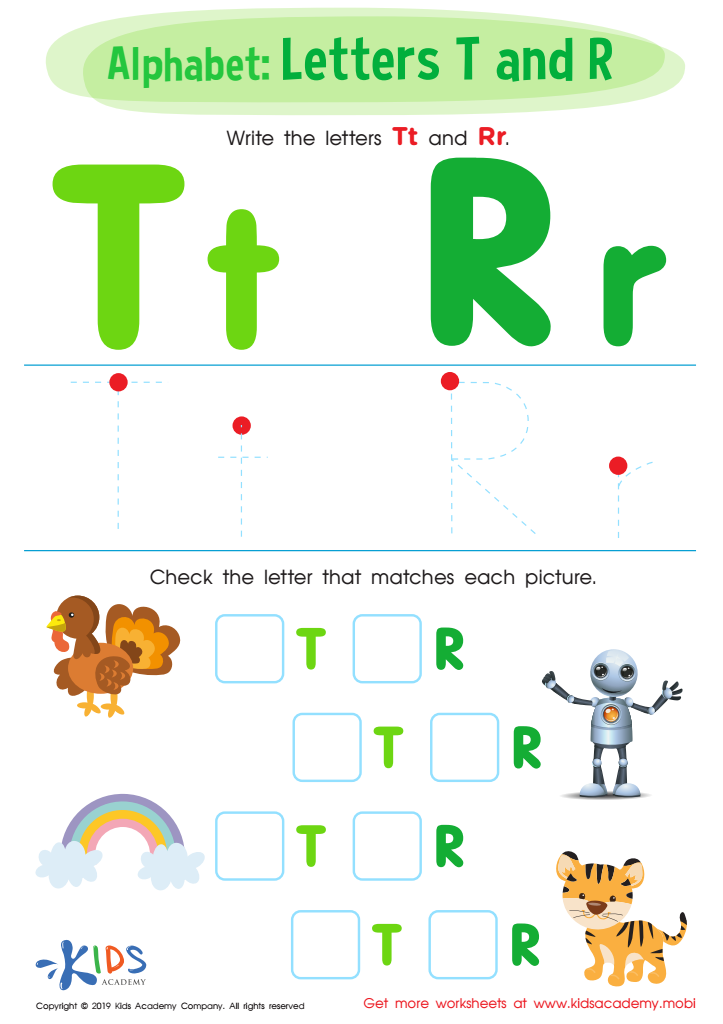
Letters T and R Worksheet
Is your kid bored with basic letter learning? Try this Letters T & R traceable sheet! It combines tracing and picture matching to help solidify fundamental skills. Your child will gain a better understanding and have fun at the same time.
Letters T and R Worksheet
Worksheet
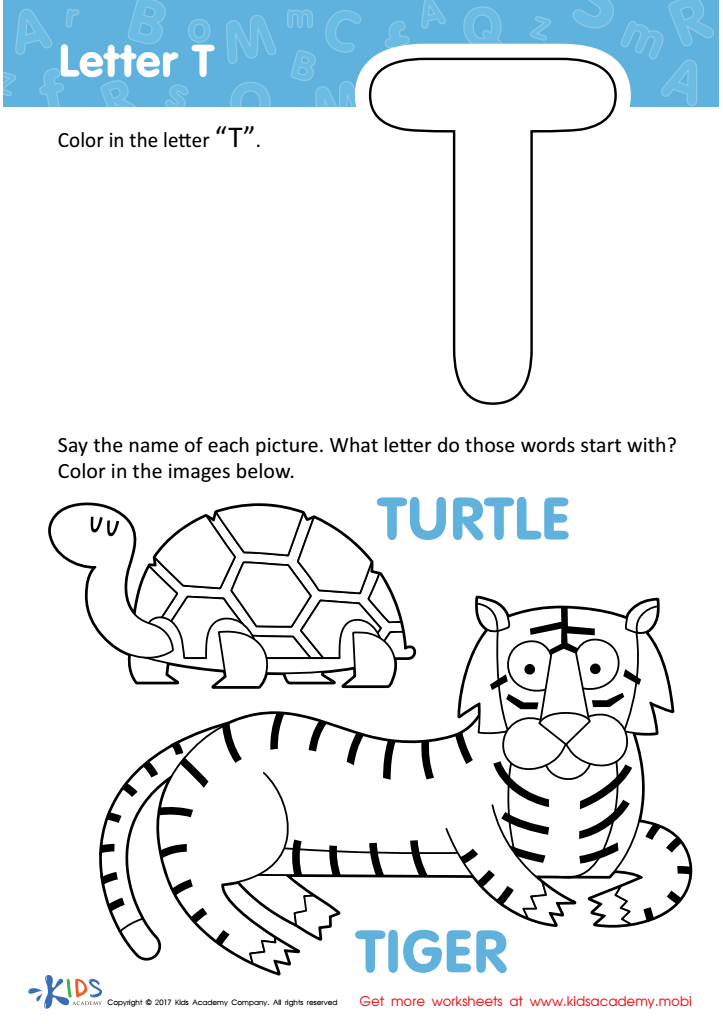
Letter T Coloring Sheet
Introduce your child to the letter "T" and its animals – turtles and tigers! With this coloring page, you can stimulate your child's imagination and creativity, while helping them recognize the letter "T". Have fun with your child and get coloring!
Download (PDF)
 Assign to My Students
Assign to My Students
Letter T Coloring Sheet
Worksheet
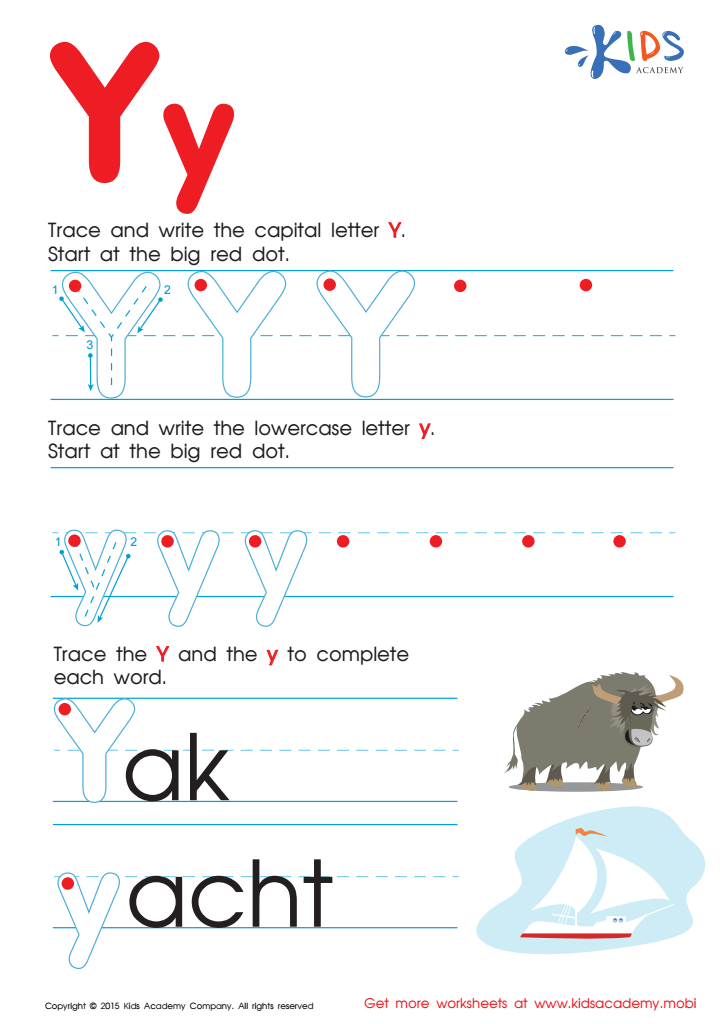
Letter Y Tracing Page
Trace the capital letter "Y" on the red dot, then trace and write the lowercase letter. Complete the words to help the Yak walk and the yacht swim. More worksheets at Kids Academy.
Letter Y Tracing Page
Worksheet
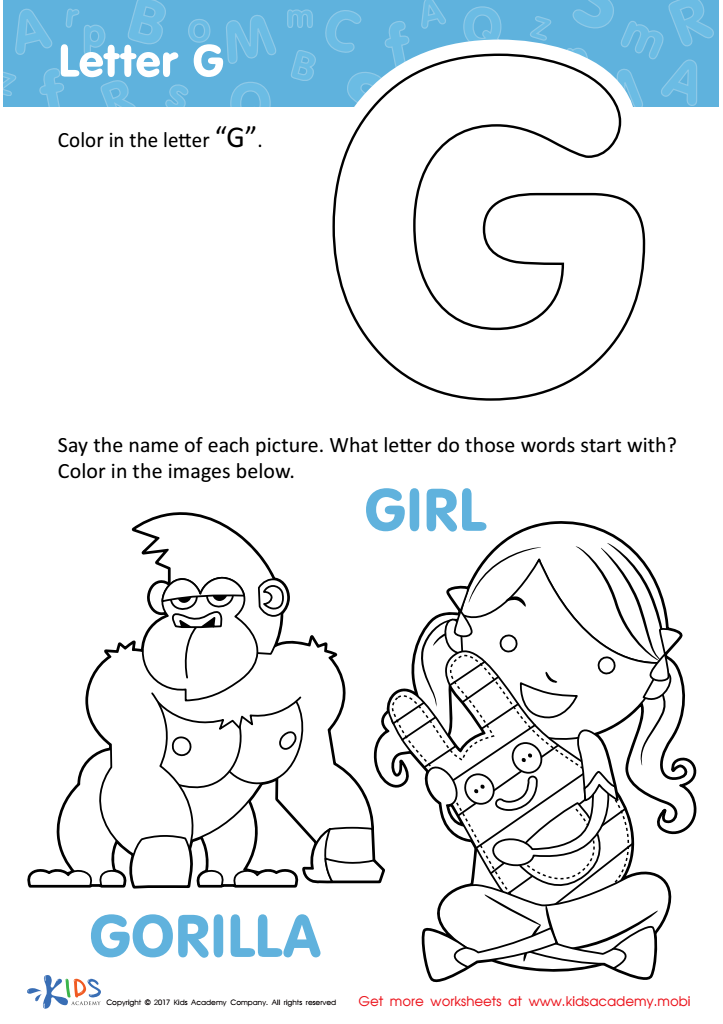
Letter G Coloring Sheet
This "G" coloring page encourages creativity and teaches kids the letter "G" sound. With its fun visuals and familiar words, it's sure to excite your child. Plus, you can talk about the letter’s sound with the pictures given.
Download (PDF)
Assign to My Students
Assign to My Students
Letter G Coloring Sheet
Worksheet
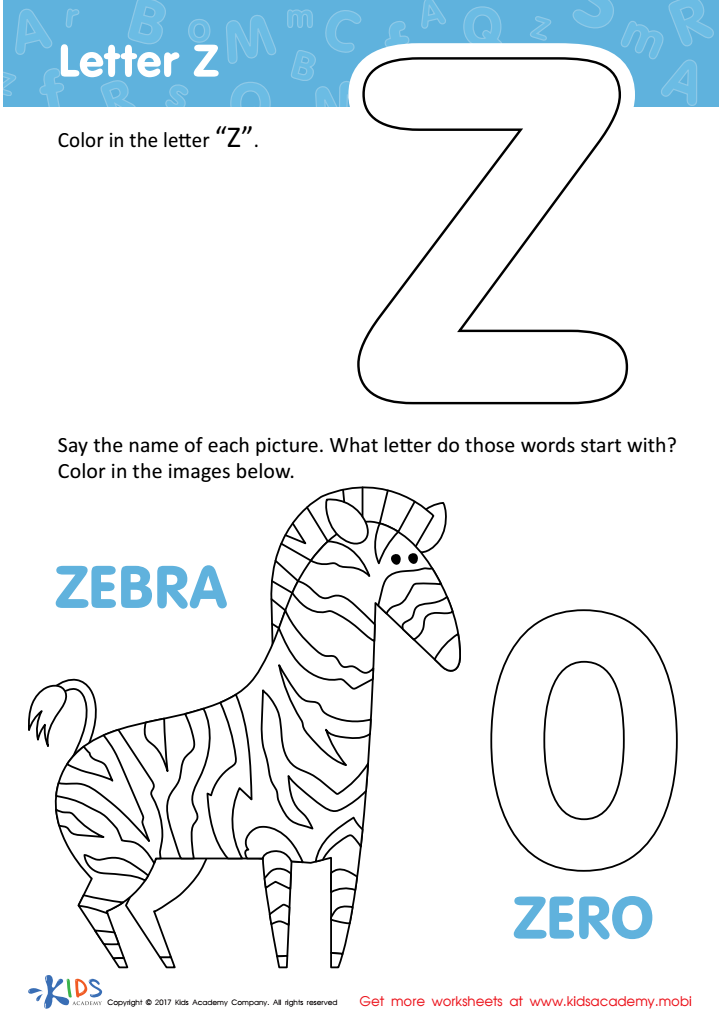
Letter Z Coloring Sheet
This coloring page featuring the letter "Z" is perfect for your child to practice letter recognition! Help them learn the unique sound it makes as they color. It'll be a fun and easy activity they won't have trouble with!
Download (PDF)
Assign to My Students
Assign to My Students
Letter Z Coloring Sheet
Worksheet
Join Kids Academy for Free
Who is primarily going to use this learning content?








Sound Association Letter Recognition is a foundational skill critical for early literacy development in children aged 5-7. This skill involves associating sounds with their corresponding letters, playing a vital role in phonic awareness, reading proficiency, and spelling capabilities. Recognizing the sounds that letters make enables young learners to decode words, fostering independent reading skills.
Parents and teachers should prioritize this skill because it empowers children with the necessary tools to become confident readers and writers. Early mastery of sound-letter associations not only supports reading fluency but also enhances comprehension as children progress through more complex texts. Furthermore, it lays the groundwork for effective communication skills, which are essential for academic success across various subjects.
Moreover, strong sound association letter recognition can mitigate feelings of frustration and anxiety when children encounter reading challenges later on. Parents can support development at home through engaging activities like letter-sound games and rhyming exercises, while educators can incorporate interactive teaching methods in the classroom. Ultimately, nurturing this skill cultivates a lifelong love for reading and learning, establishing a positive pathway for children's educational journeys. By recognizing its importance, parents and teachers can profoundly impact children’s future literacy success.







