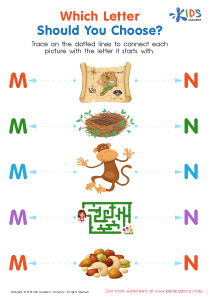
Lowercase identification Lowercase/Small Letters Worksheets for Ages 5-7
5 filtered results
-
From - To
Welcome to our Lowercase Identification Worksheets designed specifically for children ages 5-7. These engaging resources help young learners master the recognition of lowercase letters. By focusing on interactive and fun activities, kids will enhance their alphabet skills through tracing, matching, and coloring exercises. Each worksheet promotes not just literacy but also fine motor skills, making learning enjoyable and effective. Perfect for home or classroom settings, our worksheets will motivate children to explore the world of letters while developing confidence in their writing abilities. Start your child's journey towards reading success today with our thoughtfully crafted activities!
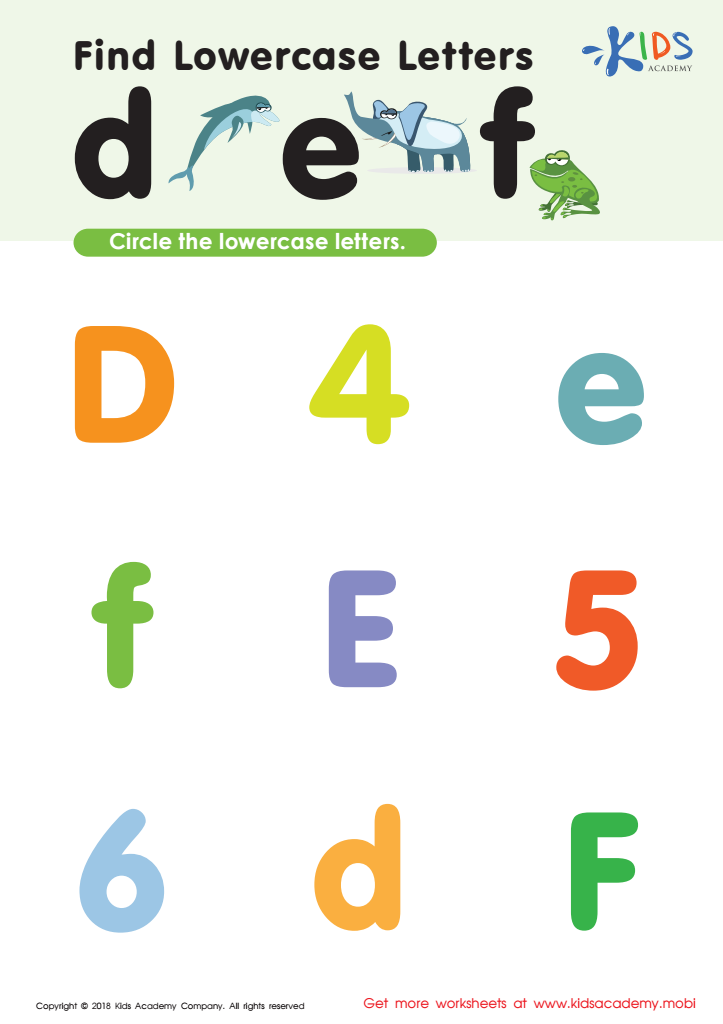
Find Lowercase Letters d e f Worksheet
 Assign to My Students
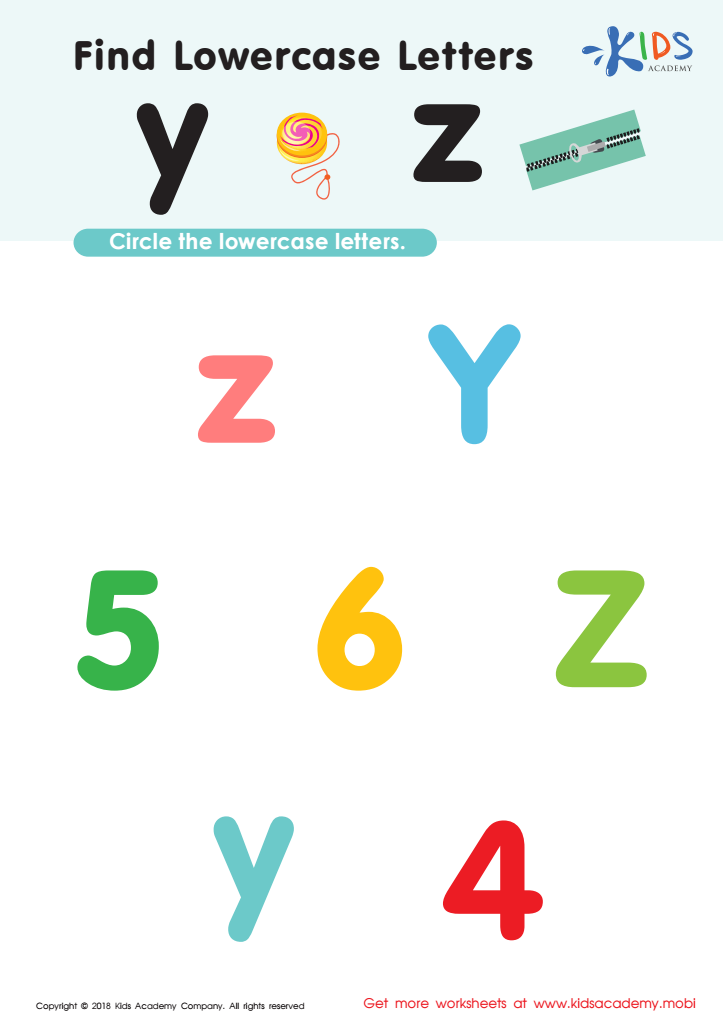
Find Lowercase Letters y z Worksheet

Find lowercase letters a b c Worksheet
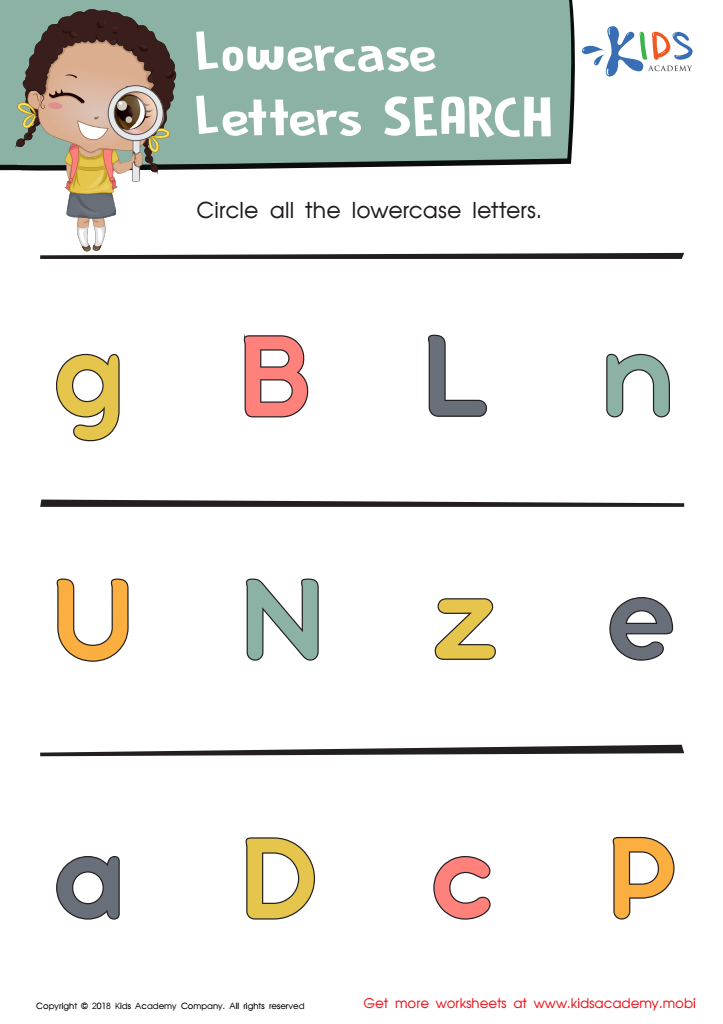
Lowercase Letters Search: Assessment Worksheet

Find Lowercase Letters v w x Worksheet


Lowercase letter identification is a crucial aspect of early literacy development for children aged 5 to 7. At this stage, students begin to connect spoken language with written symbols, and mastering lowercase letters plays a significant role in this process. Unlike uppercase letters, which are often more visually distinctive, lowercase letters can be easily confused due to their similar shapes and varied orientations.
Understanding lowercase letters not only aids in reading but also enhances writing skills as children learn to form words correctly. Recognizing these letters helps young learners become proficient in decoding text, which boosts their confidence and fosters a love for reading. Furthermore, many books and texts predominantly use lowercase letters, making identification critical for independent reading experiences.
Teachers and parents should prioritize lowercase letter identification to support phonemic awareness, word recognition, and overall literacy skills. Early mastery of lowercase letters sets a solid foundation for future learning and academic success. Moreover, nurturing these skills in a positive, engaging manner can ignite a child's interest in language and literature, encouraging lifelong learning and exploration of the written word. By focusing on lowercase letter identification, adults can equip children with essential tools for effective communication and creative expression.