
Letter-sound association Phonics Worksheets for Ages 5-7
3 filtered results
Difficulty Level
Grade
Age
-
From - To
Subject
Activity
Standards
Boost your child's reading skills with our engaging Letter-Sound Association Phonics Worksheets for ages 5-7! Designed to spark curiosity and fun, these worksheets help young learners connect letters with their corresponding sounds, laying a strong foundation for reading fluency. Our collection features colorful illustrations and interactive exercises that promote active learning, making phonics approachable and enjoyable. Each worksheet is crafted to improve letter recognition, enhance listening skills, and develop phonemic awareness. Perfect for homeschooling or classroom use, these resources empower children to build confidence and mastery in their reading journey. Explore our worksheets today and watch your child thrive as a future reader!
Favorites
With answer key
Interactive
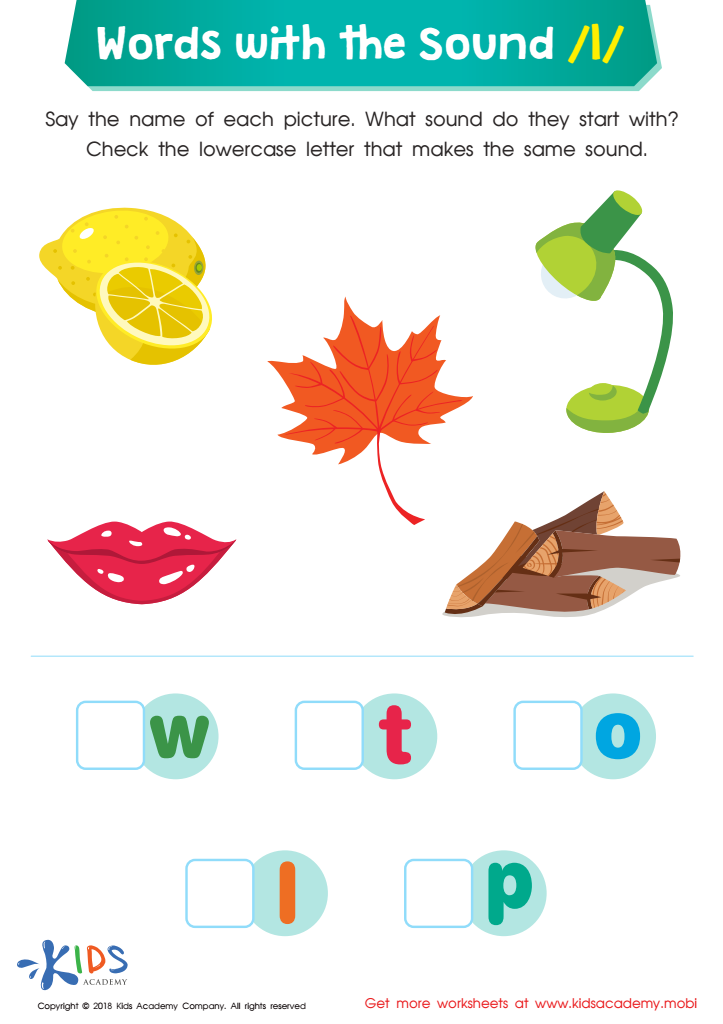
Words with Sound L Reading Worksheet
This PDF worksheet is great for helping emerging readers isolate initial sounds. Kids name familiar pictures, then identify the correct letter for the "l" sound. This worksheet strengthens fine motor skills, plus builds visual discernment. It's fun and colorful too!
 Assign to My Students
Words with Sound L Reading Worksheet
Worksheet
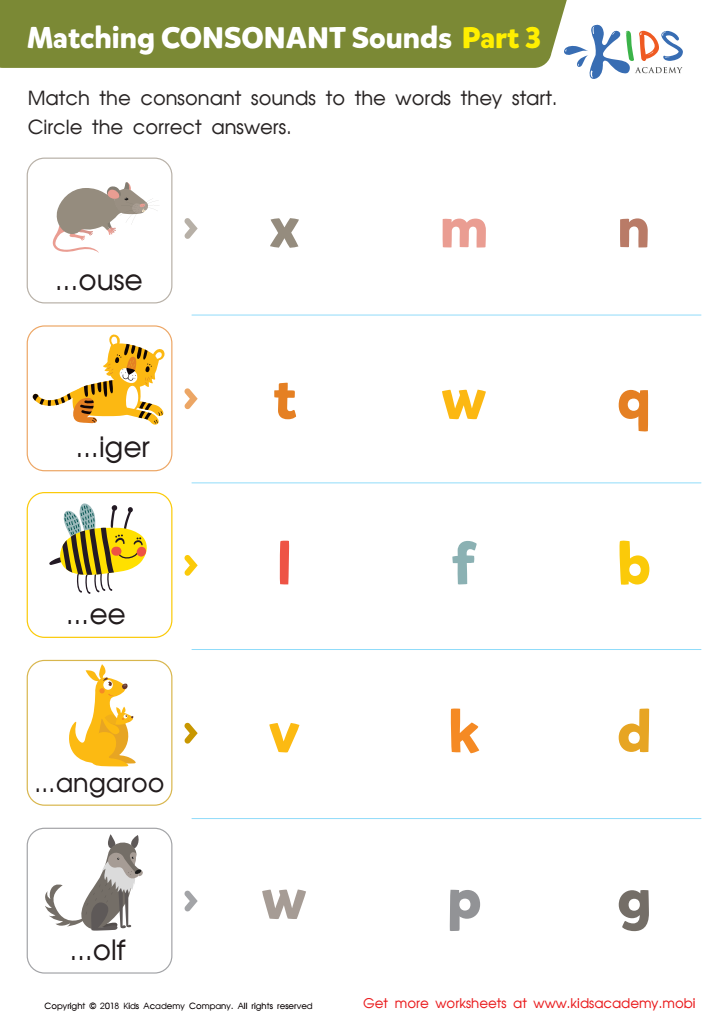
Matching Consonant Sounds: Part 3 Worksheet
Help your early learner match consonant sounds to words with this fun worksheet! Have them name the pictures and try out each letter in the corresponding column. When they hear the sound that matches, circle it. Have them write the letter in the box to complete the word. Work their way down the page until the critters' names all match with consonants!
Matching Consonant Sounds: Part 3 Worksheet
Worksheet
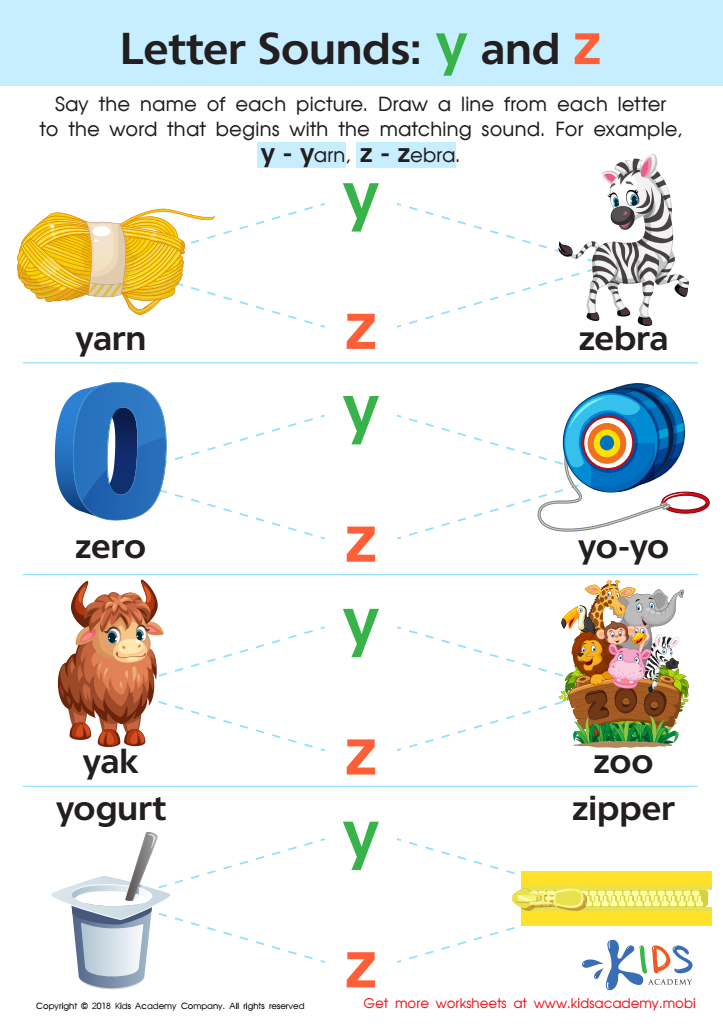
Letter Y and Z Sounds Worksheet
Y and Z can be tricky for kids to learn. Kids Academy has the answer with a great worksheet. "Yo-yo", "yak" and "zebra" help kids recognize, say and trace each letter. Plus, they can read the words and match them to images! Let your child try and help them master phonics at the end of the alphabet.
Letter Y and Z Sounds Worksheet
Worksheet
Join Kids Academy for Free
Who is primarily going to use this learning content?








Letter-sound association, a fundamental aspect of phonics, is crucial for children ages 5-7 as they embark on their reading journey. This skill involves recognizing the relationship between letters and their corresponding sounds, which serves as the building block for early literacy. By understanding how letters combine to form sounds, children can decode words, enabling them to read more fluently and with greater comprehension.
Parents and teachers should prioritize letter-sound association because it also enhances a child's ability to spell, write, and develop a rich vocabulary. Early mastery of phonics fosters confidence in literacy skills, setting a positive foundation for future academic success. Additionally, strong reading skills correlate with higher achievement across subject areas, underscoring the importance of early intervention and instruction.
Moreover, engaging in phonics-based activities can be fun and interactive, promoting bonding between parents and children during reading time and classroom activities. When parents and educators focus on letter-sound association, they provide children with the tools they need to feel competent and motivated in their literacy endeavors. Ultimately, prioritizing phonics lays a solid groundwork for lifelong learning and a love for reading, making it essential for both parents and teachers to engage in and support this learning process.







