Phonics development Phonics Worksheets for Ages 5-7
5 filtered results
-
From - To
Discover engaging Phonics Development Worksheets for ages 5-7 at Kids Academy! Our expertly designed resources enhance early literacy skills through captivating activities and games that make learning fun. Focused on key phonics concepts, these worksheets help young learners connect letters and sounds, build strong reading foundations, and improve spelling. Perfect for both classroom and home use, our printable materials support your child’s educational journey. Tailored to suit various learning styles, our worksheets foster confidence and love for reading in every young learner. Visit Kids Academy today and set your child on the path to phonics success!
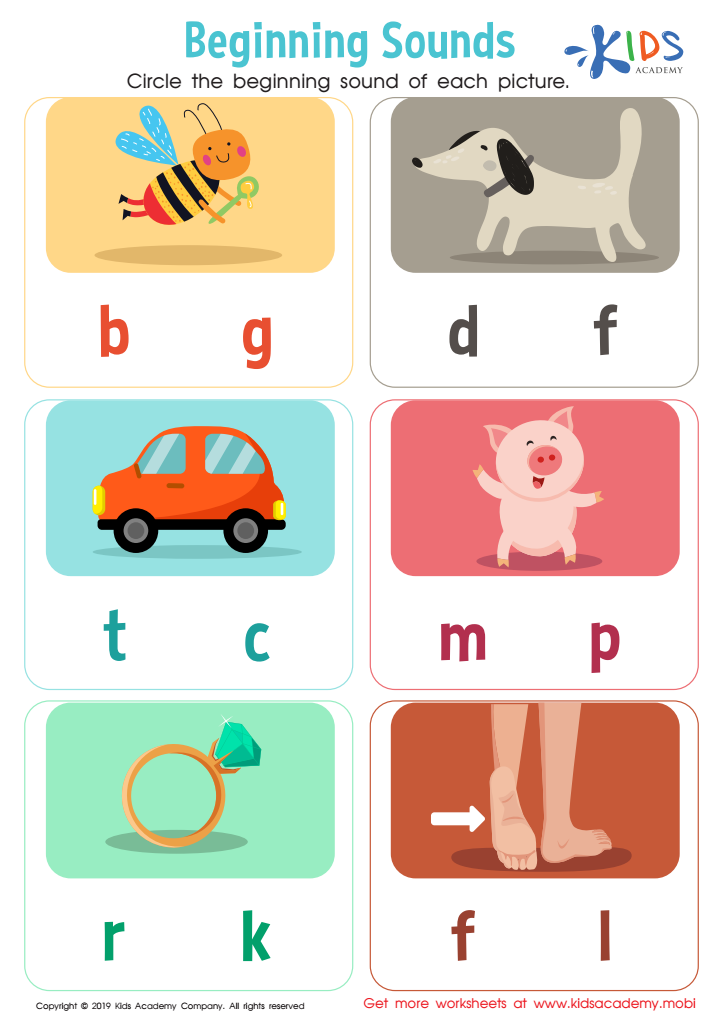
Beginning Sounds Worksheet
 Assign to My Students
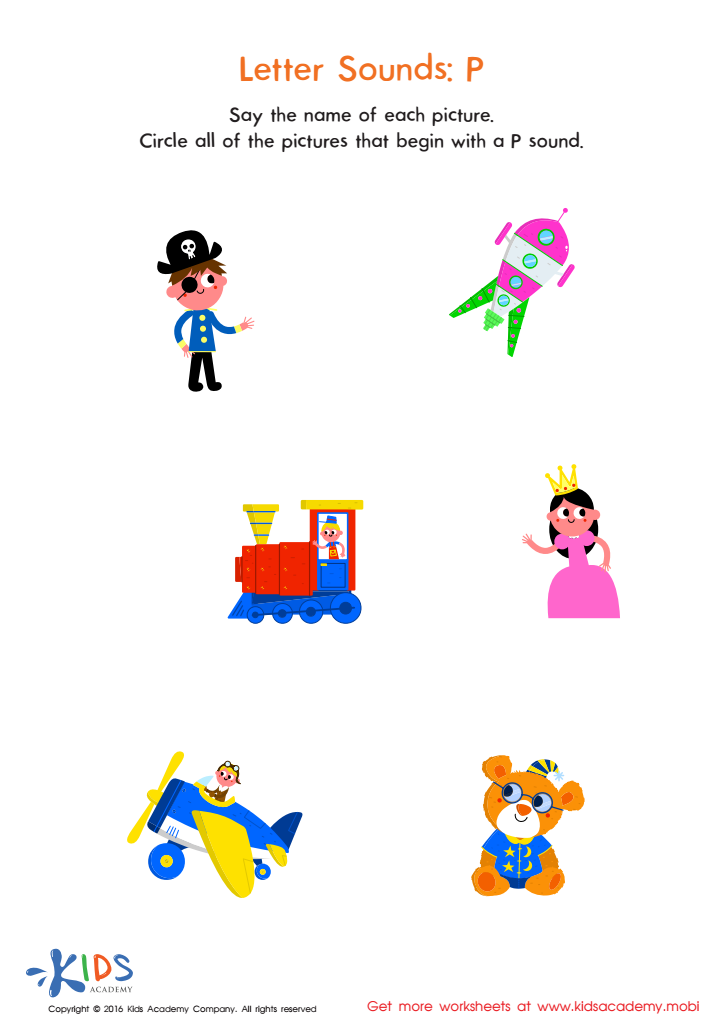
Letter P Sound Worksheet
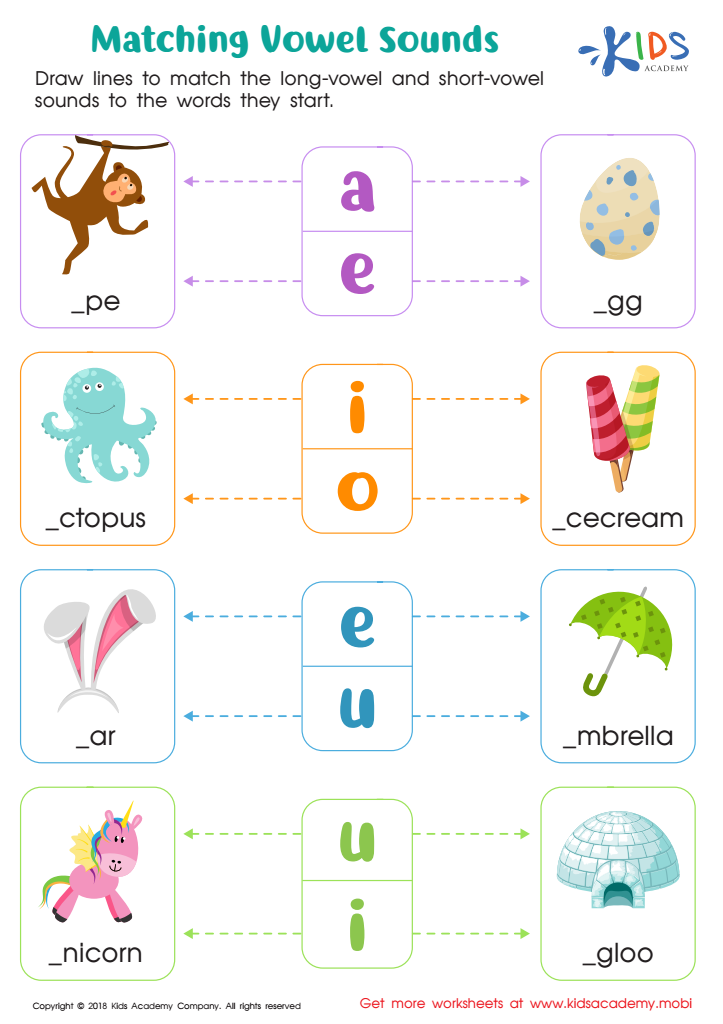
Matching Vowel Sounds Worksheet
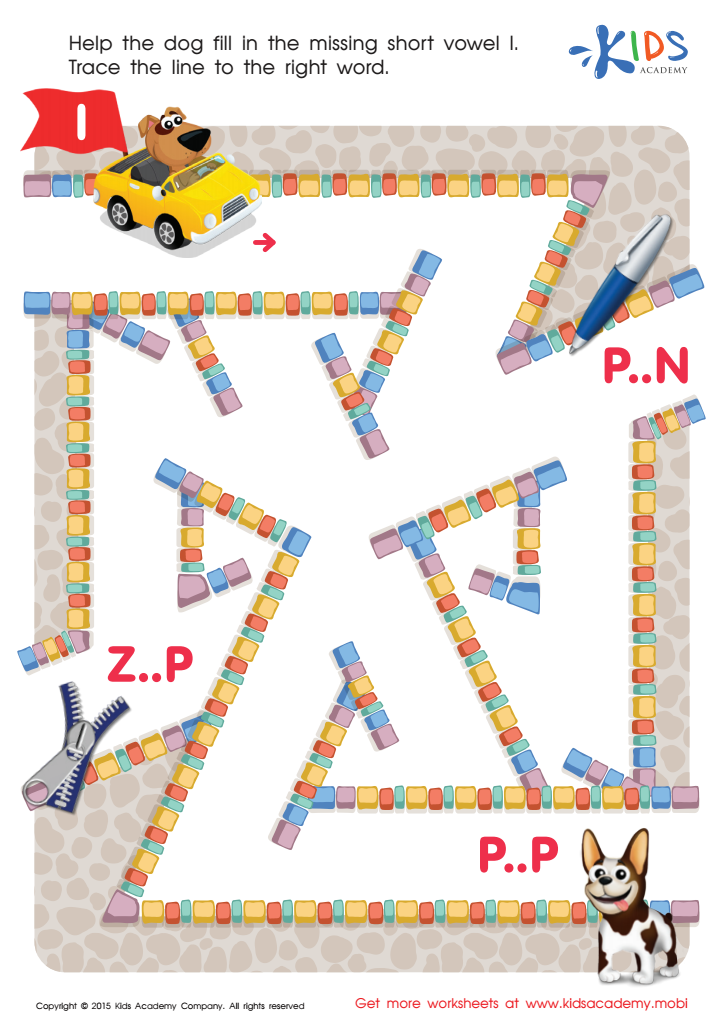
Short Vowel Sound I Worksheet
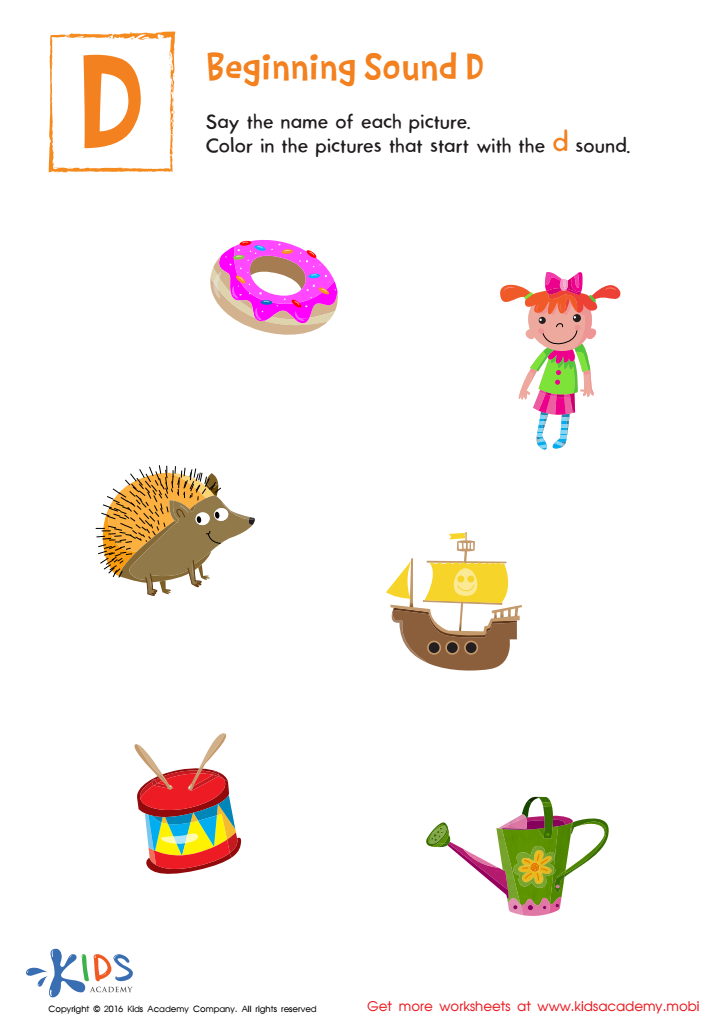
Beginning Sound D Worksheet








Phonics development is crucial for children aged 5-7 as it lays the foundation for their reading and writing skills — indispensable tools for lifelong learning and communication. Phonics helps children understand the relationship between letters and sounds, enabling them to decode words and read fluently. By identifying patterns and sounds, children can break down unknown words, fostering independent reading skills and boosting their confidence.
Parents and teachers play a vital role in this learning phase. For parents, supporting phonics at home with activities like reading aloud, playing sound-based games, and integrating phonics into everyday conversations can reinforce what children learn at school. This reinforcement can make learning enjoyable and reduce frustration, leading to higher engagement and a love for reading.
Teachers use structured phonics programs to provide systematic instruction, catering to individual learning needs. They can identify early signs of reading difficulties and intervene promptly, ensuring no child falls behind. Phonics is also linked to better spelling skills, which aids in written expression and academic success across all subjects.
Investing time in phonics development pays long-term dividends. It equips children with essential literacy skills, enhances their cognitive abilities, and sets them on a path to academic success and lifelong learning. Thus, parents and teachers should prioritize phonics development to foster comprehensive, well-rounded learners.







