Rhyme recognition Phonics Worksheets for Ages 5-7
4 filtered results
-
From - To
Discover our engaging Rhyme Recognition Phonics Worksheets designed for children ages 5-7! These worksheets make learning fun while helping young learners develop crucial phonemic awareness. Rhyme recognition is essential for reading proficiency, and our carefully crafted activities encourage kids to identify and generate rhyming words through playful exercises. Whether through colorful illustrations, matching games, or fill-in-the-blank exercises, each worksheet is tailored to captivate young minds and enhance their phonics skills. Perfect for classroom use or at-home learning, our resources ensure that kids build confidence in their reading abilities while enjoying the rhythmic world of rhyme. Let's make learning to read a joyful adventure!
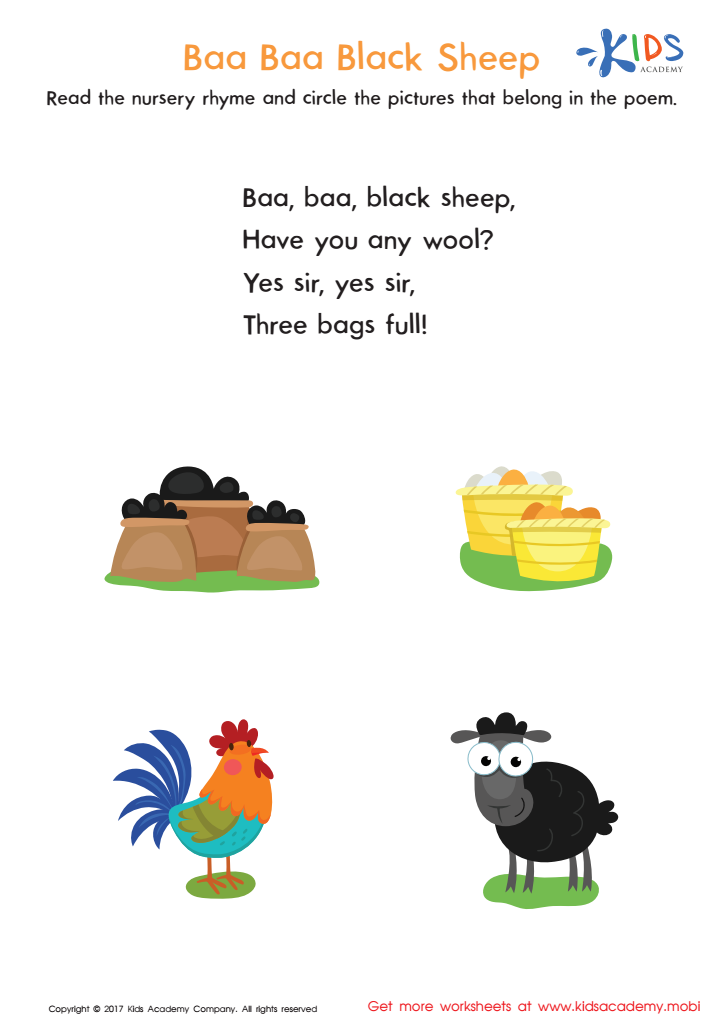
Baa Baa Black Sheep Printable
 Assign to My Students
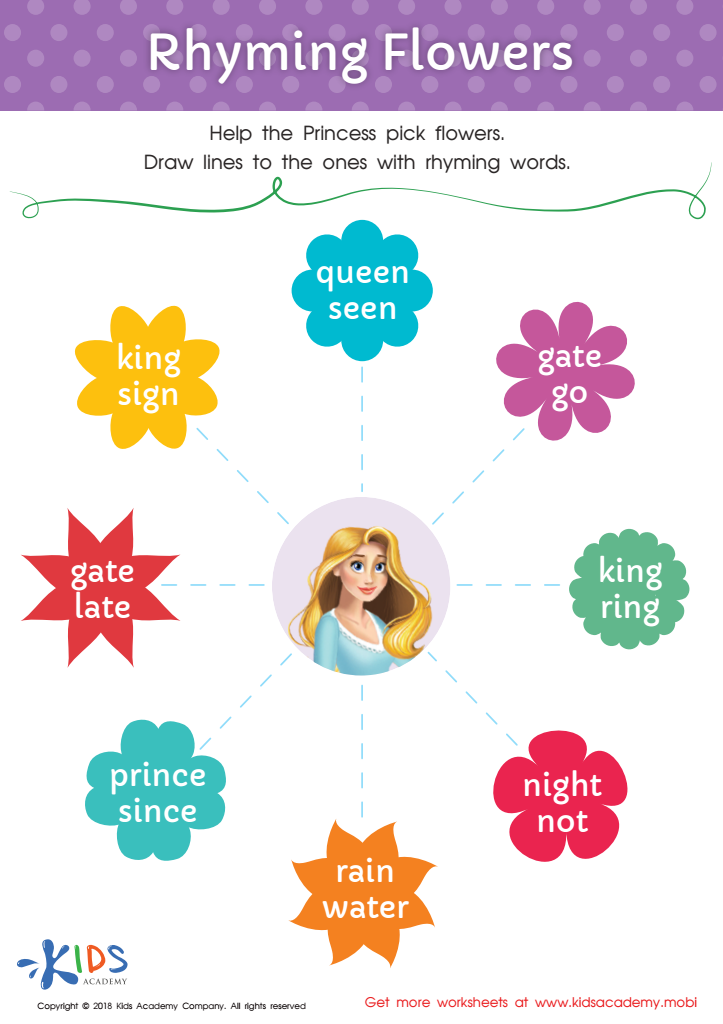
Rhyming Flowers Worksheet
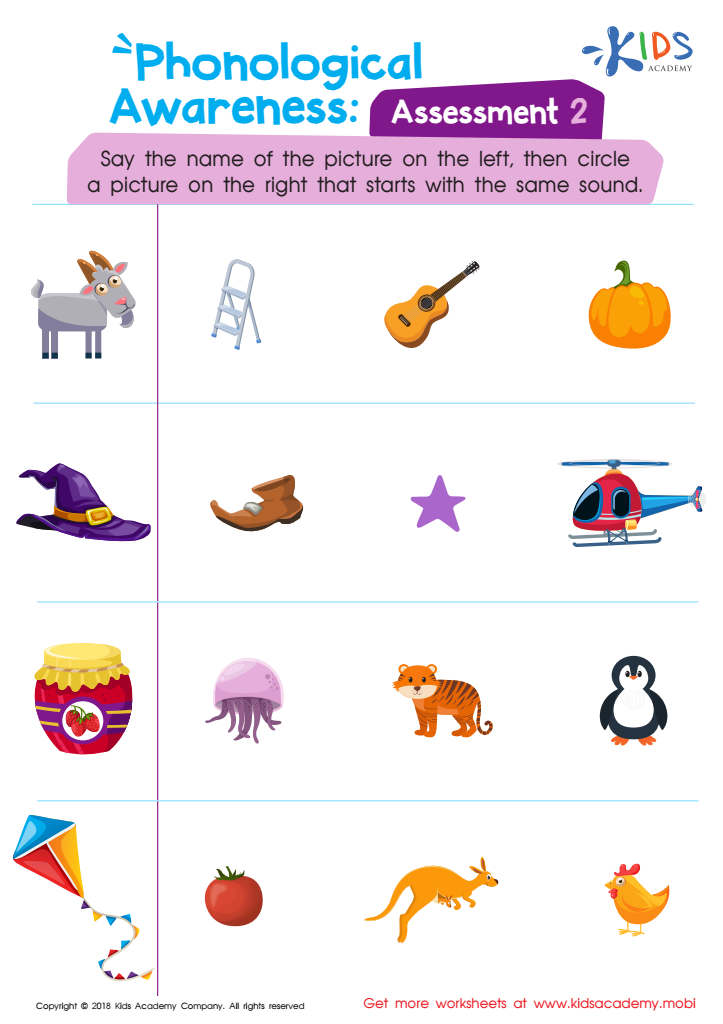
Phonological Awareness: Assessment 2 Worksheet
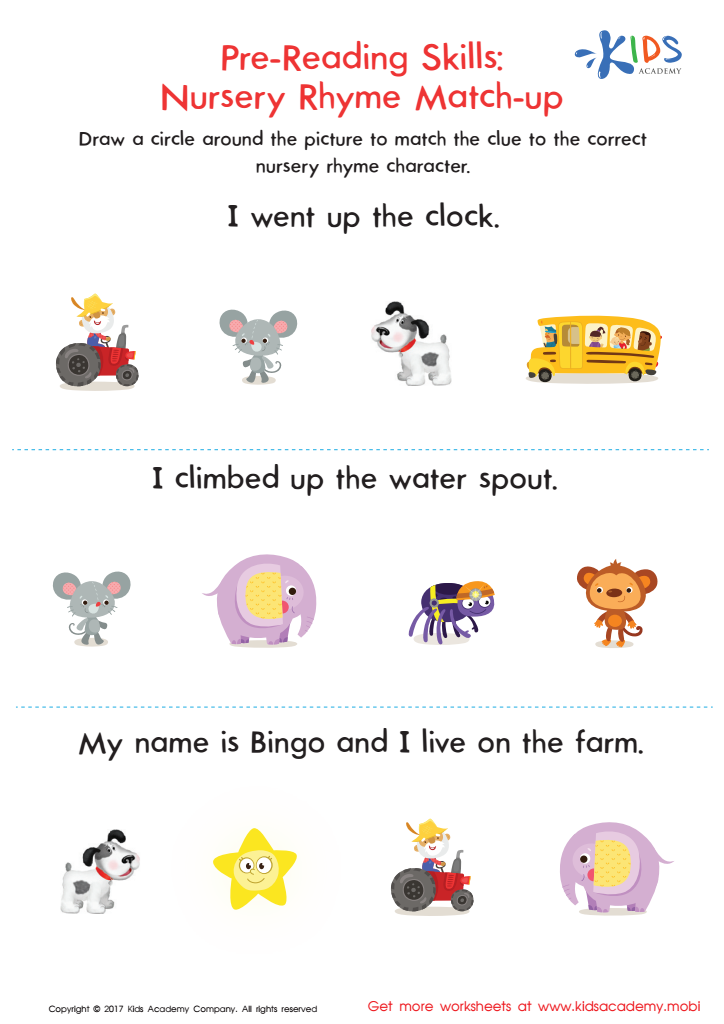
Nursery Rhyme Match–Up Worksheet








Rhyme recognition phonics is a vital component of early literacy development for children aged 5 to 7. At this crucial stage, children are developing their phonological awareness, the ability to hear, identify, and manipulate sounds in spoken language. Understanding rhymes helps children become more attuned to sounds, making it easier for them to decode new words and grasp the relationships between sounds and letters.
Parents and teachers should care about rhyme recognition phonics because it lays a solid foundation for reading and writing skills. When children can recognize and produce rhymes, they enhance their vocabulary and comprehension. This helps foster a love for language, making reading more enjoyable and accessible.
Furthermore, engaging in rhyming activities supports not only literacy but also cognitive development. It encourages creativity and critical thinking as children explore playful language, enhancing their ability to recognize patterns and sounds.
Moreover, integrating rhyme recognition into learning can emotionally engage children; they often find it fun and entertaining, reducing anxiety around literacy. Ultimately, prioritizing rhyme recognition phonics in early education equips children with essential skills for their academic success and promotes a lifelong appreciation for reading and language.







