
Sight word recognition Phonics Worksheets for Ages 5-7
4 filtered results
Difficulty Level
Grade
Age
-
From - To
Subject
Activity
Standards
Discover our engaging Sight Word Recognition Phonics Worksheets designed specifically for ages 5-7! These worksheets help young learners build essential literacy skills through fun and interactive activities. Each worksheet focuses on high-frequency sight words, promoting recognition and fluency as children learn to read with confidence. Our carefully crafted exercises include tracing, matching, and coloring, making learning an enjoyable experience. Perfect for parents and educators alike, these resources support early reading development and phonics mastery. Boost your child's reading skills and ignite their love for learning with our visually appealing and effective sight word recognition worksheets! Explore our collection today!
Favorites
With answer key
Interactive
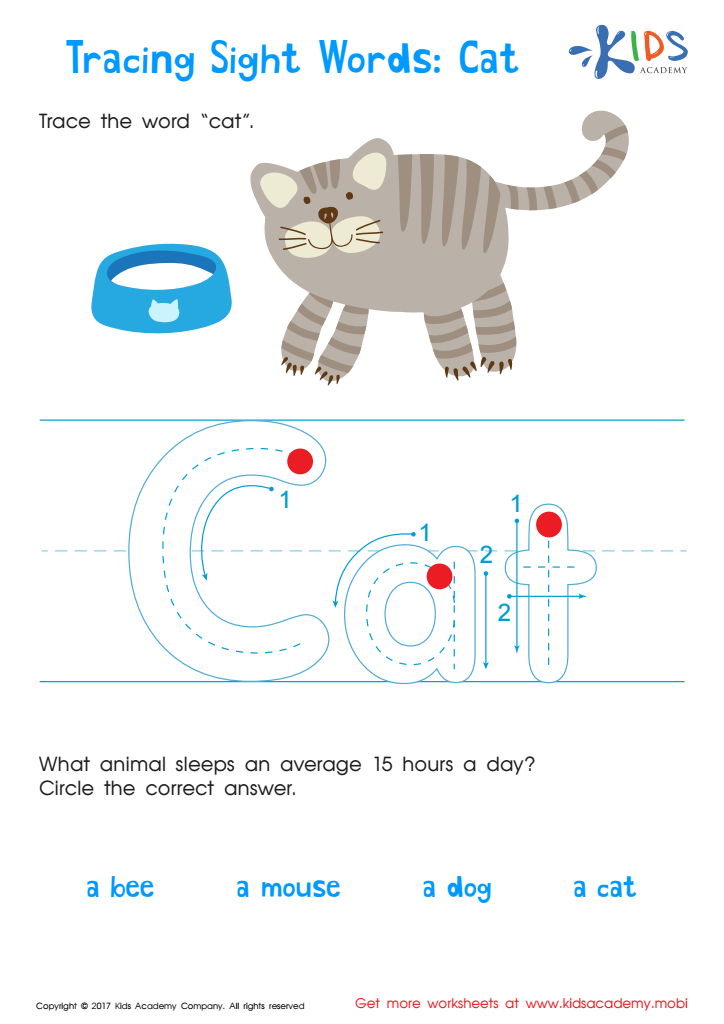
Cat Printable Sight Words Worksheet
Encourage your child's literacy with this fun sight words worksheet: cat PDF! It helps build a solid foundation for reading, featuring activities such as reading and tracing the word cat, and finding it amongst other sight words. With its cute cat, Kids Academy makes learning to read a delight!
Cat Printable Sight Words Worksheet
Worksheet
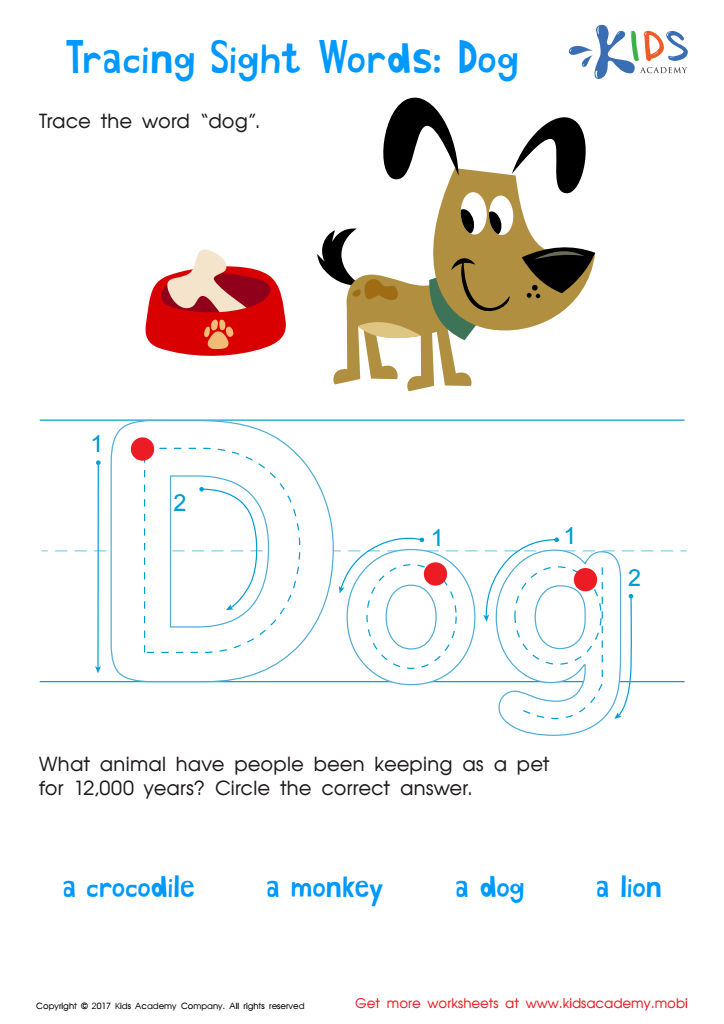
Dog Worksheet Sight Words Worksheet
Get your kids excited to read with our dog-themed sight words worksheet!
Excite your child to read with our sight words worksheet: dog edition! Featuring a lovable dog character to put a smile on any kid's face, this worksheet helps kids practice reading and writing the word "dog". Build a library of words they can read quickly and promote increasing literacy skills with early fluency! Get them ready for reading with our dog-themed sight words worksheet!
Dog Worksheet Sight Words Worksheet
Worksheet
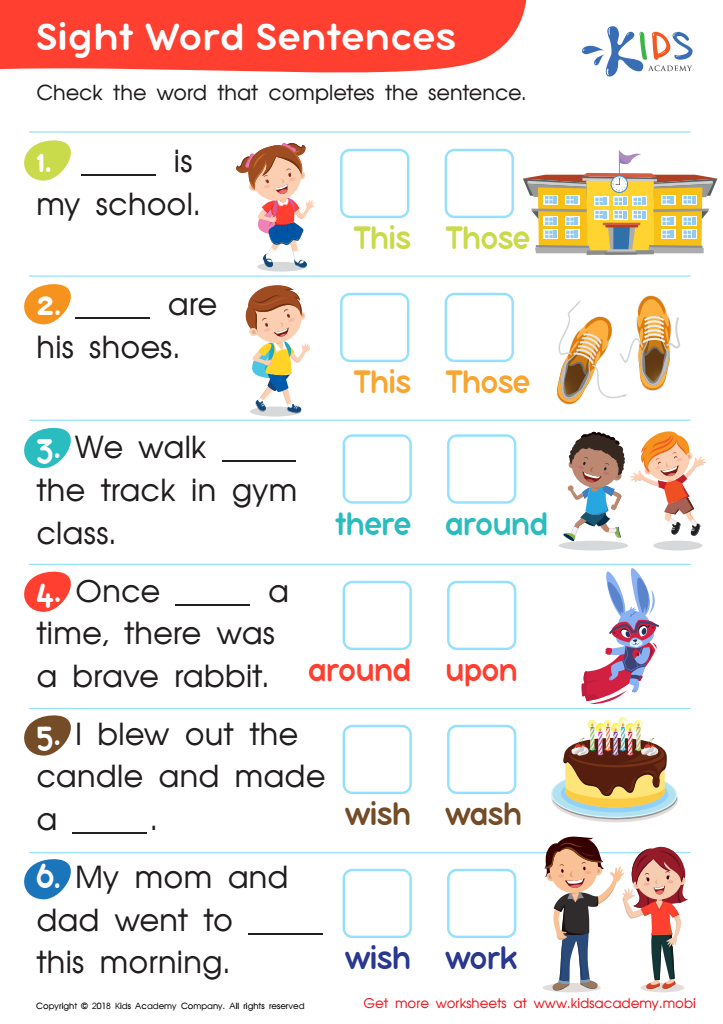
Sight Word Sentences Worksheet
Improve reading fluency! Have students fill in the blank with the correct sight word to complete sentences. Sight words are often tricky to decode - they don't follow phonics or spelling rules. To read smoothly, young learners must know them by memory. Use this printable and help kids master their sight words!
Sight Word Sentences Worksheet
Worksheet
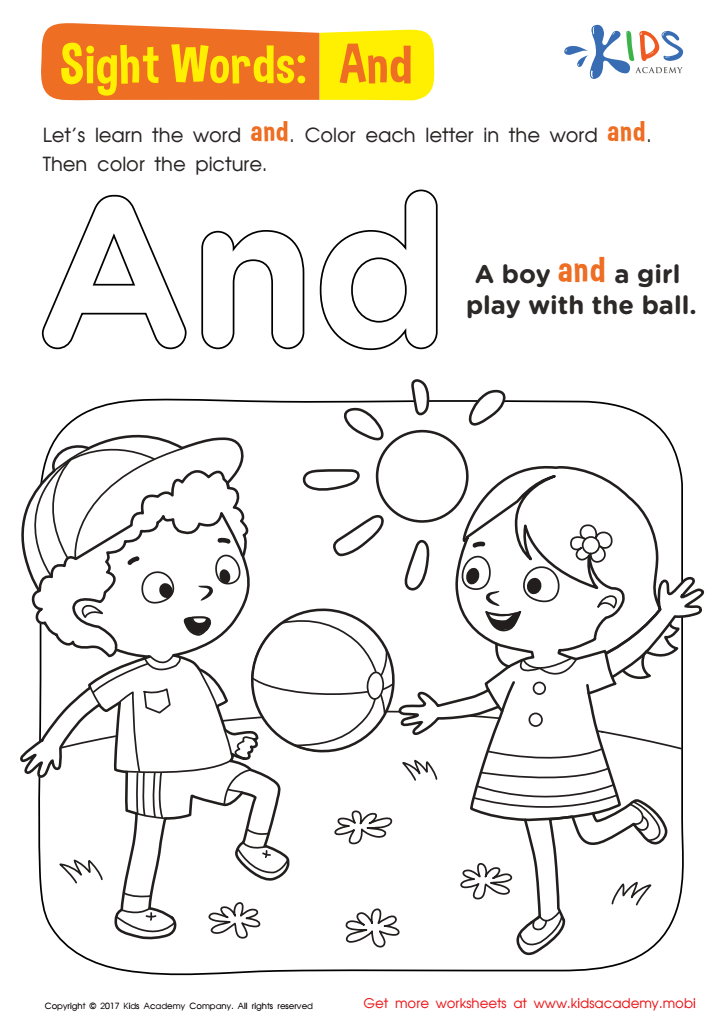
And Worksheet Sight Words Worksheet
Help your child get a jumpstart on reading with sight words! Print out this fun worksheet and get your child to read the sentence. Point out the word "and", then color the word and enjoy the rest of the scene! It's a great way to introduce sight words and get their early reading skills going!
Download (PDF)
 Assign to My Students
Assign to My Students
And Worksheet Sight Words Worksheet
Worksheet
Join Kids Academy for Free
Who is primarily going to use this learning content?








Sight word recognition and phonics are crucial components of early literacy for children aged 5-7. Sight words are familiar words that children learn to recognize instantly, allowing them to read with fluency and confidence. When children build a strong base of sight words, they can focus on comprehension rather than being bogged down by decoding every single word. This promotes a love for reading and enables them to engage with texts more fully.
Phonics, on the other hand, teaches children the relationships between letters and sounds. Mastery of phonics allows young readers to decode unfamiliar words, enhancing their reading ability and vocabulary. Together, sight word recognition and phonics foster a solid foundation in literacy skills, essential for academic success.
For parents and teachers, investing time in these areas is vital. Early literacy skills correlate with long-term educational outcomes, influencing children's academic trajectories. By supporting sight word recognition and phonics, adults equip children with tools that expand their ability to read, write, and think critically. Ultimately, fostering these skills empowers young learners, instilling confidence and a lifelong love of learning. Nurturing these competencies creates a more seamless transition into subsequent grades and broader competencies in their educational journey.







