
Letter-sound association Tracing Letters Worksheets for Ages 5-7
5 filtered results
Difficulty Level
Grade
Age
-
From - To
Subject
Activity
Standards
Boost your child's reading foundation with our Letter-Sound Association Tracing Letters Worksheets, tailored for ages 5-7. These engaging worksheets skillfully combine letter tracing exercises with phonics, helping young learners grasp the crucial connection between letters and their sounds. By practicing proper letter formation and reinforcing letter-sound recognition, children develop essential skills for reading success. Perfect for early learners, these age-appropriate activities transform learning into a joyful adventure. Equip your little one with the tools needed to excel in literacy, one worksheet at a time. Explore our collection and watch your child's confidence grow in phonics and handwriting.
Favorites
With answer key
Interactive
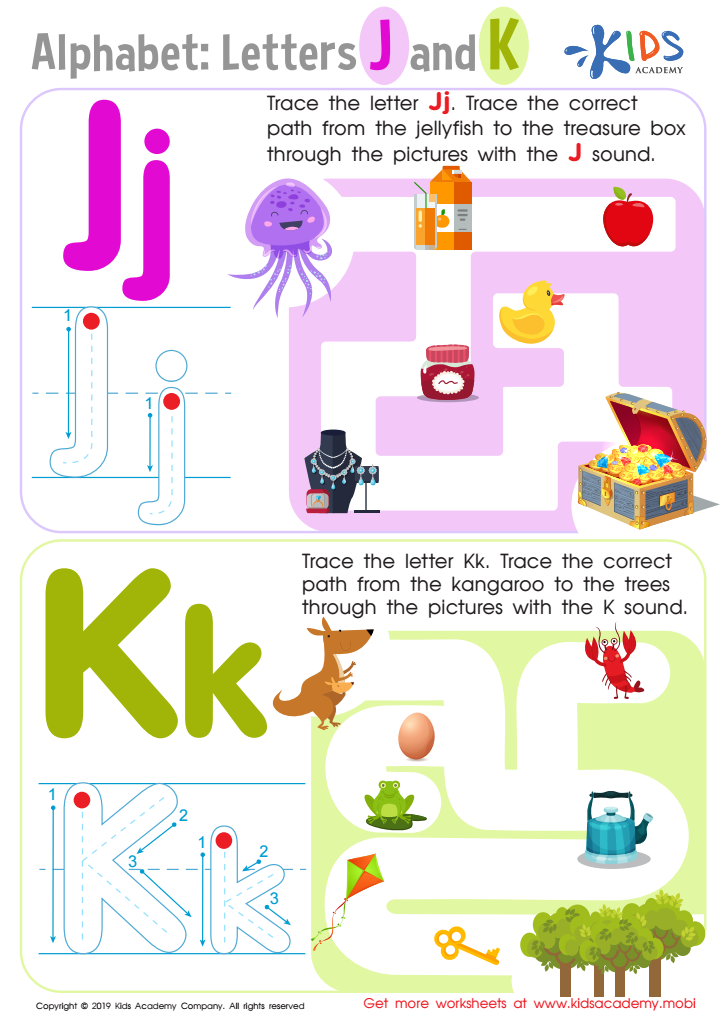
Letters J and K Tracing Worksheet
Tracing the letters «J» and «K» is the first step. Help the jellyfish find a path to the treasure chest with pictures of the «J» sound, and assist the kangaroo in finding a path to the trees with pics of «K». Fun, educational and enjoyable for children!
 Assign to My Students
Letters J and K Tracing Worksheet
Worksheet
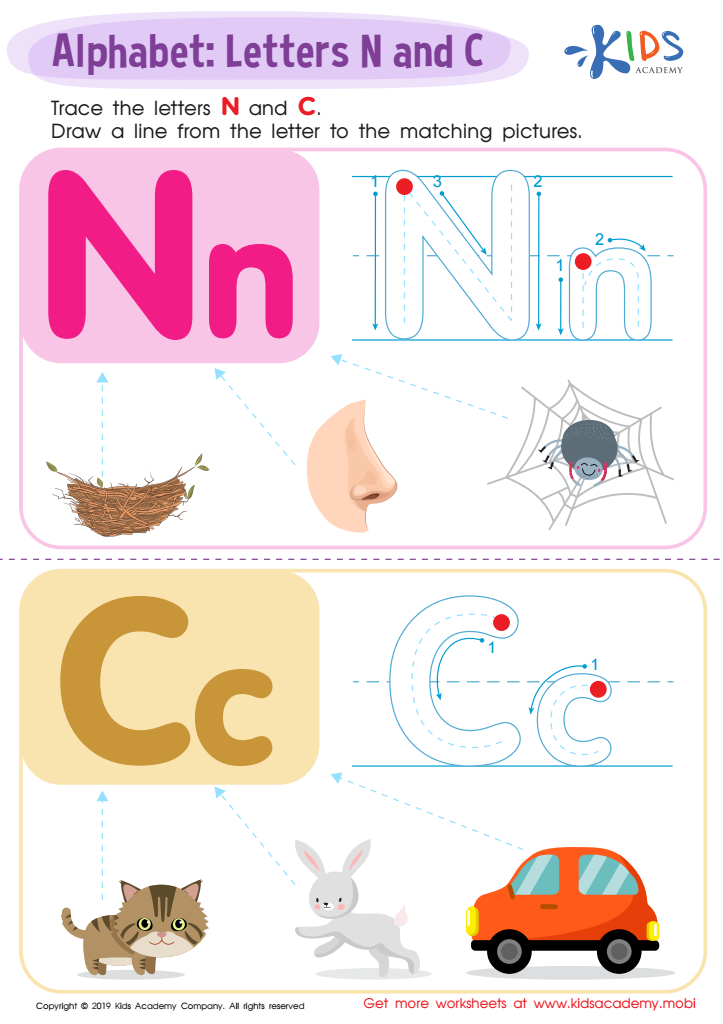
Letter N and C Tracing Worksheet
Kids can trace the letters N and C, then draw a line to the words starting with each letter. This worksheet helps them practice letter writing, distinguish capital and lowercase letters, and match pictures with the right letter. It also teaches essential skills for learning letters efficiently.
Letter N and C Tracing Worksheet
Worksheet
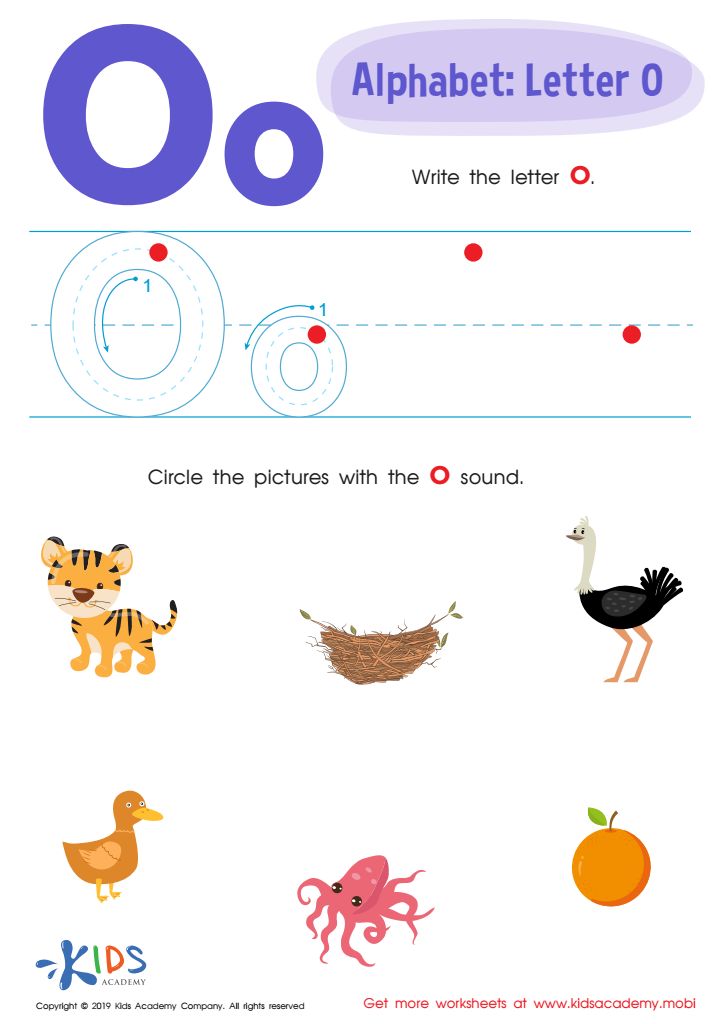
Letter O Tracing Worksheet
This worksheet gives kids the chance to trace the letter "O" while also circling pictures that have the "O" sound. Visual and hands-on learners will benefit from the visuals and tracing, helping them learn the letter "O" with ease. It's the perfect way to learn what "octopus" and "ostrich" start with!
Letter O Tracing Worksheet
Worksheet
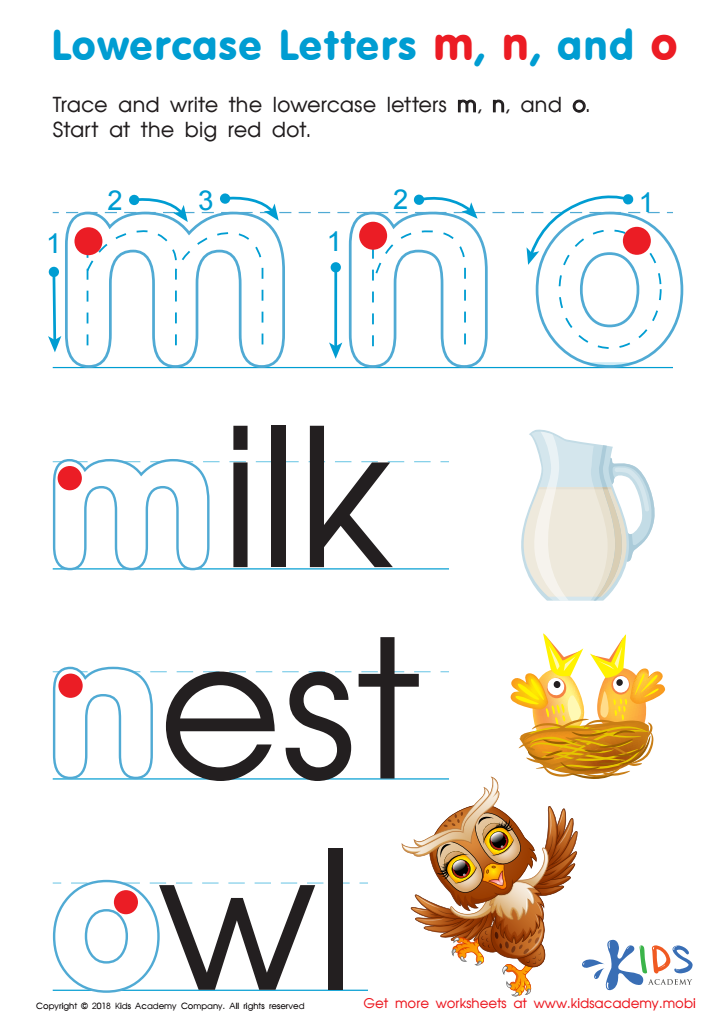
Lowercase Letters m n o Worksheet
Help your child learn the alphabet with letter tracing. Show them the difference between uppercase and lowercase letters by working through this free worksheet, tracing and writing lowercase m, n and o.
Lowercase Letters m n o Worksheet
Worksheet
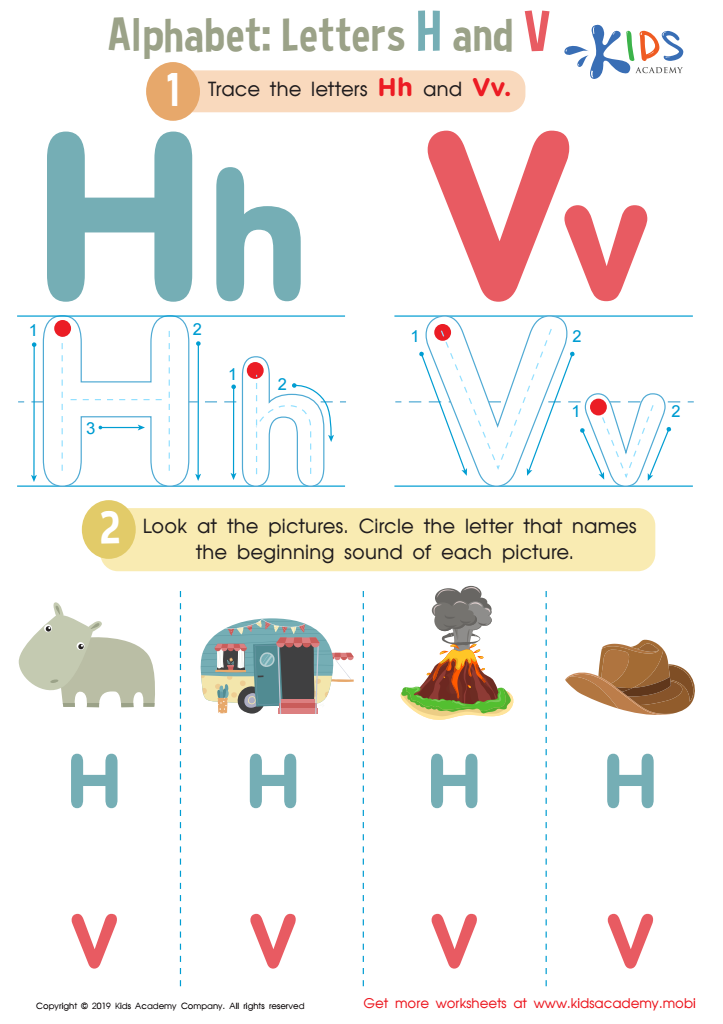
Letters H and V Tracing Worksheet
Kids will trace the letters H and V and circle the letter of the beginning sound of each picture. This helps strengthen writing and identify objects with their beginning sound, with two letter options to choose from.
Letters H and V Tracing Worksheet
Worksheet
Join Kids Academy for Free
Who is primarily going to use this learning content?








Letter-sound association and tracing letters are fundamental activities for children aged 5-7, serving as critical building blocks for literacy development. When parents and teachers emphasize these practices, they lay the groundwork for proficient reading and writing skills, essential in academic success and daily communication.
First, letter-sound association helps children understand that letters and combinations of letters represent specific sounds. This phonemic awareness is crucial for decoding words while reading and for accurate spelling. When children can effectively associate letters with the sounds they make, they become more competent readers, capable of recognizing words quickly and effortlessly.
Tracing letters, meanwhile, supports fine motor skills and hand-eye coordination, vital for legible handwriting. It also reinforces memorization of the alphabet and enhances a child's ability to recall the shapes of letters, leading to more accurate and confident writing.
Incorporating these activities into daily learning ensures that children develop a robust linguistic foundation. Engaging them in fun, multisensory letter-tracing tasks makes the learning process enjoyable and effective, fostering a love for literacy. By prioritizing these critical skills, parents and teachers help children navigate the early stages of education with increased confidence and capability, setting them up for ongoing academic and personal success.








