Lowercase letter writing Tracing Letters Worksheets for Ages 5-7
3 filtered results
-
From - To
Our All-In-One Lowercase Letter Writing Tracing Worksheets are perfect for young learners aged 5-7. These engaging and fun worksheets help children master the art of writing lowercase letters. Each sheet provides students with ample practice to develop their handwriting skills, fine motor skills, and learn proper penmanship. Designed to be both educational and enjoyable, our worksheets feature playful illustrations to keep kids motivated. Whether used at home or in the classroom, these resources are essential for any early childhood education. Make learning to write letters an enjoyable experience with our expertly designed tracing worksheets!
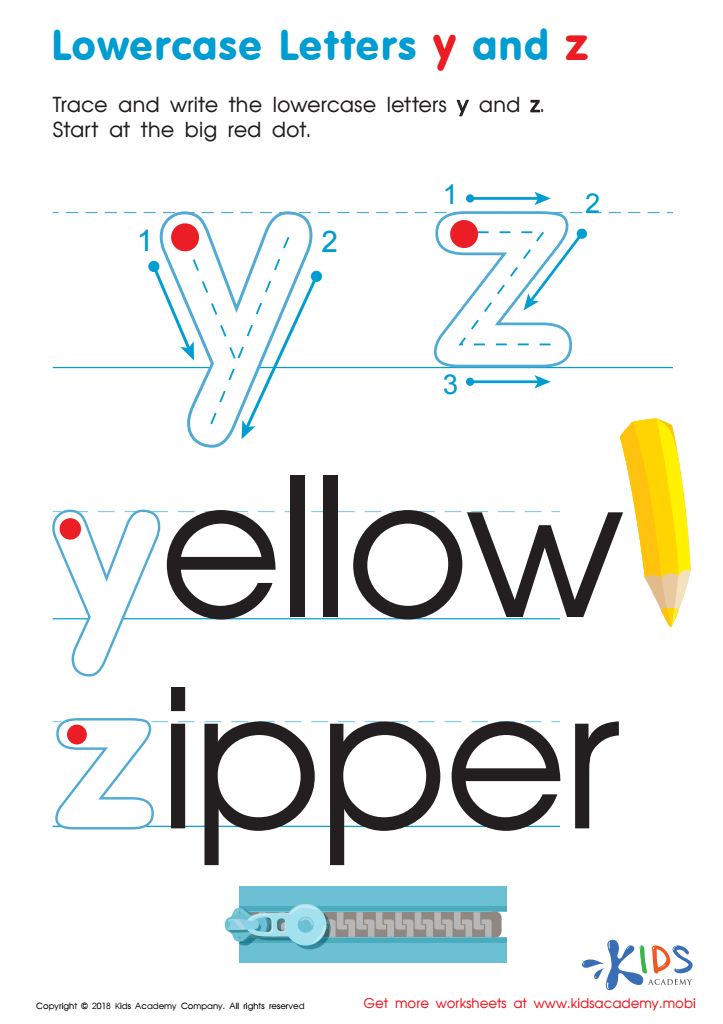
Lowercase Letters y z Worksheet
 Assign to My Students
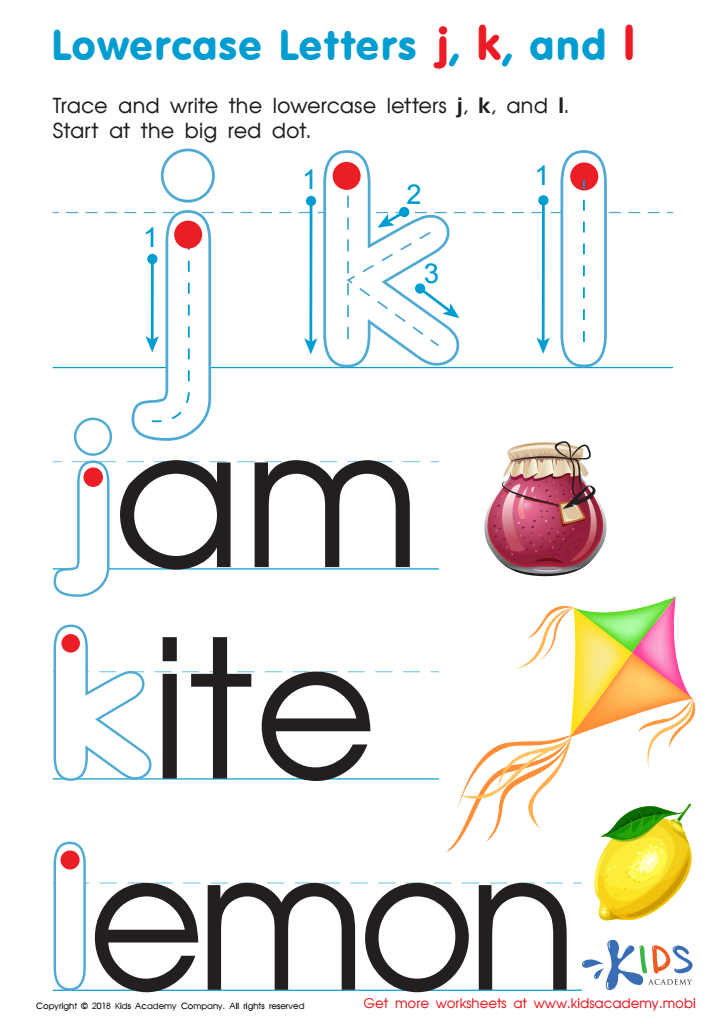
Lowercase Letters j k l Worksheet
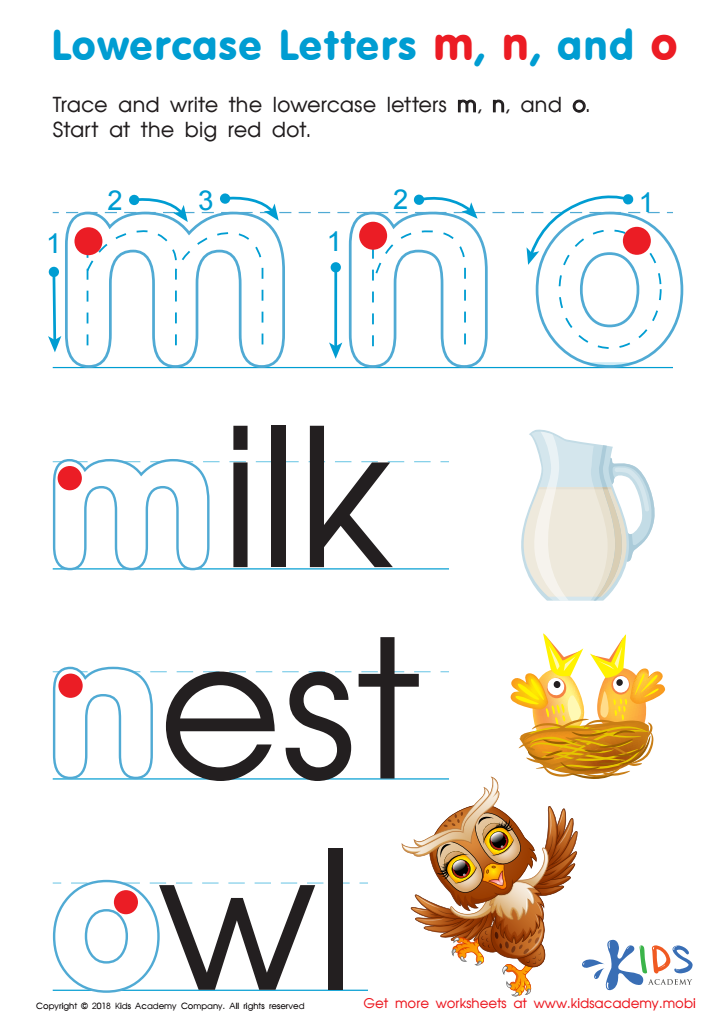
Lowercase Letters m n o Worksheet








Parents and teachers should pay close attention to lowercase letter writing and encourage tracing activities for children aged 5-7 because these foundational skills set the stage for successful literacy development. At this age, children are in a critical period for developing fine motor skills and hand-eye coordination, which are crucial for writing. Tracing lowercase letters helps young learners familiarize themselves with the shape, size, and spatial orientation of each letter.
Mastery of lowercase letters is particularly important because they are more commonly used in reading and writing compared to uppercase letters. This repetition and focused practice assist children in establishing muscle memory, leading to improved handwriting speed and legibility.
Additionally, tracing activities engage multiple senses—visual, tactical, and kinesthetic—which can enhance cognitive processing and memory retention. The process encourages patience, attention to detail, and perseverance.
Moreover, these tracing exercises provide a support framework where children can gain confidence in their abilities before moving on to independent writing tasks. For educators and parents, fostering these skills early on translates to more competent, confident readers and writers in the future, ultimately laying a strong foundation for all subsequent educational endeavors.








