Alphabet familiarity Upper & Lowercase Letters Worksheets for Ages 5-7
7 filtered results
-
From - To
Elevate your child’s literacy skills with our engaging Alphabet Familiarity Worksheets designed for children aged 5-7. Our printable activities focus on enhancing recognition of both upper and lowercase letters, ensuring a solid foundation in the alphabet. Each worksheet offers fun, interactive options that encourage children to identify, trace, and differentiate between letters. With colorful illustrations and diverse exercises, children will find learning enjoyable and effective. Perfect for homeschooling or classroom settings, these worksheets are a vital resource for fostering letter recognition, important for early reading and writing skills. Start your child's alphabet journey today! Print, learn, and play!
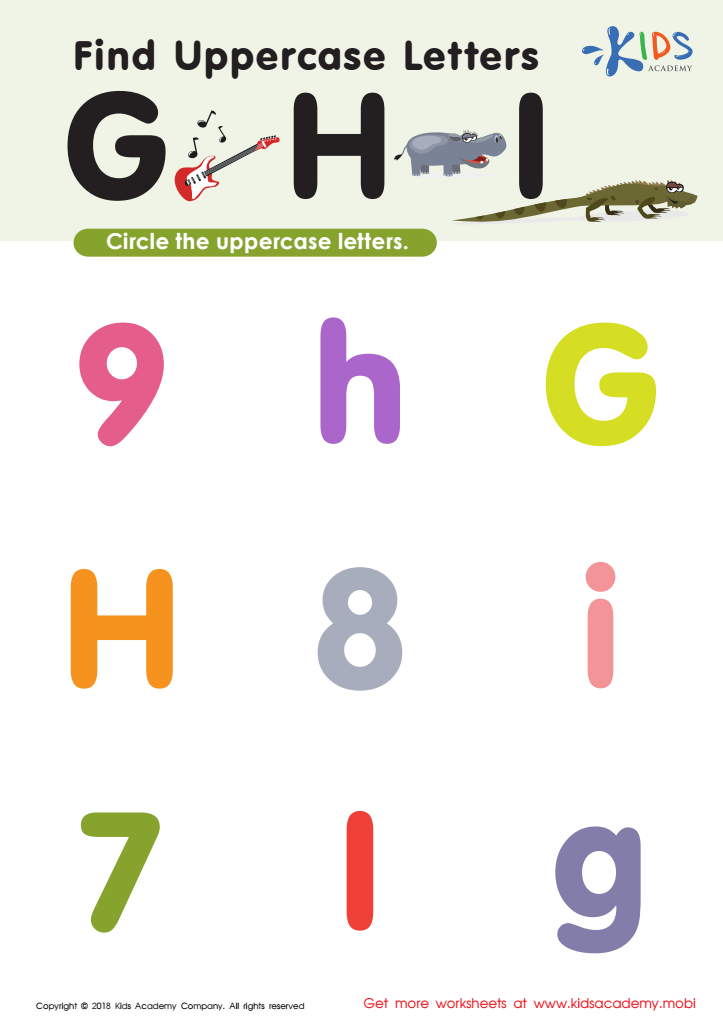
Find Uppercase Letters G, H, and I Worksheet
 Assign to My Students


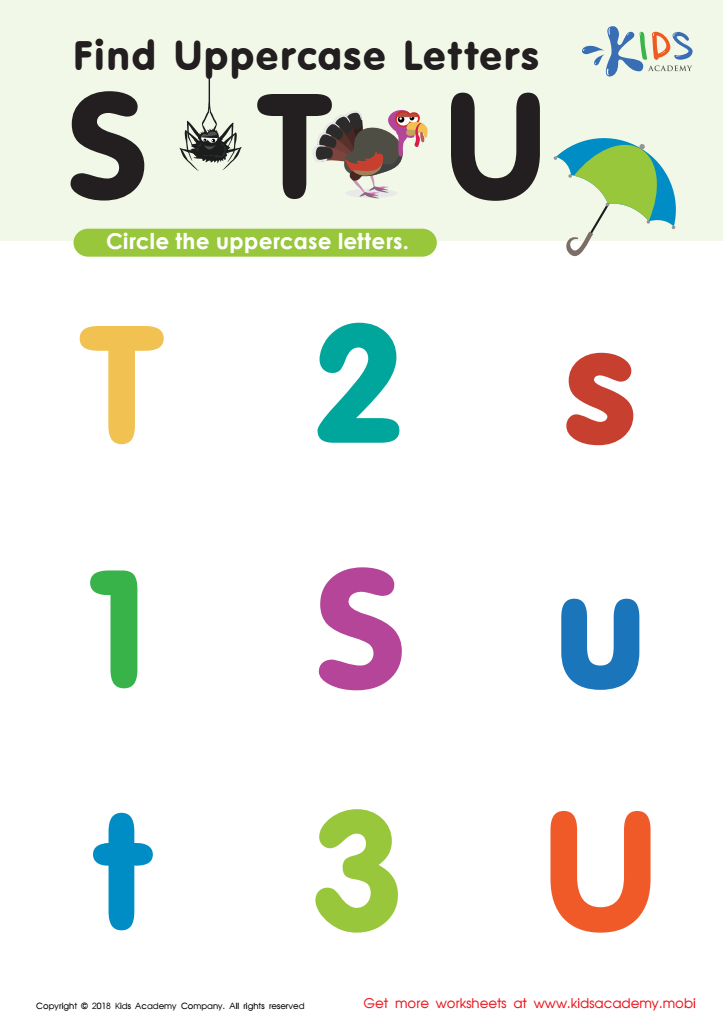
Find Uppercase Letters Worksheet
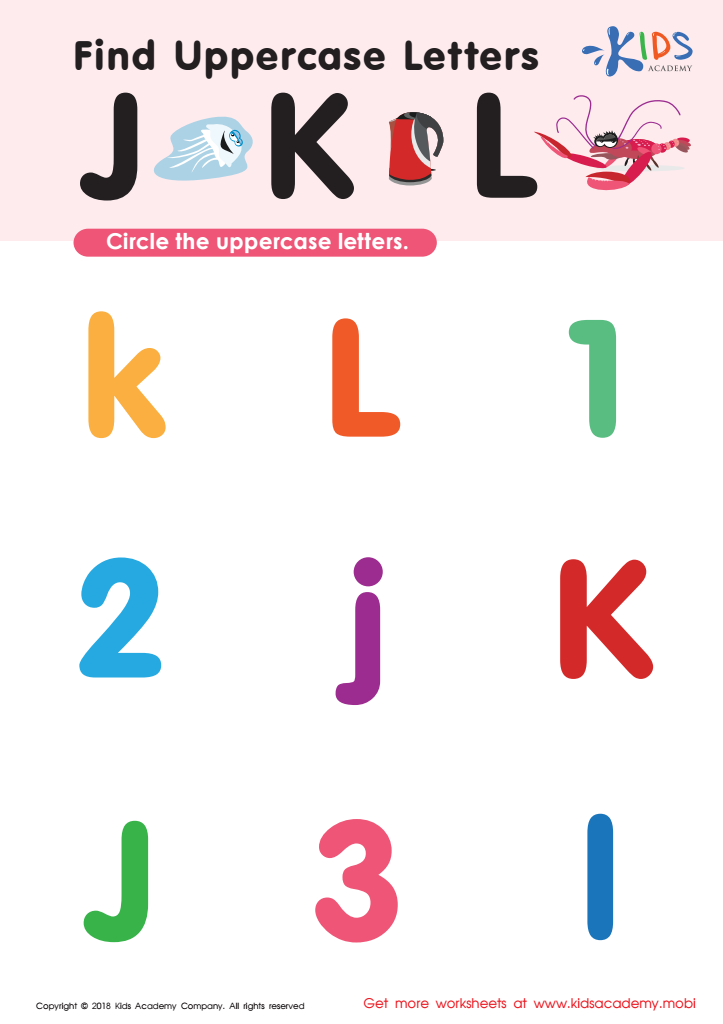
Find Uppercase Letters J, K, and L Worksheet
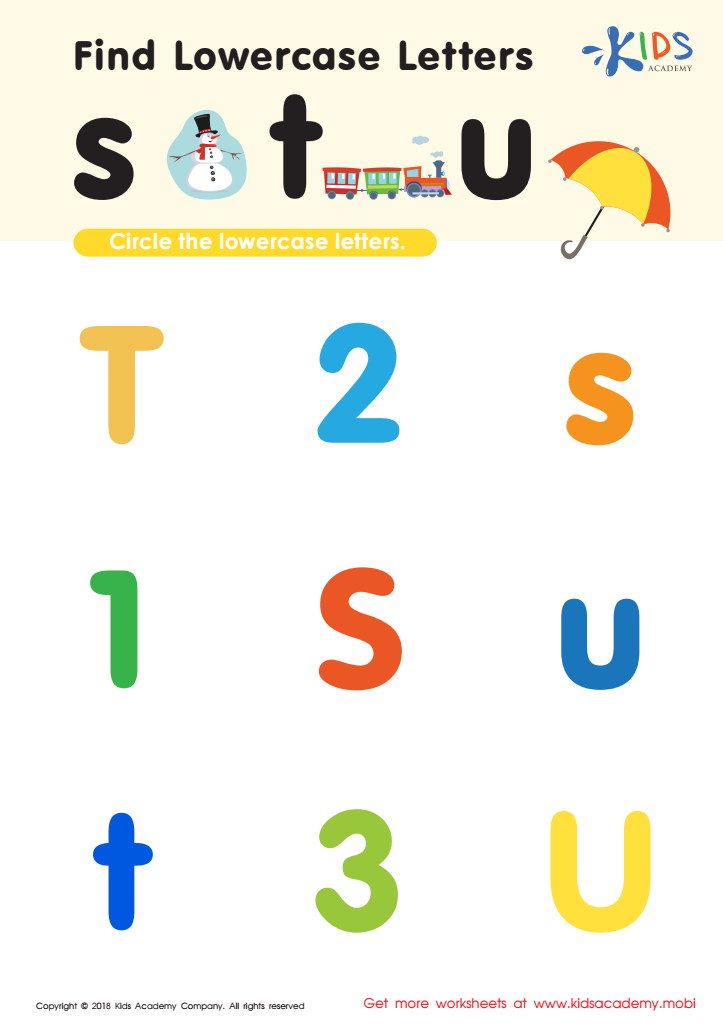
Find lowercase Letters s t u Worksheet
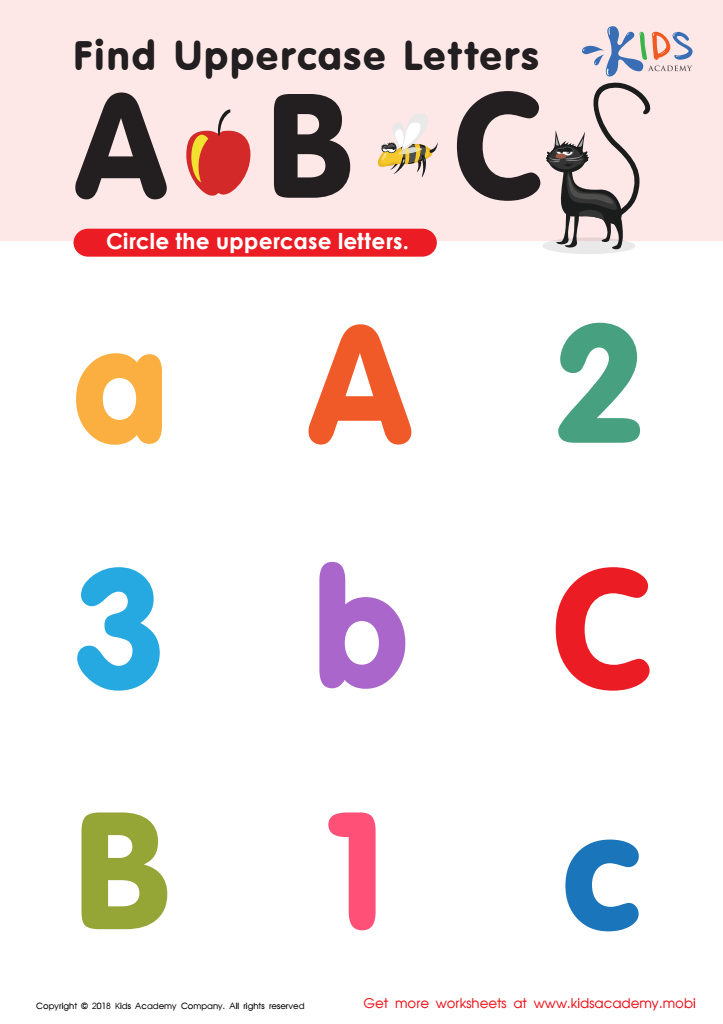
Find Uppercase Letters A, B, and C Worksheet
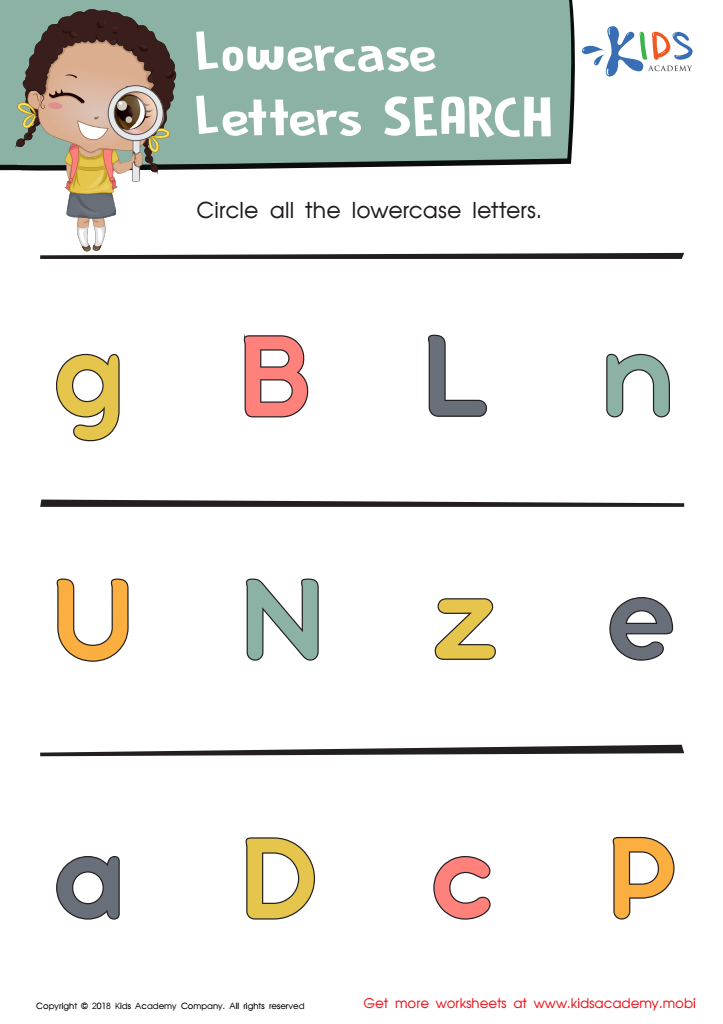
Lowercase Letters Search: Assessment Worksheet
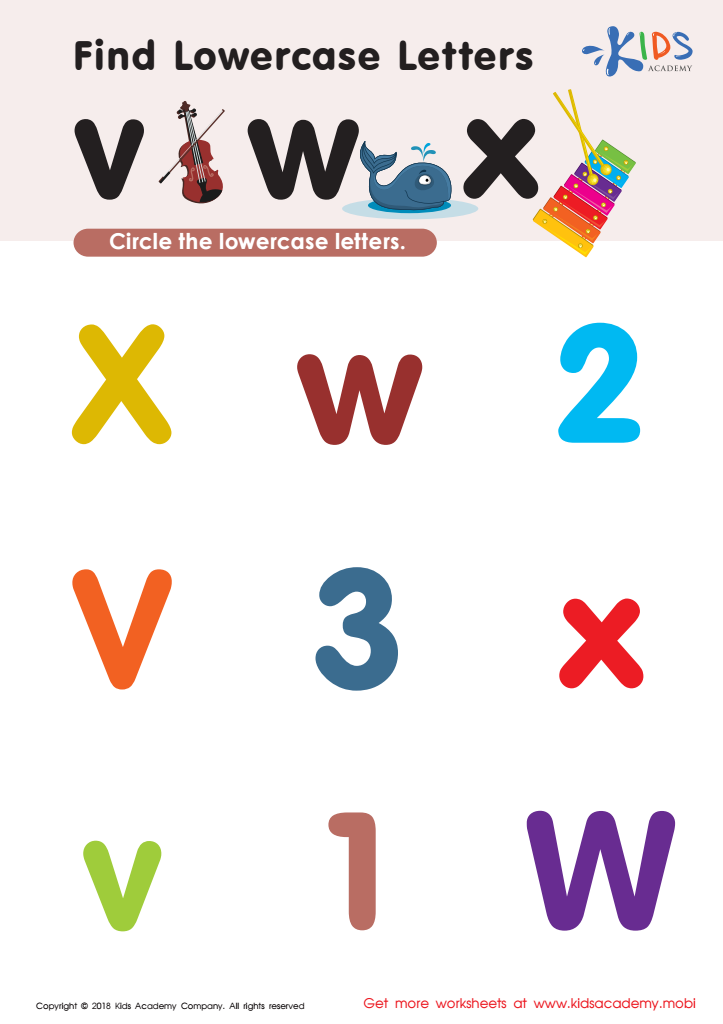
Find Lowercase Letters v w x Worksheet






Familiarity with both uppercase and lowercase letters is crucial for children aged 5 to 7 as it lays the foundation for their reading and writing skills. Mastery of each letter helps children recognize them in various contexts, thereby enhancing their reading fluency. Understanding the difference between uppercase and lowercase letters aids in word formation, as children often encounter both forms in texts. This recognition is essential for decoding words, ultimately leading to improved comprehension.
Additionally, early familiarity with letters supports writing skills. Children learn to write their names, words, and sentences using both uppercase and lowercase letters, fostering their self-expression and confidence in communication. Engaging parents and teachers in reinforcing this knowledge through playful activities—like letter games, alphabet books, and creative writing—can have lasting impacts on literacy development.
Moreover, fostering letter recognition is linked to overall academic achievement, as strong literacy skills are associated with better performance across subjects. By prioritizing alphabet familiarity, teachers and parents can help create a supportive environment that nurtures a child’s interest in reading and writing, setting them on a path toward lifelong learning. In essence, embracing both letter forms during these formative years is vital for a child's cognitive and language development.







