Phonics Skills Vowel Digraphs Worksheets for Ages 5-7
3 filtered results
Difficulty Level
Grade
Age
-
From - To
Subject
Activity
Standards
Discover an exciting and engaging collection of Phonics Skills Vowel Digraphs Worksheets designed specifically for children ages 5-7. Our expertly crafted worksheets focus on essential vowel digraphs—combinations like 'ai,' 'ea,' 'oo,' and more—helping young learners enhance their reading and writing skills. Each worksheet combines fun activities with educational goals, making phonics practice enjoyable and effective. Tailored exercises promote sound recognition, spelling accuracy, and pronunciation confidence. Ideal for both classroom use and at-home practice, these worksheets provide a solid foundation for early literacy development. Start building your child's phonics skills today with our comprehensive resources!
Favorites
With answer key
Interactive
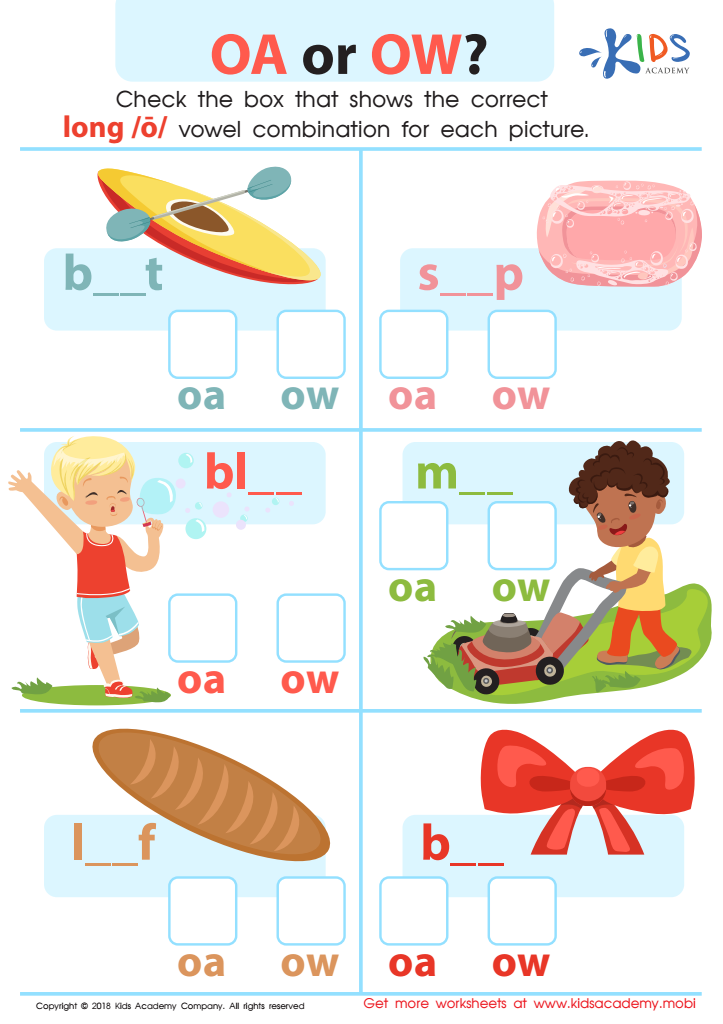
Reading: OA or OW Worksheet
This printable worksheet helps young and emergent readers with decoding words and understanding digraphs (two letters with one sound). It requires students to complete the spelling for each word based on the picture, focusing on /oa/ and /ow/ spellings. It's ideal for a reading classroom and for spelling practice.
 Assign to My Students
Reading: OA or OW Worksheet
Worksheet
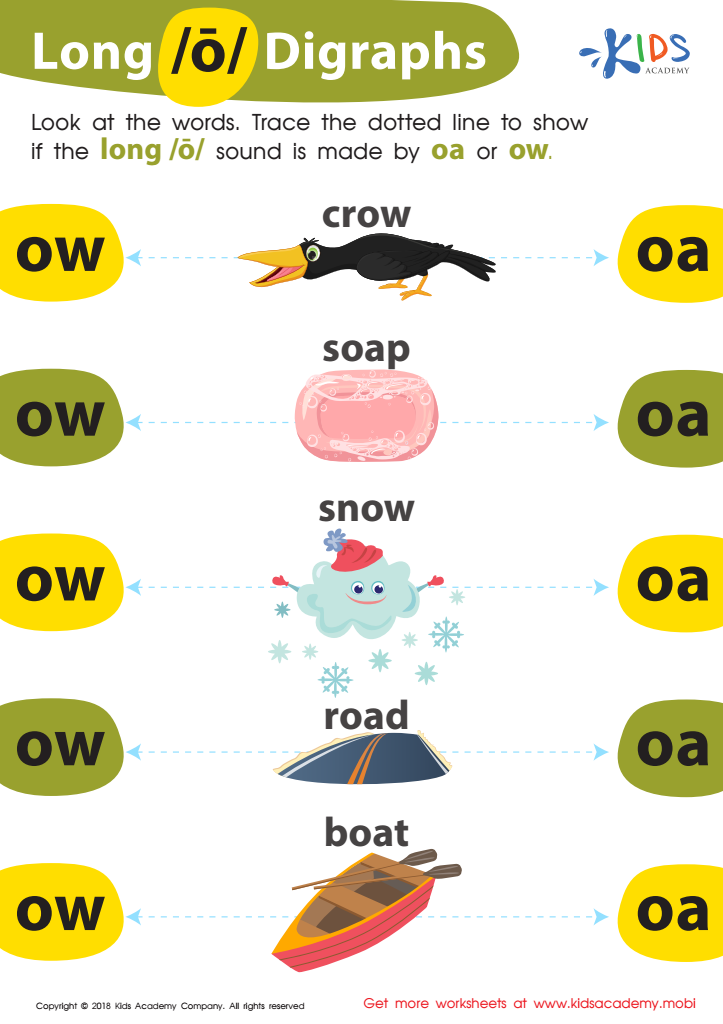
Reading: Long O Digraphs Worksheet
Reading and decoding words can be complex for learners when they start studying digraphs, two letters that make one sound. This worksheet focuses on the long O sound, /oa/ and /ow/. With the understanding of digraphs, students can decode more words and build their reading confidence.
Reading: Long O Digraphs Worksheet
Worksheet
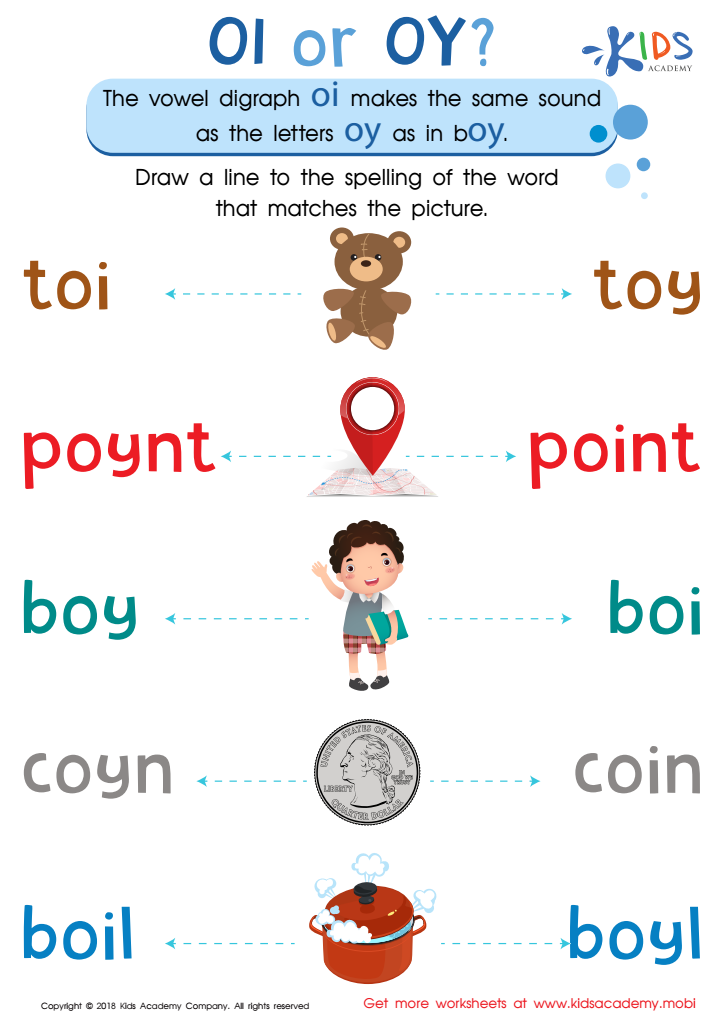
Reading: OI and OY Worksheet
Ask your students if they know the rule for words with /oi/ or /oy/ sound. If not, it's easy to learn! Rule: If /oy/ at end of word, spell with 'oy'; if /oi/ in middle of word, spell with 'oi'. Use this worksheet to help them master these digraphs and improve their ability to decode.
Reading: OI and OY Worksheet
Worksheet
Join Kids Academy for Free
Who is primarily going to use this learning content?


Phonics skills, particularly vowel digraphs, are crucial for young readers aged 5-7 because they form the foundation for proficient reading and spelling. Vowel digraphs are pairs of vowels that together make a single sound, like "ai" in "rain" or "oa" in "boat." Mastery of these combinations helps children decode words more efficiently, enhancing their reading fluency.
Understanding vowel digraphs also helps in spelling. As children recognize these consistent patterns, they can apply them to new words, making both reading and writing less daunting. This phonemic awareness—the recognition of sounds in word formation—boosts their confidence and fosters a joy for learning, setting the stage for more advanced literacy skills.
Moreover, proficiency in phonics is linked to better comprehension. When children no longer stumble over decoding individual words, mental energy is freed to understand and interpret text meaningfully. This understanding ultimately cultivates a lifetime love of reading, enriching their academic journey and supporting overall cognitive development.
Thus, focusing on phonics skills like vowel digraphs during crucial early years equips children with essential tools for reading success, underpins future academic achievement, and enhances their self-esteem. Both parents and teachers play a pivotal role in guiding and nurturing these foundational skills, making it a critical area of early education.