
Sound differentiation Vowels Worksheets for Ages 5-7
3 filtered results
Difficulty Level
Grade
Age
-
From - To
Subject
Activity
Standards
Explore our engaging "Sound Differentiation Vowels Worksheets" designed specifically for children aged 5-7. These interactive worksheets enhance phonemic awareness by focusing on vowel sounds, helping young learners distinguish between different vowel pronunciations. With a variety of activities, including matching sounds, filling in missing vowels, and identifying vowel sounds within words, students will develop essential reading skills. Our worksheets foster a fun and educational environment, making learning enjoyable. Ideal for use at home or in the classroom, these resources empower educators and parents to support children on their literacy journey. Discover the joy of learning vowels today!
Favorites
With answer key
Interactive
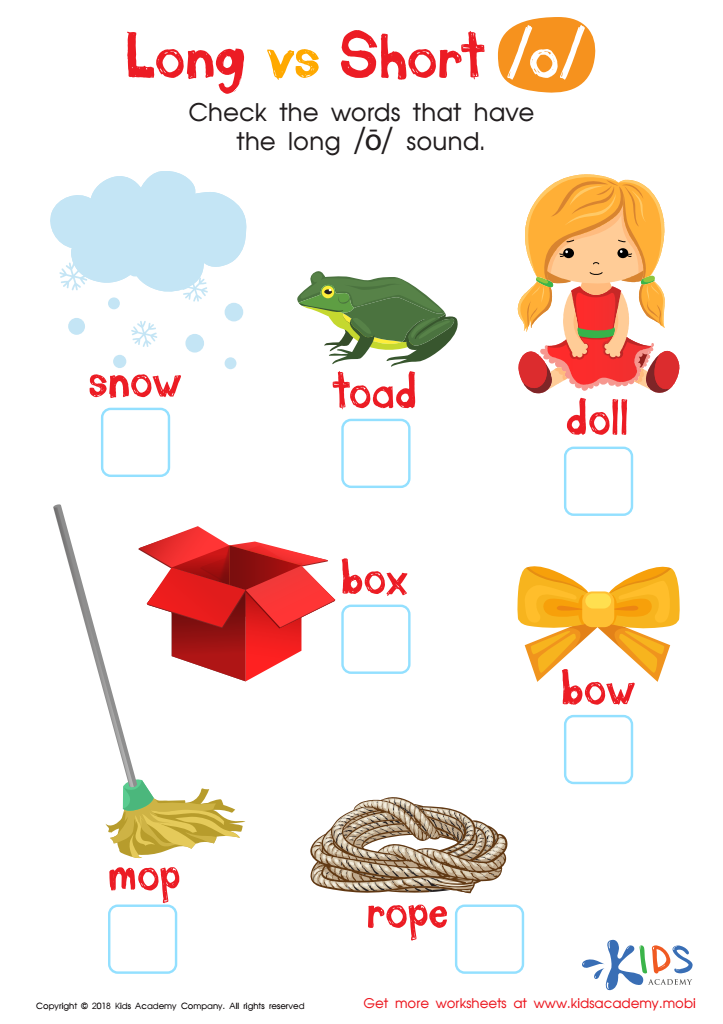
Long vs Short O Reading Worksheet
Help your child learn to identify the long and short «o» sound with this colourful worksheet. Guide them as they spot words with the long or short «o» sound. With practice, your child will find it easier to tell the difference between the two.
 Assign to My Students
Long vs Short O Reading Worksheet
Worksheet
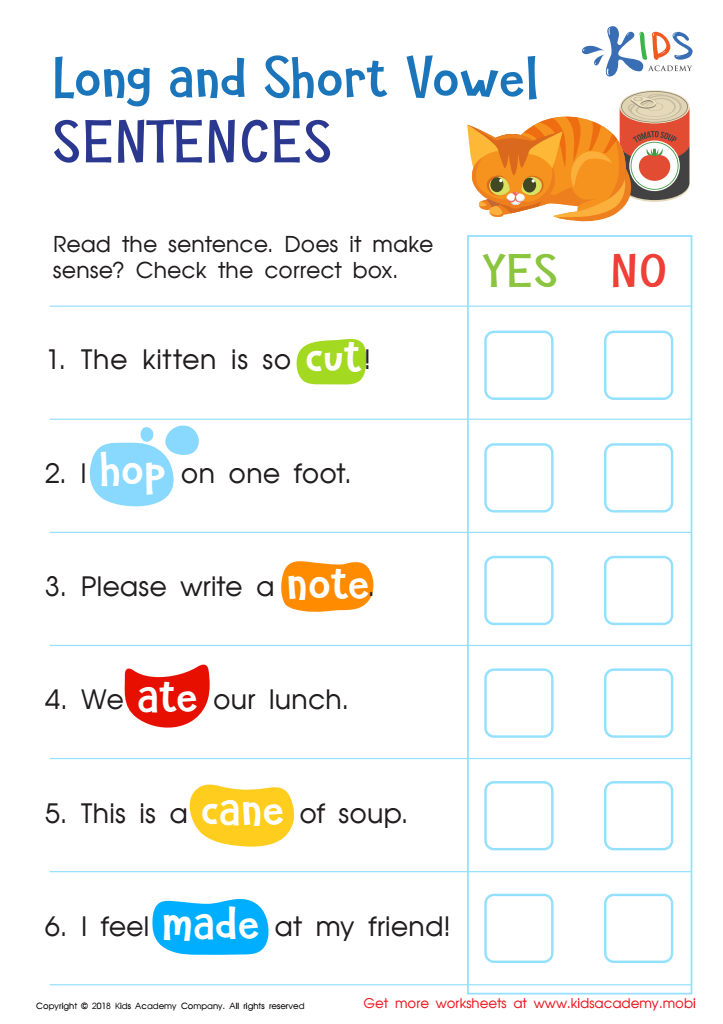
Long and Short Vowel Sentences: Assessment Worksheet
This printable worksheet helps kids practice differentiating between short and long vowel sounds. They'll use context clues to figure out which words make sense in simple sentences. A great way to build reading and writing skills!
Long and Short Vowel Sentences: Assessment Worksheet
Worksheet
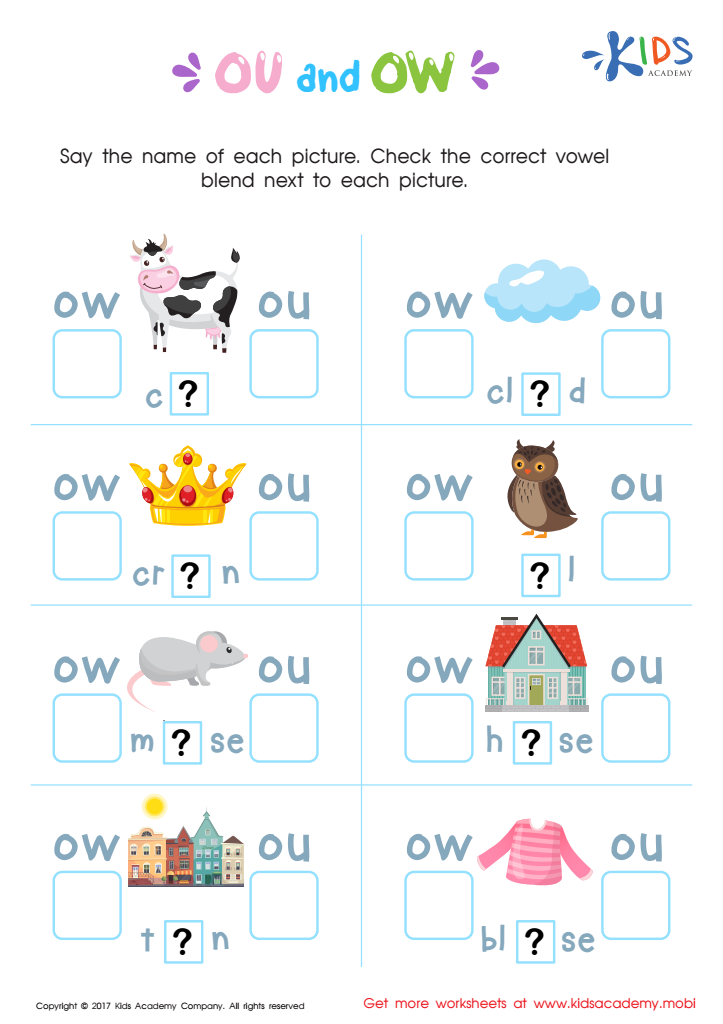
OU and OW Words Worksheet
Enhance your child's reading and spelling with this ou and ow words worksheet! Fun pictures and common words make mastering the diphthongs ou and ow easy and enjoyable.
OU and OW Words Worksheet
Worksheet
Join Kids Academy for Free
Who is primarily going to use this learning content?





Sound differentiation of vowels is crucial for children aged 5-7, as it lays the foundation for literacy and effective communication. At this developmental stage, children begin to develop phonemic awareness—the ability to recognize and manipulate individual sounds in spoken words. Vowels play a significant role in distinguishing words, and understanding the various sounds associated with them aids in decoding and spelling.
When children learn to differentiate vowel sounds, they enhance their reading skills, as accurate sound recognition enables them to sound out unfamiliar words. This phonetic understanding directly supports their writing abilities. Moreover, strong vowel differentiation contributes to better vocabulary acquisition and comprehension skills, allowing children to engage more fully in conversations and understand the meanings behind the words they encounter.
In a classroom or at home, teachers and parents can support this learning by incorporating playful activities, such as rhyming games, vowel sound sorting, and phonics songs, which reinforce these skills in an enjoyable manner. Fostering sound differentiation not only assists with immediate literacy outcomes but also instills confidence in children as they navigate their educational journey, emphasizing the importance of early intervention and support in developing critical language skills.







