Vocabulary Building Vowels Worksheets for Ages 5-7
4 filtered results
-
From - To
Discover our engaging Vocabulary Building Vowels Worksheets designed for children aged 5-7! These fun and interactive activities help young learners enhance their understanding of vowel sounds and their importance in vocabulary development. Each worksheet encourages kids to identify, match, and use vowels in a variety of words, fostering reading and spelling skills. Our resources are tailored to captivate young minds while promoting essential language skills through vivid imagery and relatable exercises. Perfect for home or classroom use, these worksheets support early literacy and set the foundation for lifelong learning. Start your child's vocabulary journey today and watch them thrive!
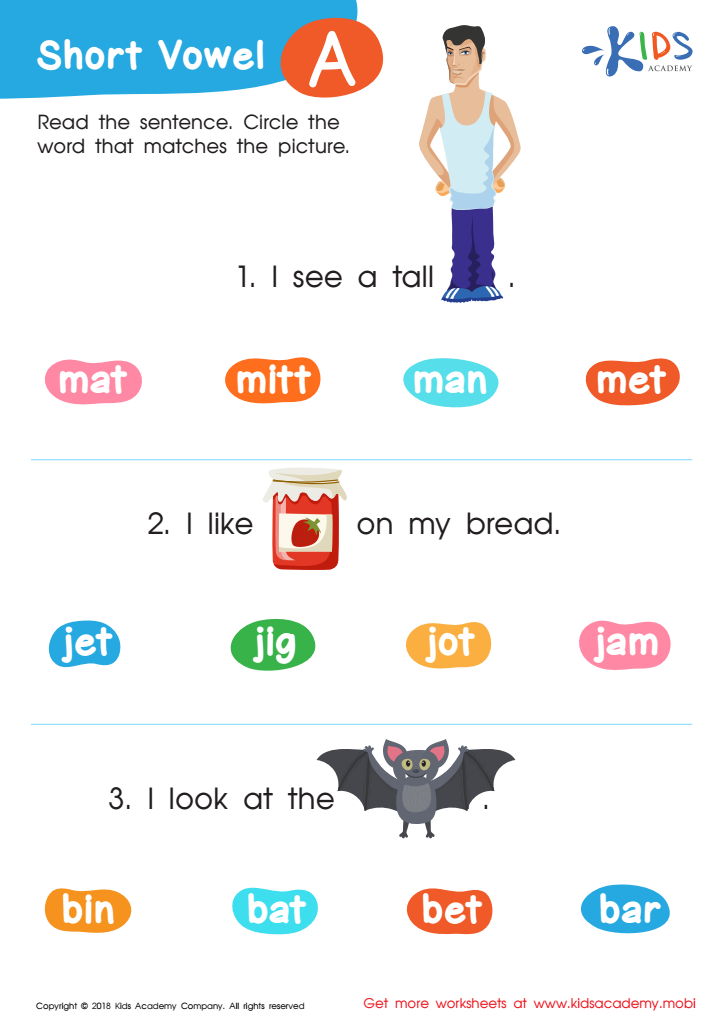
Short Vowel /a/ Worksheet
 Assign to My Students
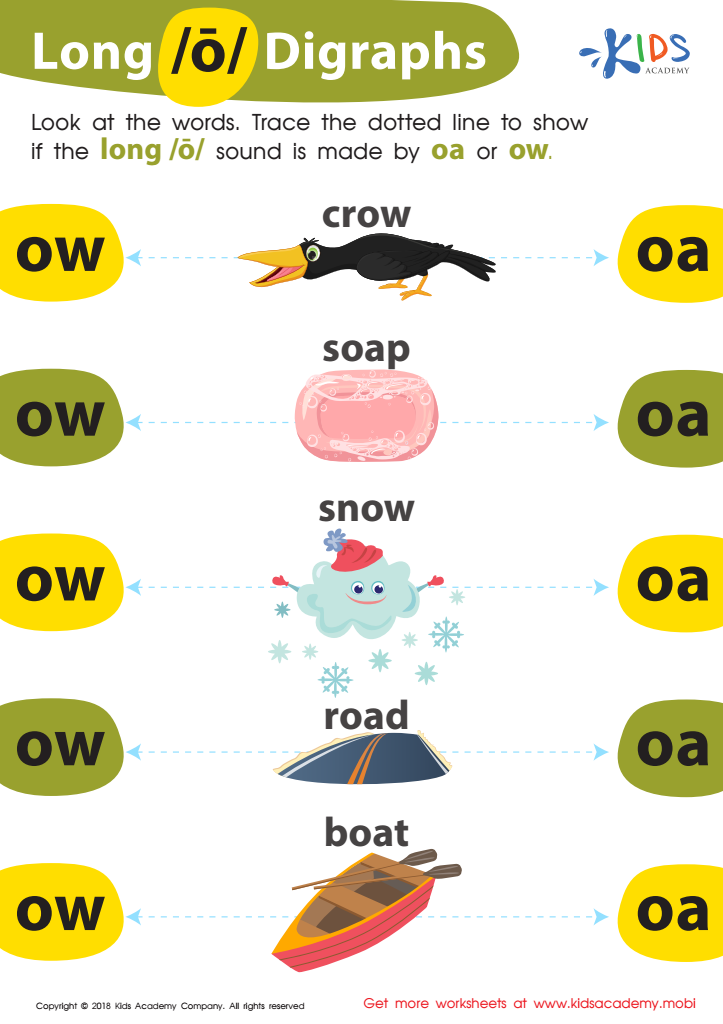
Reading: Long O Digraphs Worksheet
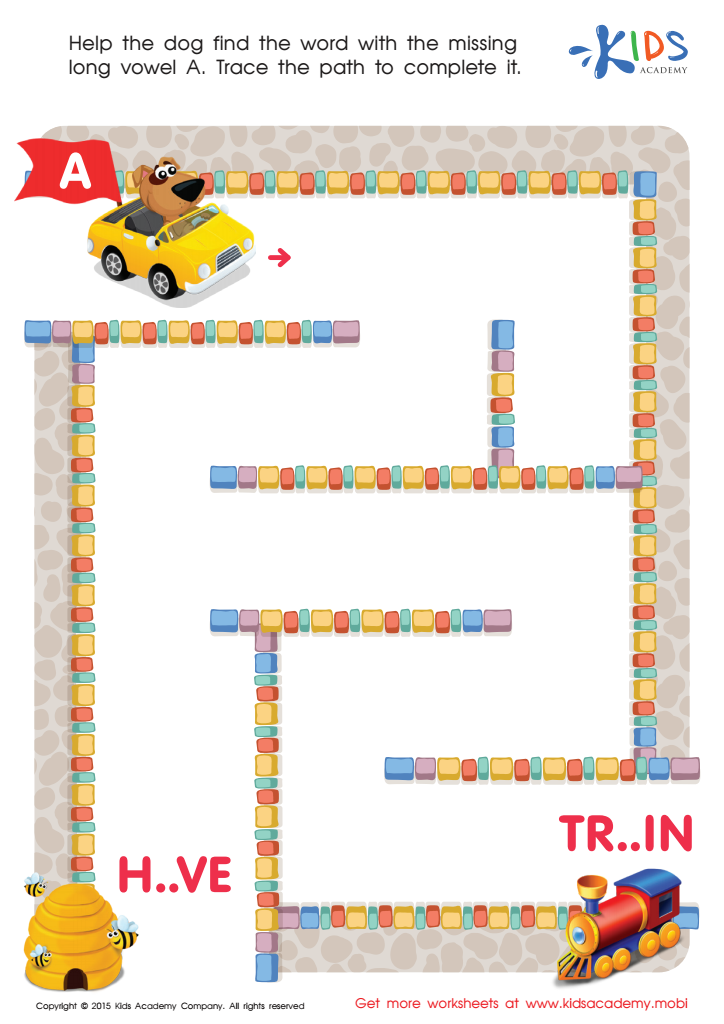
Long Vowel Sound A Worksheet
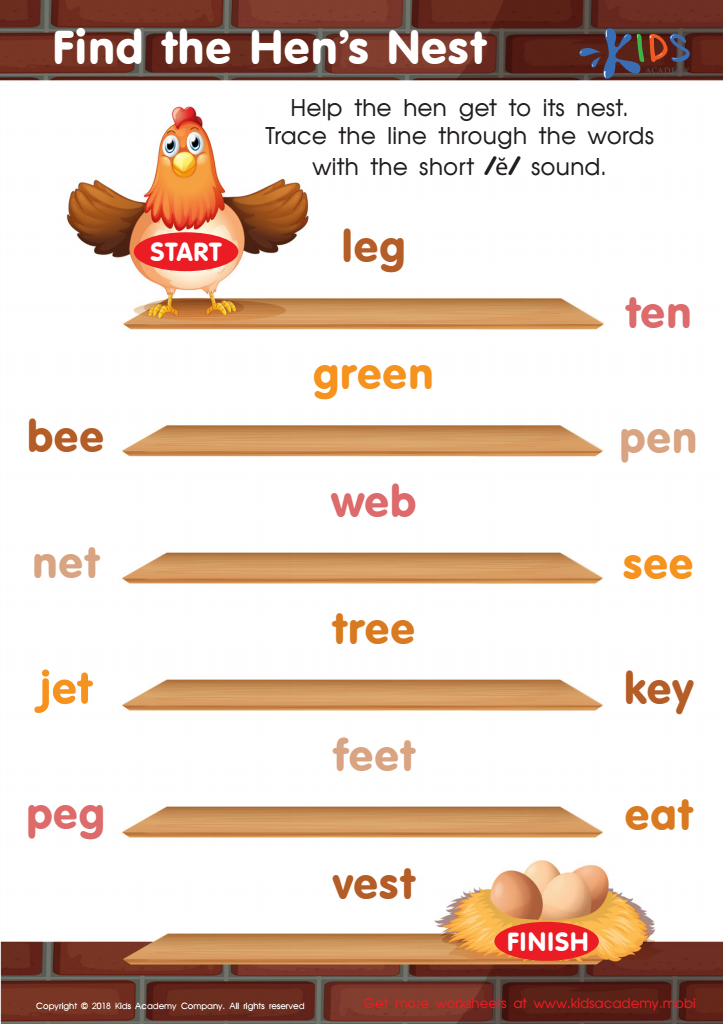
Find Hens Nest Reading Worksheet





Vocabulary building, particularly focusing on vowels, is crucial for children ages 5-7 as it lays the foundation for their reading and language skills. During these formative years, children are eager to explore language, making it the ideal time to introduce a rich, phonetic vocabulary. Vowels play a key role in word formation and pronunciation, and mastery of these sounds enables children to decode words more effectively, enhancing their literacy skills.
A robust vocabulary boosts children’s confidence in communication, allowing them to express thoughts and ideas clearly. It also encourages cognitive development, as language acquisition is closely linked to understanding concepts, relationships, and emotions. Engaging in vocabulary-building activities creates an interactive and enjoyable learning environment, fostering a love for language and reading.
Moreover, when parents and teachers prioritize vowel-based vocabulary building, they help create connections across subjects, as language is the medium through which knowledge is communicated. By nurturing vocabulary skills early on, caregivers equip children with essential tools for academic success and lifelong learning. Ultimately, focusing on vowel sounds and vocabulary sets the stage for a child's future literacy, communication skills, and overall cognitive growth. This makes it vital for parents and teachers to actively engage in these practices.







