Critical thinking development Chess Worksheets for Ages 5-7
5 filtered results
-
From - To
Unlock your child’s potential with our engaging Critical Thinking Development Chess Worksheets for ages 5-7! Designed to nurture young minds, these fun and interactive worksheets introduce basic chess concepts while fostering logical reasoning, problem-solving skills, and strategic thinking. Each worksheet is tailored for early learners, featuring colorful illustrations and age-appropriate challenges to keep your child excited about learning. By integrating chess into their educational journey, kids will enhance their critical thinking abilities in a playful and enjoyable way. Explore our vibrant collection today and watch your little ones thrive as they build essential cognitive skills while having fun with chess!
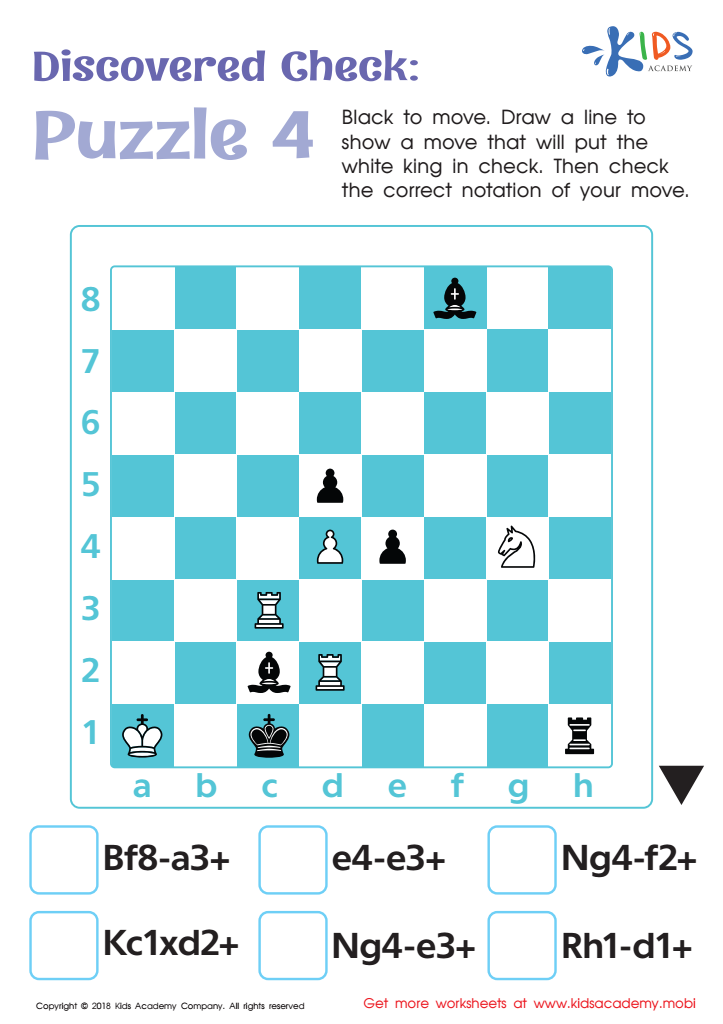
Discovered Check: Puzzle 4 Worksheet
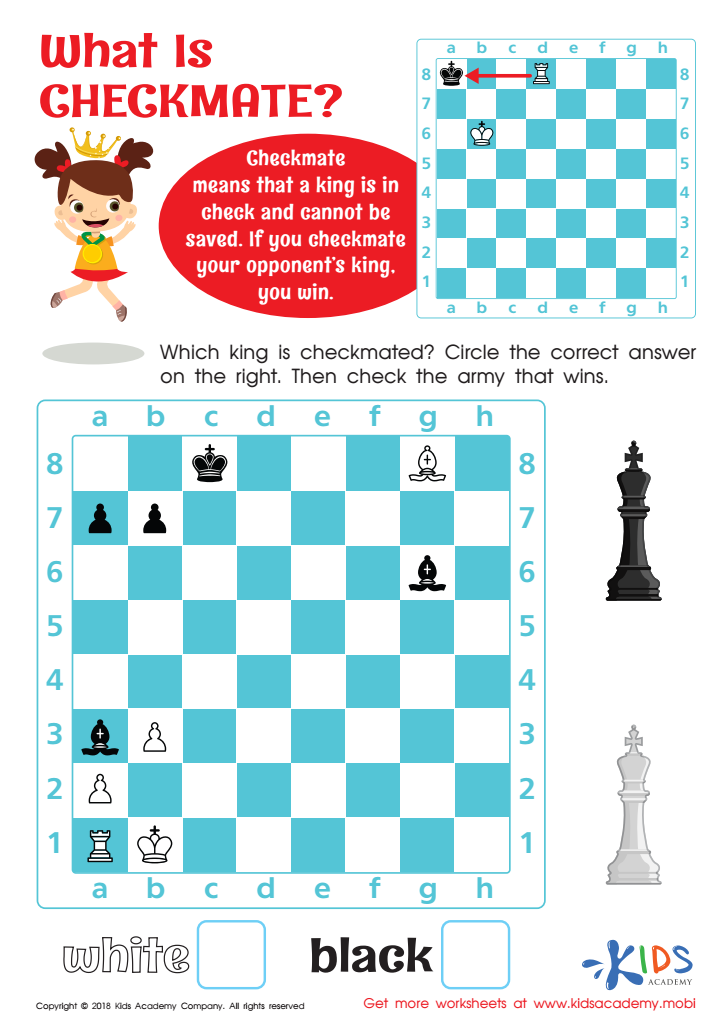
What is Checkmate? Worksheet
 Assign to My Students
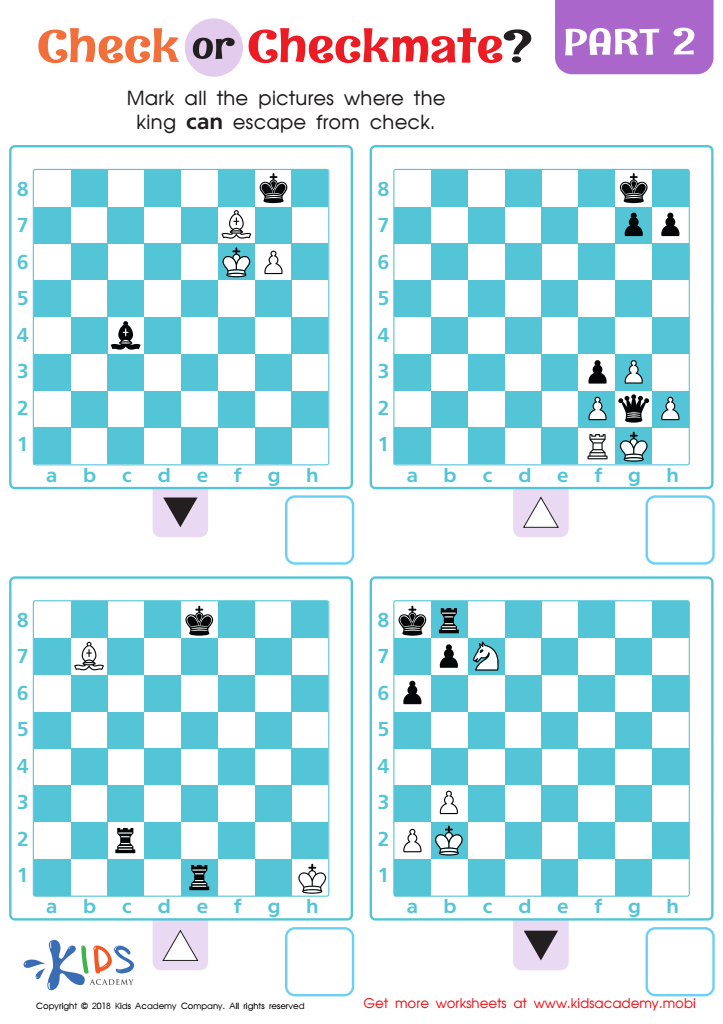
Check or Checkmate: Part 2 Worksheet
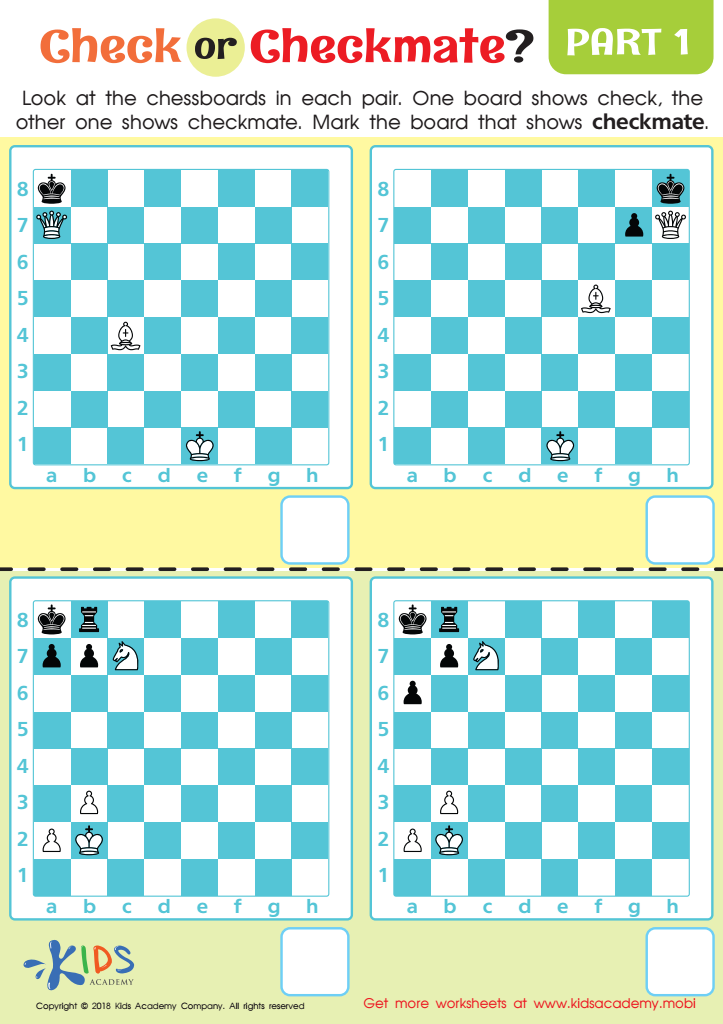
Check or Checkmate: Part 1 Worksheet
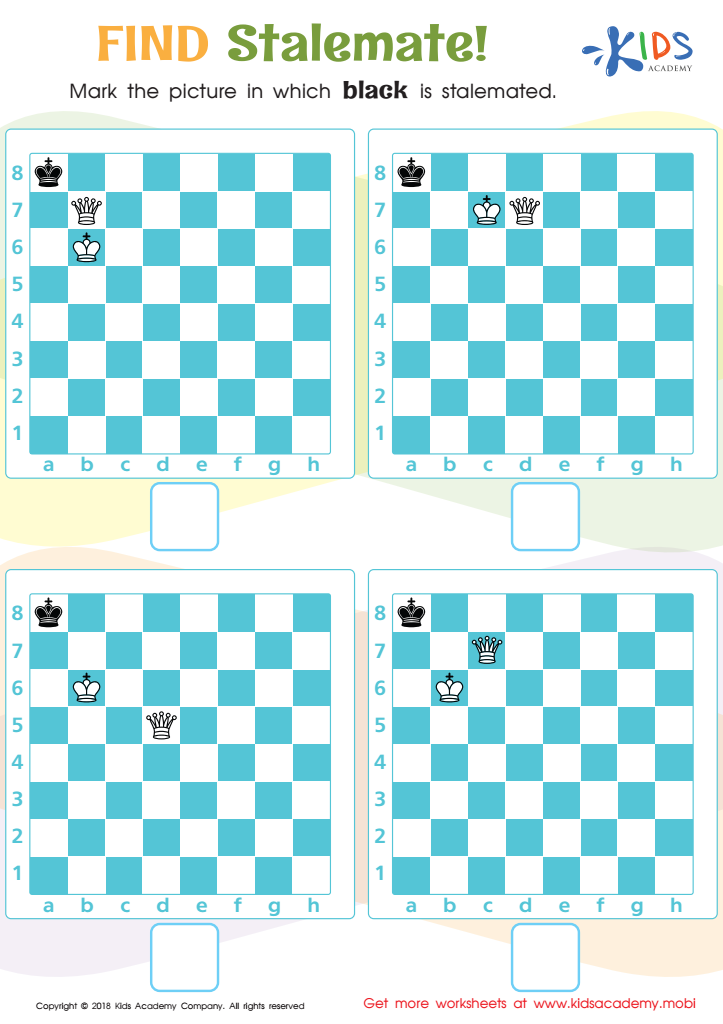
Find Stalemate! Worksheet






Critical thinking is a crucial skill that forms the foundation for lifelong learning and effective problem-solving. Introducing chess to children aged 5-7 can significantly enhance their critical thinking development. Engaging with chess helps young minds learn to analyze situations, foresee potential consequences of their moves, and strategize effectively, fostering both cognitive and emotional growth.
Playing chess invites children to think ahead, develop patience, and approach problems methodically—skills that translate beyond the chessboard into their academic and personal lives. As they learn to navigate challenges, they also cultivate resilience, understanding that failures can lead to growth and improvement.
For parents and teachers, facilitating chess as a learning tool promotes a fun and interactive way to enhance cognitive abilities in early learners. It encourages social interaction and teamwork, as children often play with peers or family members. Moreover, chess can improve children’s concentration and focus, benefiting their overall academic performance. By investing time in chess, parents and teachers empower children to become thoughtful and independent thinkers, ready to tackle challenges creatively and intelligently—a vital asset in today's fast-paced, ever-changing world.