Strategic thinking Chess Worksheets for Ages 5-7
3 filtered results
-
From - To
Nurture your child's strategic thinking with our Chess Worksheets tailored for ages 5-7. These thoughtfully crafted activities introduce young learners to the fundamentals of chess while fostering essential skills such as critical thinking, problem-solving, and planning. With captivating illustrations and easy-to-follow instructions, each worksheet makes learning both fun and educational. By gradually increasing complexity, our worksheets not only entertain but also challenge children's minds, encouraging growth and development in logical reasoning. Perfect for beginners, these resources provide a solid foundation in chess, empowering kids to think ahead and make informed decisions both on and off the board. Discover the joy of strategic thinking today!
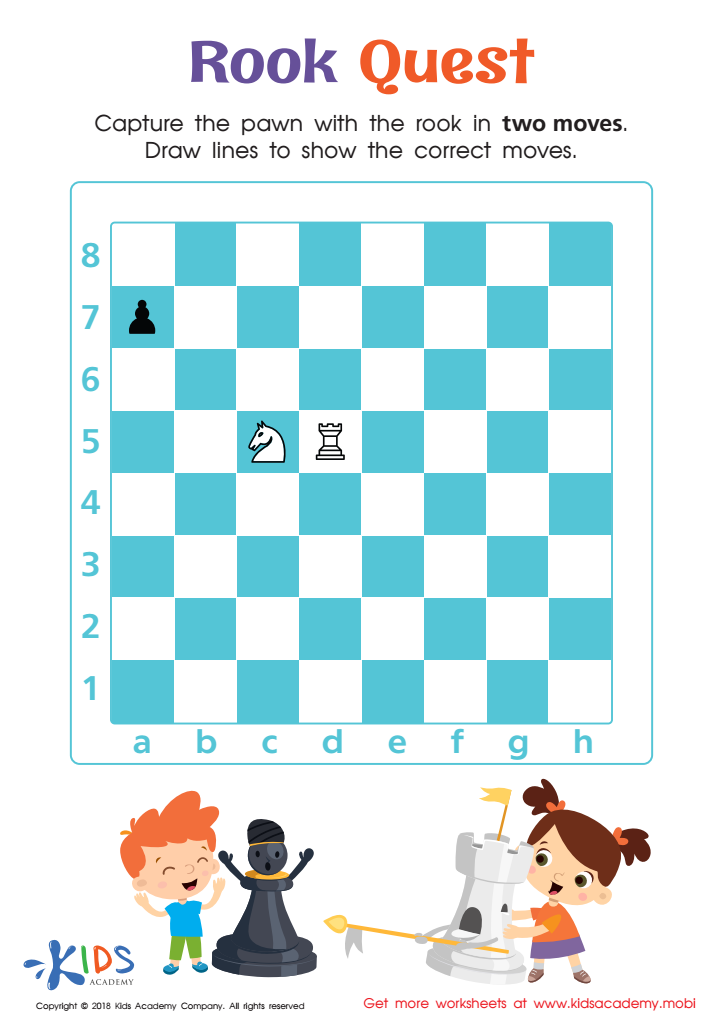
Rook Quest Worksheet
 Assign to My Students
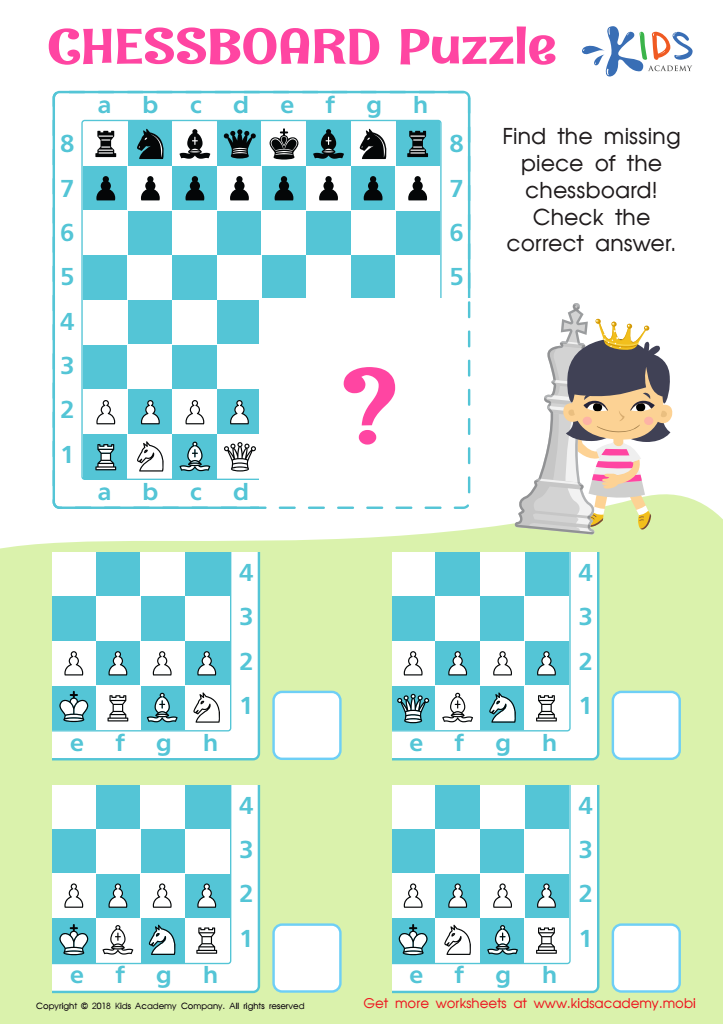
Chessboard Puzzle Worksheet
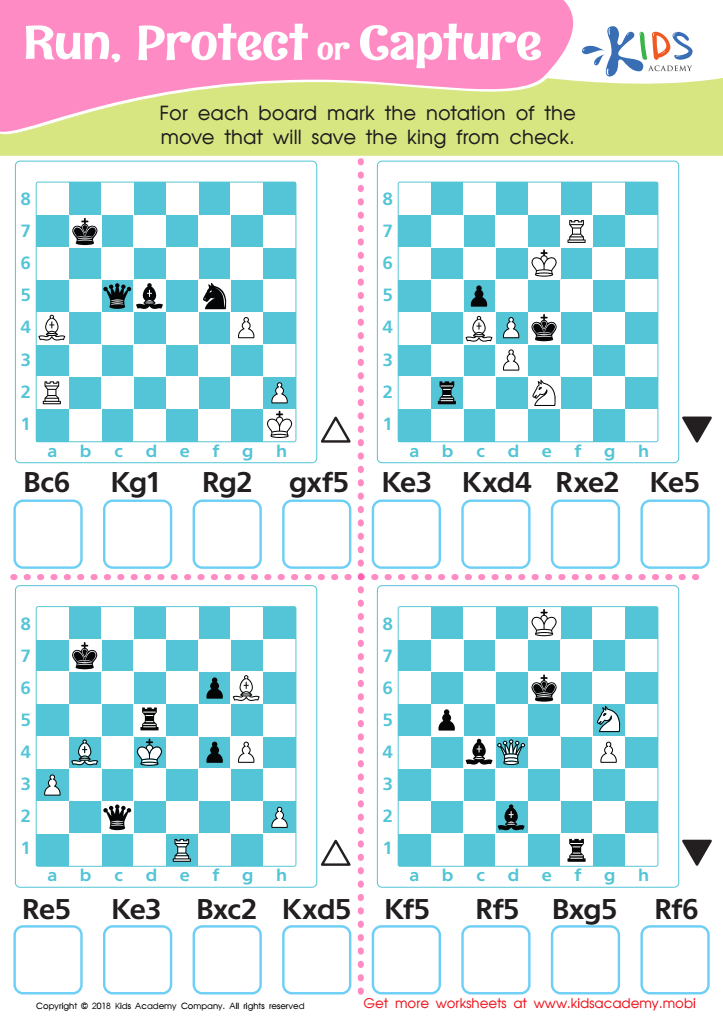
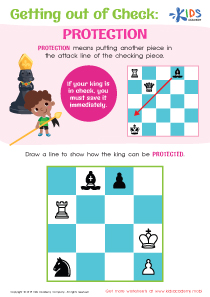
Run, Protect or Capture Worksheet






Parents and teachers should care about introducing strategic thinking through chess to children aged 5-7 because it can lay a strong foundation for critical cognitive and socio-emotional development. Chess, a game that requires careful planning and prediction, helps young children develop important skills such as problem-solving, reasoning, and analytical thinking. These skills are not only applicable within the game but extend to academic success and everyday decision-making.
Playing chess also promotes patience and perseverance. Children learn to focus on a goal, experiment with different strategies, and cope with challenging situations. Such experiences teach resilience and improve concentration, which are essential qualities for academic growth and personal development.
Moreover, chess encourages healthy social interaction when played in a group setting. It teaches kids about competition, sportsmanship, and handling both wins and losses gracefully. These lessons are crucial for their overall emotional development and can foster better interpersonal skills.
Engaging children in chess at an early age can also spark an interest in learning and intellectual pursuits. It is a fun, engaging activity that contrasts with passive screen time, encouraging active mental engagement. Given these educational and developmental benefits, investing time in teaching young children how to play chess is immensely worthwhile for their broad spectrum growth.