
Alphabetical order understanding Worksheets for Ages 5-7
7 filtered results
Difficulty Level
Grade
Age
-
From - To
Subject
Activity
Standards
Enhance your child's literacy skills with our engaging Alphabetical Order Understanding Worksheets, designed specifically for ages 5-7. These worksheets make learning the alphabet fun and interactive, helping young learners develop essential skills in organizing words and enhancing their vocabulary. Each activity is crafted to stimulate critical thinking while ensuring a solid grasp of alphabetical order. Alongside varied exercises, children will enjoy colorful illustrations that make learning enjoyable. Perfect for both classroom and home settings, our materials provide a valuable resource for parents and educators alike. Guide your little ones towards academic success with our easy-to-use worksheets today!
Favorites
With answer key
Interactive
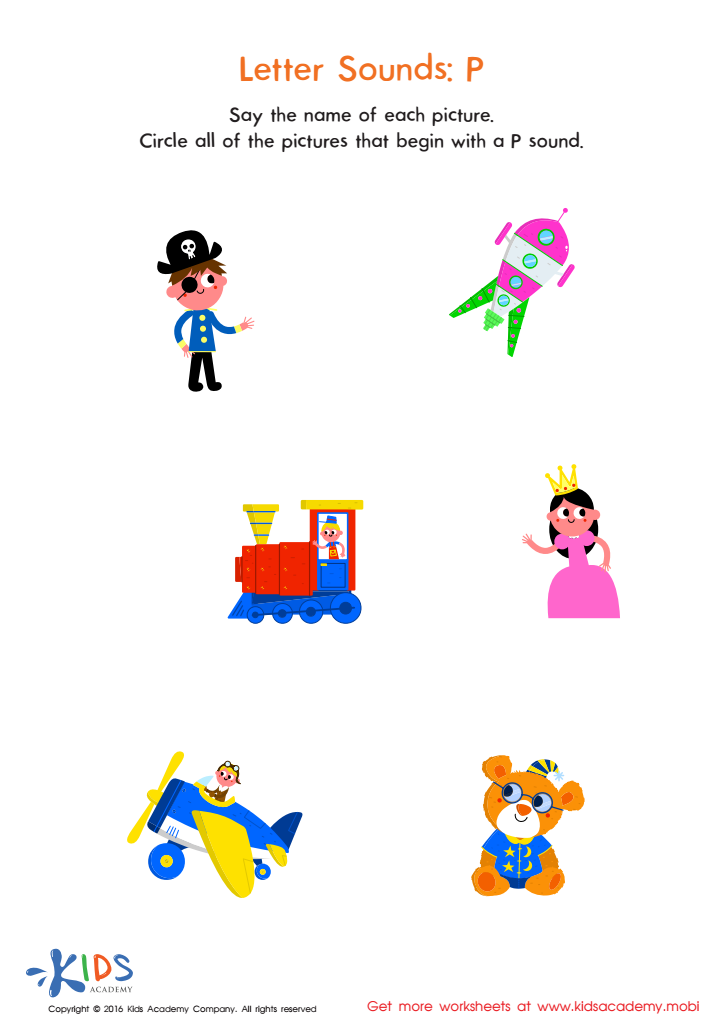
Letter P Sound Worksheet
Think P! Kids practice phonics with this fun letter P worksheet. With delightful illustrations, they'll sound out simple words and get closer to reading.
Letter P Sound Worksheet
Worksheet
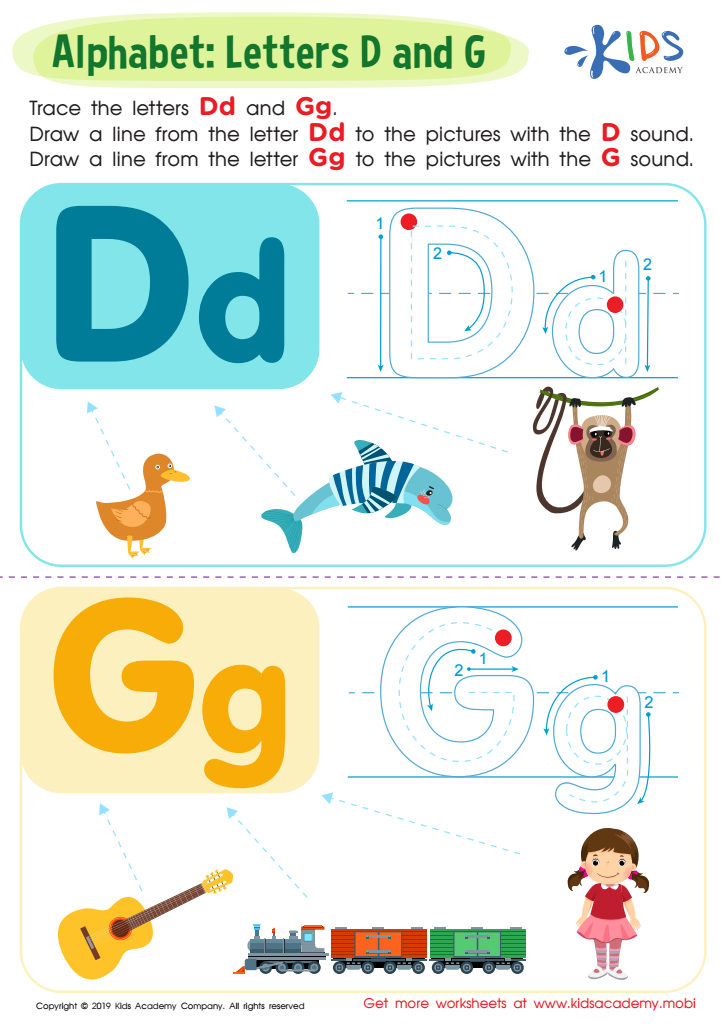
Letter D and G Tracing Worksheet
Kids can explore their imagination with the 'Alphabet: Letters D and G' worksheet! They'll trace capital and lowercase "D" and "G" and trace a line from the words. Colorful animals and objects make the task more fun and entertaining!
Letter D and G Tracing Worksheet
Worksheet
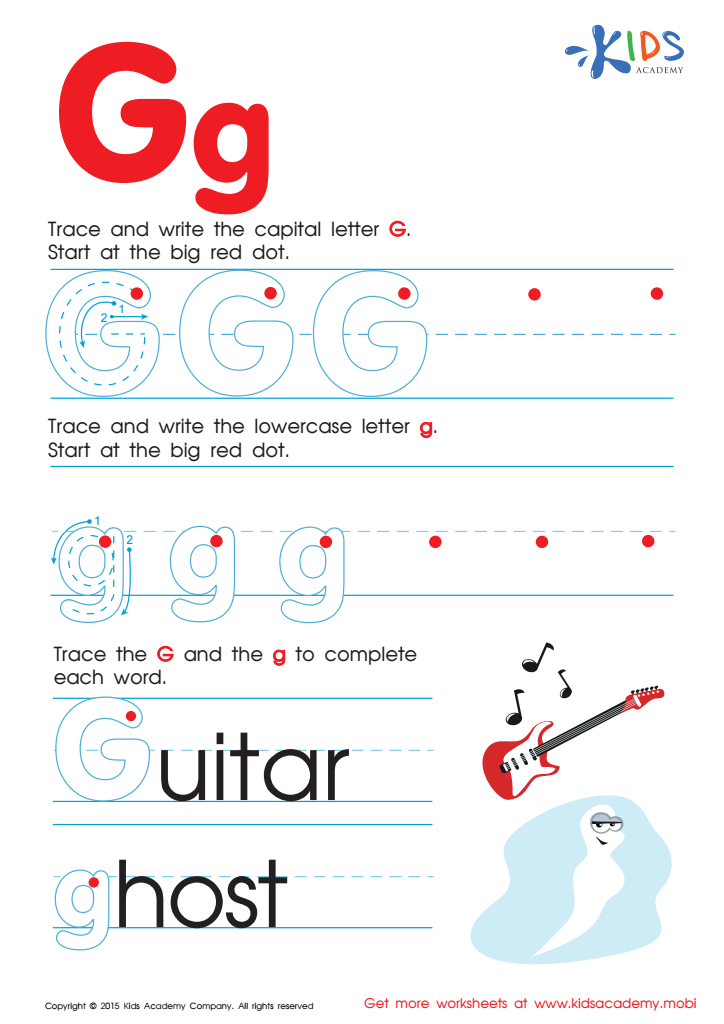
Letter G Tracing Page
Get ready to trace the letter "G" – with a big red spot as the starting point, trace the lines and watch the letter appear. Uppercase and lowercase letters are both easy and fun to write. Give it a go and finish the word "go". Play the guitar and say "hello" to a funny ghost!
Letter G Tracing Page
Worksheet
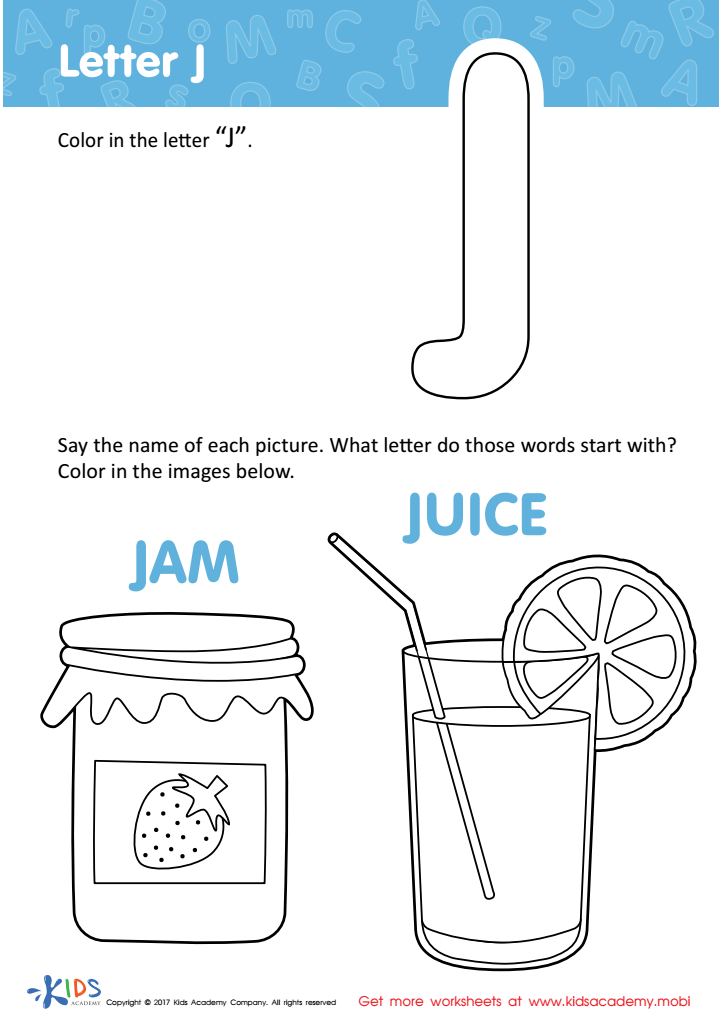
Letter J Coloring Sheet
Practice the letter 'J' with your little one with this fun coloring page! Pictures of jar, juice, jam and jelly make it an enjoyable experience for kids. Learning the letter and coloring is fun for even the youngest learners.
Download (PDF)
 Assign to My Students
Assign to My Students
Letter J Coloring Sheet
Worksheet
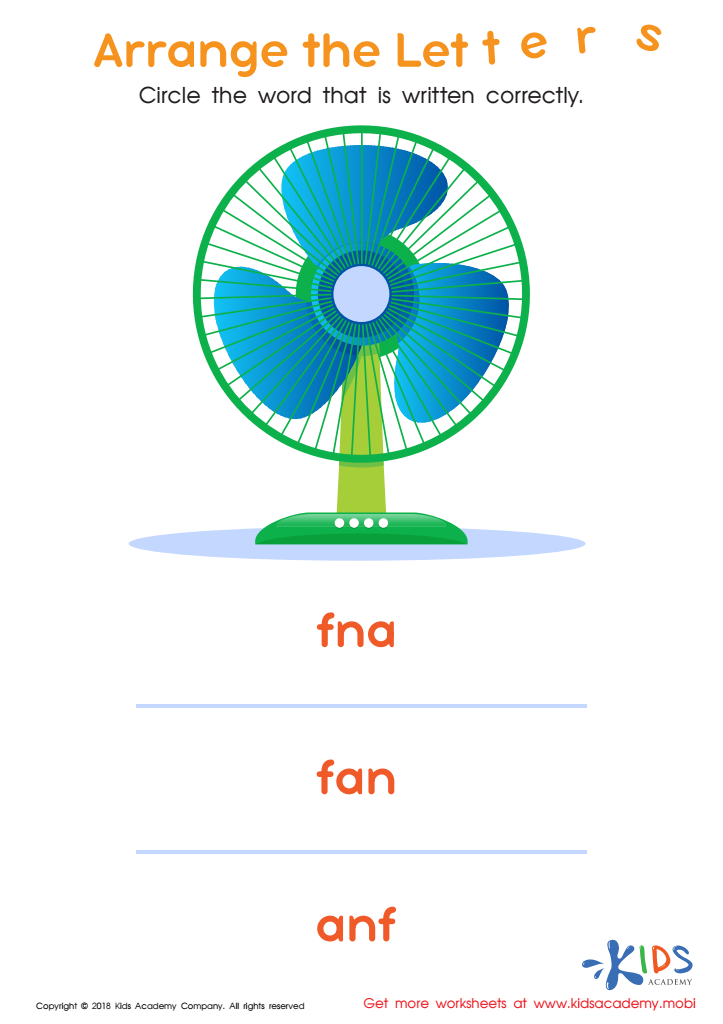
Arrange the Letters Worksheet
Test your kids' spelling skills with this worksheet! Show them the picture and ask what it stands for. Then, have them choose the correct spelling from the options given. Check their answer by circling the right one.
Arrange the Letters Worksheet
Worksheet
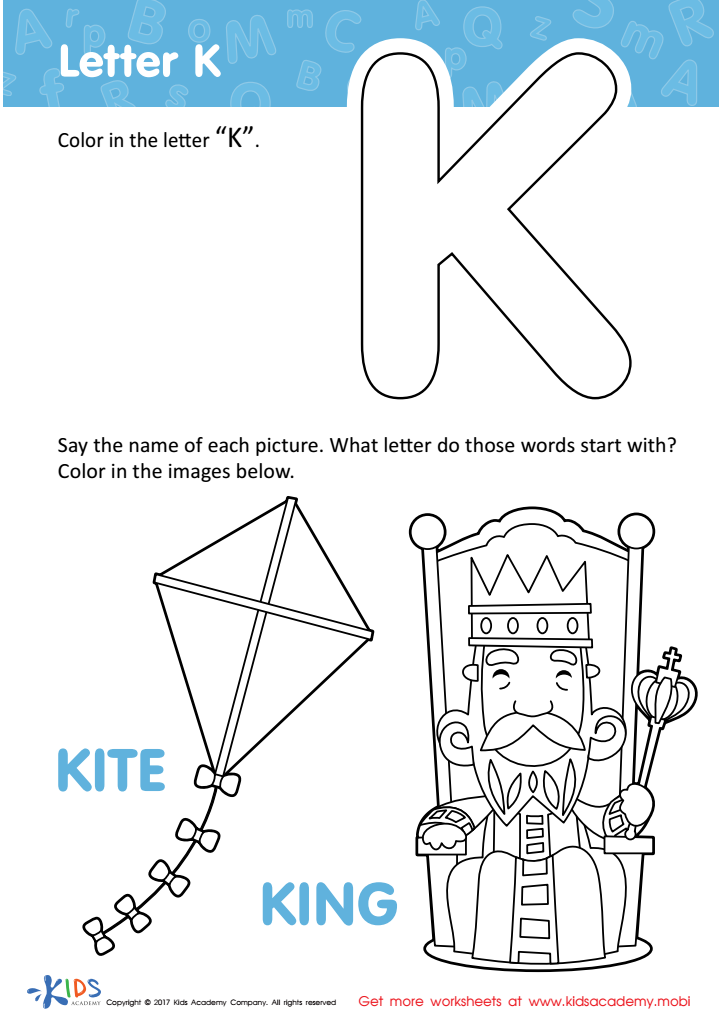
Letter K Coloring Sheet
This letter K coloring page captivates your child's creativity while learning the letter! Showcasing a king and kite, common words for their age group, it's sure to spark their imagination.
Download (PDF)
Assign to My Students
Assign to My Students
Letter K Coloring Sheet
Worksheet
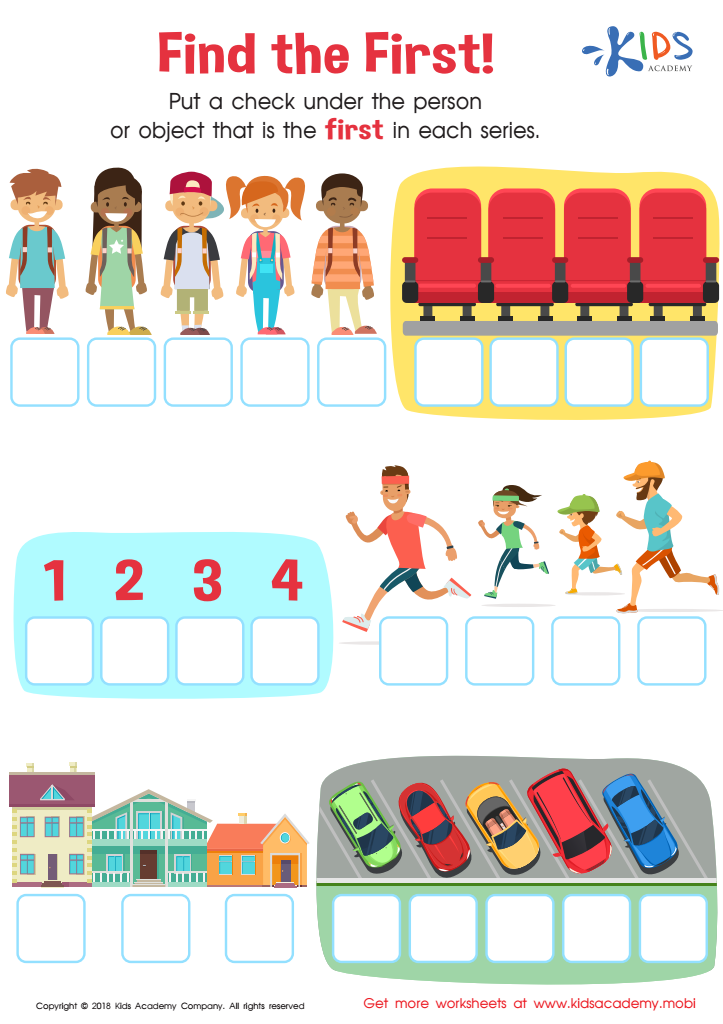
Find the First! Worksheet
Have your young students discuss what it means to be first in line, row, or a race. This free worksheet helps clarify their understanding of "first". View each group of people/objects and choose the first one. Follow up with hands-on activities like lining up students/toys or acting out a sequence of movements. Students can tell what happened first. Enjoy this printout for a fun math lesson!
Find the First! Worksheet
Worksheet
Join Kids Academy for Free
Who is primarily going to use this learning content?






Understanding alphabetical order is a fundamental literacy skill that holds significant importance for children ages 5-7. Firstly, it lays the groundwork for reading and writing by helping children recognize the sequence of letters, which is crucial for decoding words. When kids grasp alphabetical order, they can easily locate words in dictionaries, encyclopedias, or on lists, enhancing their research and learning abilities.
Moreover, alphabetical order fosters organizational skills. As kids begin to engage in writing and categorizing information, knowing how to order items alphabetically encourages them to structure their thoughts and ideas. This skill goes beyond literary tasks; it can be applied in everyday life, such as organizing school materials or finding books at the library.
Additionally, instilling a strong understanding of alphabetical order instigates a love for reading. As children become more proficient in this skill, they may explore new texts with confidence, reinforcing their engagement in learning.
In essence, parents and teachers play a crucial role in helping children navigate this skill as it not only supports literacy development but also cultivates critical thinking, organization, and exploration—key components for lifelong learning. Supporting this knowledge at an early stage sets a solid foundation for future academic success.








