Analog Clock Understanding Worksheets for Ages 5-7
3 filtered results
-
From - To
Discover our engaging Analog Clock Understanding Worksheets designed specifically for children ages 5-7. These worksheets make learning to tell time fun and interactive! With vibrant visuals and easy-to-follow instructions, your child will learn to recognize clock hands, read both hours and minutes, and develop essential time-telling skills. Ideal for home or classroom use, these resources cater to various learning styles, promoting hands-on activities that enhance understanding and retention. Foster your child's confidence in telling time with our carefully crafted worksheets, ensuring they master this crucial life skill while enjoying the learning process. Start your child's journey to time-telling mastery today!
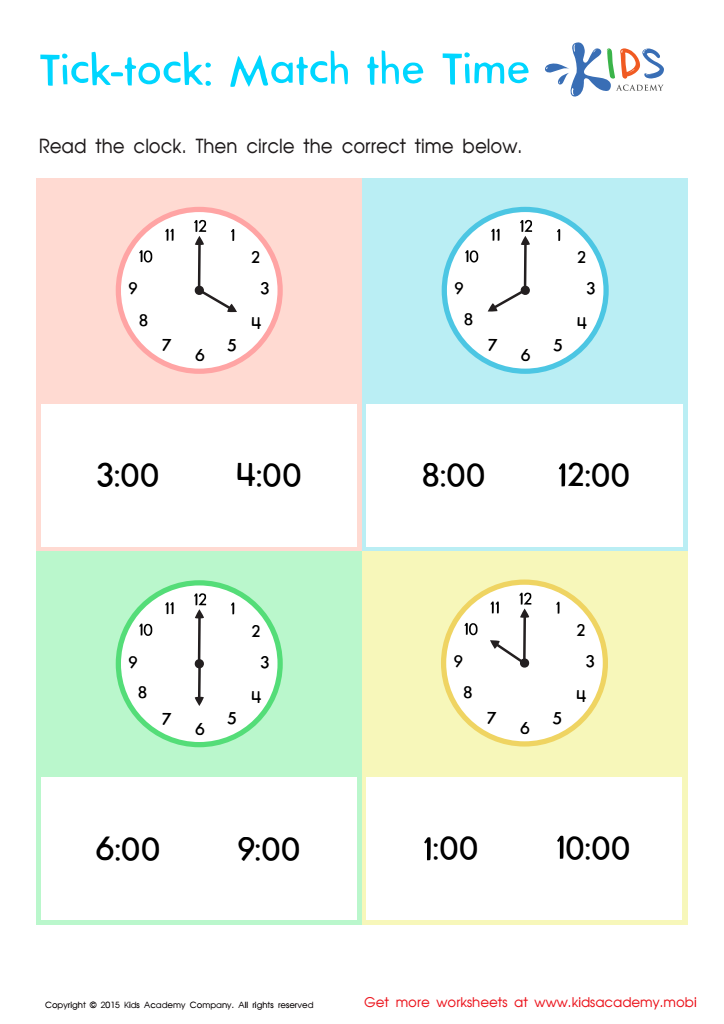
Telling The Time Worksheet: Part 4
 Assign to My Students
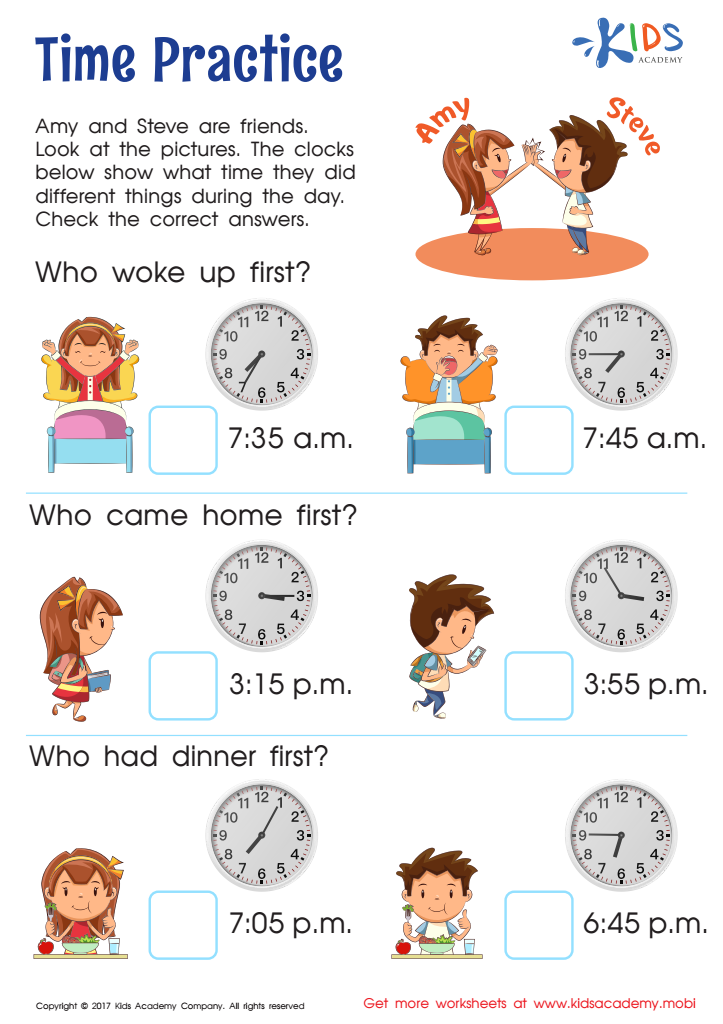
Time Practice Worksheet
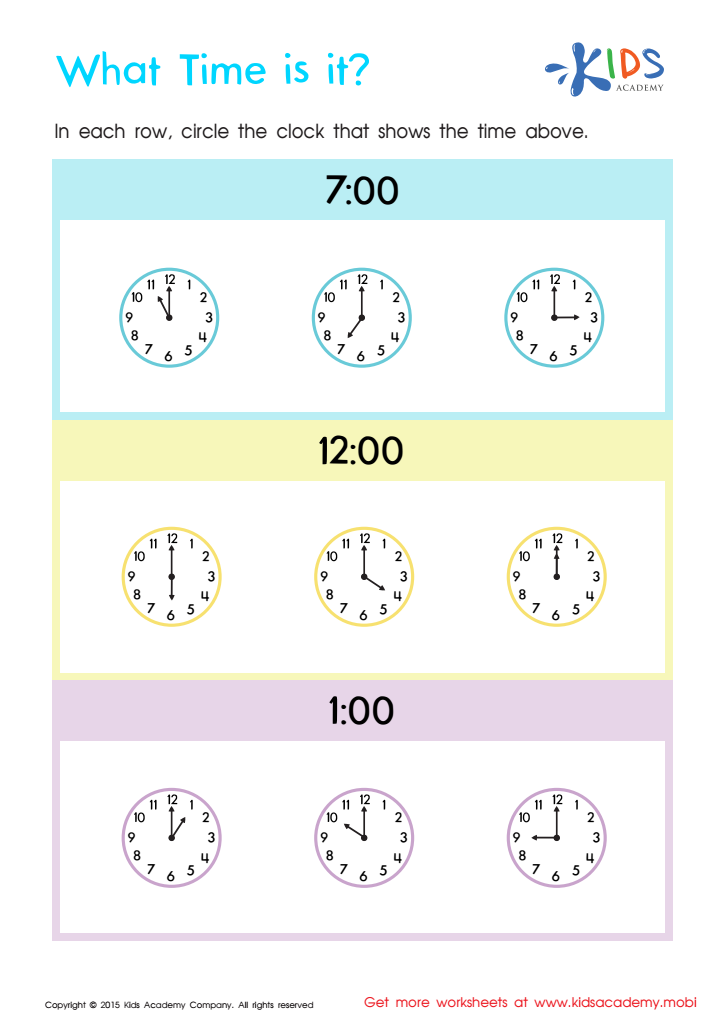
Telling The Time Worksheet: Part 3








Understanding analog clocks is crucial for children aged 5-7 for several reasons. Firstly, it fosters mathematical skills, emphasizing concepts of counting, sequencing, and understanding numerical values. Learning how to read an analog clock can help children grasp the concept of time as not just a numerical value but as a continuous flow, enhancing their ability to understand intervals and durations.
Moreover, analog clocks encourage cognitive development, as children must interpret the positions of the hour and minute hands. This activity enhances problem-solving skills and critical thinking, as they learn to estimate and calculate time.
Additionally, in today's digital world, traditional analog clocks still persist in many environments, from schools to public spaces. Ensuring children can read both analog and digital time prepares them for real-world situations and fosters independence.
Lastly, learning to tell time builds responsibility and self-regulation; children learn to manage their schedules, be on time, and plan their activities. For parents and teachers, instilling an understanding of analog clocks not only contributes to essential life skills but also provides a fun, interactive learning experience that promotes engagement and motivation in young learners.








